WEATHER ALERT

Family matters

While Rooster Town lacked basic amenities, Métis residents' shared experiences brought them together

Advertisement

Advertise with us

Where do you establish your home when you have no property, little income, and are part of a marginalized racial minority?

Read this article for free:


or

Already have an account? Log in here »

To continue reading, please subscribe:

Subscribe and receive a limited-edition Free Press branded hat or tote.

Digital Subscription

One year of digital access for only $205*

  • Enjoy unlimited reading on winnipegfreepress.com
  • Read the E-Edition, our digital replica newspaper
  • Access News Break, our award-winning app
  • Play interactive puzzles

*First annual payment billed as $205.00 + GST for one year. This annual subscription will automatically renew at $233.00 + GST every 52 weeks (10% off the regular annual price of $259.35). Offer available to new and qualified returning subscribers only. Cancel any time.

To continue reading, please subscribe:

Add Free Press access to your Brandon Sun subscription for only an additional

$1 for the first 4 weeks*

  • Enjoy unlimited reading on winnipegfreepress.com
  • Read the E-Edition, our digital replica newspaper
  • Access News Break, our award-winning app
  • Play interactive puzzles
Start now

*Your next Brandon Sun subscription payment will increase by $1.00 and you will be charged $17.95 plus GST for four weeks. After four weeks, your payment will increase to $24.95 plus GST every four weeks.

Hey there, time traveller!
This article was published 27/10/2018 (2858 days ago), so information in it may no longer be current.

Where do you establish your home when you have no property, little income, and are part of a marginalized racial minority?

This was the situation for many Métis living in Winnipeg in the early 1900s: a population dislocated due to economic change, land speculation and the influx of non-Indigenous settlers.

Compounding the problem was the social stigma of being Indigenous and, by being Métis, having no recognized treaty rights to fall back on. In this situation, many families resorted to living on the city’s fringe, with no paved roads, sewers or running water. The benefit, however, was having access to cheap land, shared experiences and cultural values, and having access to jobs in nearby farms and neighbourhoods.
Donald Laramee photo / supplied
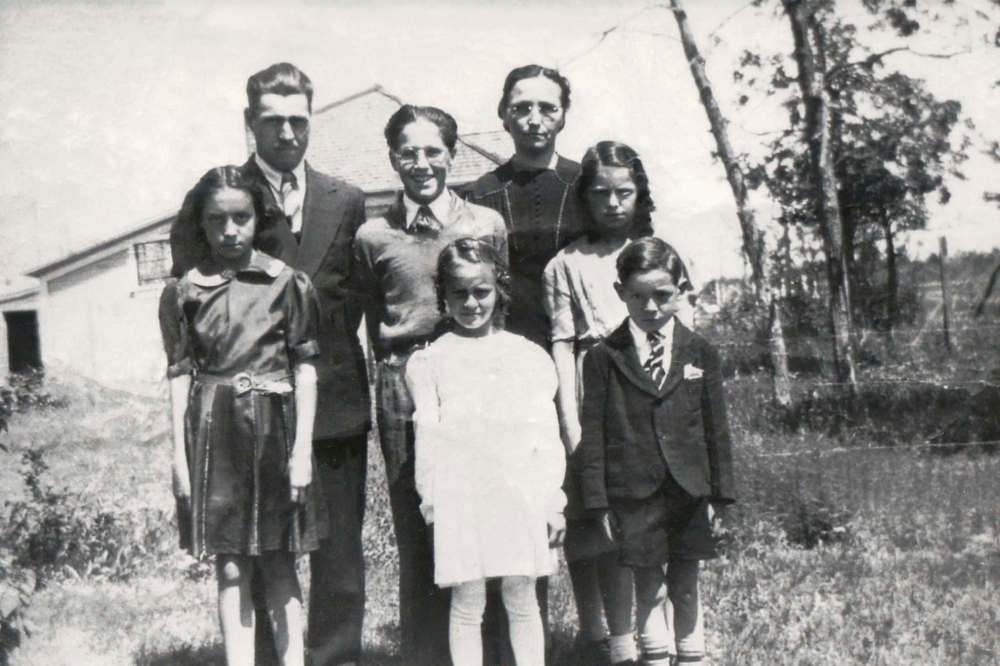
In this photo taken in the 1940s, the Laramee family is seen in front of their house on Ash Street. Joseph Noel and wife Mary are in the back, Mary, Joseph Jr., and Adrianne are in the middle, and Yvonne and Hubert are in the front.
Donald Laramee photo / supplied In this photo taken in the 1940s, the Laramee family is seen in front of their house on Ash Street. Joseph Noel and wife Mary are in the back, Mary, Joseph Jr., and Adrianne are in the middle, and Yvonne and Hubert are in the front.

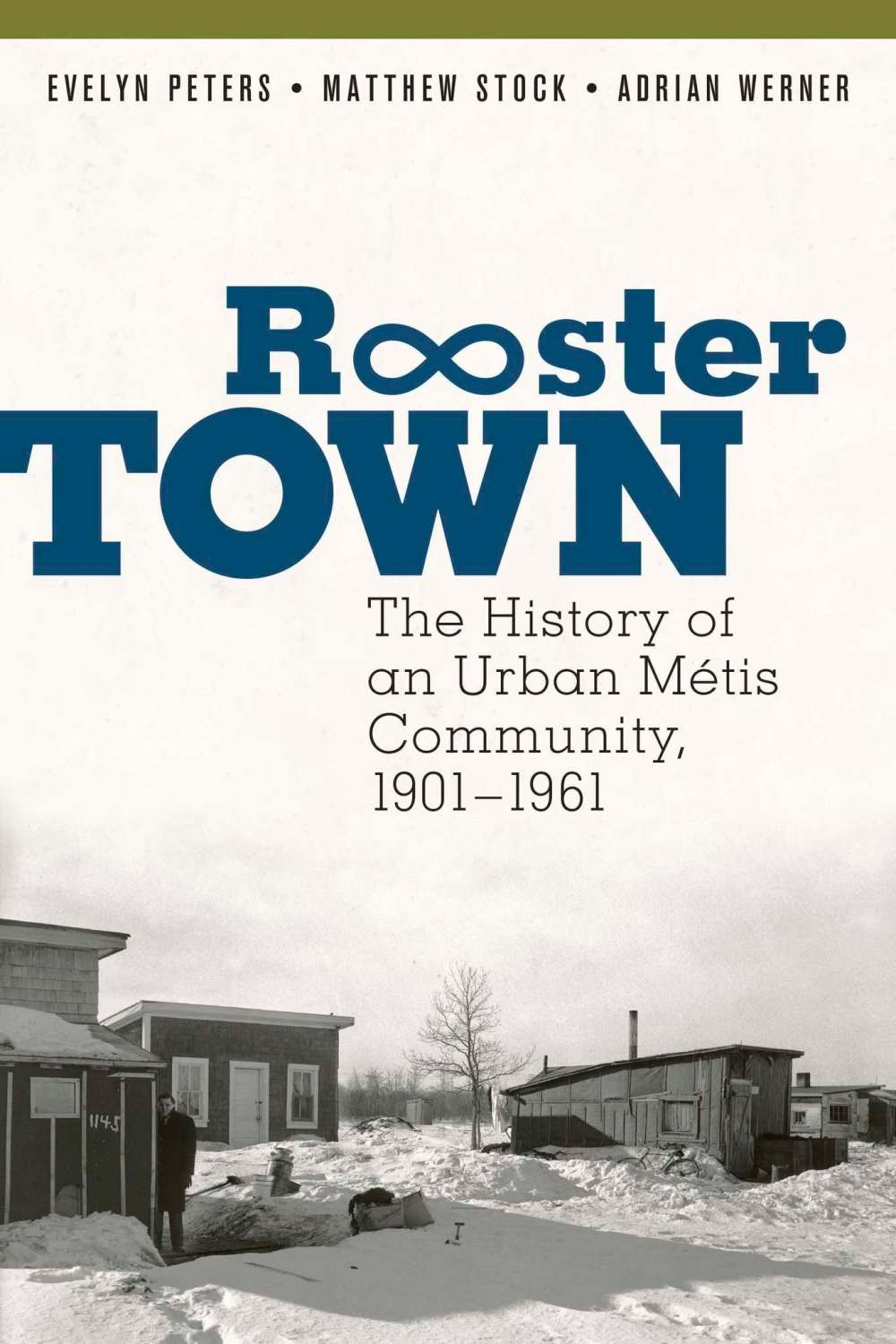
The three authors of Rooster Town: The History of an Urban Métis Community, 1901-1961 are Evelyn Peters, Matthew Stock and Adrian Werner. They bring together their research skills in urban and social policy analysis to provide an interesting account of just one of the many fringe communities that existed in different parts of Canada during this time.

“Rooster Town” was located on the edge of the Fort Rouge area of Winnipeg. The origins of the community’s name, according to the authors, remain unknown. Others have their theories about how it came to be. In a full-length article published in the Winnipeg Free Press on Jan. 30, 2016, Randy Turner wrote: “According to legend, the name Rooster Town was derived from the fact many residents owned chickens. Other unsubstantiated reports claimed the name originated from illegal cockfights that were said to be held in the community.”

What Rooster Town provides is a highly readable account about the community’s history, the nature of the dwellings and the families that lived there. It also follows its changing location from 1901 to 1959 as residential development — with its paved roads, sewers, and water lines — expanded further south and west into Fort Rouge. Over time, Rooster Town gradually shifted its location towards what is now the area around Grant Park Shopping Centre, Grant Park High School and the Pan Am Pool.

Throughout Rooster Town, the authors provide many interesting photographs including houses, family portraits, weddings and class photos. While the families were poor, they maintained their properties, often improving on the initial buildings. Children attended nearby schools including St. Ignatius School, operated by the Roman Catholic parish of the same name.

The community was not isolated from broader historical forces. When the 1930s Depression hit the Prairies, so too did it hit Rooster Town, causing job losses and unemployment. During the Second World War, many of its residents went to war, leaving young families behind.

Supplied photo
With co-authors Matthew Stock and Adrian Werner, Eveln Peters (above) undertook exhaustive research to bring together the story of Rooster Town.
Supplied photo With co-authors Matthew Stock and Adrian Werner, Eveln Peters (above) undertook exhaustive research to bring together the story of Rooster Town.

In the 1940s, the number of households peaked at 50. During the 1950s, with widespread developments occurring throughout North America, Rooster Town fell victim to urban sprawl. What helped further its demise were negative portrayals in the local press, which described residents as irresponsible land squatters and a threat to public health.

The authors rely on an exhaustive number of sources, including newspapers, Métis land scrip records, genealogies, censuses, Henderson directories, voter registration lists, building permit records, aerial photos and Winnipeg fire insurance maps.

The stories of the Rooster Town families, their genealogies, and detailed maps together provides an important and interesting study for those seeking to better understand Winnipeg’s history, in particular that of Fort Rouge. It also provides insights into the ongoing impact of colonialism in terms of the settling of the Prairies, the priority placed on suburban land development by local governments and the displacement of the urban Métis population.

Christopher Adams is the co-editor of Metis in Canada: History, Identity, Law and Politics published by the University of Alberta Press, and rector of St. Paul’s College at the University of Manitoba.
Gerry Cairns / Winnipeg Free Press Collection, Archives of Manitoba
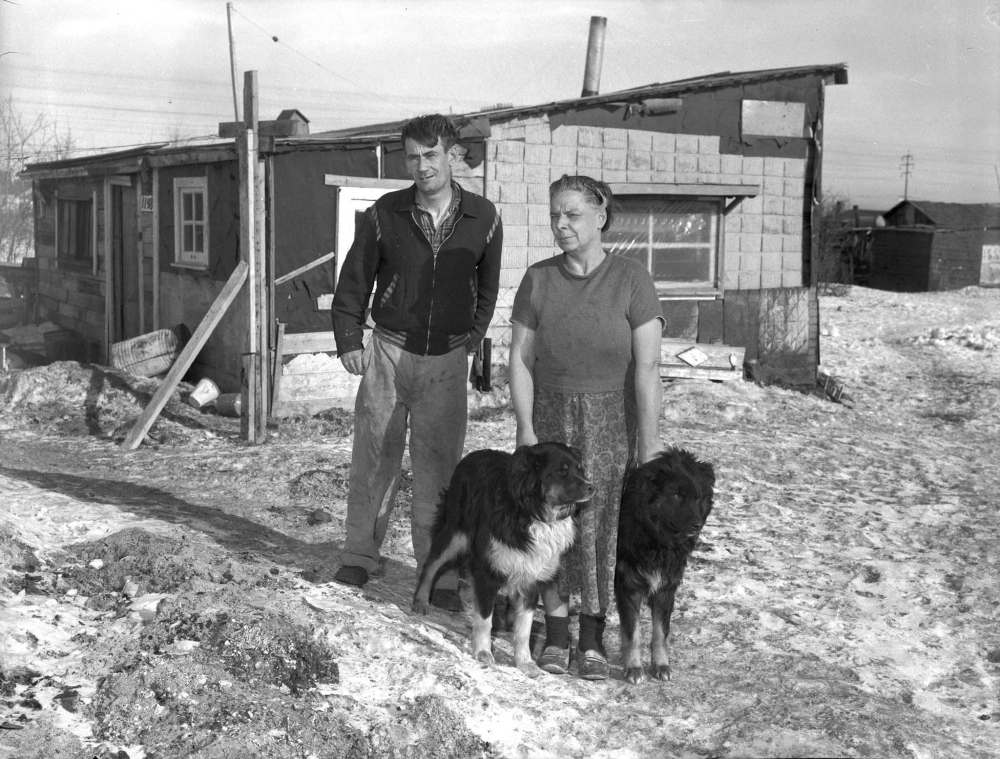
In this 1959 photo, Ernest and Elizabeth Stock are seen standing in front of a Rooster Town residence.
Gerry Cairns / Winnipeg Free Press Collection, Archives of Manitoba In this 1959 photo, Ernest and Elizabeth Stock are seen standing in front of a Rooster Town residence.
Darrell Sais / supplied photo
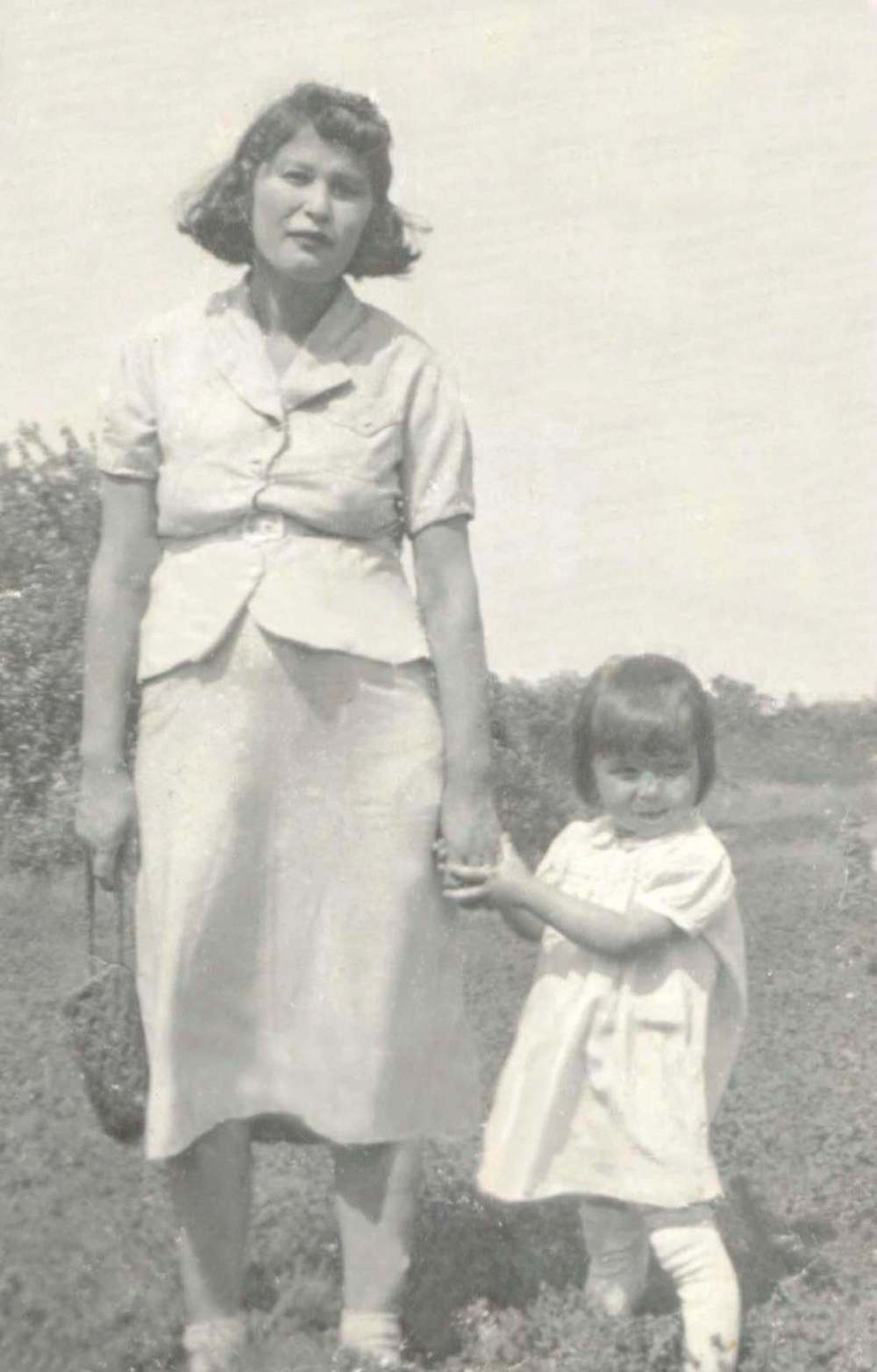
Elise Sais and her daughter Mary in Rooster Town circa 1940.
Darrell Sais / supplied photo Elise Sais and her daughter Mary in Rooster Town circa 1940.
Candace Hogue / supplied photo
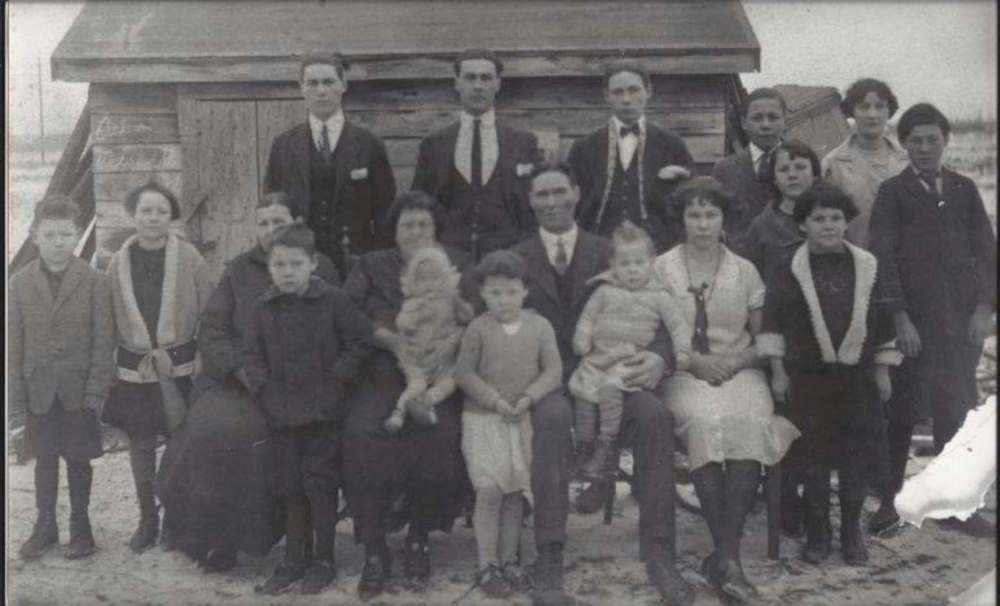
In this photo taken circa 1926, Alexander Smith (centre) and his wife Agnes (centre left) pose with their 15 children.
Candace Hogue / supplied photo In this photo taken circa 1926, Alexander Smith (centre) and his wife Agnes (centre left) pose with their 15 children.
Report Error Submit a Tip

More Stories

Executive exodus continues at Shared Health with three recent departures

Chris Kitching 5 minute read Preview

Executive exodus continues at Shared Health with three recent departures

Chris Kitching 5 minute read Updated: Yesterday at 10:15 AM CDT

Manitoba’s provincial health authority is looking for its fourth chief financial officer since 2023 and additional replacements after the recent departures of three executives.

Read
Updated: Yesterday at 10:15 AM CDT

Downtown Rudy’s restaurant announces closure

1 minute read Yesterday at 1:55 PM CDT

A downtown eatery has announced its closure.

Rudy's Eat and Drink, located on the main floor of the Manitoba Hydro building at 375 Graham Ave., posted on social media that the restaurant would be closing after "one last hurrah" on Friday, Aug. 21.

"With heavy hearts it is time to announce that Rudy’s will officially be closing its doors after an incredible 15 years," the post reads.

The post gave no reason for the closure. Rudy's and other restaurants in the building expressed concerns after an assault and resulting lockdown at Hydro Place in late January.

Conservatives call on government to release U.S. trade offer details

Nick Murray, The Canadian Press 4 minute read Preview

Conservatives call on government to release U.S. trade offer details

Nick Murray, The Canadian Press 4 minute read Updated: Yesterday at 3:17 PM CDT

OTTAWA - Federal conservatives are calling on the government to release the full details of the trade offer from the United States that Canada rejected this week.

In a letter to Trade Minister Dominic LeBlanc, Canada-U.S. relations critic Shuvaloy Majumdar said while his party supports the government's decision to reject the deal, Parliament is in the dark on what was on the table.

"If there was a draft text of any agreement that both governments have seen, please release it. The U.S. administration has seen it. Your government has seen it. Canadians deserve to see it," Majumdar wrote.

"Even after addressing Canadians and the media, the public and Members of Parliament still remain in the dark on your government's demands in negotiations with the Trump administration.

Read
Updated: Yesterday at 3:17 PM CDT

Winnipeg team behind national LGBT monument spent six years bringing it to fruition

Nicole Buffie 5 minute read Preview

Winnipeg team behind national LGBT monument spent six years bringing it to fruition

Nicole Buffie 5 minute read Yesterday at 6:05 PM CDT

The Winnipeg team behind a national monument recognizing the LGBT Purge were in Ottawa to celebrate its official unveiling Friday.

Thunderhead is the work of local artists Shawna Dempsey and Lorri Millan, Liz Wreford and Peter Sampson of Public City Architecture, and knowledge keeper Albert McLeod, who served as cultural adviser for the project.

The team beat out 31 international submissions for the project, which is permanently located at 201 Wellington St. in Ottawa along the Ottawa River, in view of Parliament.

“We are a beacon internationally around the world of what democracies can do about inclusion, about human rights,” McLeod said.

Read
Yesterday at 6:05 PM CDT

‘We got attacked’: Carney says retaliatory tariffs on U.S. to take effect next month

Catherine Morrison and David Baxter, The Canadian Press 8 minute read Preview

‘We got attacked’: Carney says retaliatory tariffs on U.S. to take effect next month

Catherine Morrison and David Baxter, The Canadian Press 8 minute read Saturday, Aug. 22, 2026

OTTAWA - Prime Minister Mark Carney says retaliatory tariffs will hit the U.S. starting next month after Canada walked away from what he called a "bad deal."

The U.S. introduced new 50 per cent tariffs on billions of dollars in Canadian exports on Saturday after trade talks failed.

"We got attacked," Carney told reporters on Parliament Hill Saturday when asked about the escalating trade war.

Carney suspended talks with the United States late Friday and summoned his negotiators back to Ottawa.

Read
Saturday, Aug. 22, 2026

Five Things: PM Carney explains why Canada left the U.S. negotiating table

David Baxter, The Canadian Press 5 minute read Preview

Five Things: PM Carney explains why Canada left the U.S. negotiating table

David Baxter, The Canadian Press 5 minute read Saturday, Aug. 22, 2026

OTTAWA - Canada is preparing to hit the U.S. with dollar-for-dollar tariffs in response to new 50 per cent duties on $28 billion worth of Canadian products that took effect when talks between the two nations collapsed as negotiations neared the finish line. 

Prime Minister Mark Carney was quiet publicly during the final days of negotiations, but now has now explained his rationale for telling the Canadian negotiating team, led by Canada-U.S. Trade Minister Dominic LeBlanc and chief negotiator Janice Charette, to leave the table.

Restrictions on further trade deals

"The U.S. Introduced at the last hours, in the last hours, efforts to restrict our ability to have other trade deals. You heard me say a moment ago, what we've accomplished in the past year, 20 new deals, economic and security partnerships, the prospect of doubling our market access because we believe in free trade. We're the partner of choice in many respects for countries around the world and the Americans wanted to restrict that. They had language that what they wanted to restrict that, unacceptable," Carney said during a press conference on Parliament Hill.

Read
Saturday, Aug. 22, 2026