

Shine your light on me
Those with seasonal affected disorder no longer have to suffer in the dark
Advertisement
Read this article for free:
or
Already have an account? Log in here »
To continue reading, please subscribe:
Digital Subscription
One year of digital access for only $1.44 a week*
- Enjoy unlimited reading on winnipegfreepress.com
- Read the E-Edition, our digital replica newspaper
- Access News Break, our award-winning app
- Play interactive puzzles
*Billed as $5.77 plus GST every four weeks. After 52 weeks, price increases to the regular rate of $19.95 plus GST every four weeks. Offer available to new and qualified returning subscribers only. Cancel any time.
To continue reading, please subscribe:
Add Free Press access to your Brandon Sun subscription for only an additional
$1 for the first 4 weeks*
- Enjoy unlimited reading on winnipegfreepress.com
- Read the E-Edition, our digital replica newspaper
- Access News Break, our award-winning app
- Play interactive puzzles
*Your next Brandon Sun subscription payment will increase by $1.00 and you will be charged $17.95 plus GST for four weeks. After four weeks, your payment will increase to $24.95 plus GST every four weeks.
Read unlimited articles for free today:
or
Already have an account? Log in here »
Hey there, time traveller!
This article was published 19/11/2018 (2756 days ago), so information in it may no longer be current.
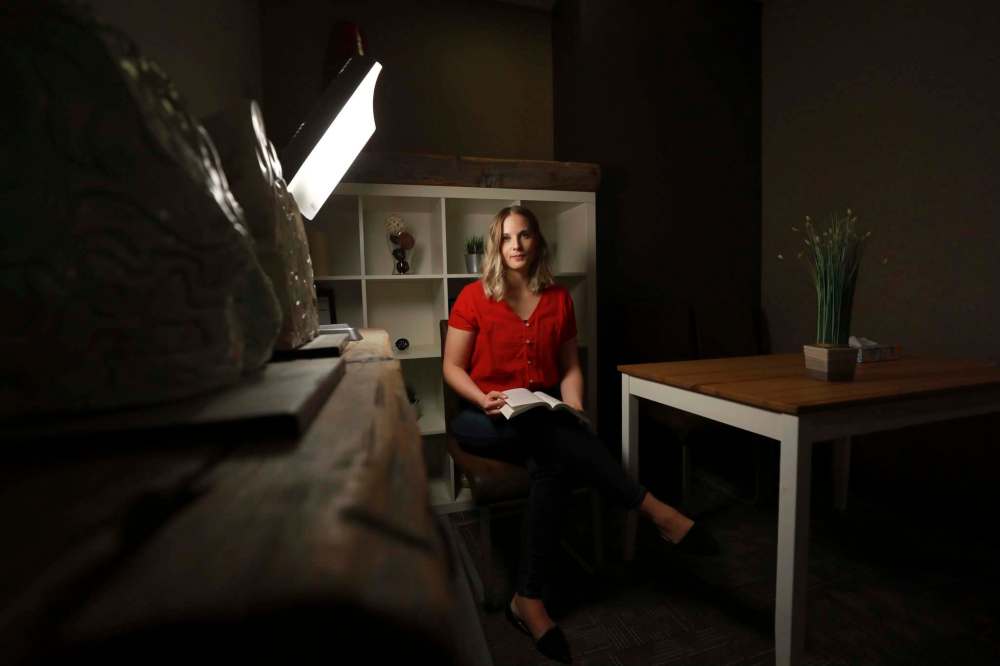
Rachel Westman is a creature of habit. And that’s a good thing for her mood.
Every day, she rises at 5 a.m. and hits the gym by six. To ensure she accomplishes her morning regimen, she also goes to bed with the near accuracy of an atomic clock: 9 p.m., almost every night.
“I also pack my lunch the night before so I can get my maximum restful sleep,” says the 30-year-old director of development with the Mood Disorders Association of Manitoba (MDAM).
It’s a winning formula for her health — especially her mental state.
That’s important because Westman can struggle with depression.
“For me it started in my first or second year of university because I found it was difficult transition going from high school to university.”
Although she manages well, this time of year can be particularly difficult. Like many Canadians, the winter brings the blues. Called seasonal affective disorder, or SAD, this form of clinical depression is common in Northern Hemisphere locales like Manitoba, says Tara Brousseau-Snider, executive director of the Mood Disorders Association of Manitoba. “It’s estimated 30,000 Manitobans have seasonal affective disorder.”
And it’s around this time of year that many individuals really begin to feel its effects.
“We see a lot of traffic right now,” she adds.
And many who come to the MDAM office are renting or buying a SAD lamp — a specialized light that helps treat the symptoms that often begin as the hours of daylight shrink.
“They’re flying off the shelves,” she says, adding MDAM rents them for $20 a month, or $200 to own. Over the course of the winter, the organization will rent or sell about 500 lamps. They are a full-spectrum light source, and aim to simulate sunlight, without the harmful ultraviolet rays.
Users sit about 30 to 45 centimetres away from the light for 20 to 30 minutes a day, based on the theory that sunlight, or lack thereof, affects our circadian rhythm (wakefulness and sleep states) and hormones that regulate it.
“The research is mixed so the verdict is still out whether this (a lack of light) is the main reason,” says Dr. Phoenix Gillis, a clinical psychologist at Grace General Hospital and professor at the University of Manitoba.
Another theory is people become less active during the winter — physically and socially — which is often linked to a higher incidence of depression symptoms and other mood afflictions, including bipolar disorder and anxiety.
“For most people, staying indoors, not socializing and a lack of physical activity are going to lead to lower mood and less enjoyment of life,” Gillis says.
The most extreme example is solitary confinement of prisoners, she says. Studies have demonstrated that even relatively short periods (like a few days) of this kind of isolation can lead to symptoms of depression, anxiety, irritability and hopelessness.
“Humans are social creatures,” she says. “And we need human contact for our well being.”
That’s why among the best ways to stave off the winter blahs is to find activities that get us out of the house and meeting people face-to-face, not just through social media.
“It’s good to be connected electronically and all, but real human contact is important.”
Gillis adds physical activity also boosts mood, instilling a sense of accomplishment besides stimulating brain chemicals associated with positive mental states, including serotonin. And that neurotransmitter is thought to be a bit scarce in folks with depression.
Additionally, eating well can help improve mood. Many vitamins and minerals are related to emotional well being, including vitamin D. Of course, the best natural source of vitamin D is sun exposure — hence why low levels of it are linked to higher incidence of SAD.
“That’s one of the reasons to talk to your health-care provider — to talk about the possibility of vitamin deficiencies,” Gillis says.
Another critical component of mood maintenance is sleep. Just like children are prone to emotional meltdowns when sleep deprived, adults also struggle to manage their emotions when we do not get enough shut-eye.
“We become more sensitive, so things that make us angry make us really angry, or something that makes us a bit sad makes us really sad.”
Gillis adds proper sleep, socialization, exercise and eating well speak to the importance of the “mind-body connection” regarding maintaining good mental health.
“If our bodies are well, our minds are well.”
That said, some individuals still feel the blues this time of year despite efforts to maintain healthy habits.
Gillis says about one in six Canadians suffer from SAD in their lifetime with about two to three per cent experiencing serious symptoms. What’s more is depression and other mood disorders can sap people of their energy and make engaging in activity difficult. They may also have difficulty sleeping and even crave junk food. In short, maintaining good health habits can be a struggle when you’re down.
If that’s the case, talk to your health-care provider about treatment options, including antidepressant medication, one of the treatments that Westman follows.
“When you’re depressed you fall into negative thinking patterns — it’s like a loop going around and around — and the medication helps stop that.”
But she also uses a SAD light every morning when the days get shorter.
“I take my medication and my SAD light in the morning so it goes hand in hand,” she says.

“For me, I do really notice a difference, and it helps me a lot to have it.”
Yet these are just two key ingredients in her mood-elevating elixir.
“It’s not just one thing,” Westman says, adding the blueprint for maintaining mental health can often be different for everyone.
“This is my recipe for recovery, but I think other people are likely very similar too.”
joelschles@gmail.com
History
Updated on Monday, November 19, 2018 6:37 AM CST: Adds photo