

Water warning issued
City's proposed utility corporation is trouble: union boss
Advertisement
Read this article for free:
or
Already have an account? Log in here »
To continue reading, please subscribe:

Digital Subscription
One year of digital access for only $205*
- Enjoy unlimited reading on winnipegfreepress.com
- Read the E-Edition, our digital replica newspaper
- Access News Break, our award-winning app
- Play interactive puzzles
*First annual payment billed as $205.00 + GST for one year. This annual subscription will automatically renew at $233.00 + GST every 52 weeks (10% off the regular annual price of $259.35). Offer available to new and qualified returning subscribers only. Cancel any time.
To continue reading, please subscribe:
Add Free Press access to your Brandon Sun subscription for only an additional
$1 for the first 4 weeks*
- Enjoy unlimited reading on winnipegfreepress.com
- Read the E-Edition, our digital replica newspaper
- Access News Break, our award-winning app
- Play interactive puzzles
*Your next Brandon Sun subscription payment will increase by $1.00 and you will be charged $17.95 plus GST for four weeks. After four weeks, your payment will increase to $24.95 plus GST every four weeks.
Read unlimited articles for free today:
or
Already have an account? Log in here »
Hey there, time traveller!
This article was published 07/07/2009 (6265 days ago), so information in it may no longer be current.
The president of Canada’s largest union has waded into Winnipeg’s water utility debate, charging that the city’s proposed corporation will cost ratepayers more money and lead to endless litigation.
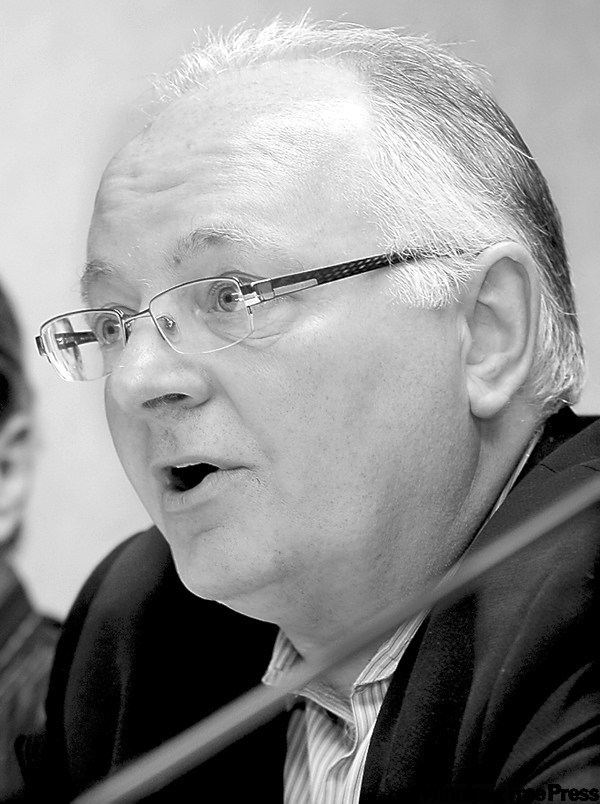
Canadian Union of Public Employees president Paul Moist wants Winnipeg to rethink its plan to create an arm’s-length corporation that would replace the existing water and waste department.
On July 22, city council will vote on a proposal to create a city-owned utility that would assume responsibilty for water treatment, sewage treatment and garbage collection; negotiate service-provision deals with neighbouring municipalities and complete up to $615 million of Winnipeg’s ongoing $1.8-billion waste-water upgrade with the help of a private engineering firm.
City officials say the utility could save ratepayers $13.4 million over its first six years, quickly conclude service-provision deals and act more innovatively than politicians and the public service do right now.
Left-leaning council members, however, fear the quasi-independent entity could place the bottom line ahead of the needs of Winnipeggers.
Moist also claims the new entity will be less cost-effective for Winnipeg because of a growing gap between government and private borrowing rates. He also claims the city will inevitably wind up suing its private partners over mistakes he believes are inevitable, given what he describes as the poor performance of similar arm’s-length utilities across Canada and the United Kingdom.
“We’re not ideological on this issue,” Moist said during a Monday meeting with the Free Press editorial board.
“We have no problem with a civic utility, but this isn’t a civic utility. It’s more of a private model.”
The heart of Moist’s concern is Winnipeg’s plan to partner up with a “strategic partner” to conduct waste-water plant upgrades.
Mayor Sam Katz and city officials believe they can avoid the cost overruns that beset Winnipeg’s new $300-million water-treatment plant (original budget: $205 million) and a $47-million component of the West End Water Pollution Control Centre (original budget: $26 million) if they bring a private consulting firm into the fold.
“We want them to have what we call skin in the game. If you have some money in the project, it will motivate you to use all your ingenuity, your know-how and your techniques to be as productive as possible,” Katz said. “If you have no skin in the game, and all you’re getting is cheques for consultation, which is how we always operate, you know what happens.”
The private firm would not own any city facilities, Katz insisted, even though this partner would own up to 49 per cent of a utility subsidiary that would be responsible for designing and building new components at three waste-water treatment plants.
Those components will remain city property and the city staff who currently operate and maintain water and waste-water plants will perform the same tasks for the utility, project developer Bryan Gray said.

As well, the private firm also may not actually borrow any cash, as it’s obvious the public sector can get a better deal right now, added Henry Hunter, another utility developer.
The city wants its private partner to have the capacity to raise cash, even though it may not be asked to do so, he said.
The criticism levelled at the utility is beginning to annoy the mayor, who claims a new “red herring” rises up as soon as the city debunks an old claim.
“Paul Moist is the only one fighting this. It’s not even the local CUPE,” Katz said. “But when the boys in Ottawa start in, you’re not going to buck the boys in Ottawa.”
bartley.kives@freepress.mb.ca