

Ukrainian Canadians observe 85th anniversary of Holodomor
Advertisement
Read this article for free:
or
Already have an account? Log in here »
To continue reading, please subscribe:

Digital Subscription
One year of digital access for only $205*
- Enjoy unlimited reading on winnipegfreepress.com
- Read the E-Edition, our digital replica newspaper
- Access News Break, our award-winning app
- Play interactive puzzles
*First annual payment billed as $205.00 + GST for one year. This annual subscription will automatically renew at $233.00 + GST every 52 weeks (10% off the regular annual price of $259.35). Offer available to new and qualified returning subscribers only. Cancel any time.
To continue reading, please subscribe:
Add Free Press access to your Brandon Sun subscription for only an additional
$1 for the first 4 weeks*
- Enjoy unlimited reading on winnipegfreepress.com
- Read the E-Edition, our digital replica newspaper
- Access News Break, our award-winning app
- Play interactive puzzles
*Your next Brandon Sun subscription payment will increase by $1.00 and you will be charged $17.95 plus GST for four weeks. After four weeks, your payment will increase to $24.95 plus GST every four weeks.
Read unlimited articles for free today:
or
Already have an account? Log in here »
Hey there, time traveller!
This article was published 24/11/2018 (2839 days ago), so information in it may no longer be current.
Ukrainian Canadians paid their respects to the dead Saturday to mark the 85th anniversary of Holodomor, the Stalinist-era famine inflicted on Ukraine.
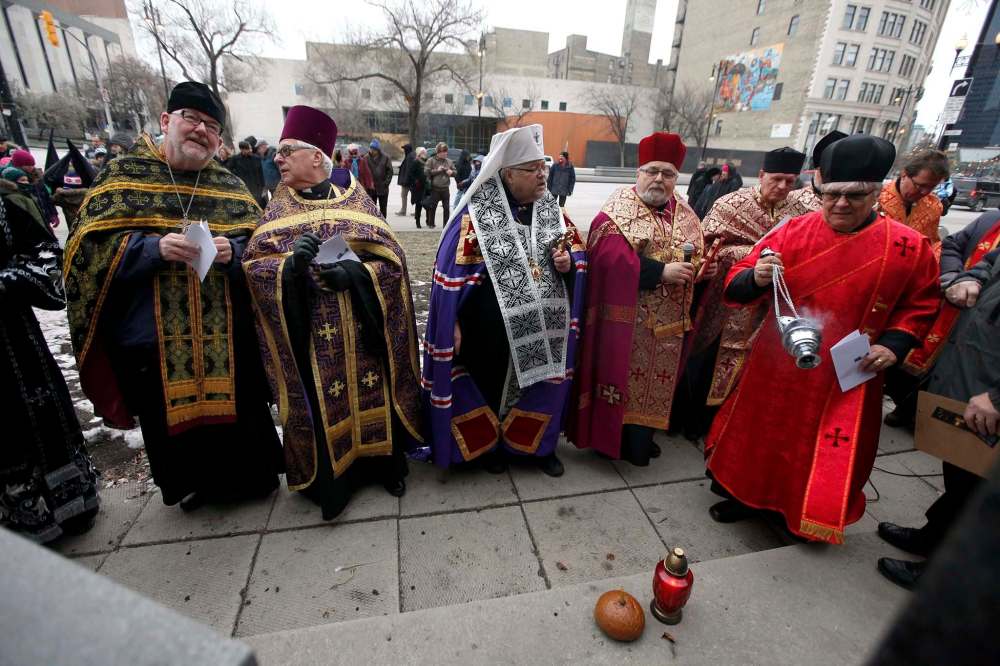
Church leaders intoned commemorative prayers during a traditional Ukrainian service held outside city hall at the foot of one of the first monuments in Canada to mark the horrendous chapter in Ukraine’s history.
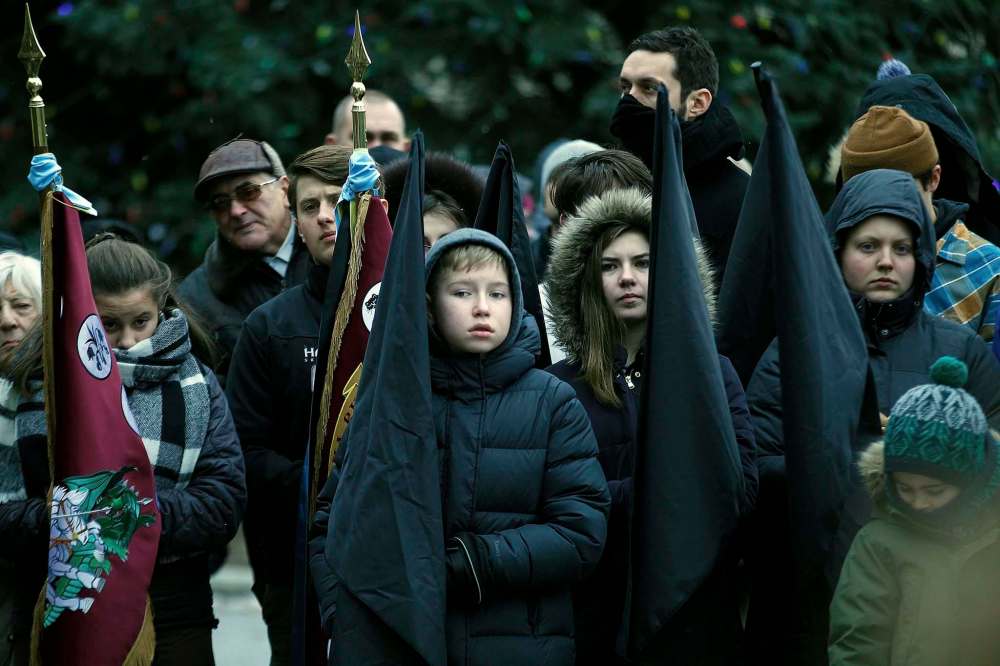
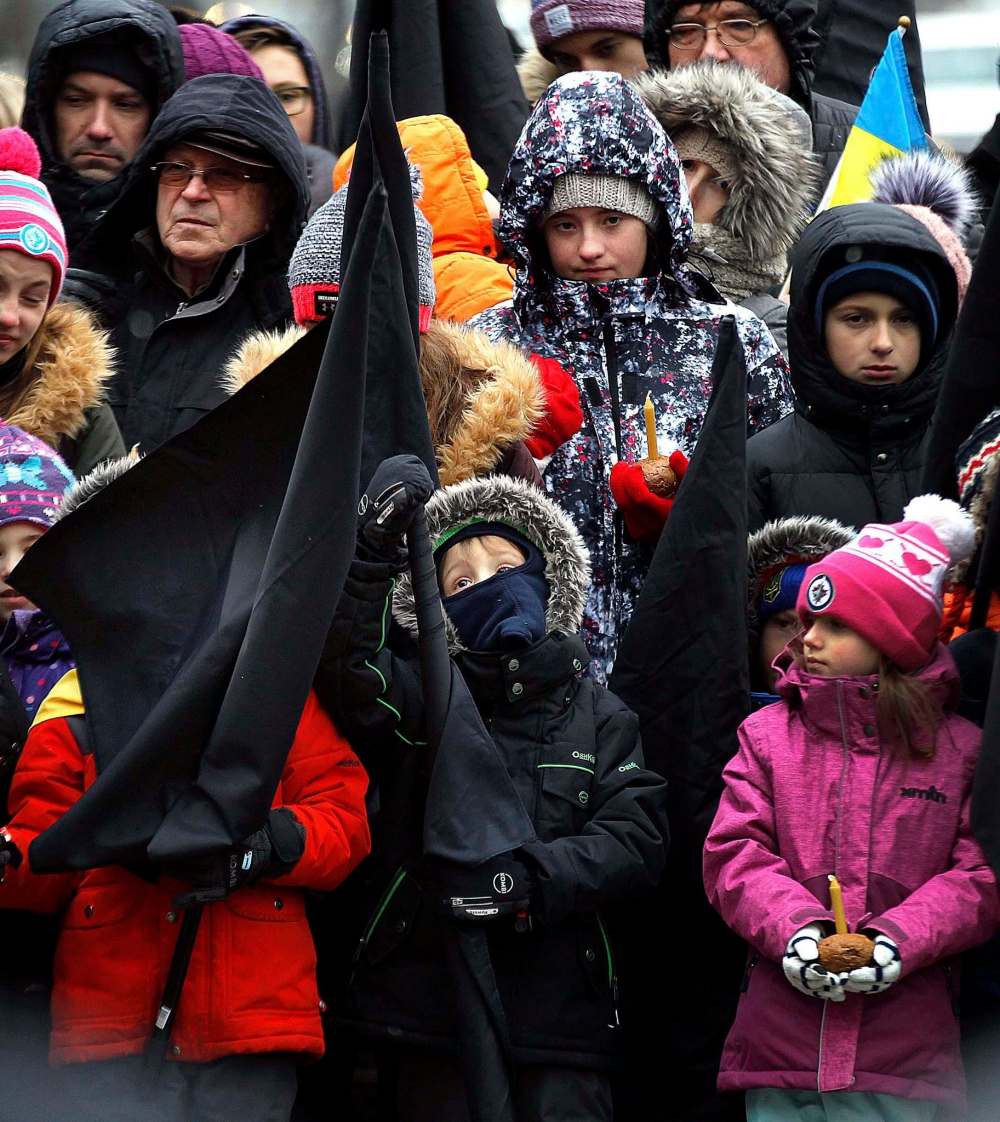
About 150 people from toddlers to seniors stood outdoors under mild but overcast skies, encircling the monument erected to the memory of the famine that was carried out under brutal Soviet laws in 1932 and 1933 and then deliberately concealed by successive regimes for decades.
Two teachers, one from the Seven Oaks School Division and the other from the Winnipeg School Division circulated bookmarks about it among the crowd.
Ukrainian Canadians have been some of the strongest advocates to turn the world’s eyes to the atrocity.
Millions were executed or starved to death under laws that made it illegal for Ukrainians to pick grain from farms in fields known as some of the fertile bread baskets in the world.
Conservative tallies put the dead at 4.5 million. Statisticians who calculated all the children who were never born to women who perished put the tally at nearly double that, as many as seven million dead that one winter.
Schools across Canada now include the chapter as part of their history units for the period between the First World War and the Second World War. Many dictionaries also include the word Holodomor and define it as death by famine.
The commemoration was sombre and deeply religious in tone. Church leaders, including two archbishops from the Ukrainian Roman Catholic and Orthodox churches were draped in liturgical mantles and stood side by side with six other bishops and two deacons.
Their prayer to the memory of the dead was ancient; the same words have book-ended Ukrainian funerals since at least the second or third centuries, repeated faithfully on the eve of funerals and immediately after such services. This time the religious leaders were heard to use the phrase “Holodomor genocide.”
Many in the crowd repeated the prayers with the church leaders.
Holodomor commemorations are always held on the fourth Saturday in November but this year, the event took added meaning because of the 85th anniversary.
“The international significance is all the Ukrainian communities including the diaspora are holding commemorative events,” University of Manitoba theological historian Roman Yereniuk said.
About 100 Ukrainian Canadians, including half a dozen from Winnipeg, travelled to the Ukrainian capital Kyiv for a special congress on the Holodomor and attended the commemorative ceremonies there.
Yereniuk, who is also a member of the Manitoba chapter of the Ukrainian Canadian Congress, said Ukrainian diasporas elsewhere in Canada, and in the United States, Australia, Brazil and Argentina, all made a special effort this year to observe the religious rites for the Holodomor.
The event was Winnipeg’s second in three days. The Manitoba legislature held a similar service along with speeches and a moment of silence on Thursday.
Many of the same people attended the service Saturday.
Manitoba Heritage Minister Cathy Cox, Transcona MLA Blair Yakimoski attended as did city councillor Ross Eadie.

Manitoba Liberal MPs Terry Duguid and MaryAnn Mihychuk and Conservative MP James Bezan were spotted among the crowd.
The event included a colour guard by two youth groups, Plast Winnipeg, which is a Ukrainian Canadian movement much like the Boy Scouts and the Ukrainian Youth Organization.
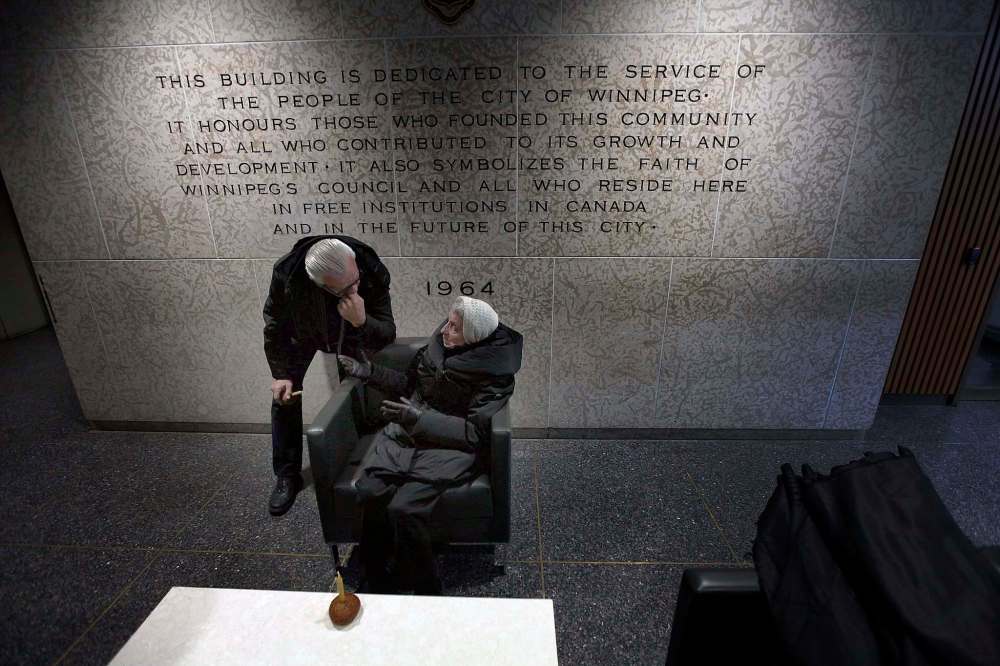
Three of the four survivors of the famine who had attended the province’s event earlier in the week were in attendance Saturday.
Luba Semaniuk, Zena Dlugosh and and Sonia Kushliak were helped to the monument to lay a wreath to close the outdoor commemoration. A reception held inside city hall after the service focused on entertainment from school choirs.
alexandra.paul@freepress.mb.ca
History
Updated on Saturday, November 24, 2018 10:58 PM CST: Edited