

Access to transit key to fighting poverty: study
Investing in transportation must be seen as a public good, group says
Advertisement
Read this article for free:
or
Already have an account? Log in here »
To continue reading, please subscribe:
Monthly Digital Subscription
$1 per week for 24 weeks*
- Enjoy unlimited reading on winnipegfreepress.com
- Read the E-Edition, our digital replica newspaper
- Access News Break, our award-winning app
- Play interactive puzzles
*Billed as $4.00 plus GST every four weeks. After 24 weeks, price increases to the regular rate of $19.95 plus GST every four weeks. Offer available to new and qualified returning subscribers only. Cancel any time.
Monthly Digital Subscription
$4.99/week*
- Enjoy unlimited reading on winnipegfreepress.com
- Read the E-Edition, our digital replica newspaper
- Access News Break, our award-winning app
- Play interactive puzzles
*Billed as $19.95 plus GST every four weeks. Cancel any time.
To continue reading, please subscribe:
Add Free Press access to your Brandon Sun subscription for only an additional
$1 for the first 4 weeks*
*Your next subscription payment will increase by $1.00 and you will be charged $16.99 plus GST for four weeks. After four weeks, your payment will increase to $23.99 plus GST every four weeks.
Read unlimited articles for free today:
or
Already have an account? Log in here »
Hey there, time traveller!
This article was published 07/12/2018 (2694 days ago), so information in it may no longer be current.
A research paper by a left-wing think tank argues governments need to see public transportation and investments in transportation infrastructure as a means to improve lives.
“We need to start thinking about transit and sustainable transportation options as a public good, in the same way we think about libraries, recreational facilities or community clubs,” said Ellen Smirl, author of the report, titled Green Light Go: Improving Transportation Equity in Winnipeg’s Inner City.
“We need to start thinking about it as a way that can improve the lives of everybody… that we should be investing in to improve everyone’s lives.”
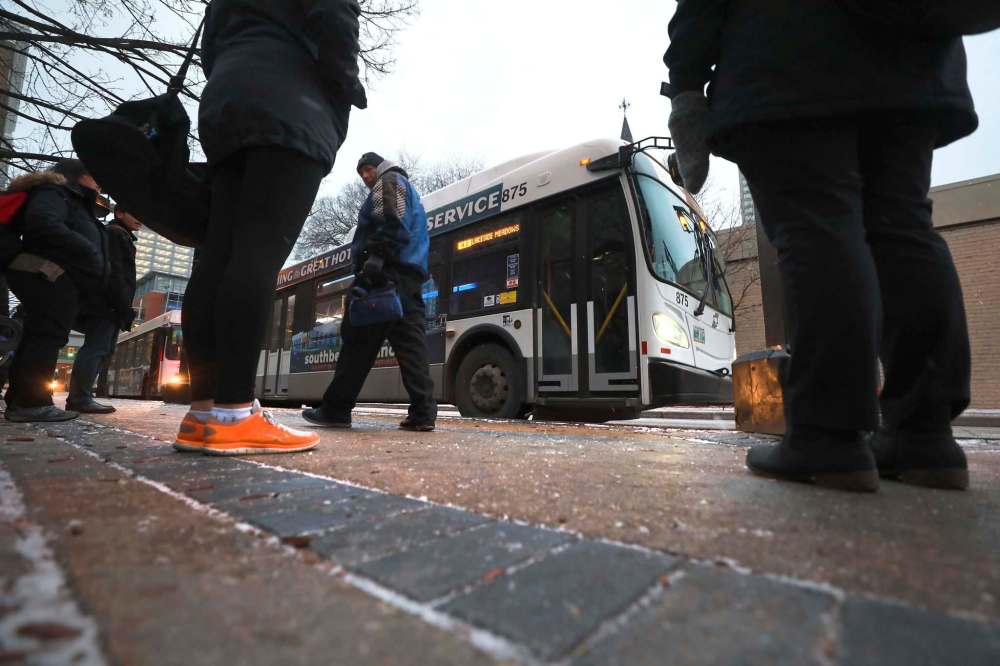
The 31-page study is the 14th annual report on Winnipeg’s inner city, produced by the Canadian Centre for Policy Alternatives — Manitoba
The report argues discussion on transit revolves around the necessity to increase ridership as a way to offset operational costs and to reduce traffic congestion and greenhouse gas emissions, but achieving transportation equity is a good way to combat poverty and inequity.
“Transportation equity argues that everyone, regardless of physical ability, economic class, race, sex, gender identity, age or ability to pay should have access to public transit and active transportation options… If a person can’t afford to get on the bus or it doesn’t take them to where they need to go, it doesn’t matter how close they live to the bus stop or how many lines run through their neighbourhood.”
The report will be formally released today. It was funded, in part, with financial assistance from Assiniboine Credit Union, United Way Winnipeg, Amalgamated Transit Union Local 1505, Manitoba Research Alliance, and Social Sciences and Humanities Research Council of Canada.
Smirl, a lifelong resident of Winnipeg’s inner-city neighbourhoods and a researcher with the group, said for the working poor and the unemployed, access to public transportation is essential to access food, employment, social activities, health care and social services.
However, she found transportation infrastructure — transit, cycling and walking paths — has not been invested in fairly across the city, or with consideration of how the decisions made would affect people from different socioeconomic backgrounds.
The research project was guided with an advisory committee with membership from community-based organizations, Indigenous women and people with disabilities. A town hall discussion session was held at Thunderbird House on Sept. 25. The final report had been peer-reviewed.
Twenty inner-city residents were interviewed, and it was their concerns and suggestions the report is based on: bus fare affordability, transit reliability, scheduling issues, safety and accessibility for seniors and people with disabilities.
The research focused on two questions: how inner-city residents experience transportation inequity and how transportation equity can be achieved.
“By asking these questions, we are stating from the outset that transportation inequity does exist in Winnipeg, both as a symptom as well as a determinant of other inequities,” Smirl said in the report.
“We also argue that transportation inequity is something that must be addressed if we are to improve social determinants of health such as access to jobs, educational outcomes, physical and mental well-being, social connectivity and food insecurity.”

Smirl said bringing equity into the decision-making process today is similar to when the question of accessibility became an issue several years ago.
City hall is often hamstrung with limited financial resources, she acknowledged, adding it’s important the provincial and federal government recognize they have a role to play and need to get involved.
“Any effort to improve access to transportation infrastructure is a positive thing,” Smirl said. “A good place to start is to understand that barriers to accessing transportation affects people… It’s hard to know how big the problem is until you start looking at it.”
aldo.santin@freepress.mb.ca