Little-known among consumers, Huawei has high profile in Canadian tech networks
Advertisement
Read this article for free:
or
Already have an account? Log in here »
To continue reading, please subscribe:

Digital Subscription
One year of digital access for only $205*
- Enjoy unlimited reading on winnipegfreepress.com
- Read the E-Edition, our digital replica newspaper
- Access News Break, our award-winning app
- Play interactive puzzles
*First annual payment billed as $205.00 + GST for one year. This annual subscription will automatically renew at $233.00 + GST every 52 weeks (10% off the regular annual price of $259.35). Offer available to new and qualified returning subscribers only. Cancel any time.
To continue reading, please subscribe:
Add Free Press access to your Brandon Sun subscription for only an additional
$1 for the first 4 weeks*
- Enjoy unlimited reading on winnipegfreepress.com
- Read the E-Edition, our digital replica newspaper
- Access News Break, our award-winning app
- Play interactive puzzles
*Your next Brandon Sun subscription payment will increase by $1.00 and you will be charged $17.95 plus GST for four weeks. After four weeks, your payment will increase to $24.95 plus GST every four weeks.
Read unlimited articles for free today:
or
Already have an account? Log in here »
Hey there, time traveller!
This article was published 08/12/2018 (2819 days ago), so information in it may no longer be current.
TORONTO – Before the arrest of Huawei Technologies’ chief financial officer Meng Wanzhou in Vancouver last weekend, the Chinese company wasn’t a household name in Canada — certainly not in the league of an Apple, Samsung or BlackBerry.
However, the Chinese tech giant considered by several of Canada’s allies as a security threat has quietly established itself as an important provider of technology essential to Canada’s telecom infrastructure, a situation that is not likely to change any time soon.
Huawei’s share of the Canadian smartphone market has been tiny — about 3.8 per cent, according to market research from IDC Canada — but outside of Canada the company is a juggernaut, overtaking Apple earlier this year in smartphone sales and employing more than 170,000 people around the world.
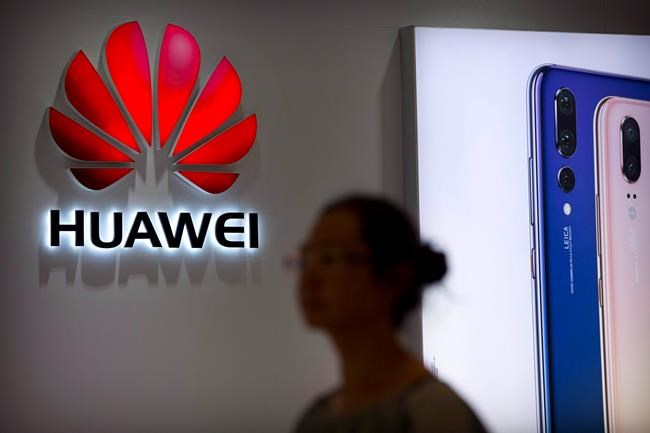
Founded in 1987 by a former officer of the Chinese People’s Liberation Army, the company has grown at an explosive rate over the past ten years and is projected to post sales of more than US$102 billion in 2018.
For Canada’s telecom industry and the federal government in Ottawa, Huawei has long been known as an important equipment supplier — one that U.S. officials consider a significant threat to national security.
That’s largely because Huawei is a major supplier of the equipment needed for wireless networks that could potentially be used to gather sensitive information for the Chinese government.
“There is ample evidence to suggest that no major Chinese company is independent of the Chinese government and Communist Party — and Huawei, which China’s government and military tout as a ‘national champion’ is no exception,” U.S. Senators Mark Warner and Marco Rubio wrote in October in a letter to Prime Minister Justin Trudeau.
However, Canadian officials and representatives of major telecom companies have maintained that they have put safeguards in place — long ago, and before the American alarm — to ensure Huawei isn’t a security or privacy threat.
Like Canada, the United Kingdom hasn’t moved to ban Huawei from doing business with their networks — despite U.S. warnings that they may be jeopardizing the “Five Eyes” intelligence gathering partnership.
Lawrence Surtees, vice-president for communications research at IDC Canada, says Britain and Canada are the second and third most important Five Eyes partners after the United States and ahead of Australia and New Zealand.
“My take is, both Ottawa and London are in a position to say … we do lots with you in the intelligence sharing and we’re not going to jeopardize our networks. We know what to do.”
Surtees says Huawei equipment has already been used in at least five Canadian wireless networks that use fourth-generation LTE technology, and it would be expensive to replace.
Huawei is also working with Bell and Telus to develop equipment for 5G wireless networks that are expected to become increasingly vital to carriers and their customers over the next decade.
“The magnitude of the contracts that Huawei has here would be a factor, with the Canadian carriers saying to Ottawa that it’s kind of too late now,” Surtees says.

There are very few alternative suppliers of 5G network equipment to chose from, he adds.
Ericsson of Sweden, the main equipment supplier for the Rogers wireless networks, and Nokia of Finland are also global players in Canada but Surtees considers Huawei to be the market leader.
It has been in operation in Canada since 2008, and currently employs about 960 people in this country — about 600 in research and development.
Huawei’s Canadian head office is in the Toronto area in Markham, Ont. while its Canada Research Centre is based in Ottawa. The company also has research facilities in Markham, Waterloo, Ont., Montreal, Vancouver and Edmonton.
Huawei also makes smartphones for current wireless networks, sold in Canada by Bell, Rogers, Telus, and Videotron under their main brands as well as some secondary brands such as Virgin Mobile, Fido and Koodo.
Related Articles
Security paramount in Huawei review: minister
Advertisement Advertise With Us
Advertisement Advertise With Us