WEATHER ALERT

US Border Patrol Museum opens a world on the evolving agency

Advertisement

Advertise with us

EL PASO, Texas - For many Mexican-Americans living near the U.S.-Mexico border, the U.S. Border Patrol was viewed as a federal government agency to be feared. Its agents might raid the factory where you worked, question your citizenship status at checkpoints, and detain you if an agent thought you were in the country illegally or were hiding drugs.

Read this article for free:

or

Already have an account? Log in here »

To continue reading, please subscribe:

Subscribe and receive a limited-edition Free Press branded hat or tote.

Digital Subscription

One year of digital access for only $205*

  • Enjoy unlimited reading on winnipegfreepress.com
  • Read the E-Edition, our digital replica newspaper
  • Access News Break, our award-winning app
  • Play interactive puzzles

*First annual payment billed as $205.00 + GST for one year. This annual subscription will automatically renew at $233.00 + GST every 52 weeks (10% off the regular annual price of $259.35). Offer available to new and qualified returning subscribers only. Cancel any time.

To continue reading, please subscribe:

Add Free Press access to your Brandon Sun subscription for only an additional

$1 for the first 4 weeks*

  • Enjoy unlimited reading on winnipegfreepress.com
  • Read the E-Edition, our digital replica newspaper
  • Access News Break, our award-winning app
  • Play interactive puzzles
Start now

*Your next Brandon Sun subscription payment will increase by $1.00 and you will be charged $17.95 plus GST for four weeks. After four weeks, your payment will increase to $24.95 plus GST every four weeks.

Hey there, time traveller!
This article was published 09/01/2019 (2756 days ago), so information in it may no longer be current.

EL PASO, Texas – For many Mexican-Americans living near the U.S.-Mexico border, the U.S. Border Patrol was viewed as a federal government agency to be feared. Its agents might raid the factory where you worked, question your citizenship status at checkpoints, and detain you if an agent thought you were in the country illegally or were hiding drugs.

To some Latinos, the work of the U.S. Border Patrol seemed racialized.

A museum dedicated to the history of the U.S. Border Patrol seeks to give a more complex view of a once unknown agency that rose from obscurity to become one of the nation’s most powerful arms of law enforcement. The privately funded museum in El Paso, Texas — near one of the busiest U.S. ports of entry — attempts to piece together its history as the nation’s views on immigration, travel and border security have changed.
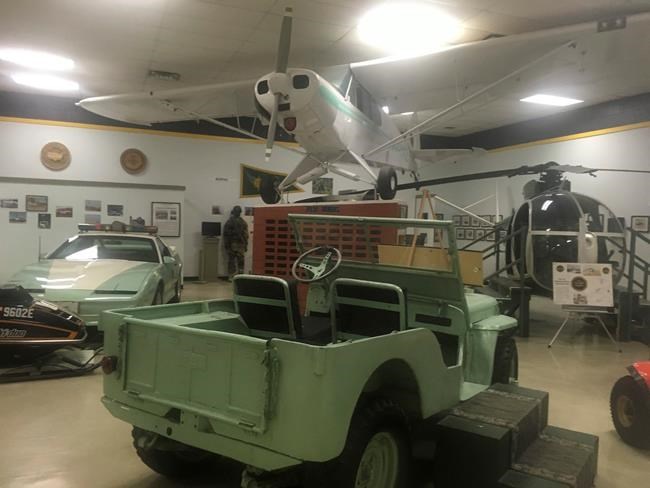
In this Nov. 29, 2018 photo, a vintage U.S. Border Patrol vehicle sits in a museum for the border patrol in El Paso, Texas. The U.S. Border Patrol Museum explores the story from the agency's formation to fight Chinese immigration and Prohibition, to its role amid massive migration and cartel drug smuggling. (AP Photo/Russell Contreras)

Using photos, artifacts, newspaper clippings and even movie posters, the U.S. Border Patrol Museum explores the story from the agency’s formation — to fight Chinese immigration and enforce Prohibition — to its current role at a time of massive migration, cartel drug smuggling and political skirmishes.

Museum visitors learn about some of the challenges agents faced over the years, from rudimentary equipment to lack of jurisdiction. Mounted horsemen and poorly assembled vehicles gave way to high-tech helicopters and surveillance accessories as expectations of the agency increased.

Visitors can even jump into a retired helicopter and an all-terrain vehicle.

The evolution of the border-patrol uniform alone — from something resembling the mythic Old West lawman to today’s heavily armed agent in a post-Sept. 11 world — shows how the agency became professionalized over a century.

Also on display are a rope ladder used by an alleged smuggler to climb over a border wall, and tools from an underground tunnel discovered in San Luis, Arizona.

There’s a raft made out of scrap metal, tire tubes and blue canvas used by Cuban migrants attempting to land in Florida. (Interestingly, the raft’s exhibit is called “Voyage to Freedom,” while exhibits about immigration from Mexico focus on border enforcement).

Congress created the U.S. Border Patrol in 1924, and the agency slowly grew as its mission transformed. Emmanuel Avant “Dogie” Wright and a handful of others were some of the first agents hired to guard nearly 2,000 miles (3,200 kilometres) of the southern border.

Kelly Lytle Hernandez, a University of California, Los Angeles history professor and author of “Migra!: A History of the U.S. Border Patrol” (University of California Press, 2010), says that initially there were no restrictions on Mexican immigration because U.S. agricultural growers wanted a steady stream of workers. That, of course, would change.

For the most part, the museum does a fair job of explaining the agency’s metamorphosis. However, it downplays the corruption and mismanagement of its early days, and its role in discriminating against Mexican-Americans along the border that federal courts were forced to halt thanks to various challenges.

For example, in 1992 a federal judge ruled that the U.S. Border Patrol had violated the rights of Mexican-American students at Bowie High School in El Paso by repeatedly stopping them to ask about citizenship status. The border patrol was forced to change some of its tactics and focus on aggressive patrols along the El Paso area, focusing migrants to change their routes to the more unforgiving Arizona desert.

There also are some surprises.

Documents and photos illustrate the role the U.S. Border Patrol played in the Civil Rights Movement. In 1962, for example, Attorney General Robert Kennedy requested that 300 border patrol agents come to support U.S. Marshals working to ensure that black student James Meredith be allowed to enrol at the previously segregated University of Mississippi. Violence ensued, and 77 Border Patrol agents were injured.
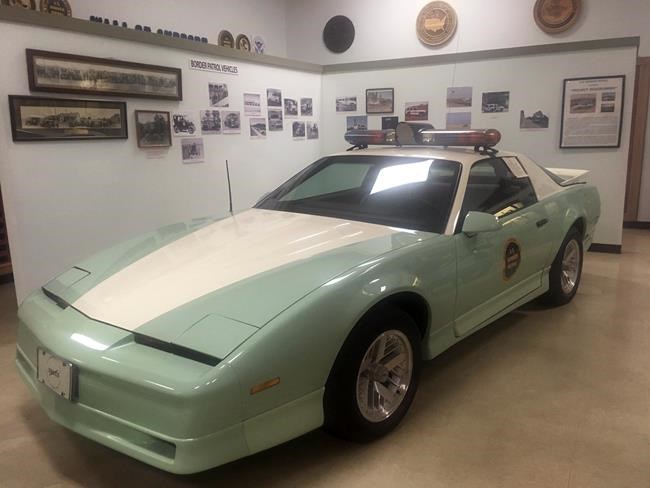
In this Nov. 29, 2018 photo, a vintage U.S. Border Patrol vehicle sits in a museum for the border patrol in El Paso, Texas. The U.S. Border Patrol Museum explores the story from the agency's formation to fight Chinese immigration and Prohibition, to its role amid massive migration and cartel drug smuggling. (AP Photo/Russell Contreras)

A wall honours agents killed in the line of duty. In the early days, most of those agents were white. By the 1990s, most of those killed were Hispanic.

The U.S. Border Patrol Museum receives no federal funding and operates on donations. It’s an excellent introduction to an agency that remains little known to most Americans, beyond soundbites and quick images on cable news.

___

If You Go…

THE U.S. BORDER PATROL MUSEUM

Located: 4315 Woodrow Bean Transmountain Road, El Paso, Texas.

Open Tuesday to Saturday 9 a.m. to 5 p.m. Admission is free.

___

Associated Press journalist Russell Contreras is a member of the AP’s race and ethnicity team. Follow Contreras on Twitter at http://twitter.com/russcontreras
Report Error Submit a Tip

More Stories

Sultans one win away from MJBL three-peat

Cassidy Dankochik 3 minute read Preview

Sultans one win away from MJBL three-peat

Cassidy Dankochik 3 minute read Yesterday at 6:31 PM CDT

A small delay due to lightning didn’t slow down the Carillon Sultans as they stormed into Koskie Field and defeated the Elmwood Giants 12-0 Sunday to take a 2-0 series lead in the Manitoba Junior Baseball League final.

Across the first two games of the best-of-five series, Carillon has a 27-5 run advantage after a similar offensive output during Game 1 in Steinbach on Friday. The Giants and Sultans have played in the finals the past three seasons, with Carillon winning both previous years.

The Sultans offence was quick to strike, plating eight runs in the top of the second inning. Anders Meilleur cleared the bases with a three-run double to start the barrage, with Dayton Christensen crushing a three-run home run to left-centre to cap off the inning.

“If we get on a roll in an inning, it’s contagious,” head coach Don Meilleur said. “We don’t hurt teams by getting one or two runs an inning, we hurt teams because we put up a crooked number most of the time and today was the perfect example… Anybody on that bench and anybody in the lineup can hurt another team. We just always find ways to get somebody to be a hero.”

Read
Yesterday at 6:31 PM CDT

An eroding Winnipeg neighbourhood looks to new foundations

Ian Bickis, The Canadian Press 5 minute read Preview

An eroding Winnipeg neighbourhood looks to new foundations

Ian Bickis, The Canadian Press 5 minute read Updated: Yesterday at 1:34 PM CDT

WINNIPEG - The lot Jesse Bettcher lives on in Winnipeg's north end used to be a pile of burnt rubble. Same with the one next door. And the one across the street.

But he's now the proud owner of a two-storey house with blue-grey siding and white trim, so new the orange construction fencing is still out front.

It's a dream home for Bettcher, and the latest hope for a city seeking to knock down, clean up and revitalize neighbourhoods that have seen hundreds of homes left vacant, leading to safety hazards and worries about the future.

He bought the house as part of a pilot project aimed at creating affordable home ownership. It let him and his family move out of a rental that he said was falling apart.

Read
Updated: Yesterday at 1:34 PM CDT

Dropping the gloves to make the point

Editorial 4 minute read Preview

Dropping the gloves to make the point

Editorial 4 minute read Saturday, Jul. 25, 2026

In hockey parlance, it’s called “shedding,” the moment in a game when you are forced to deal with an instigator by dropping (shedding) your gloves for an all-out brawl.

That term is a deep cut from hockey culture that Prime Minister Mark Carney — he of the “elbows up” phenomenon — may need to not only embrace but practise more often in the face of yet another round of overly punitive tariffs imposed by United States President Donald Trump.

To be fair, under Carney’s leadership, Canada has not exactly rolled over in the face of Trump’s bully-boy tactics.

Yes, Canada has made concessions to placate Trump to further a new continental trade agreement: investing more money to combat the cross-border flow of fentanyl that isn’t actually happening, stalling efforts to tax streaming companies as most European countries already do, and — most recently — giving Trump a cut of profits from the Canadian-made, Canadian-paid Gordie Howe bridge between Windsor and Detroit.

Read
Saturday, Jul. 25, 2026

Bombers’ offence, defence, and special teams fail to show up against Stampeders

Taylor Allen 6 minute read Preview

Bombers’ offence, defence, and special teams fail to show up against Stampeders

Taylor Allen 6 minute read Saturday, Jul. 25, 2026

The Winnipeg Blue Bombers constantly preach the importance of playing three-phase football.

On Friday night, they went 0-for-3.

Their offence, defence, and special teams all played a significant role in losing 52-30 to the visiting Calgary Stampeders.

The team that erased a 17-point deficit to beat Ottawa last Sunday was nowhere to be found.

Read
Saturday, Jul. 25, 2026

Automation reaches new heights on farm

Laura Rance-Unger 4 minute read Preview

Automation reaches new heights on farm

Laura Rance-Unger 4 minute read Saturday, Jul. 25, 2026

LANGHAM, Sask. — The thousands of farmers from across the Prairies who flock to the annual Ag in Motion show every July seem oblivious to the possibility the technology on display could one day replace many of them.

Families with children in tow, Hutterite colony workers, grandparents and young couples just starting out roamed through the 600 or more exhibitor displays, amazed at how everything about farming just keeps getting bigger, more efficient and increasingly more automated.

It’s now possible to seed using a 100-foot-wide drill — a 12-foot jump over the widest available a few years ago — provided the farmer can afford a tractor with enough horsepower to pull it. Those sell for around $850,000 and up.

Granted, the number of farms with enough acres to justify that kind of width and drawing power is still relatively small, but farms continue to grow. And it’s no secret the number of people who have the interest, skills and financial wherewithal to run them continues to shrink.

Read
Saturday, Jul. 25, 2026

Ref ‘dominates’ game in Sea Bears loss to Honey Badgers, says coach

Joshua Frey-Sam 7 minute read Preview

Ref ‘dominates’ game in Sea Bears loss to Honey Badgers, says coach

Joshua Frey-Sam 7 minute read Saturday, Jul. 25, 2026

Following a festive Christmas-in-July-themed Saturday afternoon inside Canada Life Centre, Winnipeg Sea Bears head coach Mike Raimbault didn’t mince words about who he thought was the Grinch in a hard-fought 88-86 loss to the visiting Brampton Honey Badgers that ended in controversy.

As the Sea Bears owned a one-point lead in Target Score Time, Brampton guard Sean East II was awarded three free throws — all of which he converted — after a questionable foul called on Teddy Allen by official Perry Stothart.

Raimbault, who has been known to bite his tongue on such topics, left nothing to the imagination about where he stood on the game-deciding judgment made in a game that had major post-season implications.

“I just felt like it was a fitting ending to the game where Perry Stothart had dominated the flow of the game from the start,” he said. “For him to call a bit of a guess foul and end the game on the foul, I felt like it’s disappointing that he can come in and dictate how the game’s going to be played and flow, and (that) continues to be a bit of an M.O. for him. So I think we’re disappointed with the fact that the league continues to let that happen.”

Read
Saturday, Jul. 25, 2026