

Military cadet programs slow to address inappropriate sexual behaviour, former leader says

Advertisement
Read this article for free:
or
Already have an account? Log in here »
To continue reading, please subscribe:

Digital Subscription
One year of digital access for only $205*
- Enjoy unlimited reading on winnipegfreepress.com
- Read the E-Edition, our digital replica newspaper
- Access News Break, our award-winning app
- Play interactive puzzles
*First annual payment billed as $205.00 + GST for one year. This annual subscription will automatically renew at $233.00 + GST every 52 weeks (10% off the regular annual price of $259.35). Offer available to new and qualified returning subscribers only. Cancel any time.
To continue reading, please subscribe:
Add Free Press access to your Brandon Sun subscription for only an additional
$1 for the first 4 weeks*
- Enjoy unlimited reading on winnipegfreepress.com
- Read the E-Edition, our digital replica newspaper
- Access News Break, our award-winning app
- Play interactive puzzles
*Your next Brandon Sun subscription payment will increase by $1.00 and you will be charged $17.95 plus GST for four weeks. After four weeks, your payment will increase to $24.95 plus GST every four weeks.
Read unlimited articles for free today:
or
Already have an account? Log in here »
Hey there, time traveller!
This article was published 02/02/2019 (2769 days ago), so information in it may no longer be current.
Complaints of sexual misconduct within military cadet programs in Manitoba and beyond prompted mandatory training for cadet instructors about professional boundaries — a step toward upending what one former cadet says is a culture of “turning a blind eye” to inappropriate relationships within those organizations.
Lori Armitage was a 14-year-old sea cadet in the 1980s when an instructor in his 20s pursued a sexual relationship with her. In an interview with the Free Press, Armitage said she realized as an adult the relationship was an abuse of his power, it was “not OK,” and that 30 years later, the problem continues.
“It’s common,” she said. “If you were a single guy, then it was acceptable that you could date your cadets. Not that anybody said, ‘You can date your cadets,’ because they didn’t. But nobody stopped it, either.”
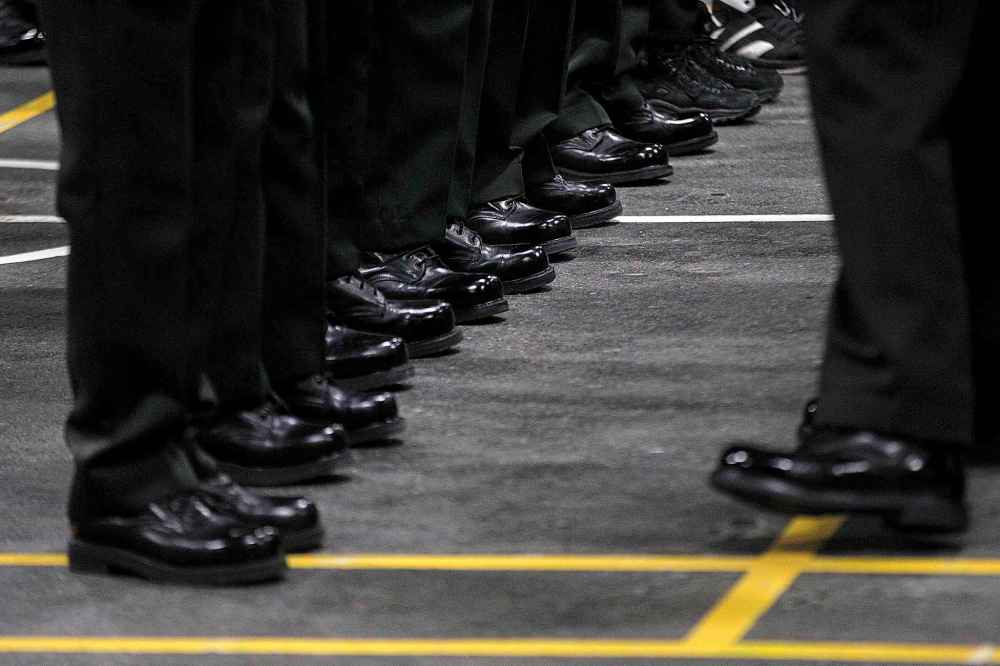
Armitage was involved with the cadet program for 28 years until 2005. During her years with the organization, she said there was an attitude of unspoken approval toward officer-cadet relationships she encountered personally as a teen — and tried to dismantle as a former Manitoba divisional commander with the Navy League of Canada, which oversees cadet programs for children up to age 12, before they can move on to sea cadet programs under the Canadian Armed Forces.
“There are always those who are in it for the right reasons, who realize that this kind of behaviour is unacceptable, but there becomes this fear of rocking the boat,” she said.
Earlier this week, Peter Schaefer, a 49-year-old cadre officer and instructor with the Royal Canadian Sea Cadet Corps — Crusader in Winnipeg, was sentenced to 3 1/2 years in prison for sexually exploiting a 17-year-old girl, with whom he fathered a child in 2016.
He met the girl through the cadet program and was one of her supervising officers before she reached out to him on social media and they began dating. It’s an example of the kinds of cases that have caused widespread concern about sexual misconduct between adult military-affiliated leaders and the youth they are supposed to look after.
The Canadian Armed Forces’ National Cadet and Junior Canadian Rangers Support Group says this is not a long-standing or widespread problem, and there were two reports each in 2017 and 2018 of inappropriate sexual behaviour between adult staff members and cadets.
However, complaints from concerned parents led the Canadian Centre for Child Protection to offer dedicated training to cadet programs, and the Armed Forces made the eight-session online training mandatory for all members and civilian instructors, as of June 2018. The Commit to Kids training includes information on grooming behaviour to watch out for, standards for establishing professional boundaries — such as not contacting youth after hours or on social media without authorization — and recognizing when other authority figures have overstepped those bounds.
Noni Classen, director of education with the Winnipeg-based child protection centre, said her organization looked into what was happening with cadet programs after hearing about misconduct from parents and other organizations in the city and elsewhere in Canada.
“The impetus was cases that were coming to our attention where leaders were misusing their positions of authority and sexually exploiting children or the youth that they were working with, or if it didn’t get to that level, engaging in harmful contact with kids — even if they weren’t charged with sexual exploitation — that was of a sexualized nature,” she said.
“This is not specific to cadets. This is a problem that youth organizations need to be looking at, and they have a responsibility to be looking at what systems are they putting in place to safeguard children beyond criminal record checks.”
Professional boundaries are key, Classen said.
“If they’re getting access to kids through their employment, it’s privileged access,” she added.

“It doesn’t just move from that contact they have through their employment to move freely outside of that without any authorization. That creates risk for children.”
Incidents of inappropriate sexual behaviour between adult military members and youth cadets “is not something that happens frequently,” said Capt. Amber Lawson, public affairs officer National Cadet and Junior Canadian Rangers Support Group. She said the organization takes each incident seriously and isn’t “sitting back.”

“We are constantly evolving as an organization to ensure that we are creating the safest space possible. So we are continuing to educate our staff, we are continuing to take immediate action if we hear of any of these incidents and move forward with a zero-tolerance policy on any of that… We continue to educate more on needs of today’s youth, and we’re focused on an environment where our cadets do feel safe.”
Armitage said she’s supportive of increased training, but is disheartened not enough has changed since she was a cadet.
“Why would you need to tell grown-up men it’s not OK to sleep with 17-year-old girls or 15-year-old girls? You shouldn’t have to.”
katie.may@freepress.mb.ca
Twitter: @thatkatiemay
Katie May is a multimedia producer for the Free Press.
Our newsroom depends on a growing audience of readers to power our journalism. If you are not a paid reader, please consider becoming a subscriber.
Our newsroom depends on its audience of readers to power our journalism. Thank you for your support.
A military administrative review is ongoing for a 49-year-old former cadet instructor who was sentenced to prison this week, but it’s still unclear how the Winnipeg man passed the screening process in the first place.
Despite leaving the military after he was convicted of assault and assault causing bodily harm in 1997, Peter Schaefer re-enrolled to become involved in the sea cadets program in November 2014, an Armed Forces public affairs officer confirmed. That’s where he met the teen girl he admitted sexually exploiting over the course of several months until she became pregnant.
He pleaded guilty and was sentenced in Winnipeg provincial court Wednesday to 3 1/2 years in prison. Schaefer was suspended from the cadet program in March 2016, after the allegations came to light.
It’s unclear how he was able to pass through the screening process to become an instructor two years earlier. His past criminal convictions, which involved a drunken assault in a bar while he was serving in the military in 1996, were deemed to be sexual in nature. He received a suspended sentence, with two years of probation.
Capt. Amber Lawson confirmed the Canadian Armed Forces is reviewing the circumstances of this case, and said it would be inappropriate to comment further.
From 1991 to 1997, Schaefer was a member of the primary reserves. He then enrolled as a member of the Cadet Instructors Cadre, a sub-component of the Reserve Force, in November 2014 and began a relationship with the 17-year-old girl in 2015. The teen, who gave birth to a daughter in 2016, believed the relationship was consensual at the time, but she was present in court while Schaefer was sentenced and denounced for committing a breach of trust.
The girl’s mother called for societal change while reading her victim-impact statement in court.
“My hope is this court and this country see the cycle needs to stop and that we have to protect the children… Parents should be able to send their children to safe places and should not have to worry that there are predators waiting for them.”
— Katie May
Katie May is a multimedia producer for the Free Press.
Our newsroom depends on a growing audience of readers to power our journalism. If you are not a paid reader, please consider becoming a subscriber.
Our newsroom depends on its audience of readers to power our journalism. Thank you for your support.
Related Articles
Record checks fail to screen cadet leader who exploited teen
Advertisement Advertise With Us
Advertisement Advertise With Us