

PIRATES, LEGENDS & FLOWERS
Britain's Scilly Isles a quaint, unhurried throwback to another age
Advertisement
Read this article for free:
or
Already have an account? Log in here »
To continue reading, please subscribe:
Monthly Digital Subscription
$1 per week for 24 weeks*
- Enjoy unlimited reading on winnipegfreepress.com
- Read the E-Edition, our digital replica newspaper
- Access News Break, our award-winning app
- Play interactive puzzles
*Billed as $4.00 plus GST every four weeks. After 24 weeks, price increases to the regular rate of $19.95 plus GST every four weeks. Offer available to new and qualified returning subscribers only. Cancel any time.
Monthly Digital Subscription
$4.99/week*
- Enjoy unlimited reading on winnipegfreepress.com
- Read the E-Edition, our digital replica newspaper
- Access News Break, our award-winning app
- Play interactive puzzles
*Billed as $19.95 plus GST every four weeks. Cancel any time.
To continue reading, please subscribe:
Add Free Press access to your Brandon Sun subscription for only an additional
$1 for the first 4 weeks*
*Your next subscription payment will increase by $1.00 and you will be charged $16.99 plus GST for four weeks. After four weeks, your payment will increase to $23.99 plus GST every four weeks.
Read unlimited articles for free today:
or
Already have an account? Log in here »
Hey there, time traveller!
This article was published 11/07/2009 (6117 days ago), so information in it may no longer be current.
OFF WITH HER HEAD!”
The words of the Queen of Hearts in that famous classic, Alice in Wonderland, flashed momentarily in my subconscious as I ducked low under the whirling blades of the Sikorsky helicopter at Penzance Heliport.
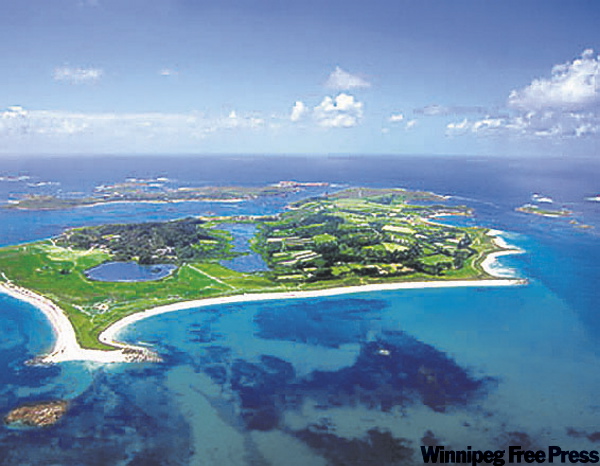
We were bound for Tresco, the second-largest of the Isles of Scilly, 45 kilometres off the coast of England. In all, this tiny archipelago comprises close to 100 islands. The largest, St. Mary, is close to four kilometres by three kilometres; the smallest, just a rock with maybe standing room for a puffin or two. Size, though, is inconsequential on Scilly. To Scillonians, if it shows above the waterline, an island it is.
Small but crammed with interest, Scilly was once a haven for smugglers. With its plethora of megalithic barrows, archeologists believe there was a time when the islands were considered sacred and used as a vast burial site for English kings.
On Tresco, mermaids are said to inhabit a haunted cave called Piper’s Hole. A story circulates that the rocky outcrops in the sea around the main islands are the peaks of submerged Lyonnesse, the land once ruled by the legendary King Arthur and his Queen, Guinevere.
Way back in the early 16th century, the islands were owned by the Duchy of Cornwall. Acquiring the leasehold in 1834, Augustus Smith, a wealthy Hertfordshire banker, set about building his own island empire. From then on, he became lord of all he surveyed, and in payment for the privilege, he abided by a quaint English custom by paying the Duchy of Cornwall a peppercorn rent of 300 puffins a year. For this minuscule fee, his family was granted the right to enjoy a lifestyle akin to that of royalty for hundreds of years to come.
Today, overlooking his domain, Robert Dorrien-Smith, a descendant of Augustus Smith, resides with his family in the massive granite manor house built by Augustus those many years ago. No longer recognized as the Lord Proprietor of the islands, for most of the islands have reverted to the former landlord, he still owns the island of Tresco.
With its pollution-free seas and clean, sandy beaches, this Island of Flowers, as it is called, attracts thousands of holiday-makers each summer.
Above-average temperatures compare favourably with those of Spain, Portugal, Italy and Greece. Transport on some of the islands is rustic, but that only adds to their charm. To get around on Tresco, we hitched a ride on a wagon pulled by a farm tractor, rode bicycles rented from a local entrepreneur, and walked.
Inter-island travel is by motor launch, so if it’s an evening pub visit to St. Martin or a trip across to St. Mary on a Wednesday to cheer in the winners of the traditional gig races, a mini sea trip starting at the dock close to the Island Hotel is the way to go.
Of Scilly’s 100 or so islands, only the largest five are occupied. A resident population of nearly 2,000 is spread out between St. Mary, Tresco, St. Martin, Bryher and St. Agnes.
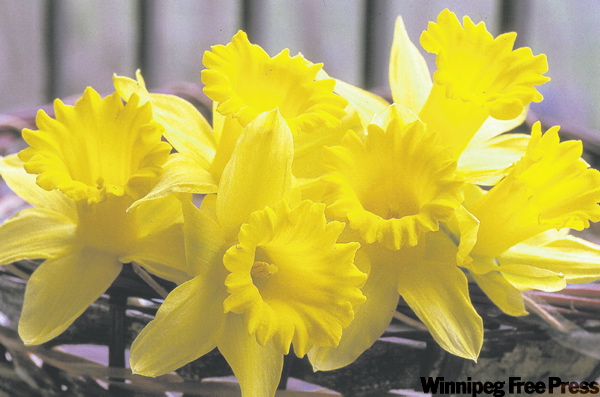
St. Mary is the centre of a thriving flower-growing industry. From Christmas onwards, life is all go in the patchwork fields of early spring bulbs that blanket the landscape. Scilly’s daffodils are often the first spring flowers available in the lucrative European market.
Bryer is a godsend for birds making their way south to warmer climes as winter steals into their summer habitat. Bypassing Hell Bay, where in the fall fierce gales whip the waves into a spray-spattered fury, Bryer’s east coast across the channel from Tresco is tranquil and welcoming to weary flyers.
Blown across the Atlantic from the Americas, migrating butterflies find sanctuary and rest on the island of St. Agnes.
On St. Martin, walkers amble along pathways that meander between low cottages. Whereas Europe’s seaside resorts are crammed with humanity, St. Martin’s crescent beaches stretch to the horizon, pristine and sparsely populated.
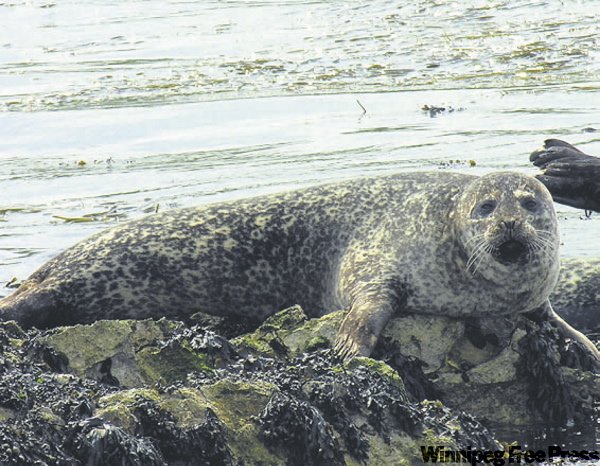
On the outer rim of the Scillies, the rocky, desolate shores of uninhabited islands provide ideal nesting sites for puffins and other seabirds. When the breeding season is imminent, hundreds of grey Atlantic seals emerge from the sea, gathering in rowdy colonies close to the water’s edge. Amazingly, in this densely packed community each mother knows the cry and the smell of her own pup.
For a change of scenery, when the seas pull back at low tide, one can stroll across a dimpled seabed to neighbouring White Island. Be it autumn, spring or summer, tourists and the locals sail, cycle and wander across sand dunes, in woodlands and on heaths dappled with wild flowers.
A swim in St. Agnes’s Beady Pool may, if you are lucky, yield a sand-polished bead or two from a 17th century shipwreck.
Unlike the mainland, where vehicles from Jaguars to Morris Minors occupy driveways, here on car-free Tresco fishing boats rest on wooden cradles alongside neatly stacked lobster pots. The wild scream of gulls replaces the gentle twitter of sparrows. The sea wind, be it breeze or roaring gale, is a constant presence.
On the fleet of 35 boats owned by local fishermen, traditional pots are used to catch lobster, crab and crawfish. When the fleet comes in, it is not uncommon for a fisherman to arrive at the Island Hotel kitchen with a blue shark in a wheelbarrow. "How much will you give me for this, chef?" he asks, and a suitable payment changes hands.
Sipping sherry before dinner at the Island Hotel on our first night in Tresco, we were told of the basking shark, close to 12 metres long, that had followed the supply ship across from the mainland that evening. These gentle giants are often seen gliding languidly in the bay close to the hotel.
At the onset of night, we watched the intermittent flash of the Scilly Light as it warned seagoing vessels of the treacherous coast. Tresco, at that moment, was tranquil, a place of wheeling gulls, mists and creamy beaches where shallow waves rimmed the smooth sand with a delicate, lacy foam, then slipped silently back, leaving behind ribbons of brown and olive seaweed.
Calm as it was that night, there are times when beautiful Scilly, without warning, turns into a raging bull of torrential rain, lightning and fog. Whipped by hurricane-force winds, hundreds of sailing ships have perished over the centuries on a coast guarded by a mountainous terrain just inches below the surface of the sea.
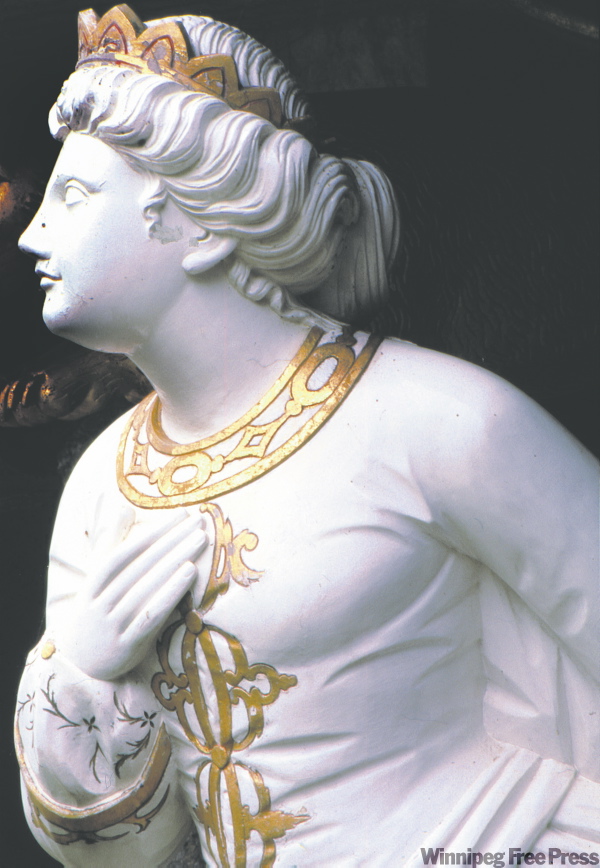
Bearing testament to those times is the National Maritime Collection of Ship’s Figureheads housed in Valhalla, an open-air museum in Tresco’s Abbey Garden. Numerous nostalgic female figures, sailors wielding swords, plump cherubs and a bearded Turk rescued from the "Bosphorus," wrecked off the Scillies in 1880, are a wonderful representation of this ancient craft.
Monks are believed to have lived on Scilly from 1042. They finally abandoned the islands after frequent attacks by pirates. But there were, in fact, even earlier visitors to Tresco. A Roman gravestone in the Abbey Gardens dates from the 5th century AD.
At the entrance to the Abbey Garden is the ruin of an old Benedictine abbey. Its ancient stone walls, crumbling with age, provide rooting pockets for brilliantly coloured mesembreanthemums and plump green succulents. Its skeleton, pitted with large and small cavities, acts as a support for a rampant honeysuckle and a glorious shower of blue when the Convolvulus mauratanicus is in flower at the height of summer.
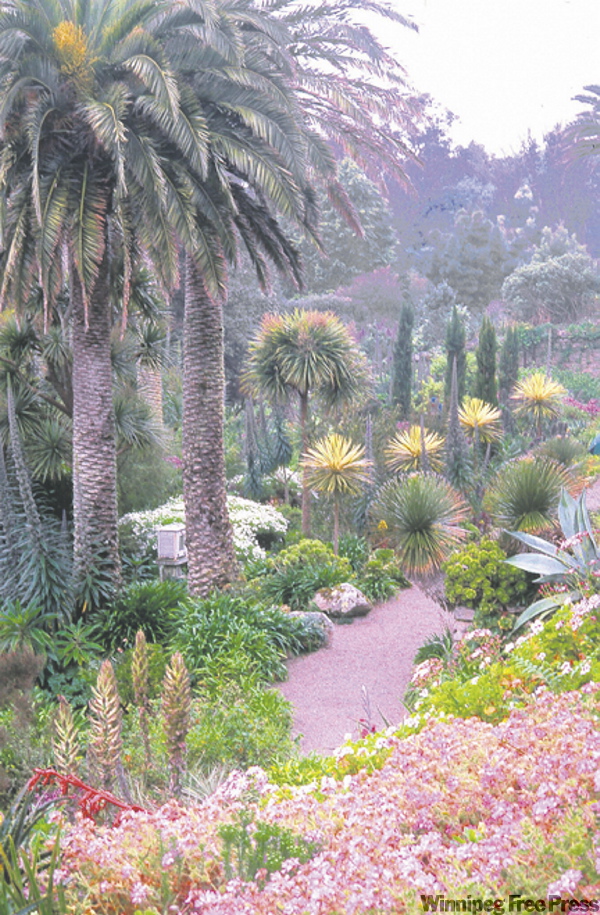
On an island bathed by the warm gulf stream but battered frequently by sea winds, Augustus Smith, founder of the Abbey Garden, protected his early collection of exotic and rare plants by importing and planting Monterey pines and cypresses. He erected massive granite walls and planted hedges of Holm oak to provide an environment suitable for his delicate plants.
From the garden’s top terrace, a panoramic view of the garden spreads like an intricately woven tapestry in the valley below. Date palms heavy with orange fruit mingle with rarities brought back by Scillonian ship’s captains from New Zealand, Chile, Tasmania and Mexico. Rhododendrons, candelabra-shaped echiums as tall as a man, pink and silver proteas from the mountainsides of South Africa and tree ferns from New Zealand thrive in this subtropical paradise.
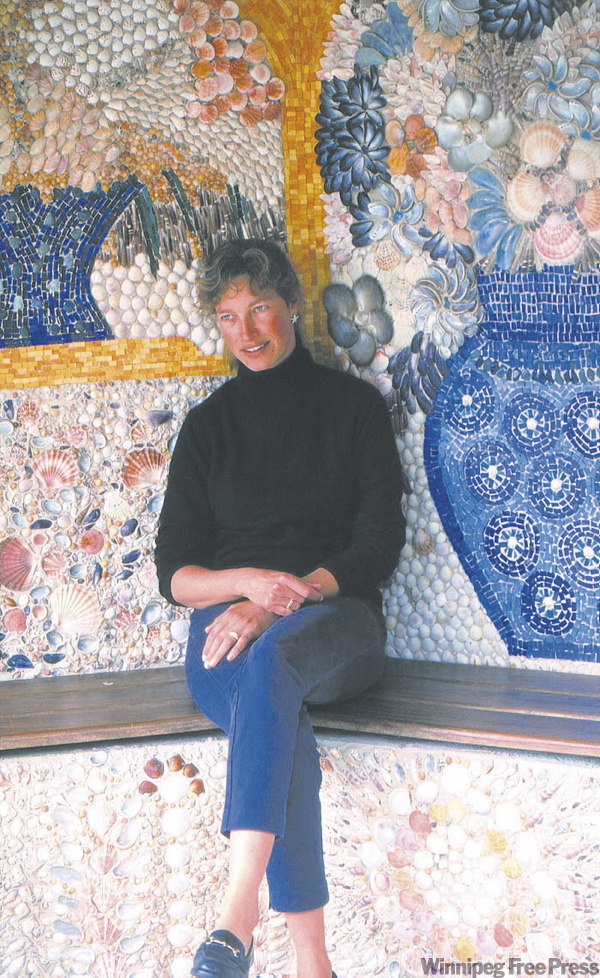
Artworks, including a voluptuous nude sculpture of Gaia, the universal earth mother, are strategically placed throughout the garden. A shell summer house designed by Lucy Dorrien-Smith as a love token for her husband and children was my favourite.
Before leaving this enchanting place, we visited the al fresco café for a cream tea. Its open plan makes it a haven for birds and they are inclined to treat visitors as the interloper. Unprepared for precocious advances, I lifted a scone heaped with clotted cream and crowned with a circle of strawberries to my mouth. An aggressive thrush took aim, swooped in and collided with my cheek in a botched attempt to grab the tempting morsel.
IF YOU GO
The Scilly Isles are located off the southwestern tip of England. Penzance, the closest town, is easily reached by rail. Recommended: Purchase a BritRail Flexipass, available for four days, eight days and 15 days’ travel, starting at about $326.
A round-trip ticket on the Scillonian 111 ferry that departs from Penzance Quay starts at about $140. For reservations, phone 011 44 1737 334220 or email sales@islesofscilly-travel.co.uk.
Accommodation is available at the Island Hotel or the New Inn on Tresco. Email the Tresco Estate Office at islandhotel@tresco.co.uk or phone: 011 44 1720 422883. For more on the Island Hotel, visit their web page: www.tresco.co.uk.
For more information about places to visit in Cornwall and on the Isles of Scilly: www.visitbritain.com.