Study links teenage pot use to increased risk of suicidal behaviour
Advertisement
Read this article for free:
or
Already have an account? Log in here »
To continue reading, please subscribe:

Digital Subscription
One year of digital access for only $205*
- Enjoy unlimited reading on winnipegfreepress.com
- Read the E-Edition, our digital replica newspaper
- Access News Break, our award-winning app
- Play interactive puzzles
*First annual payment billed as $205.00 + GST for one year. This annual subscription will automatically renew at $233.00 + GST every 52 weeks (10% off the regular annual price of $259.35). Offer available to new and qualified returning subscribers only. Cancel any time.
To continue reading, please subscribe:
Add Free Press access to your Brandon Sun subscription for only an additional
$1 for the first 4 weeks*
- Enjoy unlimited reading on winnipegfreepress.com
- Read the E-Edition, our digital replica newspaper
- Access News Break, our award-winning app
- Play interactive puzzles
*Your next Brandon Sun subscription payment will increase by $1.00 and you will be charged $17.95 plus GST for four weeks. After four weeks, your payment will increase to $24.95 plus GST every four weeks.
Read unlimited articles for free today:
or
Already have an account? Log in here »
Hey there, time traveller!
This article was published 13/02/2019 (2724 days ago), so information in it may no longer be current.
A new study suggests teens who regularly smoke weed are at greater risk of developing depression and suicidal behaviour in young adulthood.
Scientists at McGill University analyzed 11 international longitudinal studies involving people aged 18 to 32 who smoked weekly or daily when they were 18 or younger.
They found a higher rate of diagnosed depression, suicide ideation and suicide attempts compared to those who didn’t use cannabis in their teens.
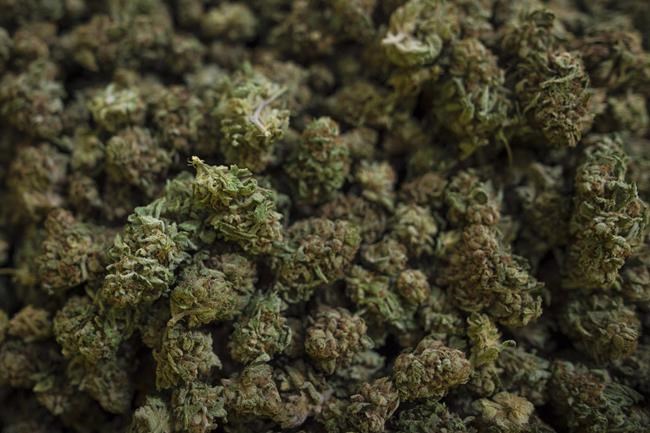
Lead author Gabriella Gobbi says the increased individual risk is modest, but the popularity of pot means a large number of young people could be at risk of developing mental-health issues.
Researchers estimate seven per cent of Canadians between the ages of 18 and 30 are diagnosed with depression that could be linked to prior cannabis use, or roughly 25,000 young people. Researchers found even stronger links to suicidal ideation and suicide attempt, but weaker links to anxiety.
The study consisted of a systematic review and meta-analysis of studies comprising 23,317 individuals. It was done in collaboration with Oxford University and Rutgers University-Camden and published Wednesday in the journal JAMA Psychiatry.
Gobbi says the findings highlight the need for better education on the risks of marijuana.
“We have to do more prevention, to decrease the amount of young people and adolescents that smoke cannabis,” the McGill psychiatry professor says from Montreal, urging education for teens and parents.
Most provincial laws restrict usage to those 19 and older, but about 27 per cent of Canadians aged 15 to 24 — more than any other age group — used cannabis in the last three months of 2018, according to Statistics Canada.
“Since we had legalization, young people continue to smoke as before,” says Gobbi. “So legalization is not the only response. We need to do more prevention.”
Gobbi says the studies included were adjusted for any subjects that may have displayed signs of depression or suicidal tendencies before using pot.
She says adolescents are particularly vulnerable because their brain does not fully develop until age 25.
The findings also dispel misconceptions that weekly pot use is harmless, she adds, noting that scientists found it impossible to differentiate degree of risk between weekly use and daily use.
She explains that the psychoactive property in cannabis — tetrahydrocannabinol, or THC — remains in the body “for a long, long time.”

“THC is a lipid so it stays in the brain and in the body for one week or even more — in some individuals until one month. So smoking a joint is not like drinking two or three beers on a Saturday night,” says Gobbi, also a researcher in the Brain Repair and Integrative Neuroscience program at the Research Institute of the McGill University Health Centre.
Gobbi says there are many more questions to explore, noting the research did not consider alternate modes of consuming cannabis such as vaping or edibles.
She also notes the subjects were teens during the 1980s, 1990s, and 2000s, when the amount of THC content was generally relatively low.
“Now we have joints that have 10, 20, 30 per cent, even more content of THC so we don’t know the impact of the cannabis that we have today on mental health. This is something that of course we have to study more.”
The research was funded by the Canadian Institutes of Health Research and the Quebec Network on Suicide, Mood Disorders and Related Disorders.