Creators of monster-hunter comic hope to inspire next generation
Advertisement
Read this article for free:
or
Already have an account? Log in here »
To continue reading, please subscribe:

Digital Subscription
One year of digital access for only $205*
- Enjoy unlimited reading on winnipegfreepress.com
- Read the E-Edition, our digital replica newspaper
- Access News Break, our award-winning app
- Play interactive puzzles
*First annual payment billed as $205.00 + GST for one year. This annual subscription will automatically renew at $233.00 + GST every 52 weeks (10% off the regular annual price of $259.35). Offer available to new and qualified returning subscribers only. Cancel any time.
To continue reading, please subscribe:
Add Free Press access to your Brandon Sun subscription for only an additional
$1 for the first 4 weeks*
- Enjoy unlimited reading on winnipegfreepress.com
- Read the E-Edition, our digital replica newspaper
- Access News Break, our award-winning app
- Play interactive puzzles
*Your next Brandon Sun subscription payment will increase by $1.00 and you will be charged $17.95 plus GST for four weeks. After four weeks, your payment will increase to $24.95 plus GST every four weeks.
Read unlimited articles for free today:
or
Already have an account? Log in here »
Hey there, time traveller!
This article was published 24/02/2019 (2757 days ago), so information in it may no longer be current.
Years ago, Bitter Root, a monster-hunting comic book set in the Harlem Renaissance, began as an unfinished idea between two longtime friends in South Carolina.
Now, the series — the fourth issue of which arrives in print and digitally Wednesday — has become a conversation starter in the comic-book industry, which continues to awaken to more diverse ways of creating characters both on the page and behind the scenes. The comic is by an all-black creative team and features a predominantly black cast of characters in the 1920s — embracing the black artistic creativity of the Harlem Renaissance, but also recognizing the racism of the time.
It all started when Image Comics approached veteran comic-book artist Sanford Greene and asked if he had any ideas for a new series. Greene thought of a story he’d been developing for some time with his friend and fellow Columbia, S.C., resident, Chuck Brown, about an African-American family that hunted monsters in Harlem.
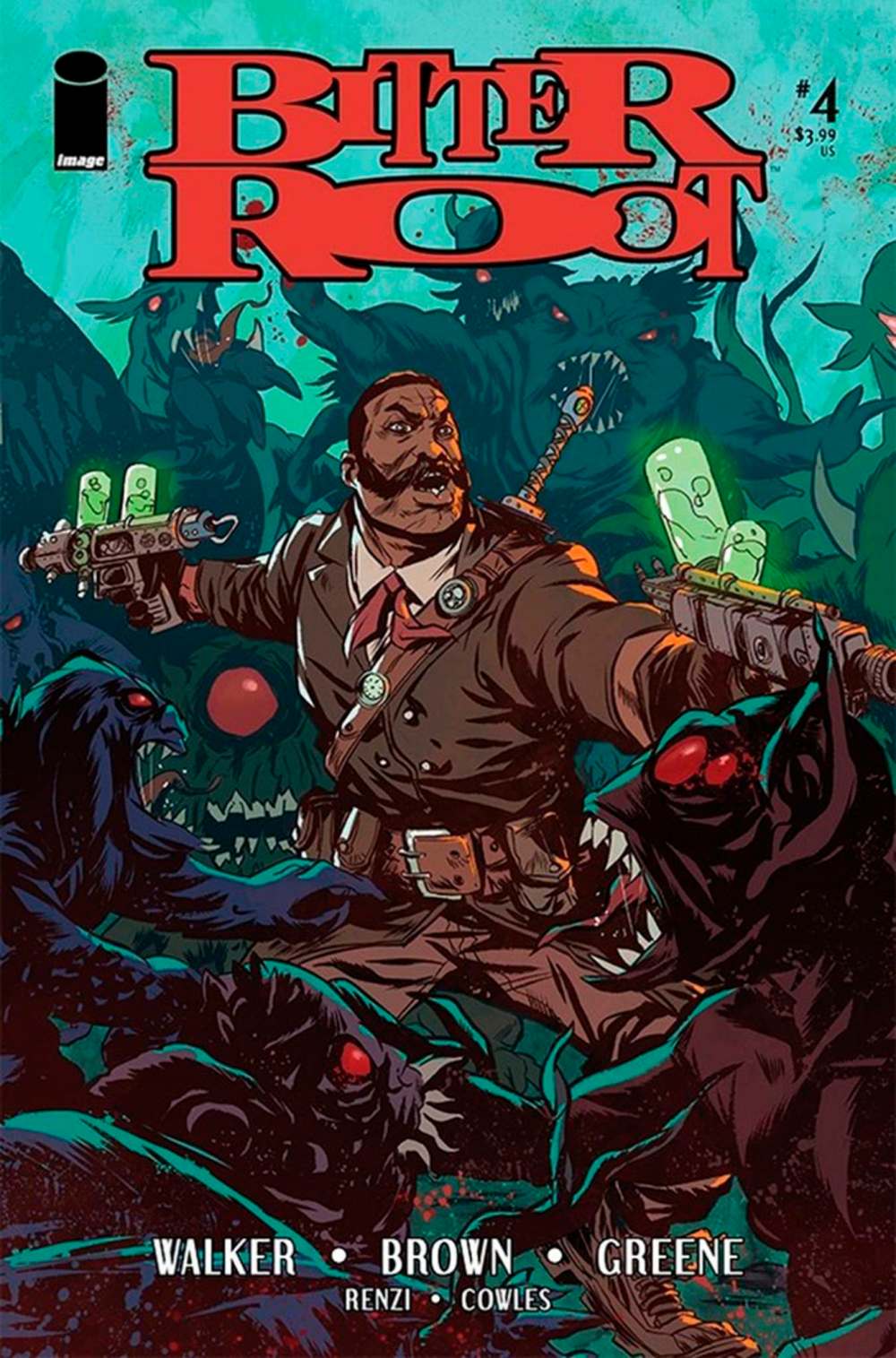
Image Comics was ready to provide publishing support. The only problem was that Greene and Brown never got around to figuring out the entire plot.
“Not only was it not fleshed out, we just didn’t even have a name,” Greene says. “We just had a basic idea of, hey, something with the Harlem Renaissance.”
Greene suggested that they bring in David F. Walker, a Portland-based comic-book writer, as a co-writer to help smooth out this new world. Walker and Greene previously worked together at Marvel Comics on Power Man and Iron Fist. Illustrating scripts from Walker for more than a year at Marvel was enough to convince Greene that Walker was the guy to come in and bring new life to the concept.
“Chuck had an initial idea and some plot points and some scenes in mind, but there wasn’t a true story there that had been fleshed out yet,” Walker says. “I came onboard and rolled up my sleeves and started asking a lot of questions that I don’t necessarily think they had really thought about.”
Walker knew there would be a buzz factor to him, Greene and Brown working together. But Walker was convinced that if Bitter Root was going to work as a series, the story — not the creators — had to be the star.
“It can’t just be that it’s three black guys creating this thing,” Walker said. “That’s not going to be enough to sustain it. We (needed) to find… some sort of hook or multiple hooks that will really bring this thing to life. And that was the beginning of what turned out to be a fairly long development process.”
Walker instantly identified areas where Bitter Root could use some assistance. The monsters, for example. Why were they there? The answer harked back to the social issues of the 1920s: people turned into monsters due to racism and hate.
Would they be hunted lethally? That would depend on who was doing the hunting, but Walker, Brown and Greene would centre the story on the Sangerye family, who use herbal warfare to cure such monsters, not kill them. The Sangerye clan would also be a family divided by tragedy and varying opinions on how to fight hate. A young woman named Blink, for example, can’t chase down monsters because of old-school rules about a woman’s place on the hunt, set in place by her elders.
Slowly, Bitter Root grew until the series’ debut in November. But not without the occasional butting of heads from its creative trio. All involved admit that at times they bickered just as much as the characters they were creating — with Walker serving as an older brother of sorts during those moments.
“(This) is something very special. Something very unique, to have the three of us working well together putting out a great (comic),” Brown says. “I’m enjoying myself. I’m not gonna lie, it’s been bumpy. Because brothers fight.”
Following the global success of last year’s Black Panther from Marvel Studios, having the chance to create a new black fictional world at a major comic publisher gives the trio the satisfaction of knowing that they’re possibly producing something that could inspire future generations — just like the late Stan Lee and Jack Kirby did when they constructed Wakanda. Brown says that potential effect makes their work much more meaningful.
Walker is happy knowing a previous collaboration at Marvel turned into this opportunity.
“I’m just thankful that Chuck and Sanford brought me in on this,” Walker says. “I know that we’re going to keep working to make the best comic we possibly can.”
— Washington Post