Canada’s dark war-time past illuminated in NFB project with writer Joy Kogawa
Advertisement
Read this article for free:
or
Already have an account? Log in here »
To continue reading, please subscribe:

Digital Subscription
One year of digital access for only $205*
- Enjoy unlimited reading on winnipegfreepress.com
- Read the E-Edition, our digital replica newspaper
- Access News Break, our award-winning app
- Play interactive puzzles
*First annual payment billed as $205.00 + GST for one year. This annual subscription will automatically renew at $233.00 + GST every 52 weeks (10% off the regular annual price of $259.35). Offer available to new and qualified returning subscribers only. Cancel any time.
To continue reading, please subscribe:
Add Free Press access to your Brandon Sun subscription for only an additional
$1 for the first 4 weeks*
- Enjoy unlimited reading on winnipegfreepress.com
- Read the E-Edition, our digital replica newspaper
- Access News Break, our award-winning app
- Play interactive puzzles
*Your next Brandon Sun subscription payment will increase by $1.00 and you will be charged $17.95 plus GST for four weeks. After four weeks, your payment will increase to $24.95 plus GST every four weeks.
Read unlimited articles for free today:
or
Already have an account? Log in here »
Hey there, time traveller!
This article was published 27/02/2019 (2748 days ago), so information in it may no longer be current.
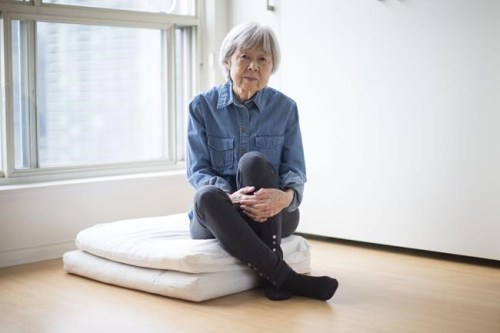
VANCOUVER – Joy Kogawa is giddy about the “miracle” of technology allowing people to learn about Canada’s racist past that forced thousands of citizens like her out of their homes and into internment camps during the Second World War.
“It’s wonderful to me that the story that I lived through can be part of this generation’s knowledge,” the writer and poet says from her home in Toronto.
Kogawa, 83, chronicled her family’s internment experience in the British Columbia Interior town of Slocan and their forced labour at a sugar beet farm in Coaldale, Alta., in her acclaimed 1981 novel “Obasan.”

She was six years old in 1942 when her older brother Timothy and their parents were stripped of their property and belongings after Japan’s attack on Pearl Harbor changed the lives of 22,000 Japanese-Canadians, most of whom were born in Canada but classified as a threat to national security. Their American counterparts were also interned but their homes and businesses were not confiscated and sold.
Now, Kogawa has written the script for an interactive augmented reality experience called “East of the Rockies,” which brings to life a dark chapter in Canada’s history through the story of a 17-year-old girl named Yuki who is sent to the same camp where Kogawa’s family was taken.
The project, available March 1 through Apple’s App Store, was developed by digital production agency Jam3 and co-produced by the National Film Board. It allows users to tap, swipe and zoom in on objects in the camp, such as Yuki’s beloved family record player, and hear music they listened to in their cramped space shared with a new mother desperately trying to care for her twin babies, along with her grandfather.
Archival photos of other Japanese families, complete with details about the conditions they endured, often while separated, can also be accessed through the app.
Dirk van Ginkel, a creative director with Jam3, who considered the nearly two-year project a labour of love as he worked with his then-colleague Jason Legge, says the pair played games on PlayStation with Kogawa to get her used to the idea of interactive technology.
“Instead of consuming content just linearly, you are in charge of what you’re looking at and how you’re looking at it,” van Ginkel says.
Facial features of the characters are obscured because those detained in the camp were “not seen as humans,” van Ginkel adds.
The technique also seems to tap into the harsh tempo of current populist views in some countries that Kogawa says could propel a return to racist policies mirroring those of the 1940s and impact the lives of people around the world.
Kogawa says the fear and resentment she witnessed as a child who looked different from the majority fuelled a lot of suffering including her mother’s breakdown. But she is proud of Canada’s current stance on immigration, calling the country a “beacon of hope.”
Back then, however, Japanese-Canadians were given the choice of being deported to Japan or moving east of the Rockies after the war ended, says Kogawa, who was born in Vancouver and is a Nisei — someone born in North America to parents who immigrated from Japan.
“A lot of people did come to Toronto but they were scattered across the country,” she says, adding that dispersal made it tough to retain their culture, with more than 90 per cent of Japanese-Canadians intermarrying and “essentially disappearing” or remaining single.
“The other day I went to a nursing home and there were two old Niseis, neither of whom had been married. And they had nobody to visit them, no family. That’s the tragedy of the first generation.”

Kogawa’s 21-year-old granddaughter, Anne Canute, narrates “East of the Rockies,” in which her displaced character reminisces on a teenage crush while trying to reckon with the reality of losing the family’s home in Vancouver: “I wonder who’s sleeping in my bedroom? Who has all our things?”
Canute says she grew up listening to her grandmother’s stories about her uprooted childhood and the racial tensions that swirled across Canada toward Japanese-Canadians but didn’t learn much about that history until after high school, thinking: “‘Wow, this is just a weird thing that happened to my family.'”
“I think the dispersal of community and lack of ability to practise culture was really impactful for both my grandmother and my mother and me,” says Canute, a fourth-year University of B.C. student whose studies include Asian migration and the development of those communities in Canada.
The National Film Board’s website includes a free downloadable English and French PDF learning kit based on “East of the Rockies” for high schools, featuring lessons on life in the various internment camps, repatriation and the impact of Canada’s policies on future generations.
— Follow @CamilleBains1 on Twitter.