

Lake Winnipeg fishery ‘collapse’ feared
Province gets earful from fishers over plan to change net size
Advertisement
Read this article for free:
or
Already have an account? Log in here »
To continue reading, please subscribe:
Digital Subscription
One year of digital access for only $1.44 a week*
- Enjoy unlimited reading on winnipegfreepress.com
- Read the E-Edition, our digital replica newspaper
- Access News Break, our award-winning app
- Play interactive puzzles
*Billed as $5.77 plus GST every four weeks. After 52 weeks, price increases to the regular rate of $19.95 plus GST every four weeks. Offer available to new and qualified returning subscribers only. Cancel any time.
To continue reading, please subscribe:
Add Free Press access to your Brandon Sun subscription for only an additional
$1 for the first 4 weeks*
- Enjoy unlimited reading on winnipegfreepress.com
- Read the E-Edition, our digital replica newspaper
- Access News Break, our award-winning app
- Play interactive puzzles
*Your next Brandon Sun subscription payment will increase by $1.00 and you will be charged $17.95 plus GST for four weeks. After four weeks, your payment will increase to $24.95 plus GST every four weeks.
Read unlimited articles for free today:
or
Already have an account? Log in here »
Hey there, time traveller!
This article was published 14/03/2019 (2637 days ago), so information in it may no longer be current.
The province’s plan to make commercial fish harvesters use larger mesh sizes on nets in Lake Winnipeg’s south basin will “crash” the walleye fishery, commercial fishers say.
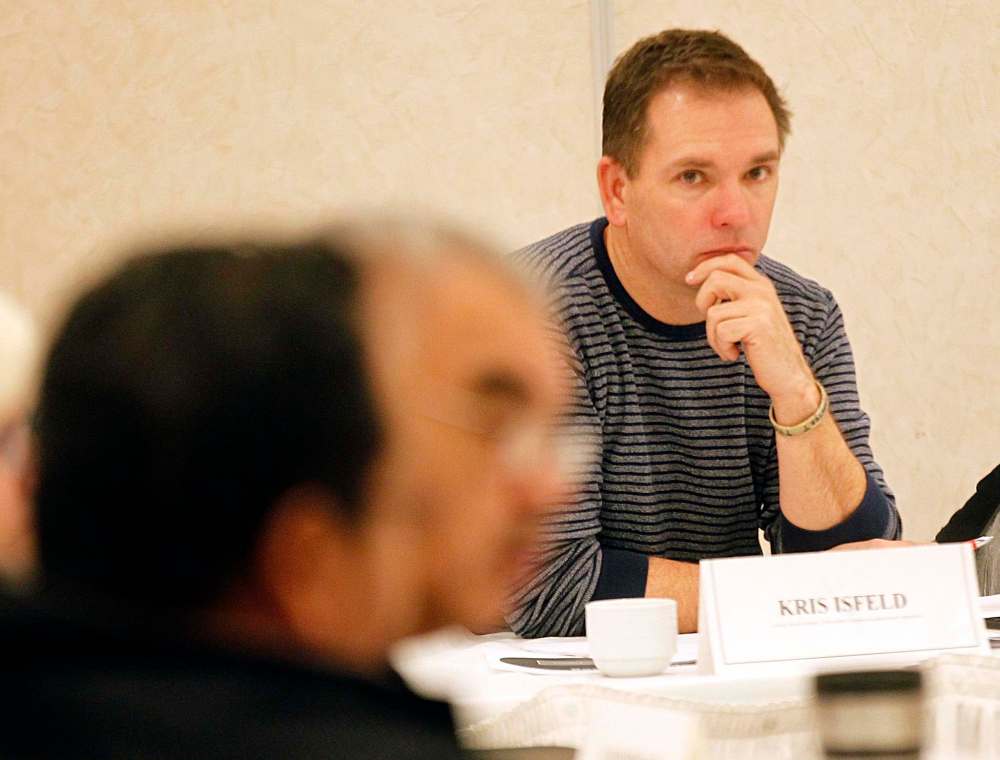
Up to 80 or 90 per cent of the annual catch in the south basin is of fish that wouldn’t be caught with larger mesh sizes being proposed, said Kris Isfeld, a commercial fish harvester based in Winnipeg Beach.
Those smaller fish will be able to feed for up to three more years, placing extreme stress on the food supply for commercial fish.
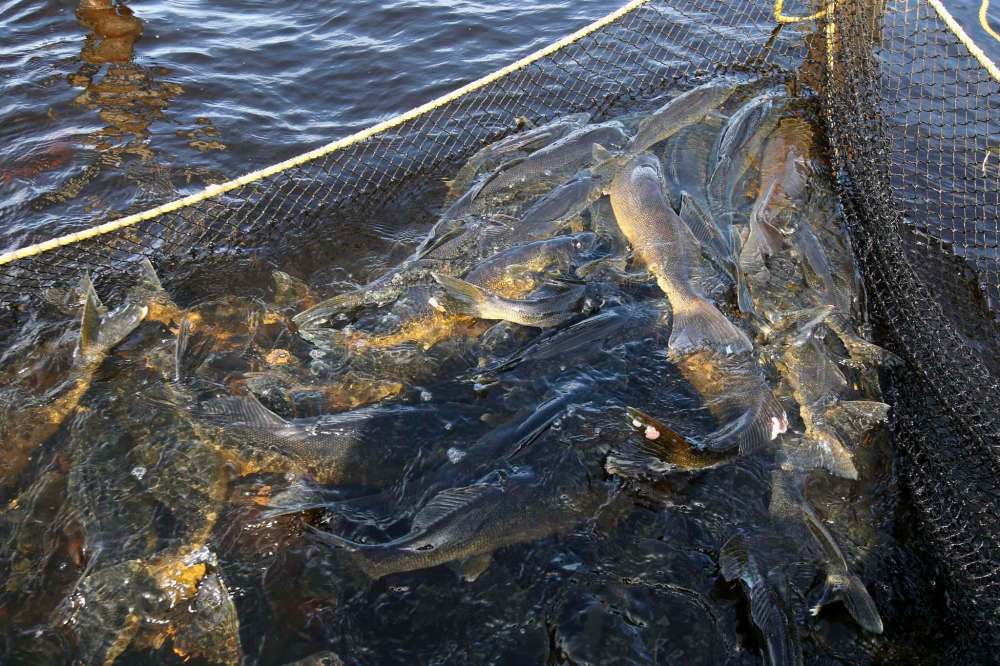
“You’re talking in the millions of pounds of feed. The larger fish will start to cannibalize the young” or just starve, said Isfeld, who sits on the Lake Winnipeg Commercial Fish Co-management Board.
Sustainable Development Minister Rochelle Squires announced on Monday a voluntary quota buyback program to reduce fishing quota, and a proposal to change mesh size.
Fishers have a 30-day window in which to give their views.
Isfeld maintained the cost for commercial fishers to replace nets will trigger a mass exodus from the industry. It would cost in the range of $100,000 to replace all his fishing nets, for example.
Changing mesh size will also eliminate the commercial goldeye catch. The government wants to increase mesh size to 3-3/4 inches, from the three-inch and 3-1/4-inch used now.
“Goldeye will be completely eliminated. Three-and-three-quarter mesh size is bigger than any goldeye,” Isfeld said.
“A mesh size change like this can and will collapse (the fishery on) the lake.”
In an interview Thursday, Squires advised fishers to use the 30-day consultation period to make their views known. A meeting will also be arranged in April to bring all stakeholders together in one room.
However, Squires also reiterated that Lake Winnipeg’s south basin is the only fishery in the province that still allows mesh sizes as small as three inches in diameter.
“Every other fishery in this province has recognized that sustainability matters and they are moving towards larger mesh sizes,” Squires said. “We are hopeful that the south basin will also come into an agreement that they need to move in this trend.”
She said letting smaller fish go will mean another one or two more spawns per fish and contribute to the fishery’s sustainability.
Commercial fishers don’t believe the province’s data, noting that the walleye catch for the 2018-19 season that ends in a few weeks has been very healthy.
Squires acknowledged the data is an ongoing issue.
“Commercial fishers reject all the data coming from my department, for no reason that I can understand,” she said. “That seems to be the sticking point. Some people believe the data and other people don’t believe the data.”
Squires said the federal Department of Fisheries and Oceans will be producing a report soon that will back the province’s claim that the current fish quota of 7.3 million kilograms is not sustainable. The province has set 5.3 million kilograms as an ideal target.
Squires said the larger mesh size could be implemented as soon as this November.
Isfeld argued Lake Winnipeg has been one of the world’s most stable and successful commercial fisheries.
In 125 years, there has never been a collapse of fish stocks that required the closure of commercial fishing, he said. “Every other fishery in the world has had one.”
He accused the minister’s department of “pandering” to the sports fishing industry, which he says believes there will be more and bigger fish if the commercial fish catch is reduced.
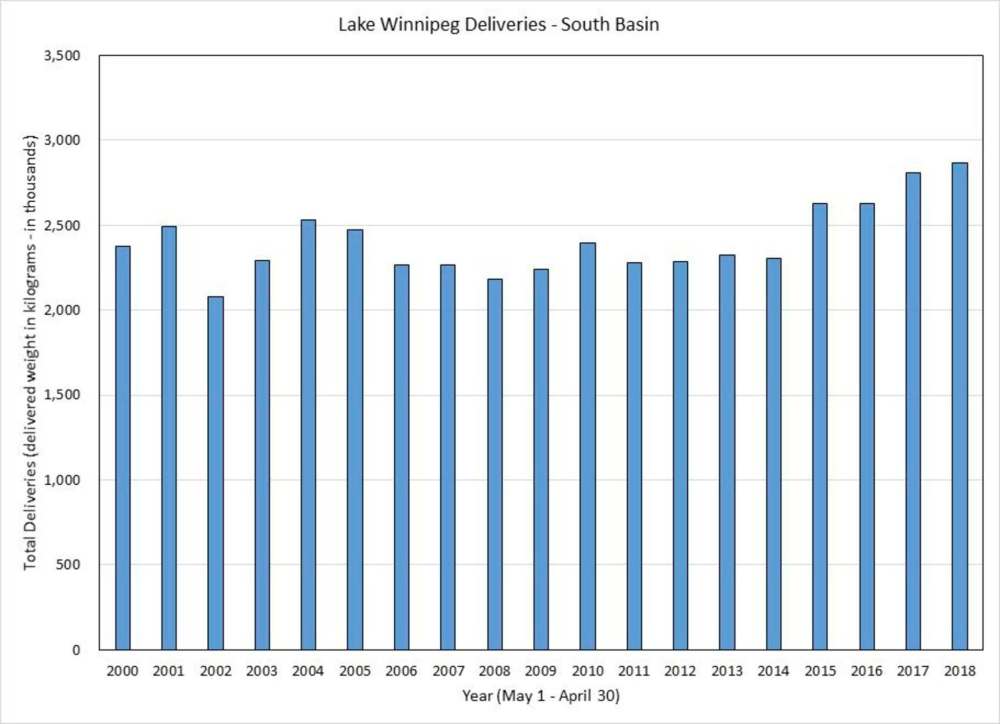
Isfeld said the walleye catch is up substantially this year, but couldn’t produce figures as there are still a few weeks left in the 2018-19 season.

Bill Buckels, a commercial fisher out of Gimli, agrees with Isfeld and feels the province announced the two measures together to scare fishers into selling quota and exiting the industry. “People are lining up to sell their quotas,” he said.
There are about 500 commercial fishers on Lake Winnipeg, with about 300 in the south basin, who make their primary income from the sector.
A time or place for the April meeting has not yet been set, but it aims to bring academics, scientists, sport-fishing groups, the Manitoba Wildlife Federation and commercial fishers together. Stakeholders can also contact the department by email with their views.
“Some of these people have never actually sat down in the same room, so this meeting is going to be historic,” Squires said.
bill.redekop@freepress.mb.ca
History
Updated on Thursday, March 14, 2019 11:25 PM CDT: Updates story.