WEATHER ALERT

Smoking strong pot daily raises psychosis risk, study finds

Advertisement

Advertise with us

LONDON - Smoking high-potency marijuana every day could increase the chances of developing psychosis by nearly five times, according to the biggest-ever study to examine the impact of pot on psychotic disorder rates.

Read this article for free:

or

Already have an account? Log in here »

To continue reading, please subscribe:

Subscribe and receive a limited-edition Free Press branded hat or tote.

Digital Subscription

One year of digital access for only $205*

  • Enjoy unlimited reading on winnipegfreepress.com
  • Read the E-Edition, our digital replica newspaper
  • Access News Break, our award-winning app
  • Play interactive puzzles

*First annual payment billed as $205.00 + GST for one year. This annual subscription will automatically renew at $233.00 + GST every 52 weeks (10% off the regular annual price of $259.35). Offer available to new and qualified returning subscribers only. Cancel any time.

To continue reading, please subscribe:

Add Free Press access to your Brandon Sun subscription for only an additional

$1 for the first 4 weeks*

  • Enjoy unlimited reading on winnipegfreepress.com
  • Read the E-Edition, our digital replica newspaper
  • Access News Break, our award-winning app
  • Play interactive puzzles
Start now

*Your next Brandon Sun subscription payment will increase by $1.00 and you will be charged $17.95 plus GST for four weeks. After four weeks, your payment will increase to $24.95 plus GST every four weeks.

Hey there, time traveller!
This article was published 19/03/2019 (2689 days ago), so information in it may no longer be current.

LONDON – Smoking high-potency marijuana every day could increase the chances of developing psychosis by nearly five times, according to the biggest-ever study to examine the impact of pot on psychotic disorder rates.

The research adds to previous studies that have found links between marijuana and mental health problems, but still does not definitively pinpoint marijuana as the cause.

Psychotic disorders — in which people lose touch with reality — are typically triggered by factors including genetics and the environment. But experts say the new study’s findings have implications for jurisdictions legalizing marijuana, warning they should consider the potential impact on their mental health services.

FILE - In this Dec. 19, 2014 file photo, a sales associate uses a pair of chopsticks to hold a bud of Lemon Skunk, the highest potency strain of marijuana available at the dispensary in Denver. According to research released on Tuesday, March 19, 2019, scientists say smoking high-potency marijuana every day could increase the chances of developing psychosis by about five times.(AP Photo/David Zalubowski, File)

“If we think there’s something particular about (high-potency) cannabis, then making that harder to get a hold of, could be a useful harm-reduction measure,” said Suzanne Gage, of the University of Liverpool, who was not connected to the new study.

Researchers at King’s College London and elsewhere analyzed data from a dozen sites across Europe and Brazil from 2010 to 2015. About 900 people who were diagnosed with a first episode of the disorder at a mental health clinic, including those with delusions and hallucinations, were compared with more than 1,200 healthy patients. After surveying the patients about their use of cannabis and other drugs, researchers found daily marijuana use was more common among patients with a first episode of psychosis compared with the healthy, control group.

The scientists estimated that people who smoked marijuana on a daily basis were three times more likely to be diagnosed with psychosis compared with people who never used the drug. For those who used high-potency marijuana daily, the risk jumped to nearly five times. The paper was published online Tuesday by the journal Lancet. It was paid for by funders including Britain’s Medical Research Council, the Sao Paulo Research Foundation and the Wellcome Trust.

“If you decide to use high-potency marijuana, you should bear in mind: Psychosis is a potential risk,” said Dr. Marta Di Forti, of King’s College London and the study’s lead author. She said it was unknown how frequently people could smoke lower-potency marijuana without raising their likelihood of psychosis, but that less than weekly use appeared to pose no risk.

Di Forti and colleagues estimated that in Amsterdam, about half of new psychosis cases were associated with smoking high-potency pot.

Gage noted that it was possible that people with a family history of psychosis or other risk factors might be more susceptible to developing problems like psychosis or schizophrenia if they used cannabis.

“That could be the thing that tips the scale for some people,” she said. “Cannabis for them could be an extra risk factor, but it definitely doesn’t have to be involved. If you use cannabis, it doesn’t mean you are definitely going to develop psychosis.”

___

Find complete AP marijuana coverage here: http://apnews.com/Marijuana

___

The Associated Press Health and Science Department receives support from the Howard Hughes Medical Institute’s Department of Science Education. The AP is solely responsible for all content.


Report Error Submit a Tip

More Stories

Mayor backs new way to handle 911 mental health, addiction calls

Malak Abas 7 minute read Preview

Mayor backs new way to handle 911 mental health, addiction calls

Malak Abas 7 minute read Updated: Yesterday at 5:47 PM CDT

Mayor Scott Gillingham is enthusiastically endorsing a proposal to change the city’s crisis-response system, potentially diverting 10,000 calls away from overburdened police, fire and paramedic services every year.

The “fourth crisis response pathway” would allow 911 calls that aren’t violent or criminal in nature to be transferred to citywide crisis-response teams, staffed in part through current community resources, which could include the Downtown Community Safety Partnership and The Link’s mobile crisis teams.

A community crisis dispatch and co-ordination hub would receive triaged calls and match them with the teams, which would move them out of the Winnipeg Police Service and Winnipeg Fire and Paramedic Service calls for service.

“Every day, our 911 dispatchers receive calls from Winnipeggers who are in distress, dealing with complex mental health struggles, addiction, or wellness concerns,” Gillingham said after releasing a report on the proposal Tuesday.

Read
Updated: Yesterday at 5:47 PM CDT

Gaps in homecare leave Winnipeg man in perilous situation

Nicole Buffie 4 minute read Preview

Gaps in homecare leave Winnipeg man in perilous situation

Nicole Buffie 4 minute read 6:00 AM CDT

Tom Landy fears he won’t live long enough to receive adequate homecare.

The 49-year-old Winnipegger has spinal muscular atrophy, a degenerative disease, and requires 24-7 homecare, but gaps in his care leave him sitting in one spot for hours and lately he’s developed bed sores.

Landy was approved for around-the-clock care in June 2025, but staffing issues and an investigation into a homecare worker’s workplace injury have left him without help for periods of time throughout the day and forced his 76-year-old father to fill in.

“This is what they’re here for, to take care of me, and now it feels like I’m a burden,” he said from his home in the Maples.

Read
6:00 AM CDT

Leave lonely lake life and get back to busy

Maureen Scurfield 5 minute read 2:00 AM CDT

DEAR MISS LONELYHEARTS: I’m going crazy! My husband and I are living up at a lake for the first summer after buying a beautiful new cabin. I thought it was going to be heaven, but it’s been hell for me.

I’m not retired, but I’m able to work at my office job remotely for the summer. The problem is, I’m already lonely and bored while my husband is out fishing. My man goes off in the boat with his buddies in the early morning, often for the whole day and the early evening, too. Now he says he’s “in fisherman’s heaven” with his retired buddies who go explore the many great angling lakes around us.

If it goes on all summer and into early fall, and I’ll be out of my mind by then. Most of the other guys’ wives stay back in the city now. They learned early on it’s a drag to be a fisherman’s “widow.”

I called my boss this morning after my husband left to go fishing. My manager says they’re really busy right now, and could use me there ASAP. Yay! I can come back to the office as soon as I want, but I feel guilty about leaving my husband alone. What should I do?

Smoking strong pot daily raises psychosis risk, study finds

Maria Cheng, The Associated Press 4 minute read Preview

Smoking strong pot daily raises psychosis risk, study finds

Maria Cheng, The Associated Press 4 minute read Friday, Mar. 22, 2019

LONDON - Smoking high-potency marijuana every day could increase the chances of developing psychosis by nearly five times, according to the biggest-ever study to examine the impact of pot on psychotic disorder rates.

The research adds to previous studies that have found links between marijuana and mental health problems, but still does not definitively pinpoint marijuana as the cause.

Psychotic disorders — in which people lose touch with reality — are typically triggered by factors including genetics and the environment. But experts say the new study's findings have implications for jurisdictions legalizing marijuana, warning they should consider the potential impact on their mental health services.

"If we think there's something particular about (high-potency) cannabis, then making that harder to get a hold of, could be a useful harm-reduction measure," said Suzanne Gage, of the University of Liverpool, who was not connected to the new study.

Read
Friday, Mar. 22, 2019

Troubling photo worth a significant number of words for coach who refuses to speak

Dan Lett 5 minute read Preview

Troubling photo worth a significant number of words for coach who refuses to speak

Dan Lett 5 minute read Monday, Jul. 27, 2026

There’s nothing funny about violent hazing rituals in youth sport. Why then, you might ask, is Doug Kovacs laughing?

Read
Monday, Jul. 27, 2026

Report draws link between missing Indigenous women and trafficking across Canada

Marsha McLeod 6 minute read Preview

Report draws link between missing Indigenous women and trafficking across Canada

Marsha McLeod 6 minute read Yesterday at 7:07 PM CDT

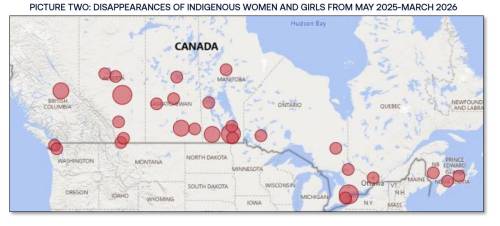
A new analysis of online sex advertisements featuring Indigenous women has identified cross-country corridors that are highly indicative of sex trafficking, while revealing insight into how women and girls are exploited in Winnipeg.

Read
Yesterday at 7:07 PM CDT