WEATHER ALERT

Alaska’s Tlingit Code Talkers praised for secret WWII work

Advertisement

Advertise with us

ANCHORAGE, Alaska - Army veteran Richard Bean Sr. died without anyone knowing that he and four other long-deceased Alaska Natives had used their Tlingit language to outsmart the Japanese during World War II.

Read this article for free:

or

Already have an account? Log in here »

To continue reading, please subscribe:

Subscribe and receive a limited-edition Free Press branded hat or tote.

Digital Subscription

One year of digital access for only $205*

  • Enjoy unlimited reading on winnipegfreepress.com
  • Read the E-Edition, our digital replica newspaper
  • Access News Break, our award-winning app
  • Play interactive puzzles

*First annual payment billed as $205.00 + GST for one year. This annual subscription will automatically renew at $233.00 + GST every 52 weeks (10% off the regular annual price of $259.35). Offer available to new and qualified returning subscribers only. Cancel any time.

To continue reading, please subscribe:

Add Free Press access to your Brandon Sun subscription for only an additional

$1 for the first 4 weeks*

  • Enjoy unlimited reading on winnipegfreepress.com
  • Read the E-Edition, our digital replica newspaper
  • Access News Break, our award-winning app
  • Play interactive puzzles
Start now

*Your next Brandon Sun subscription payment will increase by $1.00 and you will be charged $17.95 plus GST for four weeks. After four weeks, your payment will increase to $24.95 plus GST every four weeks.

Hey there, time traveller!
This article was published 27/03/2019 (2679 days ago), so information in it may no longer be current.

ANCHORAGE, Alaska – Army veteran Richard Bean Sr. died without anyone knowing that he and four other long-deceased Alaska Natives had used their Tlingit language to outsmart the Japanese during World War II.

Now, they are finally being hailed in their home state for their lifesaving efforts as servicemen.

Earlier this month, legislators passed a formal citation honouring the Tlingit Code Talkers. State flags were flown at half-staff and later presented to the men’s families.
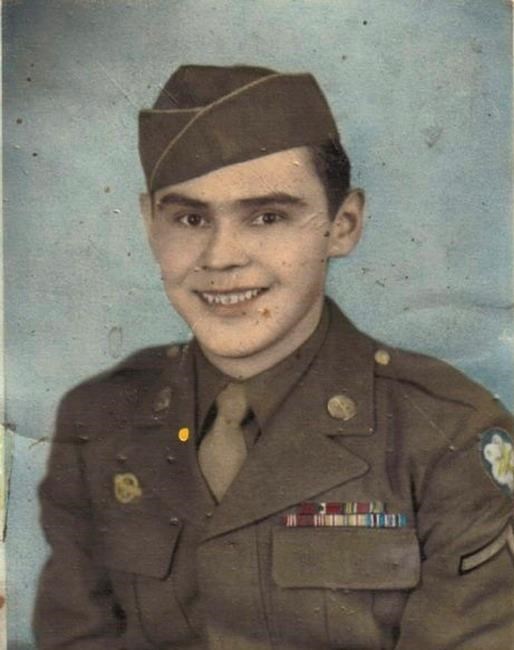
This undated photo provided by relatives shows the late Army veteran Richard Bean Sr. of Hoonah, Alaska. Bean was among five long-deceased men who are being hailed by the state in March 2019 for their life-saving efforts during World War II for using their Native language to help the military outsmart the Japanese with Tlingit codes they could not break. (Family of Richard Bean Sr. via AP)

Bean and the others had been forbidden to speak Tlingit as schoolchildren in their southeast Alaska villages. Later, they used it to provide the military with unbreakable codes, as did their more well-known peers, Navajo Code Talkers.

The language of the Alaska Natives had been suppressed by missionaries and teachers trying to “civilize” them, said Rosita Worl, president of the Sealaska Heritage Institute. The Juneau non-profit works to preserve and enhance the cultures of southeast Alaska’s Tlingit, Haida and Tsimshian tribes.

Punishments for students who spoke Tlingit included having their mouths washed out with soap and their hands struck with rulers, Worl said.

“We’re finally ecstatic that there is this recognition that our people served this country, even served this country that wasn’t always good to them,” she said.

The men’s contributions went undisclosed for decades because the U.S. military had kept the unbroken codes secret in case they were needed in future wars.

“Their orders were not to talk about it,” Ozzie Sheakley, an Army veteran and Tlingit leader, said about the five Alaska Natives. “They took those orders seriously.”

Even their closest relatives had no clue about the wartime endeavours of Richard Bean Sr. of Hoonah and Robert “Jeff” David Sr. of Haines; Sitka brothers and Navy men Mark Jacobs Jr. and Harvey Jacobs; and Sitka resident George Lewis Jr., who served in the Army.

Bean’s wife died before Congress posthumously recognized the men. His 85-year-old nephew, Ron Williams, never knew either, even though the two were close.

Williams said there was only one hint. His uncle told him a platoon leader had overheard him speaking Tlingit with Jeff David while the two served together in the Philippines. They were in the same company but different platoons.

The Army official asked how the men would like to handle communications then gave each a walkie-talkie.

That was all Bean said, and Williams never pushed for more, sensing his uncle didn’t want to talk about it. Richard Bean died in 1985.

“Even the guys that knew him all his life, you know, they didn’t know what he did either because he never said anything about it,” Williams said.

David never said anything about the wartime duties to his son, Jeff David Jr., either.

“He just said he was in special services,” the son said.

The military declassified the Navajo Code Talker program in 1968. But it was decades before recognition came to the Tlingit servicemen, after the passage of the Code Talkers Recognition Act of 2008.

Sheakley, commander of the Southeast Alaska Native Veterans, got a call from Department of Defence officials.

They told him the five Alaskans had been identified as Code Talkers from the Tlingit tribe, along with others from 32 Lower-48 tribes. Soon they would get the recognition long afforded the Navajos, who made up the largest group of Code Talkers.

In 2013, Congress recognized the Code Talkers, who were posthumously awarded silver medals. Sheakley also received a Congressional Gold Medal on behalf of the entire Tlingit tribe.

Alaska state Rep. and Tlingit Vietnam veteran Bill Thomas thought state recognition would soon follow.

“I just waited and waited and waited,” Thomas said. “I finally said, ‘Hey, it’s time to pay tribute to these men.'”

State lawmakers agreed after Thomas and the Sealaska Heritage Institute pushed the idea.

The role the men played in history was a stunning discovery for the family of George Lewis Jr.

His son, Ray Lewis, was born after the war and never knew his father was in the military.

“I’m very proud of it,” Ray Lewis said of the new recognition. “My father was instrumental in saving a lot of lives out there.”

___

Follow Rachel D’Oro at https://twitter.com/rdoro .

Report Error Submit a Tip

More Stories

City has plenty of frozen dessert oases to discover

AV Kitching 6 minute read Preview

City has plenty of frozen dessert oases to discover

AV Kitching 6 minute read Updated: 11:23 AM CDT

No matter the weather, ice cream is always a welcome addition to the day.

It’s a rite of passage as, at the slightest hint of a thaw, Winnipeggers descend in droves, heeding the siren call of institutions such as Sargent Sundae (2053 Portage Ave.) and Bridge Drive-In (766 Jubilee Ave. and 1680 Main St.) that slide open their shutters any time from late March to early April, ready to welcome dedicated connoisseurs seeking their first taste of the season.

We’re blessed with an abundance of ice cream joints in this city, ranging from brick-and-mortar storefronts to mobile carts and pop-up stalls, all serving generous scoops of childhood faves alongside rather more innovative flavours.

With so many dairy bars and frozen dessert parlours dotted around, there’s no need to choose just one spot to satisfy your sweet tooth.

Read
Updated: 11:23 AM CDT

Bombers’ offence, defence, and special teams fail to show up against Stampeders

Taylor Allen 6 minute read Preview

Bombers’ offence, defence, and special teams fail to show up against Stampeders

Taylor Allen 6 minute read Saturday, Jul. 25, 2026

The Winnipeg Blue Bombers constantly preach the importance of playing three-phase football.

On Friday night, they went 0-for-3.

Their offence, defence, and special teams all played a significant role in losing 52-30 to the visiting Calgary Stampeders.

The team that erased a 17-point deficit to beat Ottawa last Sunday was nowhere to be found.

Read
Saturday, Jul. 25, 2026

Man accused of breaking into Kingsway homes, high school

1 minute read Updated: Yesterday at 9:50 PM CDT

A 35-year-old man has been accused of breaking into six Crescentwood homes and a nearby high school on Saturday morning, causing damage estimated at $25,000.

At about 6:30 a.m. July 25, Winnipeg police got several 911 calls about an unknown man breaking into homes in the 100 block of Kingsway after throwing bricks and rocks through windows and glass doors. In some cases, a man confronted and threatened residents and stole their belongings, the Winnipeg Police Service said in a news release Sunday.

One of the victims flagged down officers when police arrived on scene, pointing out a man walking down the street armed with a broken liquor bottle. The suspect dropped the bottle and police arrested him.

No one was injured and the Major Crimes Unit took on the investigation.

Vacant Bay store on road to redevelopment, St. Vital Centre owner says

Gabrielle Piche 6 minute read Preview

Vacant Bay store on road to redevelopment, St. Vital Centre owner says

Gabrielle Piche 6 minute read Friday, Jul. 24, 2026

Entertainment attractions are coming to fill the former Hudson’s Bay space in St. Vital Centre.

Montreal-based real estate firm Leyad, the south Winnipeg mall’s owner, says it is finalizing an agreement for the vacant property. Further details should appear in the next couple months, said president Henry Zavriyev.

“We’re looking at what other types of experiences we can bring to the mall that aren’t just typical retail,” he said during a visit to Winnipeg this week.

“We want to create an experience where you can just come to the mall, hang out here for hours, no matter if you’re a kid, an adult, a retiree.”

Read
Friday, Jul. 24, 2026

Take care of them; there is enough

David Driedger 5 minute read 2:01 AM CDT

The parable of the Good Samaritan is one of those stories that has endured far beyond its original context, far beyond religion itself. Someone is robbed, assaulted and left for dead.

Dropping the gloves to make the point

Editorial 4 minute read Preview

Dropping the gloves to make the point

Editorial 4 minute read Saturday, Jul. 25, 2026

In hockey parlance, it’s called “shedding,” the moment in a game when you are forced to deal with an instigator by dropping (shedding) your gloves for an all-out brawl.

That term is a deep cut from hockey culture that Prime Minister Mark Carney — he of the “elbows up” phenomenon — may need to not only embrace but practise more often in the face of yet another round of overly punitive tariffs imposed by United States President Donald Trump.

To be fair, under Carney’s leadership, Canada has not exactly rolled over in the face of Trump’s bully-boy tactics.

Yes, Canada has made concessions to placate Trump to further a new continental trade agreement: investing more money to combat the cross-border flow of fentanyl that isn’t actually happening, stalling efforts to tax streaming companies as most European countries already do, and — most recently — giving Trump a cut of profits from the Canadian-made, Canadian-paid Gordie Howe bridge between Windsor and Detroit.

Read
Saturday, Jul. 25, 2026