WEATHER ALERT

Federal study gives new options for people with rare cancers

Advertisement

Advertise with us

ATLANTA - People with rare cancers have been out of luck — not only do most lack good treatments but drug companies also don't pursue them because of small potential sales. Now, a federal study that pools these folks gives them strength in numbers and new options.

Read this article for free:

or

Already have an account? Log in here »

To continue reading, please subscribe:

Subscribe and receive a limited-edition Free Press branded hat or tote.

Digital Subscription

One year of digital access for only $205*

  • Enjoy unlimited reading on winnipegfreepress.com
  • Read the E-Edition, our digital replica newspaper
  • Access News Break, our award-winning app
  • Play interactive puzzles

*First annual payment billed as $205.00 + GST for one year. This annual subscription will automatically renew at $233.00 + GST every 52 weeks (10% off the regular annual price of $259.35). Offer available to new and qualified returning subscribers only. Cancel any time.

To continue reading, please subscribe:

Add Free Press access to your Brandon Sun subscription for only an additional

$1 for the first 4 weeks*

  • Enjoy unlimited reading on winnipegfreepress.com
  • Read the E-Edition, our digital replica newspaper
  • Access News Break, our award-winning app
  • Play interactive puzzles
Start now

*Your next Brandon Sun subscription payment will increase by $1.00 and you will be charged $17.95 plus GST for four weeks. After four weeks, your payment will increase to $24.95 plus GST every four weeks.

Hey there, time traveller!
This article was published 01/04/2019 (2677 days ago), so information in it may no longer be current.

ATLANTA – People with rare cancers have been out of luck — not only do most lack good treatments but drug companies also don’t pursue them because of small potential sales. Now, a federal study that pools these folks gives them strength in numbers and new options.

The first results from this novel effort were revealed at an American Association for Cancer Research conference in Atlanta on Sunday. They suggest that for people with one of these unusual diseases, there seems to be a way to predict who will benefit from a drug combo that boosts the immune system and who will not.

“For the patients that it works for, it’s phenomenal, it’s life-changing … but it’s not for everybody,” said one study leader, Dr. Sandip Patel of the University of California, San Diego’s Moores Cancer Center.
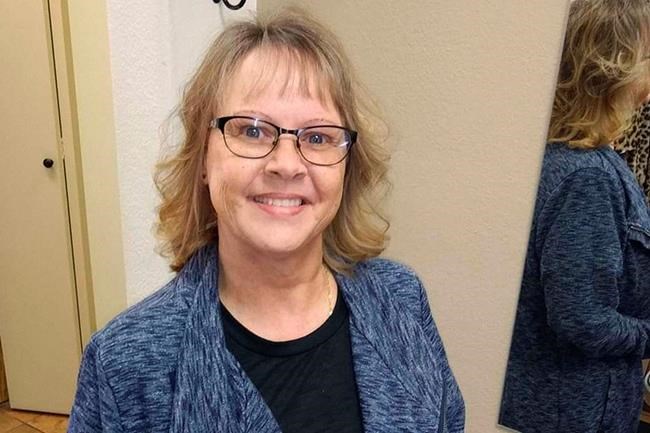
This March 12, 2019 photo provided by Brigitte Sagasser shows her in San Marcos, Calif. Sagasser, a participant in a federal study for rare cancers, seems to be benefitting from the treatment. Her tumors have been shrinking since starting the treatment a year ago for a rare type of ovarian cancer that defied surgeries, chemotherapy and hormone therapy. (Courtesy Brigitte Sagasser via AP)

Brigitte Sagasser, 54, of San Marcos, California, is one study participant who seems to be benefiting. Her tumors have been shrinking since starting the treatment a year ago for a rare type of ovarian cancer that defied surgeries, chemotherapy and hormone therapy.

“I’ve tried all kinds of stuff before and nothing really helped in the long run,” she said. “I felt like I was kind of out of choices on what could be done.”

Rare cancers individually affect fewer than 6 in 100,000 people a year, but collectively make up 22% of all cancer cases. They include tumors in the brain, blood, glands, bones, and skin, and there’s often not even a study that patients can join to test an experimental drug or therapy.

“We’re trying to fill that gap” by funding the federal study, said Dr. Elad Sharon of the National Cancer Institute.

It has enrolled more than 550 patients in the U.S. and Canada since it started in 2017. Currently, it’s testing a combo of two immunotherapy drugs, Opdivo and Yervoy — in people grouped into “buckets” according to their tumour type. The drugs’ maker, Bristol-Myers Squibb, is donating them for the study.

One of these buckets just reached critical mass to yield results — neuroendocrine tumors, which can form many places in the body but often in the lungs or digestive tract. Biopsies when the disease is diagnosed classify the cases as high, low or intermediate grade according to how aggressively the cells seem to be growing.

In the study of 32 patients, the drug combo only worked for high-grade tumors. Eight of the 18 patients saw their tumors significantly shrink. None of the others did.

In the high-grade group, survival at six months without worsening disease was 31% — better than the 10% that doctors historically have seen for such patients, said Patel, who has been a paid adviser to Bristol-Myers and several other companies.

“It gives us a glimpse into what can happen,” said another study leader, Dr. Razelle Kurzrock at the San Diego cancer centre. “If we get it right, maybe we can get it to work in more patients.”

About one-quarter of all patients had symptoms typical of immune system therapies — effects on the liver, fatigue, nausea — and 6% had colitis, gut inflammation. But side effects were manageable and not severe, Patel said.

Identifying which patients are likely to benefit from these drugs spares others these side effects, expense and false hope.

Sagasser developed a problem from Yervoy, but continues to get Opdivo every two weeks. She is looking forward to next year, when it will be 20 years since she was first diagnosed.

“It will be a party next year, believe me,” she said. “I expect to be cancer-free by then and for good.”

___

Marilynn Marchione can be followed at http://twitter.com/MMarchioneAP

___

The Associated Press Health & Science Department receives support from the Howard Hughes Medical Institute’s Department of Science Education. The AP is solely responsible for all content.

Report Error Submit a Tip

More Stories

Body of 11-year-old Calgary boy missing for two weeks found in water pipe

Dayne Patterson and Bill Graveland, The Canadian Press 5 minute read Preview

Body of 11-year-old Calgary boy missing for two weeks found in water pipe

Dayne Patterson and Bill Graveland, The Canadian Press 5 minute read Updated: Yesterday at 9:05 PM CDT

CALGARY - An 11-year-old Calgary boy who disappeared two weeks ago has been found dead in a labyrinth of pipes under the city, police announced Wednesday.

Chief Katie McLellan said the boy, named Parker, was discovered in a small water pipe underneath Deerfoot Trail, the city's major north-south expressway.

"For nearly two weeks, so many people woke up hoping it would be the day Parker came home," McLellan told reporters.

"Instead, we are here sharing news that is heartbreaking for his family and for everyone who has been carrying that hope."

Read
Updated: Yesterday at 9:05 PM CDT

Use it twice: a data centre we could support

Hersh Seth 5 minute read Preview

Use it twice: a data centre we could support

Hersh Seth 5 minute read 2:00 AM CDT

In June, Premier Wab Kinew rejected a massive AI data centre planned near Île-des-Chênes. The project would have used 500 megawatts of power, which is about the same as the Grand Rapids generating station, and would have run on six natural gas turbines. Kinew said the environmental cost was too high and the long-term benefit for Manitobans was too low.

He made the right call. But simply saying no to data centres is not enough.

Winnipeg is a cold city. Data centres are basically huge electric heaters with computers inside. Almost every watt they use turns into heat, and most facilities pay to release it into the air. In a city that spends half the year paying to stay warm, that’s not just waste; it’s an opportunity. The idea is simple: use the energy twice. First for computing, then for heating our buildings.

The stakes are real. Manitoba Hydro’s new resource plan says peak demand will exceed our capacity as early as 2029 or 2030, and that the province will need about 1,760 additional megawatts of dependable capacity by 2035.

Read
2:00 AM CDT

It isn’t ‘just the weather’

Erna Buffie 5 minute read 2:00 AM CDT

I was reading The Guardian the other day, which is one of the best, if not the best, newspaper for climate change coverage. I say this, despite the fact that it still silos the subject into a special section called “Climate Crisis and Environment.”

And it continues to publish front page headlines like “May and June heatwave kills about 2,700 in England and Wales, data suggests,” with no reference to climate change, until you hit the body of the story.

Which, quite frankly, is better than most newspapers do.

Indeed, in a recent issue of The Guardian, there’s an article about just that — the fact that an analysis of British newspapers revealed that 72 per cent of articles covering the U.K.’s June heatwave failed to even mention the climate crisis.

Report draws link between missing Indigenous women and trafficking across Canada

Marsha McLeod 6 minute read Preview

Report draws link between missing Indigenous women and trafficking across Canada

Marsha McLeod 6 minute read Tuesday, Jul. 28, 2026

A new analysis of online sex advertisements featuring Indigenous women has identified cross-country corridors that are highly indicative of sex trafficking, while revealing insight into how women and girls are exploited in Winnipeg.

Read
Tuesday, Jul. 28, 2026

Gaps in homecare leave Winnipeg man in perilous situation

Nicole Buffie 4 minute read Preview

Gaps in homecare leave Winnipeg man in perilous situation

Nicole Buffie 4 minute read Yesterday at 6:00 AM CDT

Tom Landy fears he won’t live long enough to receive adequate homecare.

The 49-year-old Winnipegger has spinal muscular atrophy, a degenerative disease, and requires 24-7 homecare, but gaps in his care leave him sitting in one spot for hours and lately he’s developed bed sores.

Landy was approved for around-the-clock care in June 2025, but staffing issues and an investigation into a homecare worker’s workplace injury have left him without help for periods of time throughout the day and forced his 76-year-old father to fill in.

“This is what they’re here for, to take care of me, and now it feels like I’m a burden,” he said from his home in the Maples.

Read
Yesterday at 6:00 AM CDT

Saying goodbye to a friend I never met

Pam Frampton 5 minute read Preview

Saying goodbye to a friend I never met

Pam Frampton 5 minute read Yesterday at 2:00 AM CDT

Hedie Epp and I first connected over a column I wrote in October 2023 about my mother’s dementia. Now I find myself awash in sadness for the loss of this person I will never get to meet.

Read
Yesterday at 2:00 AM CDT