Tougher laws needed to police cultural appropriation in fashion, study says

Advertisement

Advertise with us

WATERLOO, Ont. - A global think tank is calling for tougher intellectual property laws that would protect Indigenous arts and traditions from cultural appropriation in the fashion industry.

Read this article for free:


or

Already have an account? Log in here »

To continue reading, please subscribe:

Subscribe and receive a limited-edition Free Press branded hat or tote.

Digital Subscription

One year of digital access for only $205*

  • Enjoy unlimited reading on winnipegfreepress.com
  • Read the E-Edition, our digital replica newspaper
  • Access News Break, our award-winning app
  • Play interactive puzzles

*First annual payment billed as $205.00 + GST for one year. This annual subscription will automatically renew at $233.00 + GST every 52 weeks (10% off the regular annual price of $259.35). Offer available to new and qualified returning subscribers only. Cancel any time.

To continue reading, please subscribe:

Add Free Press access to your Brandon Sun subscription for only an additional

$1 for the first 4 weeks*

  • Enjoy unlimited reading on winnipegfreepress.com
  • Read the E-Edition, our digital replica newspaper
  • Access News Break, our award-winning app
  • Play interactive puzzles
Start now

*Your next Brandon Sun subscription payment will increase by $1.00 and you will be charged $17.95 plus GST for four weeks. After four weeks, your payment will increase to $24.95 plus GST every four weeks.

Hey there, time traveller!
This article was published 04/04/2019 (2701 days ago), so information in it may no longer be current.

WATERLOO, Ont. – A global think tank is calling for tougher intellectual property laws that would protect Indigenous arts and traditions from cultural appropriation in the fashion industry.

A new report from the Centre for International Governance Innovation says traditional cultural expressions “are undeniably” forms of intellectual property but are largely excluded from existing protections offered by the World Intellectual Property Organization (WIPO).

The study’s Canadian author Brigitte Vezina says “there is a grey zone between harmful misuse and permissible inspiration,” making it very difficult to assess when something has crossed the line.

“It is urgent. We don’t see any other way to put an end to cultural appropriation,” says the Montreal-born Vezina, an international law consultant in The Hague and previously a legal officer at WIPO.

“Copying traditional design motifs without consent can erode a community’s identity and cause profound harm.”

As defined by the Geneva-based WIPO, traditional cultural expressions include patterns, motifs and other design features created by traditional or Indigenous cultures.

Vezina says copyright laws demand a certain threshold for a work to be considered original — a threshold most traditions fail to meet because they are often passed down through generations.

“From a copyright standpoint, traditional cultural expressions are considered to be in the public domain and that makes them freely available for anyone to use,” says Vezina, adding that also makes them vulnerable to misuse.

Her report, Curbing Cultural Appropriation in the Fashion Industry, points to examples that include Nike workout leggings for women in 2013 that featured a traditional tattoo for Samoan men. A public outcry forced Nike to pull the leggings from sale and apologize, but they said no offence had been intended.

“The problem is everything has to be done through social pressure nowadays because the legal basis does not exist,” adds Vezina, urging more public awareness on the issue but also greater industry sensitivity.

“A lot of designers claim innocence or that they didn’t know that they were doing anything wrong. Often it’s true, it’s unwilling and it might be out of ignorance but there’s also a lot of work that needs to be done to make sure that designers should be aware that it’s not OK.”

She notes that successful collaborations abound when the source material is acknowledged and respected.

They include the high-fashion Brazilian label Osklen, which drew inspiration for its spring 2016 collection in the tattoos and traditional fabrics of the Ashaninka people, an Indigenous tribe living in the Amazonian rainforest of Brazil and Peru.

The label asked permission and paid the tribe an agreed-upon equivalent of US$50,000, some of which funded a new school and a store where the tribe could sell artisanal jewelry and clothing.

While misuse can be an economic blow to a community, Vezina says the social and cultural impact can be far greater — “it can erode their sense of belonging within their community and their sense of identity.”

Vezina says the definition of cultural appropriation is “fluid” but she identifies three characteristics: a change of cultural context, a power imbalance between the taker and the holder, and the absence of the holder’s involvement.

She’s also come up with four questions that can help determine whether something crosses the line or not: Does it understand and respect the community? Does it merely replicate the work or actually transform it into something new? Does it acknowledge and attribute the community that served as inspiration? Does it include authorization and even collaboration of the source community or communities?

A WIPO intergovernmental committee has been working on developing a legal framework since 2000, adds Vezina. But she says it’s a long process that is entirely in the hands of member states, which include Canada.

The Centre for International Governance Innovation is a non-partisan think tank based in Waterloo, Ont.

Report Error Submit a Tip

More Stories

Letters, Aug. 26

7 minute read 2:00 AM CDT

Time to be resolute

Re: “Life during wartime” (Letters, Aug. 25)

Kudos to Brent Corrigan for his perfectly penned letter about how he will be responding to the Trump government’s economic war against Canada.

To support Canadian sovereignty and businesses, we should all be actively redirecting our money away from U.S. products, services and travel, and toward Canadian alternatives.

Inflation-battered U.S. voters could prove to be key Canadian ally in fight against Trump’s trade tyranny

Dan Lett 5 minute read Preview

Inflation-battered U.S. voters could prove to be key Canadian ally in fight against Trump’s trade tyranny

Dan Lett 5 minute read Monday, Aug. 24, 2026

Is there anything or anyone that can help Canada and the United States avoid an unprecedented trade war?

Both nations stand poised on the precipice of a tariff battle that could — in the worst-case scenario — trigger an economic downturn. Both countries have a lot to lose, but neither country is showing any sign of backing down.

Canadian Prime Minister Mark Carney has, by all accounts, given negotiation a full chance to defuse the trade war. It didn’t work and it appears now that nothing — neither thoughtful negotiation or retaliatory measures — will dissuade U.S. President Donald Trump from his war of trade attrition.

Increasingly, it appears that if Trump is going to back away from punitive tariffs against Canada, it will be because of mounting pressure from within the United States and not because of tough talk and countermeasures from this side of the border.

Read
Monday, Aug. 24, 2026

Emergency rooms and health-care bottlenecks

Editorial 4 minute read Preview

Emergency rooms and health-care bottlenecks

Editorial 4 minute read 2:00 AM CDT

Manitoba’s emergency rooms are being crushed under the weight of a health-care problem that cannot be fixed inside emergency departments.

The latest picture from Winnipeg hospitals is grim. ER wait times hit an all-time high this year and there appears to be no relief in sight.

Despite a 2023 election pledge by the NDP to shorten wait times, they are getting longer and patient care is suffering. ER doctors and nurses interviewed recently by the Free Press said they have never seen the situation this bad.

The temptation for government is to look for quick fixes: add capacity to emergency departments, redirect patients to clinics or move hospital beds around the system.

Read
2:00 AM CDT

Reject roadie role, stick to your own tune

Maureen Scurfield 5 minute read 2:00 AM CDT

DEAR MISS LONELYHEARTS: My girlfriend is a great singer and guitar player, but now she’s gotten in with some male musicians to form a band for playing bars. I’m a drummer, but a terrible one. They found themselves a great one a couple weeks ago, so I’ve been pushed out.

My girl could see I was feeling jealous of her continued band action, so she told me I should still come out to help schlep the equipment to and from the gig. That’s just not happening — I won’t be their lowly roadie to boss around!

So, now what happens to her and I? Let me guess — we break up, and what do you know? The singer guy sees his chance and makes a big play for her. She is a beautiful, talented woman. Help!

— Feeling Anxious, Osborne Village

The rural/urban immigration difference

Patrick MacKenzie and Enver Naidoo 4 minute read 2:00 AM CDT

Conversations about immigration often pretend that managing the numbers and where they go is as simple as turning a dial up or down. Like most things, the truth is more nuanced.

The Immigrant Employment Councils of Canada network’s 18-month engagement with over 1,100 employers, community and settlement service stakeholders made this apparent in many ways but, perhaps an underappreciated facet is the contrast between urban and rural immigration, and what challenges both immigrants and employers face in each context.

Rural and urban labour markets differ in structure, services and constraints, and a one-size solution will underdeliver everywhere.

This is why we have government programs such as the Rural Community Immigration Pilot, currently active in 14 areas across the country, as well as the provincial nominee program and provincial rural immigration pilots such as Manitoba’s West-Central Immigration Initiative.

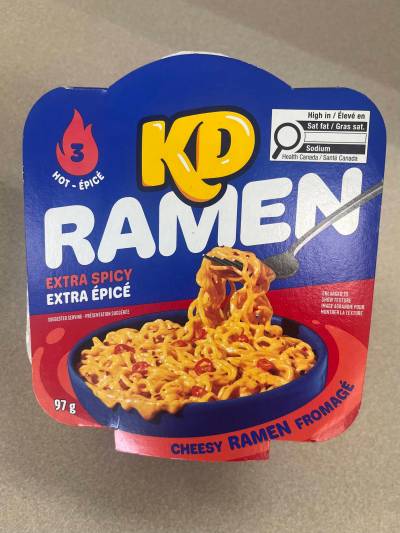
Arts & Life team taste-tests new Kraft concoction

AV Kitching 4 minute read Preview

Arts & Life team taste-tests new Kraft concoction

AV Kitching 4 minute read 2:00 AM CDT

Prepare your tongue for the ultimate thrill, as Kraft Dinner has once again veered wildly out of its box and into new territory.

Just when we all thought the brand had peaked after unleashing its limited-run New York-style KD Mac & Cheesecake earlier this summer, the beloved pantry staple set its sights on dethroning another kitchen cupboard essential: instant noodles.

Emboldened by the rapturous reception of cheesecake lovers nationwide who had clearly been hankering for the savoury-sweet combo, the convenience food’s latest mashup pairs its infamous neon-orange cheese powder with classic ramen soup seasoning and dehydrated noodles.

The resulting bowl is a respectable attempt at creating a North American version of the South Korean trend of noodle lovers adding slices of processed cheese to their ramyeon to temper spice levels and added creaminess.

Read
2:00 AM CDT