NYC Chinese eatery heats up cultural appropriation debate

Advertisement

Advertise with us

A New York City restaurant owner who touted her "clean" American-Chinese cuisine and derided Chinese dishes as swimming in "globs of processed butter," sodium and MSG is renewing the long-simmering debate about stereotyping and cultural appropriation in the restaurant world.

Read this article for free:


or

Already have an account? Log in here »

To continue reading, please subscribe:

Subscribe and receive a limited-edition Free Press branded hat or tote.

Digital Subscription

One year of digital access for only $205*

  • Enjoy unlimited reading on winnipegfreepress.com
  • Read the E-Edition, our digital replica newspaper
  • Access News Break, our award-winning app
  • Play interactive puzzles

*First annual payment billed as $205.00 + GST for one year. This annual subscription will automatically renew at $233.00 + GST every 52 weeks (10% off the regular annual price of $259.35). Offer available to new and qualified returning subscribers only. Cancel any time.

To continue reading, please subscribe:

Add Free Press access to your Brandon Sun subscription for only an additional

$1 for the first 4 weeks*

  • Enjoy unlimited reading on winnipegfreepress.com
  • Read the E-Edition, our digital replica newspaper
  • Access News Break, our award-winning app
  • Play interactive puzzles
Start now

*Your next Brandon Sun subscription payment will increase by $1.00 and you will be charged $17.95 plus GST for four weeks. After four weeks, your payment will increase to $24.95 plus GST every four weeks.

Hey there, time traveller!
This article was published 12/04/2019 (2726 days ago), so information in it may no longer be current.

A New York City restaurant owner who touted her “clean” American-Chinese cuisine and derided Chinese dishes as swimming in “globs of processed butter,” sodium and MSG is renewing the long-simmering debate about stereotyping and cultural appropriation in the restaurant world.

Arielle Haspel, who is white and a certified health coach, told the dining website Eater that she wanted to offer modified, “clean” versions of typical Chinese menu items. In a now deleted Instagram post, Haspel said that a Chinese noodle dish, lo mein, can make people feel “bloated and icky.”

Online critics pounced, including New York Baohaus restaurateur and author Eddie Huang who dismissed Lucky Lee’s as “the Fyre Fest of food & ‘wellness,'” on the restaurant’s Instagram page.
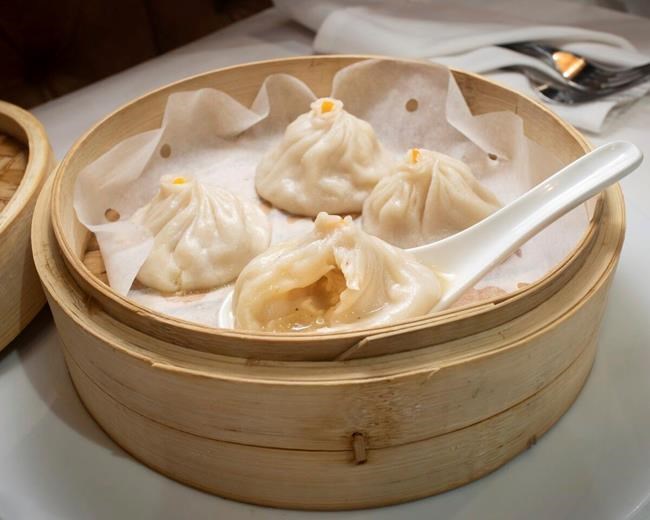
This undated photo provided by Stratis Morfogen in April 2019 shows the French onion soup dumplings at Brooklyn Chop House in New York City. Morfogen, who is of Greek descent, doesn’t spend time worrying about the cultural appropriation accusations his steakhouse has received for its Chinese-inspired items. (Daniel Kwak/Stratis Morfogen via AP)

Haspel has since apologized, but her comments are the latest misstep in a succession of restaurateurs and TV chefs who have been criticized for insensitivity when dealing with food from a culture that’s not their own.

Robert Ku, a professor of Asian American studies and food studies at Binghamton University, New York, said Haspel came off as relying on age-old stereotypes of Chinese food being unsanitary or grotesque. It was especially tone-deaf in New York City where most locals regularly eat Chinese food, he added.

“These are long-standing tropes that have followed specifically Chinese food more than any other cuisine,” said Ku, who has written about the cultural politics of Asian food in the U.S. “What she’s focused on is health and being clean, which implies the others were not.”

He also said it’s a myth that Chinese-American restaurants use MSG. Most cut it out of their kitchens in the 1970s because it was so unpopular, making Haspel’s reference problematic, Ku said.

Haspel was apologetic in an interview Friday with the New York Times .

“We were never trying to do something against the Chinese community. We thought we were complementing an incredibly important cuisine, in a way that would cater to people that had certain dietary requirements,” she said. “Shame on us for not being smarter about cultural sensitivities.

She previously acknowledged the uproar via Instagram and promised to listen and reflect on people’s comments.

She did not return messages from the AP seeking comment.

White TV chefs like Andrew Zimmern and Gordon Ramsay have been skewered for their respective Asian restaurants (both of which also use the adjective “lucky” in their name).

Zimmern last year said in an interview that his Lucky Cricket restaurant in Minnesota was saving the souls of people who dine at “(expletive) restaurants masquerading as Chinese food” in the Midwest. The “Bizarre Foods” host later apologized.

Ramsay, who is British, is opening the Japanese-inspired Lucky Cat restaurant in London this summer. In a press release in February, the “Kitchen Nightmares” star promised a restaurant that would be “revolutionary” and “authentic,” but many noted the lack of Asians in key executive positions.

On the flipside, there are chefs who have earned reputations as visionaries for mixing cuisines. Chef Roy Choi elevated the food truck when his Kogi BBQ hit the streets of Los Angeles in 2008. Choi combined his Korean roots with tortillas and came up with mouthwatering munchies like Korean short rib tacos.
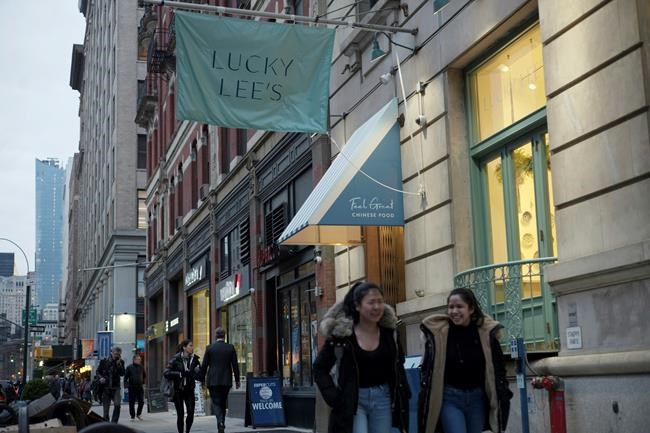
In this Thursday, April 11, 2019 photo, pedestrians walk past the Lucky Lee's restaurant in the Greenwich Village neighborhood of New York. The owner has drawn backlash for touting offerings of “clean” American-Chinese cuisine, renewing debate about cultural appropriation in the restaurant world. (AP Photo/Patrick Sison)

Being against cultural appropriation doesn’t necessarily mean being against anyone cooking outside of their own ethnicity or culture, said Ku, the professor. It’s the line between appropriation and appreciation where things can get tenuous.

“What people are reacting to is saying ‘For generations, Chinese in America were doing stuff but they did it horribly. As a white person, I can do it better,'” Ku said.

New York restaurateur Stratis Morfogen, who is of Greek descent, doesn’t worry about the cultural appropriation accusations against his steakhouse for its Chinese-inspired items.

Brooklyn Chop House, which opened last fall, offers cheeseburgers, pastrami and French onion soup encapsulated in Chinese-dumpling form. Morfogen is collaborating with singer Patti LaBelle to bring the dumplings to frozen food aisles later this year, packaged in reusable bamboo steamers.

“If people didn’t move forward or innovate or create and fuse different cultures together, the culinary landscape would be pretty boring,” Morfogen said.

Morfogen employs more than 15 chefs from China across his restaurants and a Chinese chef is also one of his partners. He thinks restaurant owners worried about inadvertently stereotyping just need to think twice before they speak.

“I really believe that those words are insensitive and it hurts people,” Morfogen said. “I don’t think that is what food is meant to be. I think food is meant to bring all the cultures together and respect each other.”

____

Follow Terry Tang on Twitter at www.twitter.com/ttangAP
Report Error Submit a Tip

More Stories

Province invests $3.8M in culinary arts training facility for francophone high school students

Kelly-Anne Riess 3 minute read Preview

Province invests $3.8M in culinary arts training facility for francophone high school students

Kelly-Anne Riess 3 minute read Yesterday at 12:10 PM CDT

A new dedicated culinary arts training facility will give francophone high school students a place to learn the trade in French.

The Manitoba government announced this week that it is providing $3.8 million toward the purchase of a property at 170 Marion St. and beginning design work for its renovation.

The facility will be the first dedicated vocational education site operated by Division scolaire franco-manitobaine, and the first fully French-language culinary arts program for Grade 11 and 12 students, preparing them for work in the restaurant and service sector.

“French-language education is a fundamental part of Manitoba’s identity and strength,” Education Minister Tracy Schmidt said in a news release. “It is an exciting step that will help strengthen both the francophone community and our skilled workforce.”

Read
Yesterday at 12:10 PM CDT

Positive anticipation is growing about major housing developments underway in Winnipeg’s downtown

Gabrielle Piché 10 minute read Preview

Positive anticipation is growing about major housing developments underway in Winnipeg’s downtown

Gabrielle Piché 10 minute read Friday, Sep. 25, 2026

If traffic is light and the wind is down, Somia Sadiq is able to hear the roar of Winnipeg Jets fans twice: first through her window, then on TV.

From her apartment view high above downtown, she can look out at Graham Avenue’s painted pedestrian landscape, see construction cranes and hear the heavy equipment at work as massive housing projects take shape at The Forks, at what used to be Portage Place shopping centre and at the former Hudson’s Bay building.

Sadiq has lived at 300 Main for 2 1/2 years, a few steps from the city’s famous, windy and reopened-to-pedestrians Portage Avenue intersection. At 42 storeys, it’s the tallest building in Winnipeg.

She is among 18,000 downtown residents who will soon be joined by thousands of others attracted to the city’s core by the new wave of major construction projects.

Read
Friday, Sep. 25, 2026

Signs of local neo-Nazi recruiting efforts spark concern

Conrad Sweatman 7 minute read Preview

Signs of local neo-Nazi recruiting efforts spark concern

Conrad Sweatman 7 minute read Saturday, Sep. 26, 2026

A far-right canvassing push in Manitoba this month is raising concerns among Winnipeg residents.

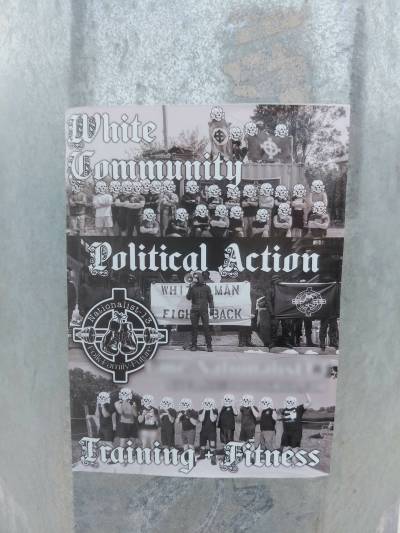
Stickers promoting Nationalist-13, a men’s-only neo-Nazi group also known as NS-13 based primarily in Hamilton, Ont., have appeared in Winnipeg and parts of southern Manitoba. The stickers bear national socialist branding and messages such as “White Man, Fight Back” and “White Community, Political Action, Training and Fitness.”

Winnipeg writer Jess Woolford recently encountered an NS-13 poster on Pembina Highway.

“It was appalling,” Woolford said. “It has the Nazi death heads covering people’s faces. It was pretty disturbing to come across this … I just didn’t expect to see it so blatantly displayed in my neighbourhood.”

Read
Saturday, Sep. 26, 2026

Bombers let another one slip away and face pivotal issue

Taylor Allen 7 minute read Preview

Bombers let another one slip away and face pivotal issue

Taylor Allen 7 minute read Saturday, Sep. 26, 2026

Mike O’Shea summed it up best.

“That one doesn’t feel very good.”

Nor should it.

The Winnipeg Blue Bombers started out hot Friday night, only to run out of gas down the stretch and allow the visiting Toronto Argonauts to steal a 30-28 victory.

Read
Saturday, Sep. 26, 2026

Winnipeg Police Service recognizes, honours residential school survivors as Orange Shirt Day approaches

Malak Abas 3 minute read Preview

Winnipeg Police Service recognizes, honours residential school survivors as Orange Shirt Day approaches

Malak Abas 3 minute read Yesterday at 7:27 PM CDT

Winnipeg Police Service members lit a sacred fire outside of their North District Station in recognition of residential school survivors ahead of the upcoming Orange Shirt Day.

“We know that the relationship between policing and Indigenous communities has not always been one of trust,” WPS Chief Gene Bowers told visitors at a gathering outside of the station Sunday afternoon.

“We cannot change that history, but we can acknowledge it, we can learn from it, and we can take responsibility for how we move forward.”

The sacred fire, guided by elder Mike Calder, will burn for 24 hours at the Sinclair Street station, and then be allowed to extinguish naturally. It’s the second year the WPS has lit a sacred fire in recognition of residential school survivors — last year, the fire was lit outside of WPS headquarters on Smith Street.

Read
Yesterday at 7:27 PM CDT

Charges laid after St. Boniface hospital assault

1 minute read Yesterday at 12:40 PM CDT

A man has been charged after a serious assault at St. Boniface Hospital on Saturday.

Just after 1 a.m. Sept. 26, two men were having an argument that escalated to a physical fight in which the victim sustained serious upper-body injuries, the Winnipeg Police Service stated in a news release Sunday.

When police arrived, a 36-year-old man was being detained by security personnel. The incident didn't involve hospital staff and no one else was hurt, the release stated.

James Anthony Junior Clark, 36, was arrested and charged with assault causing bodily harm and two counts of violating a probation order.