Power to the people
Impact of Winnipeg General Strike still felt a century later
Advertisement
Read this article for free:
or
Already have an account? Log in here »
To continue reading, please subscribe:

Digital Subscription
One year of digital access for only $205*
- Enjoy unlimited reading on winnipegfreepress.com
- Read the E-Edition, our digital replica newspaper
- Access News Break, our award-winning app
- Play interactive puzzles
*First annual payment billed as $205.00 + GST for one year. This annual subscription will automatically renew at $233.00 + GST every 52 weeks (10% off the regular annual price of $259.35). Offer available to new and qualified returning subscribers only. Cancel any time.
To continue reading, please subscribe:
Add Free Press access to your Brandon Sun subscription for only an additional
$1 for the first 4 weeks*
- Enjoy unlimited reading on winnipegfreepress.com
- Read the E-Edition, our digital replica newspaper
- Access News Break, our award-winning app
- Play interactive puzzles
*Your next Brandon Sun subscription payment will increase by $1.00 and you will be charged $17.95 plus GST for four weeks. After four weeks, your payment will increase to $24.95 plus GST every four weeks.
Read unlimited articles for free today:
or
Already have an account? Log in here »
Hey there, time traveller!
This article was published 20/04/2019 (2714 days ago), so information in it may no longer be current.
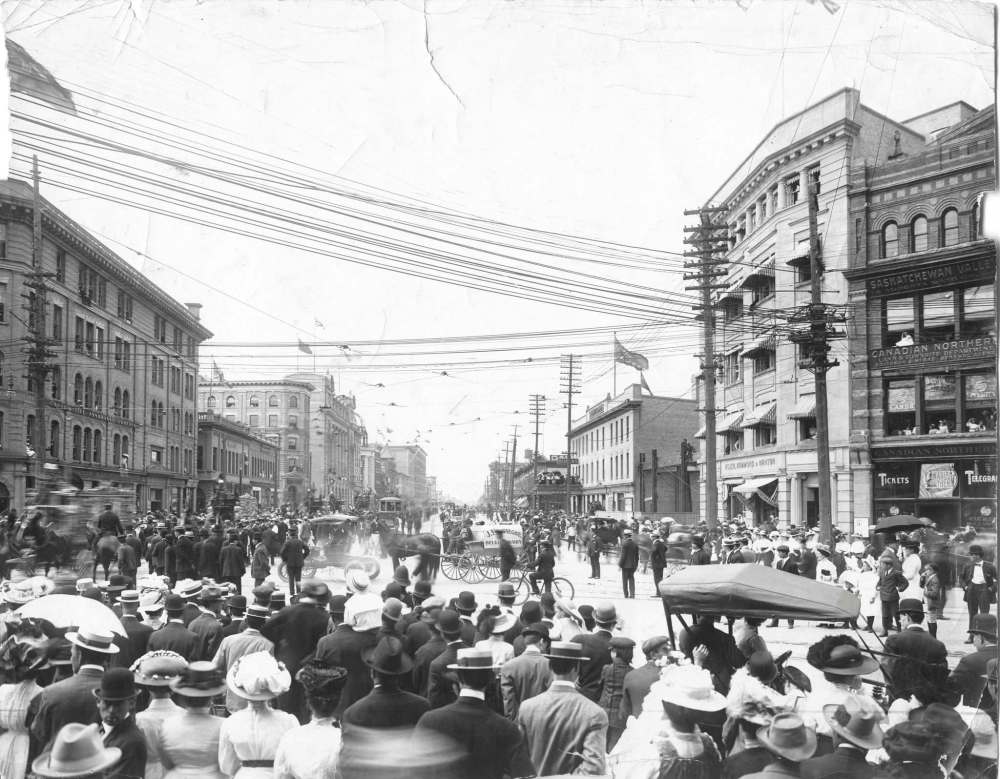
A century ago, 35,000 Winnipeggers walked off the job in demand for a living wage, an eight-hour work day and the right to organize.
In May and June 1919, with deplorable living and working conditions, hyperinflation and an intense concentration of wealth south of the Canadian Pacific Railway line, union and non-union workers collectively used their voices to advocate for a more equitable and democratic society.
One hundred years later in Canada, union workers are being maligned on social media, collective bargaining is sneered at and many Canadians are struggling to find the means for a decent life. Authoritarian populism has once again reared its ugly head to scapegoat the vulnerable — Indigenous people, newcomers, the LGBTTQ* community and the working poor.
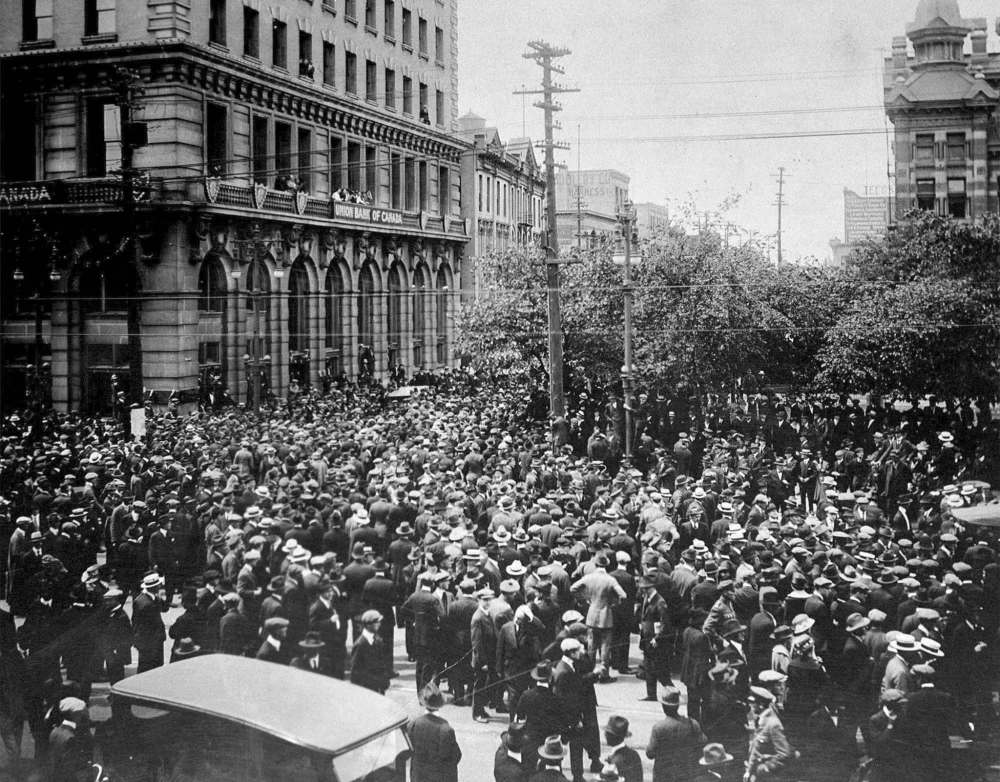
And those rail lines still symbolize a critical divide in our city between those who have and those who have not.
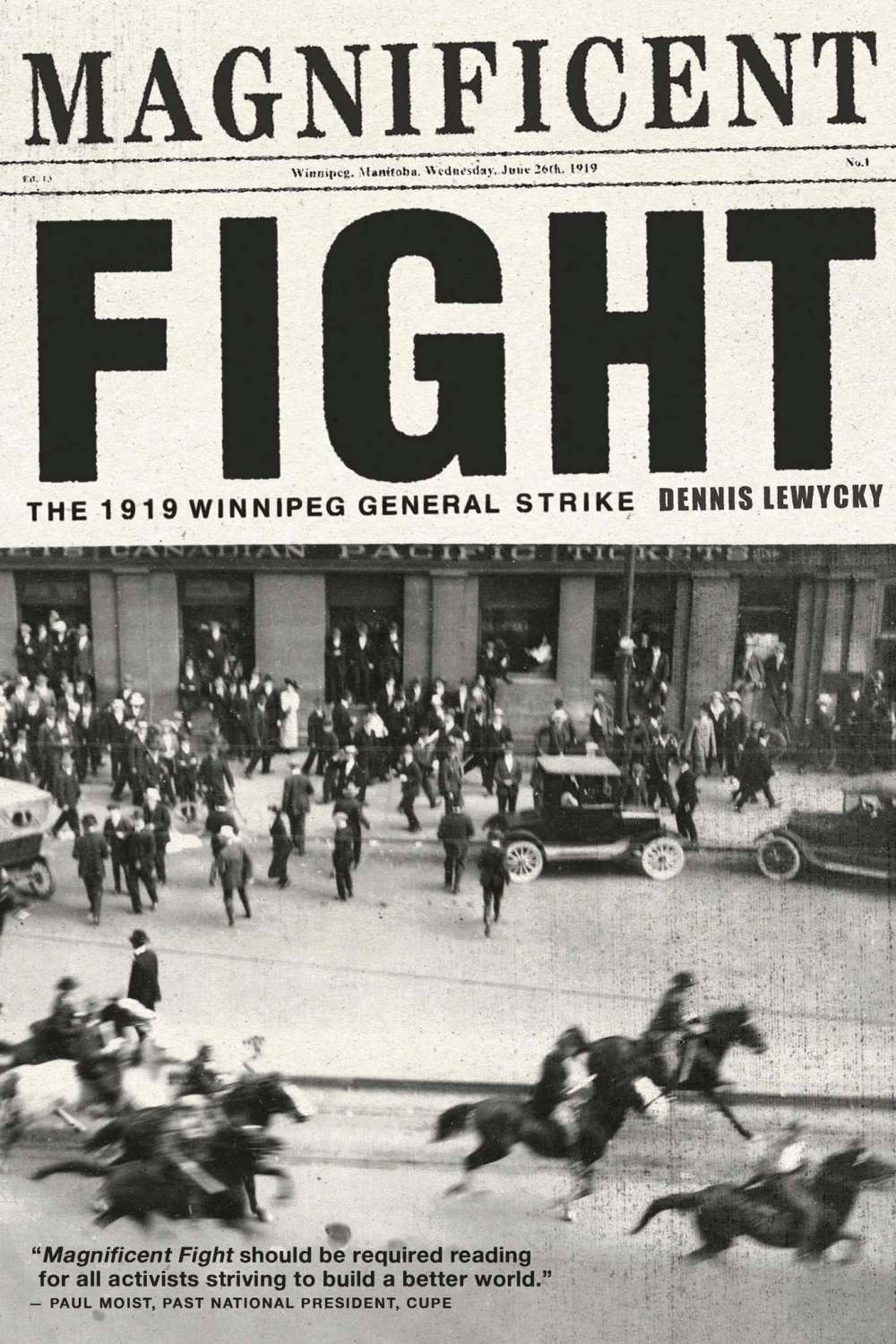
In Magnificent Fight: The 1919 Winnipeg General Strike, local social advocate and activist Dennis Lewycky makes a bold attempt to make sense of the strike, a century of historical analysis and the complex task of assessing its success. Structuring his narrative under the headings of “Before the Strike,” “After the Strike” and “Since the Strike,” Lewycky carefully surfaces the significance of a general and sympathetic strike. In this context, “general strikes were considered a relatively rare tactic,” he writes, and “sympathetic strikes were unheard-of.”
And in 1919, the stakes were incredibly high, which resulted in workers from all walks of life banding together to demand a more just society. As Lewycky notes, the strike was the catalyst for massive fissures in society: “The divide in the community was largely along class lines, according to those with or without property and those living south or north of the railway lines.” Progressive Winnipeggers were demanding to control their own destinies, both politically and economically, and they knew that “their labour was essential to the employers and the economy and that they had some power to negotiate.” And this struggle, Lewycky writes, “necessarily meant taking some control from the ruling classes.”
For those who held the means of production — namely the elite and what would be known as the Committee of 1,000 — their resistance to the strike was fuelled “by a fear that revolution would take their privilege and power.” Those who enjoyed wide and treed avenues in Crescentwood and lavish dinners at the Manitoba Club (which still enjoys its exclusiveness) were not eager to share and turned to sinister tactics and powerful friends to protect their way of life.
Through the hiring of thugs after the police walked off the job, to dubious arrests of strike leaders and raids of labour temples, to deportations and acts of violence, the Committee of 1,000 and the governments of Winnipeg, Manitoba and Canada were determined, as they saw it, to defend “the constitutional order” of the new dominion. In reality, Lewycky says, “the conflicting interests of fair wages versus unlimited profits drove a large part of the hope and fear embodied in the The Strike.”

And following Bloody Saturday, which saw the death of two strikers and the eventual bogus trials of strike leaders, the strike itself ended. And so what? Here, Lewycky argues that the strike was a critical moment in Canadian consciousness, whereby it birthed the election of labour politicians, the Co-operative Commonwealth Federation (CCF) and eventually the NDP — all voices for workers and the social conscious of Parliament. The strike marked the beginning of the development of the welfare state and “at least contributed to a major shift in working class understanding of the state and how to organize to advocate for their interests,” Lewycky writes.

And much of what we enjoy today is as a result of the emancipatory and hopeful struggle of Winnipeggers who walked the same streets 100 years ago. Perhaps we owe it to their memories to keep democracy, equity and hope alive in a time of malaise.
Lewycky’s work is a call to all of us to begin the conversation of “how people who are disempowered can be empowered.” This is the antithesis to fascism and oppression.
And as the spectre of fascism becomes ever more present, we see the resistance through protest and collective voice: #MeToo, #SchoolStrikeforClimate, #BlackLivesMatter.
Magnificent Fight is a reminder that we do have a collective voice that is intensely powerful.
Matt Henderson is assistant superintendent of the Seven Oaks School Division.