Americans getting more inactive, computers partly to blame

Advertisement

Advertise with us

Americans are becoming increasingly sedentary, spending almost a third of their waking hours sitting down, and computer use is partly to blame, a new study found.

Read this article for free:

or

Already have an account? Log in here »

To continue reading, please subscribe:

Subscribe and receive a limited-edition Free Press branded hat or tote.

Digital Subscription

One year of digital access for only $205*

  • Enjoy unlimited reading on winnipegfreepress.com
  • Read the E-Edition, our digital replica newspaper
  • Access News Break, our award-winning app
  • Play interactive puzzles

*First annual payment billed as $205.00 + GST for one year. This annual subscription will automatically renew at $233.00 + GST every 52 weeks (10% off the regular annual price of $259.35). Offer available to new and qualified returning subscribers only. Cancel any time.

To continue reading, please subscribe:

Add Free Press access to your Brandon Sun subscription for only an additional

$1 for the first 4 weeks*

  • Enjoy unlimited reading on winnipegfreepress.com
  • Read the E-Edition, our digital replica newspaper
  • Access News Break, our award-winning app
  • Play interactive puzzles
Start now

*Your next Brandon Sun subscription payment will increase by $1.00 and you will be charged $17.95 plus GST for four weeks. After four weeks, your payment will increase to $24.95 plus GST every four weeks.

Hey there, time traveller!
This article was published 23/04/2019 (2655 days ago), so information in it may no longer be current.

Americans are becoming increasingly sedentary, spending almost a third of their waking hours sitting down, and computer use is partly to blame, a new study found.

Over almost a decade, average daily sitting time increased by roughly an hour, to about eight hours for U.S. teens and almost 6 1/2 hours for adults, according to the researchers. That includes school and work hours, but leisure-time computer use among all ages increased too.

By 2016, at least half of American kids and adults spent an hour or more of leisure time daily using computers. The biggest increase was among the oldest adults: 15% of retirement-aged adults reported using computers that often in 2003-04, soaring to more than half in 2015-16.
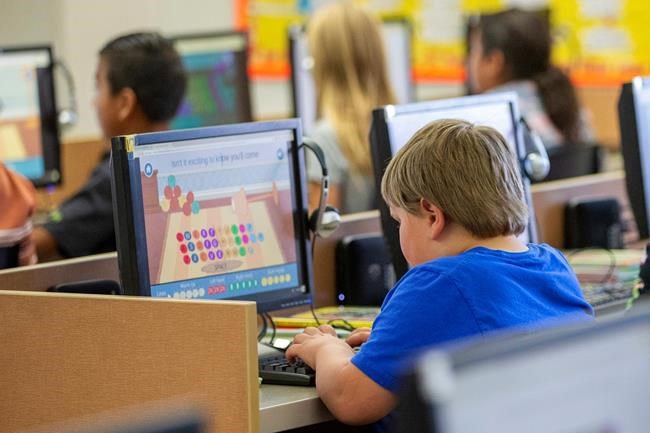
FILE - In this Oct. 29, 2018 file photo, students work on computers at an elementary school in Beaver, Utah. According to a study published on Tuesday, April 23, 2019, Americans are becoming increasingly sedentary, spending almost a third of their waking hours sitting down, and computer use is partly to blame. (Scott G Winterton/The Deseret News via AP)

Most Americans of all ages watched TV or videos for at least two hours daily and that was mostly unchanged throughout the study, ranging from about 60% of kids aged 5 to 11, up to 84% of seniors.

“Everything we found is concerning,” said lead author Yin Cao, a researcher at Washington University’s medical school in St. Louis. “The overall message is prolonged sitting is highly prevalent,” despite prominent health warnings about the dangers of being too sedentary.

The researchers analyzed U.S. government health surveys from almost 52,000 Americans, starting at age 5, from 2001-2016. Total sitting time was assessed for teens and adults starting in 2007. The results were published Tuesday in the Journal of the American Medical Association.

Studies have shown that prolonged periods of sitting can increase risks for obesity, diabetes, heart disease and some cancers. U.S. activity guidelines released last fall say adults need at least 150 minutes to 300 minutes of moderate-to-vigorous activity each week, things like brisk walking, jogging, biking or tennis. Muscle strengthening two days weekly is also advised. Immediate benefits include reduced blood pressure and anxiety and better sleep. Long-term benefits include improved brain health and lower risks for falls.

Kids aged 6 through 17 need 60 minutes of moderate-to-vigorous physical activity daily. Regular activity is even recommended for kids as young as 3. But only about 1 in 4 U.S. adults and 1 in 5 teens get recommended amounts.

College student Daisy Lawing spends a lot of time sitting, but says she doesn’t have much choice. Classes and homework on the computer take up much of her day.

“I always feel bad” about being inactive, she said Tuesday at an Asheville, North Carolina, cafe, explaining that she did a school paper about the benefits of physical activity.

“I try to walk a lot, try to work out twice a week. But sometimes I can’t because I’m too busy with school,” Lawing, 21, a junior at Appalachian State University in Boone.

Peter T. Katzmarzyk of the Pennington Biomedical Research Center in Baton Rouge, Louisiana, said people who sit all day need to do more than the minimum recommended amount of physical activity to counteract the harms of being sedentary.

“We’ve just got to really work on the population to get the message out there. Physical activity is good for everyone,” he said.

___

Follow AP Medical Writer Lindsey Tanner at @LindseyTanner.

___

The Associated Press Health and Science Department receives support from the Howard Hughes Medical Institute’s Department of Science Education. The AP is solely responsible for all content.

Report Error Submit a Tip

More Stories

Former teacher would suit up with Bombers in just ninth game of three-down loop career

Taylor Allen 6 minute read Preview

Former teacher would suit up with Bombers in just ninth game of three-down loop career

Taylor Allen 6 minute read Tuesday, Jul. 28, 2026

In a way, Micah Vanterpool’s brief stint as a Grade 3 teacher in his hometown of Tulsa, Okla., prepared him for life in the CFL.

The third-year offensive lineman for the Winnipeg Blue Bombers only has eight career games on his resumé as he has bounced around between the practice roster, starting lineup and injury report.

But thanks to his time in the classroom, he’s developed the patience that’s required by a young American trying to make a name for oneself in the three-down loop.

Vanterpool got into teaching after failing to make the New England Patriots in 2023. He said goodbye to the education profession the following year and took his talents up north to Winnipeg.

Read
Tuesday, Jul. 28, 2026

Time for a democratic reset

John R. Wiens 5 minute read 2:00 AM CDT

‘Amor mundi’, love of the world, is a basic tenet of Hannah Arendt’s philosophy of life and closely related to her idea of republican (i.e., democratic) politics. Currently, Western democracies have strayed far from the ideals stressed in this view.

Decision on corridor for Trans-Canada twinning near Ontario border expected this fall, province says

Chris Kitching 4 minute read Preview

Decision on corridor for Trans-Canada twinning near Ontario border expected this fall, province says

Chris Kitching 4 minute read Updated: Yesterday at 5:24 PM CDT

The Manitoba government is taking more time to evaluate and select a preferred corridor for the twinning of a 16-kilometre section of the Trans-Canada Highway near the Ontario boundary.

An earlier timeline indicated Manitoba Transportation and Infrastructure expected to choose an alignment by the fall of 2025. A provincial spokesperson told the Free Press on Monday a decision is expected this winter, but a different spokesperson said Wednesday a decision is expected this fall.

“The department continues to evaluate corridor alternatives and will undertake additional geotechnical, environmental and design work as part of the (functional design study) to support the selection of a preferred corridor,” the spokesperson said in a statement.

The study, which will include Crown-Indigenous and public consultation, is expected to be completed in late 2027, with a detailed design to follow.

Read
Updated: Yesterday at 5:24 PM CDT

South Osborne residents fail in bid to prevent construction of 131-unit apartment tower

Malak Abas 4 minute read Preview

South Osborne residents fail in bid to prevent construction of 131-unit apartment tower

Malak Abas 4 minute read Yesterday at 3:01 PM CDT

A proposed 10-storey highrise on an empty south Osborne lot will move forward despite concerns from residents about the impact the building will have on nearby parking and traffic.

The city-owned lot at 425 Osborne St., which previously served as a gas station but has long sat vacant, will be developed into a mixed-use residential building with 131 units, 39 of which would be affordable, along with additional office space for the adjacent Winnipeg Transit garage and the Transit customer service centre across the street, along with a two-level parkade for tenants and Transit employees.

The property is being developed by the University of Winnipeg Community Renewal Corp. 2.0, and designed by Prairie Architects Inc.

At a meeting held by city council’s appeal committee Wednesday, several residents said while they supported the idea of more housing in the Lord Roberts neighbourhood, they had lingering concerns about the impact the development will have on the already-busy area.

Read
Yesterday at 3:01 PM CDT

Saying goodbye to a friend I never met

Pam Frampton 5 minute read Preview

Saying goodbye to a friend I never met

Pam Frampton 5 minute read Yesterday at 2:00 AM CDT

Hedie Epp and I first connected over a column I wrote in October 2023 about my mother’s dementia. Now I find myself awash in sadness for the loss of this person I will never get to meet.

Read
Yesterday at 2:00 AM CDT

Bracket creep: A stealthy tax increase

Gage Haubrich 4 minute read Yesterday at 2:00 AM CDT

About $2,100. That’s how much Premier Wab Kinew’s bracket creep tax hike could cost your family by 2030, depending on how much you make.

Bracket creep is an income tax hike that happens when the government stops indexing tax brackets to inflation. That means that after getting a cost-of-living raise, taxpayers can be bumped into a new tax bracket and have their tax bill increased even though they can’t afford to buy more.

Think about it this way: A raise that only covers higher grocery prices isn’t a real raise. You’re not richer. Your cart costs the same. But the bigger number on your paycheque bumps you into a higher bracket. That means higher taxes on a paycheque that buys the exact same number of groceries as last year.

That’s why most provincial governments and the federal government adjust income tax brackets with inflation.