UN: No screen time for babies; only 1 hour for kids under 5
Advertisement
Read this article for free:
or
Already have an account? Log in here »
To continue reading, please subscribe:

Digital Subscription
One year of digital access for only $205*
- Enjoy unlimited reading on winnipegfreepress.com
- Read the E-Edition, our digital replica newspaper
- Access News Break, our award-winning app
- Play interactive puzzles
*First annual payment billed as $205.00 + GST for one year. This annual subscription will automatically renew at $233.00 + GST every 52 weeks (10% off the regular annual price of $259.35). Offer available to new and qualified returning subscribers only. Cancel any time.
To continue reading, please subscribe:
Add Free Press access to your Brandon Sun subscription for only an additional
$1 for the first 4 weeks*
- Enjoy unlimited reading on winnipegfreepress.com
- Read the E-Edition, our digital replica newspaper
- Access News Break, our award-winning app
- Play interactive puzzles
*Your next Brandon Sun subscription payment will increase by $1.00 and you will be charged $17.95 plus GST for four weeks. After four weeks, your payment will increase to $24.95 plus GST every four weeks.
Read unlimited articles for free today:
or
Already have an account? Log in here »
Hey there, time traveller!
This article was published 24/04/2019 (2654 days ago), so information in it may no longer be current.
LONDON – The World Health Organization has issued its first-ever guidance for how much screen time children under 5 should get: not very much, and none at all for those under 1.
The U.N. health agency said Wednesday that kids under 5 should not spend more than one hour watching screens every day — and that less is better.
The guidelines are somewhat similar to advice from the American Academy of Pediatrics. That group recommends children younger than 18 months should avoid screens other than video chats. It says parents of young children under two should choose “high-quality programming” with educational value and that can be watched with a parent to help kids understand what they’re seeing.
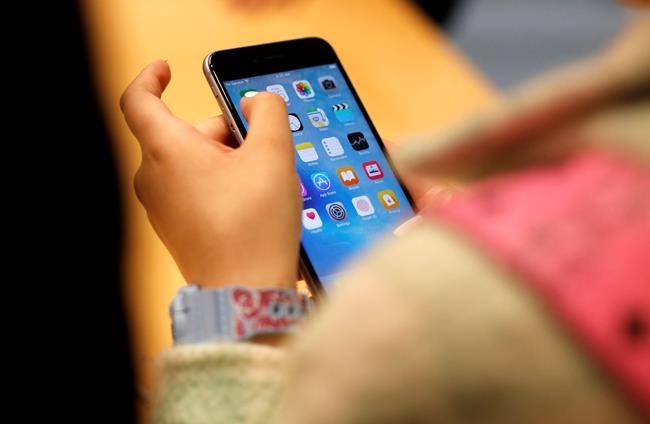
Some groups said WHO’s screen time guidelines failed to consider the potential benefits of digital media.
WHO’s screen time advice “overly focuses on quantity of screen time and fails to consider the content and context of use,” said Andrew Przybylski, director of research at the Oxford Internet Institute at the University of Oxford. “Not all screen time is created equal.”
Britain’s Royal College of Paediatrics and Child Health said the data available were too weak to allow its experts to set any thresholds for the appropriate level of screen time.
“Our research has shown that currently there is not strong enough evidence to support the setting of screen time limits,” said Dr. Max Davie, the college’s Officer for Health Improvement. “The restricted screen time limits suggested by WHO do not seem proportionate to the potential harm,” he said.
WHO did not specifically detail the potential harm caused by too much screen time, but said the guidelines — which also included recommendations for physical activity and sleep — were needed to address the increasing amount of sedentary behaviour in the general population. It noted that physical inactivity is a leading risk factor for death and a contributor to the rise in obesity.
The agency said infants less than 1 year should spend at least half an hour every day on their stomachs and that older kids should get at least three hours of physical activity every day.