Food poisoning remains persistent problem, US report finds

Advertisement

Advertise with us

NEW YORK - As recent illnesses tied to raw turkey, ground beef, cut melon and romaine lettuce suggest, U.S. food poisoning cases don't appear to be going away anytime soon.

Read this article for free:

or

Already have an account? Log in here »

To continue reading, please subscribe:

Subscribe and receive a limited-edition Free Press branded hat or tote.

Digital Subscription

One year of digital access for only $205*

  • Enjoy unlimited reading on winnipegfreepress.com
  • Read the E-Edition, our digital replica newspaper
  • Access News Break, our award-winning app
  • Play interactive puzzles

*First annual payment billed as $205.00 + GST for one year. This annual subscription will automatically renew at $233.00 + GST every 52 weeks (10% off the regular annual price of $259.35). Offer available to new and qualified returning subscribers only. Cancel any time.

To continue reading, please subscribe:

Add Free Press access to your Brandon Sun subscription for only an additional

$1 for the first 4 weeks*

  • Enjoy unlimited reading on winnipegfreepress.com
  • Read the E-Edition, our digital replica newspaper
  • Access News Break, our award-winning app
  • Play interactive puzzles
Start now

*Your next Brandon Sun subscription payment will increase by $1.00 and you will be charged $17.95 plus GST for four weeks. After four weeks, your payment will increase to $24.95 plus GST every four weeks.

Hey there, time traveller!
This article was published 25/04/2019 (2654 days ago), so information in it may no longer be current.

NEW YORK – As recent illnesses tied to raw turkey, ground beef, cut melon and romaine lettuce suggest, U.S. food poisoning cases don’t appear to be going away anytime soon.

The Centers for Disease Control and Prevention said in a report Thursday that the frequency of several types of food poisoning infections climbed last year, but that the increases could be the result of new diagnostic tools that help identify more cases.

Overall, the agency believes food poisoning rates have remained largely unchanged.
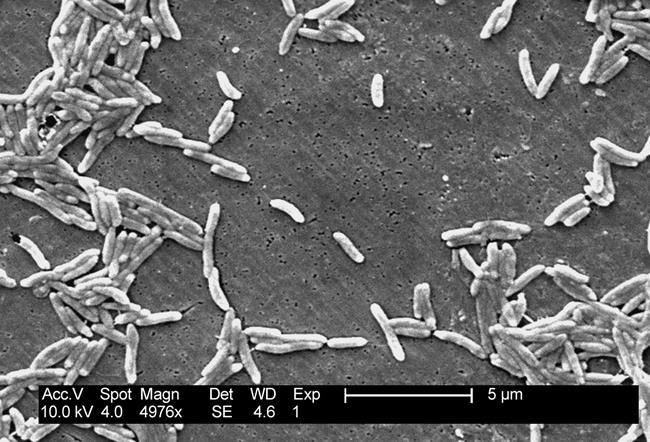
This 2004 electron microscope image made available by the Centers for Disease Control and Prevention shows Gram-negative Campylobacter fetus bacteria. As of April 2019, recent illnesses tied to raw turkey, ground beef, cut melon and romaine lettuce suggest, U.S. food poisoning cases don’t appear to be going away anytime soon. Salmonella and campylobacter are allowed in raw poultry sold in supermarkets, noted Tony Corbo of Food and Water Watch, an advocacy group that supports stricter food safety regulations. It’s why health experts advise people to properly handle and cook poultry. (Janice Haney Carr/CDC via AP)

Rob Tauxe, director of the agency’s foodborne illness division, said the figures show more needs to be done to make food safer. He noted the two most common causes of infection have been longtime problems.

One of the two, salmonella, can come from an array of foods including vegetables, chicken, eggs, beef and pork. The other germ, campylobacter , is commonly tied to chicken. People may not hear as much about it because health officials often can’t group cases into outbreaks. Both bacteria are spread through animal feces.

“For some reason, campylobacter is making people sick with lots of different fingerprints,” Tauxe said.

The report is based on monitoring in 10 states, but is seen as an indicator of national trends. It highlights the difficulty in understanding food poisoning when so many cases go unreported, diagnostic methods are inconsistent, and production practices and eating habits are constantly changing.

With chicken, for instance, companies have brought down salmonella rates in raw whole carcasses since the government began publishing test results of individual plants. But the U.S. Department of Agriculture only recently began posting similar data for raw chicken parts like breasts and legs, which Americans have gravitated toward over the years.

Last year, the agency said 22 per cent of production plants did not meet its standard for limiting salmonella in chicken parts. The USDA said in a statement that it’s working to improve its approach to fighting bacteria, including with the publication of such data.

Despite such efforts, salmonella and campylobacter are allowed in raw poultry sold in supermarkets, noted Tony Corbo of Food and Water Watch, an advocacy group that supports stricter food safety regulations. It’s why health experts advise people to properly handle and cook poultry.

“There is very little the USDA can do besides posting the report card on salmonella,” he said.

The National Chicken Council says the industry has been working to bring down contamination rates, including through germ-killing solutions sprayed on raw chicken during processing, improved sanitation and increased use of vaccines. But the group says the bacteria are endemic in chickens and that eliminating them is difficult.

The CDC report also notes produce is a major source of food poisoning, citing recent E. coli outbreaks tied to romaine lettuce. It said outbreaks tied to produce also contributed to a big jump in infections from a parasite called cyclospora .

The Food and Drug Administration, which oversees fruits and vegetables, said in a statement that a recently developed test is helping it detect the parasite in produce. The agency is also implementing new regulations for produce, though food safety experts note the inherent risk with fruits and vegetables that are grown in open fields and eaten raw.

The CDC said is still working to confirm how much increases in food poisoning cases can be chalked up to new diagnostic methods. It noted some results of a newer, faster test could be false positives.

___

Follow Candice Choi on Twitter: @candicechoi

___

The Associated Press Health and Science Department receives support from the Howard Hughes Medical Institute’s Department of Science Education. The AP is solely responsible for all content.

Report Error Submit a Tip

More Stories

Self-described white supremacist pleads guilty to hate crimes; Crown stays charge accusing him of threatening to kill PM

Dean Pritchard 3 minute read Preview

Self-described white supremacist pleads guilty to hate crimes; Crown stays charge accusing him of threatening to kill PM

Dean Pritchard 3 minute read Yesterday at 4:57 PM CDT

A Winnipeg man arrested for hate speech crimes and threatening to kill Prime Minister Mark Carney told police: “My tongue could get cut off and I would still say these things,” a court has heard.

Jason Paul Rindall, 55, pleaded guilty Thursday to advocating genocide and promoting hatred of Muslims and Jewish people. A charge of uttering threats related to Carney was stayed by the Crown.

Rindall remains in custody and will be sentenced at a later date.

Rindall was arrested in February after Manitoba RCMP launched an investigation into threatening messages posted on social media platform X.

Read
Yesterday at 4:57 PM CDT

South Osborne residents fail in bid to prevent construction of 131-unit apartment tower

Malak Abas 4 minute read Preview

South Osborne residents fail in bid to prevent construction of 131-unit apartment tower

Malak Abas 4 minute read Wednesday, Jul. 29, 2026

A proposed 10-storey highrise on an empty south Osborne lot will move forward despite concerns from residents about the impact the building will have on nearby parking and traffic.

The city-owned lot at 425 Osborne St., which previously served as a gas station but has long sat vacant, will be developed into a mixed-use residential building with 131 units, 39 of which would be affordable, along with additional office space for the adjacent Winnipeg Transit garage and the Transit customer service centre across the street, along with a two-level parkade for tenants and Transit employees.

The property is being developed by the University of Winnipeg Community Renewal Corp. 2.0, and designed by Prairie Architects Inc.

At a meeting held by city council’s appeal committee Wednesday, several residents said while they supported the idea of more housing in the Lord Roberts neighbourhood, they had lingering concerns about the impact the development will have on the already-busy area.

Read
Wednesday, Jul. 29, 2026

Girl pleads guilty to assaulting fellow student

Tessa Adamski 3 minute read Preview

Girl pleads guilty to assaulting fellow student

Tessa Adamski 3 minute read Yesterday at 2:01 AM CDT

A high school student who admitted to attacking another girl in the hallway says she is taking responsibility for her wrongdoing.

Read
Yesterday at 2:01 AM CDT

Squash-ing the competition

Grace Penner 7 minute read Preview

Squash-ing the competition

Grace Penner 7 minute read Yesterday at 5:30 PM CDT

The Thiessen bloodline is no stranger to racquet sport, and 19-year-old Ivo Thiessen is no different as an up and coming Manitoban squash player.

Thiessen started the sport at a young age, first introduced to the enclosed court and rubber ball by his father, John — an avid squash player himself.

“When I was younger, he was just taking me down (to the Racquet Club), throwing me on the court and making me hit a ball,” Thiessen explained. “Then it just progressed. He kept putting me in lessons, kept pushing me and then I started to actually begin enjoying it once I figured it out a bit.”

Thiessen not only had the support from his father, but from other family members who had a personal love of the game.

Read
Yesterday at 5:30 PM CDT

Giant Tiger to close downtown, area residents bemoan dwindling grocery options

Nicole Buffie 4 minute read Preview

Giant Tiger to close downtown, area residents bemoan dwindling grocery options

Nicole Buffie 4 minute read Yesterday at 6:34 PM CDT

One of the only remaining grocery-store options for people living downtown and in the Exchange District is closing its doors.

Red notices on the windows at Giant Tiger’s Donald Street and Ellice Avenue location advised passersby the store will close on Nov. 7.

Chain spokesperson Jessica Charbonneau said in an email the decision to shutter stores is “not taken lightly and is made with careful consideration and thorough analysis.”

The store was busy Thursday afternoon.

Read
Yesterday at 6:34 PM CDT

A Good Samaritan who was trying to help a woman who appeared to be suffering from a drug overdose on Tuesday night was instead stabbed by her companion, police say.

The victim, a 51-year-old man, came across the woman near Jubilee Avenue and Osborne Street at about 9:15 p.m. on Tuesday and tried to assist her, before a suspect came up and stabbed him in the upper body. Police say the suspect knows the woman.

The 51-year-old was rushed to hospital in unstable condition, where he was given medical treatment. The woman, too, was taken to hospital for medical attention. Winnipeg Fire Paramedic Service personnel alerted police to the incident.

Patrol officers, along with a police dog unit, found the suspect on the 400 block of Brandon Avenue just before 11 p.m. He tried to run, but officers made the arrest and seized two knives, police said.