Funny business
Comedians have been known to run for office, but sometimes they actually win
Advertisement
Read this article for free:
or
Already have an account? Log in here »
To continue reading, please subscribe:

Digital Subscription
One year of digital access for only $205*
- Enjoy unlimited reading on winnipegfreepress.com
- Read the E-Edition, our digital replica newspaper
- Access News Break, our award-winning app
- Play interactive puzzles
*First annual payment billed as $205.00 + GST for one year. This annual subscription will automatically renew at $233.00 + GST every 52 weeks (10% off the regular annual price of $259.35). Offer available to new and qualified returning subscribers only. Cancel any time.
To continue reading, please subscribe:
Add Free Press access to your Brandon Sun subscription for only an additional
$1 for the first 4 weeks*
- Enjoy unlimited reading on winnipegfreepress.com
- Read the E-Edition, our digital replica newspaper
- Access News Break, our award-winning app
- Play interactive puzzles
*Your next Brandon Sun subscription payment will increase by $1.00 and you will be charged $17.95 plus GST for four weeks. After four weeks, your payment will increase to $24.95 plus GST every four weeks.
Read unlimited articles for free today:
or
Already have an account? Log in here »
Hey there, time traveller!
This article was published 27/04/2019 (2691 days ago), so information in it may no longer be current.
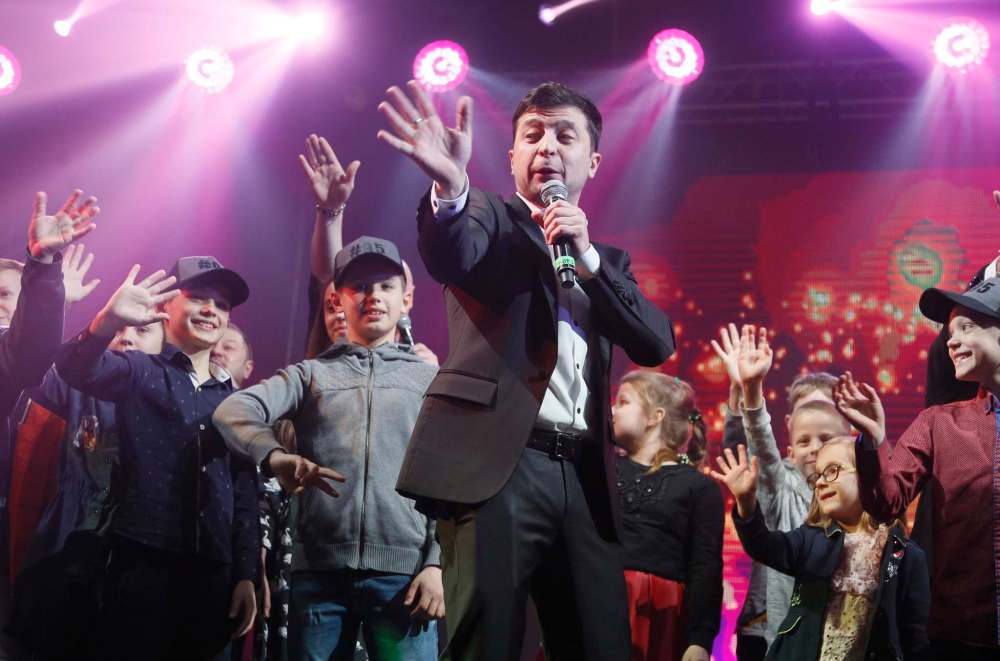
It’s no joke — a comedian with no political experience has been elected president in Ukraine.
Volodymyr Zelenskiy, a famous comedian who portrayed Ukraine’s head of state for years on a popular comedy show, crushed the incumbent president, Petro Poroshenko, who had been in power since 2014.
According to exit polls, Zelenskiy won a staggering 73 per cent of the vote in last Sunday’s election. Poroshenko, a billionaire candy magnate, conceded the race not long after polls closed.
It’s a remarkable achievement for an ordinary guy who played an ordinary guy-turned-president on TV. Zelenskiy, 41, rose to fame on Servant of the People, a satirical comedy program that follows the life of Vasyl Petrovych Holoborodko, an everyman schoolteacher who unexpectedly becomes president after his rant against political corruption goes viral.
“We did this together,” Zelenskiy said onstage at his campaign headquarters as exit poll results began to confirm his landslide victory. “I promise I will never let you down.”
His path to the presidency was paved by widespread dissatisfaction over corruption and poverty — by some accounts, Ukraine is the poorest country in Europe — and the ongoing war with Russian-backed forces that has taken more than 13,000 lives in eastern Ukraine.
He is far from the first comedian to become a real-life politician, as we see from today’s totally serious list of Five Comics Who Ran For Office (And Got Elected):
5) The comedian candidate: Hideo Higashikokubaru
The comical campaign: The political landscape is littered with comedians who have run faux election campaigns over the years, In 1968, for instance, comic Pat Paulsen from the iconic Smothers Brothers Comedy Hour, and Dick Gregory, a legendary civil rights activist and standup comedian, mounted presidential campaigns that earned them more laughs than votes.
Flash forward to today’s troubled times and a growing number of international comics are running for office — and some of them are winning. Consider the case of beloved Japanese comedian Hideo Higashikokubaru, also known by his stage name Sonomanma Higashi (literally “Higashi without change” or “simply Higashi”), who appeared in several films and TV shows before taking the plunge into politics.
He became a comedian in 1982 and eventually rose to fame for his role on the off-the-wall Japanese game show Takeshi’s Castle, which became a cult sensation around the world. Higashikokubaru became known to western viewers as the head of the so-called “Emerald Guard” on the show, wherein ordinary contestants took part in wacky and seemingly impossible physical challenges under the watchful eye of “General Lee” in a bid to storm the castle and win the game.
In 2007, he ran a serious campaign for governor of Japan’s Miyazaki Prefecture — and won. “The media speculated his election signified the youth culture’s disillusionment with government, and the enduring appeal of celebrity,” according to website MentalFloss.com.
He replaced former governor Tadahiro Ando, who resigned after being arrested for bid rigging. He ran for governor of Tokyo in 2011, finishing second, and was elected to the House of Representatives in the general election in 2012, but resigned in 2013. Most recently he was seen co-starring with a bright-red “alien sausage” mascot in a video promoting a new tax scheme.
4) The comedian candidate: Jon Gnarr
The comical campaign: Icelandic comedian Jon Gnarr’s 2010 mayoral campaign was seen as nothing but a joke — at least it was until he got elected as mayor of Iceland’s capital city, Reykjavik.
“With the help of his comedian and musician friends, Gnarr had formed the Besti Flokkurin, or Best Party,” according to MentalFloss.com. “To join the party, one must have seen all five seasons of The Wire. They promised to halt corruption by participating in it, but transparently. Construction has yet to begin on the airport Disneyland he promised a kindergarten class.”
Gnarr became a well-known comedian and actor in Iceland in the 1990s, appearing on radio, TV and in films. His Best Party, formed in 2009, began as a satirical campaign, but became a real political force because voters were angered by the 2008-11 financial crisis that saw the default of all three of the country’s major privately owned commercial banks. The crisis led to a severe economic depression and political unrest — fertile ground for comedians making fun of those to blame.
“A candid, anecdotal and lighthearted approach to political speeches is what propelled Gnarr into popularity in the wake of Iceland’s 2008 financial crisis,” ForeignPolicy.com noted. “His Best Party, composed of punk rockers, campaigned on free towels in all swimming pools and a polar bear for the capital’s zoo, among other things.”
As a young man, he worked with carmaker Volvo, and drove a taxi in Reykjavik. During the campaign, he ran into the incumbent mayor, and had no idea who she was. As mayor, the political neophyte vowed to make the life of citizens more fun. It was jokingly proposed that his city be nicknamed “Gnarrenburg,” the title of one of his earlier TV talk shows.
He appeared at the 2010 Pride parade dressed as a drag queen, and posted a holiday video greeting wearing a Darth Vader mask and a Santa cap. “Why do I always have to get myself into trouble?” is what he recalls thinking on the night of his election. When his term expired in 2014, he decided not to run again.
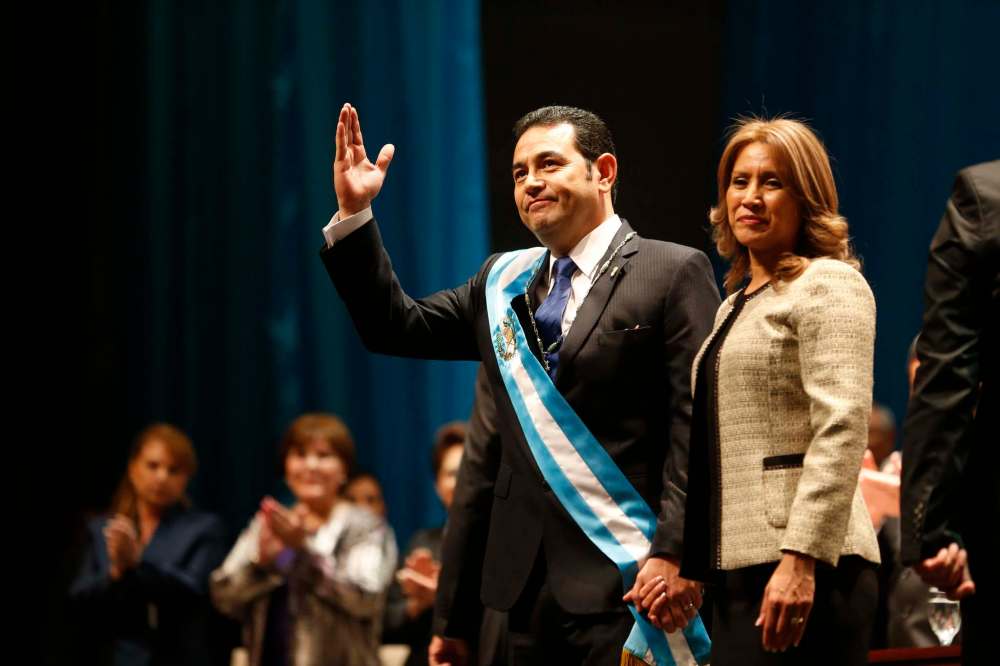
3) The comedian candidate: Jimmy Morales
The comical campaign: Just like Ukraine’s new leader, Jimmy Morales was a former TV comedian who had never held office and at one point played a cowboy who accidentally became president. But the jokester swept to power in Guatemala in 2015 after milking public anger over a corruption scandal that deepened distrust of the country’s political establishment.
Despite his lack of experience and a few ideas widely seen as eccentric, Morales humbled centre-left rival and former first lady Sandra Torres in a runoff vote that became a landslide victory. “As president I received a mandate, and the mandate of the people of Guatemala is to fight against the corruption that is consuming us,” Morales said after being elected president.
What pushed him to power was the fact he was already a household name, having spent a 14-year stint on a popular TV comedy. Along with his brother, Sammy, he appeared in a popular sketch comedy show called Moralejas, or “Morals,” as well as in several movies. He played a wide variety of characters during his 16 years as a comic, including, controversially, a character in blackface known as Black Pitaya.
In 2014, he quit his TV show, which centred on skits and lewd jokes, to run for president. At the time, he didn’t make a blip in opinion polls, but surged as the government and a rival candidate who was leading the race became mired in corruption probes. No one is laughing at the ex-comic now, as he’s facing his own corruption woes, with his brother Sammy and son Jose Manuel Morales facing corruption and money-laundering charges.
He recently expelled a UN-backed anti-corruption commission from his country. “Elected under the modest campaign slogan ‘Neither corrupt nor a thief,’ he since has displayed troubling signs of both. His popularity has fallen under accusations that he has undermined the justice system, empowered right-wing elites and turned the country into a corrupted narco state. Not funny,” the Chicago Tribune recently opined.
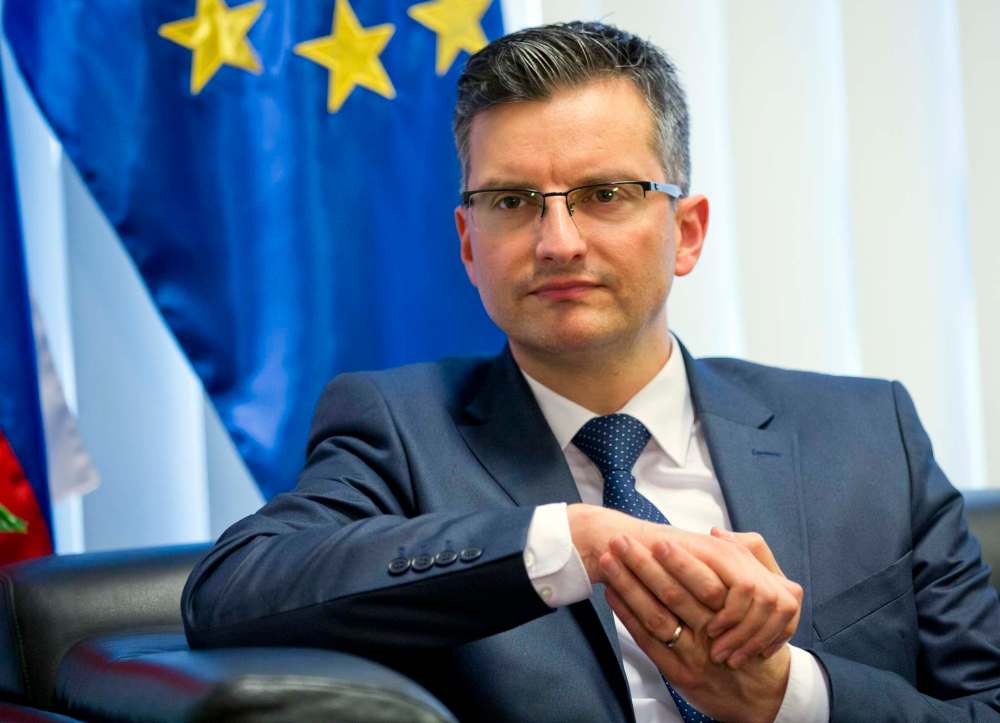
2) The comedian candidate: Marjan Sarec
The comical campaign: After finishing high school in 1996, Marjan Sarec began the serious career of being funny. He went to Slovenia’s Academy of Theatre, Radio, Film and Television, which led to starring turns on a number of shows where he became famous as a comedian and political satirist. His most famous fictional creation was Ivan Serpentinsek, a grouchy, misogynistic farmer from Upper Carniola.
The standup comic also had a gift for impersonations, winning fame for mimicking former Slovenian prime minister Janez Jansa, mocking the leader’s apparent fondness for Latin words and his shaky grasp of English. He also did impressions of Osama bin Laden and Fidel Castro, to name just a few.
In 2010, he ran for mayor of Kamnik, a town in north-central Slovenia. He was elected to two terms. He narrowly lost the presidential election in 2017, and entered the National Assembly in 2018. And that’s when the comedian who used to impersonate the former Slovenian prime minister got a chance to play the part in real life. The man famed for his anti-establishment skits was appointed prime minister after his party finished second in Slovenia’s parliamentary election and the country’s leftist parties ganged up to sideline the top party, led by Jansa.
At the time, he told NBC News he would take his new role seriously, just as he did when he was elected mayor and made a “promise to conclude with the profession of actor.” He said not all actors and comedians make good politicians, though some attributes come in handy in both fields. “For acting, for comedy, you must read a lot, you must observe a lot, you must study characters, and it’s not so simple,” Sarec told Politico.eu. “In politics, you have to have courage, you have to perform, you have to know a lot of things. You must be a quick learner.”
The liberal warned earlier this month that the EU needs more efficient leadership to counter a populist surge and the growing influence of Russia and China.
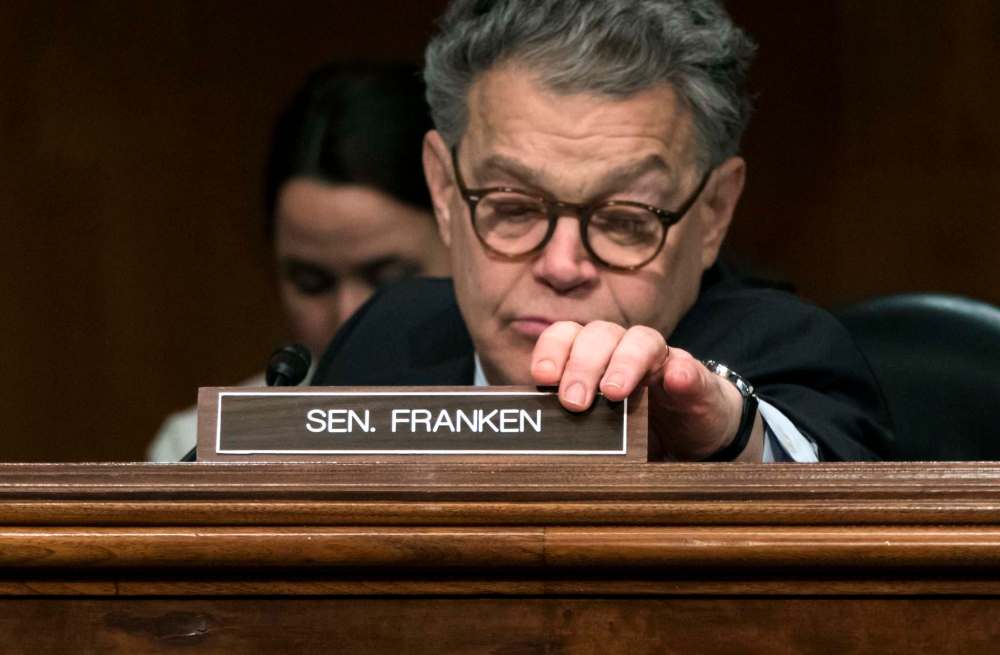
1) The comedian candidate: Al Franken
The comical campaign: “I’m good enough, I’m smart enough, and doggone it, people like me.” Comedy fans of a certain age will recognize that line as the iconic catchphrase of Stuart Smalley, the fictional self-help guru created by comedian Al Franken in his days as a writer and performer on Saturday Night Live. Franken spent almost two decades working on SNL, receiving seven Emmy nominations. He was twice a guest performer at the White House correspondents dinner, worked as a talk show host, and wrote books such as Rush Limbaugh Is a Big Fat Idiot and Other Observations and Lies and the Lying Liars Who Tell Them: A Fair and Balanced Look at the Right.
In 2008, however, Franken’s career took an abrupt turn when he decided to run for the U.S. Senate from Minnesota. “The ride to the Senate was not at all smooth for Franken, especially when the GOP dug up an article he penned eight years prior to his campaign for Playboy entitled ‘Porn-O-Rama!’ In the column, the funnyman wrote about visiting a sex institute where he describes sexual exploits with humans and machines,” ABC News recalled.
The election was about as close at they come, but, after a recount, Franken eked out a narrow victory — winning by little more than 300 votes — beginning a celebrated and mostly successful political career that spanned almost a decade. The popular senator was considered a safe bet for re-election until a radio host in 2017 accused him of forcibly kissing her during a USO tour in the Middle East in 2006, and circulated a photo in which he can be seen pretending to grope her breast. That was followed by allegations from several women that he groped them while posing for photos.
Several female Democratic senators called on him to step down, which he did, despite maintaining some of the accusations were untrue. He was one of the first high-profile casualties of the #MeToo era. At the time, U.S. President Donald Trump mocked Franken for quitting too soon. “Man… He was gone so fast. It was like, ‘Oh, he did something, oh, oh, oh, I resign. I quit, I quit.’ Wow,” Trump snorted, saying the former comic folded “like a wet rag.”
Whether that remains the punchline on his political career remains to be seen.
doug.speirs@freepress.mb.ca