Epic battle thwarts expectations of death

Advertisement
Read this article for free:
or
Already have an account? Log in here »
To continue reading, please subscribe:

Digital Subscription
One year of digital access for only $205*
- Enjoy unlimited reading on winnipegfreepress.com
- Read the E-Edition, our digital replica newspaper
- Access News Break, our award-winning app
- Play interactive puzzles
*First annual payment billed as $205.00 + GST for one year. This annual subscription will automatically renew at $233.00 + GST every 52 weeks (10% off the regular annual price of $259.35). Offer available to new and qualified returning subscribers only. Cancel any time.
To continue reading, please subscribe:
Add Free Press access to your Brandon Sun subscription for only an additional
$1 for the first 4 weeks*
- Enjoy unlimited reading on winnipegfreepress.com
- Read the E-Edition, our digital replica newspaper
- Access News Break, our award-winning app
- Play interactive puzzles
*Your next Brandon Sun subscription payment will increase by $1.00 and you will be charged $17.95 plus GST for four weeks. After four weeks, your payment will increase to $24.95 plus GST every four weeks.
Read unlimited articles for free today:
or
Already have an account? Log in here »
Hey there, time traveller!
This article was published 04/05/2019 (2688 days ago), so information in it may no longer be current.
After Game of Thrones’ epic Battle of Winterfell aired on HBO last Sunday, another war broke out online.
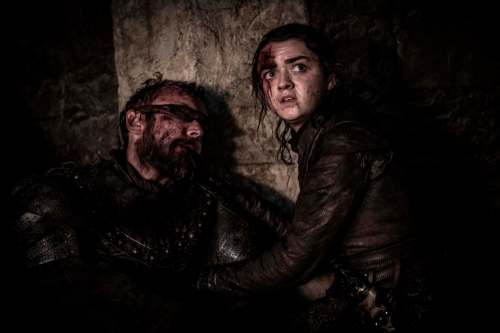
A lot of that fan follow-up was harder fought — and certainly easier to follow — than the battle itself. Much of the controversy revolved around the issue of darkness. A lot of viewers felt “The Long Night” was too dark. In another crucial sense, some claimed, it wasn’t dark enough.
The action was physically murky. The first casualty of war, the too-darkers suggested, seemed to be the show’s lighting budget. The battle scenes — which took up almost all of this 82-minute episode — were undeniably massive but also frequently incomprehensible, making it difficult to follow strategy, sustain suspense or even determine, at the most basic level, who was who and what was happening.

As Twitter users joked that key scenes came down to “the dark person shaped blur that did that thing with the other dark person shaped blur,” there was a flanking manoeuvre from some tech nerds — including the show’s cinematographer — who offered practical suggestions for increased visibility. Evidently all you had to do to separate the undead from the living, the fire dragons from the ice was get some blackout curtains, tinker with the factory settings on your television, or possibly upgrade your $400 TV.
Defenders of the dark also suggested the lighting was meant to be hyper-realistic — a tricky argument for a show that features dragons and giants — and the mid-battle muddle was meant to mimic the disorienting experience of being on the ground in the thick of war.
I’m not convinced. You can suggest the idea of darkness without going completely dark — think of the brilliant low lighting in The Favourite. And you can replicate the confusion of battle while still conveying what’s happening overall — Steven Spielberg’s D-Day landing sequence in Saving Private Ryan is often cited as a model for communicating chaos with clarity.
An even more fraught discussion circled around the idea that “The Long Night” wasn’t dark enough, at least in terms of story.
Back in 2011 when GoT debuted, the series was famously unafraid to kill off major characters, often with sudden, ruthless dispatch. Making a gory opening statement with Ned Stark’s head on a spike, GoT seemed set to lay waste to Lord of the Rings-style fantasy tropes. This was not a universe where good could be counted on to overcome evil. This was not even a universe where you could reliably tell good and evil apart.
The show presented a world in which death was arbitrary, wasteful and ugly, where alliances were transactional, where brute power so often violated virtue. Bloody bursts of cruelty and violence, combined with a clear-eyed and unsentimental refusal to spare women, children or dogs, slayed any lingering notions of chivalry.

In some ways, “The Long Night” seemed geared to the “less gabbing, more stabbing” cohort of GoT fans. Beyond desperate shouts (“Light the trenches!” or “Man the wall!”), this episode was almost dialogue-free. And the body count was vast, with whole regiments of soldiers wiped out within a few moments.
For the show’s named characters, however, the casualties remained light. Death was confined to a couple of minor figures, and those who did die were given the chance to perish in heroic, sacrificial or redemptive ways.
Was this fan service? Since the whole Jon-Snow-resurrection thing, the show seems much more reluctant to kill off favourites. Or was it some kind of sneaky reverse fan service? Facing a final-season, potentially world-ending battle, as well as a previous episode in which the characters themselves seemed to be preparing for death, many viewers had braced themselves for loss. Maybe they’d even taken part in dead pools on who would be killed off. Vulture magazine speculated on the odds, with a “Call your Agent” tier for those deemed most likely to die.
Maybe the decision to spare the core cast deliberately thwarted fans’ grimmest expectations, some commentators suggested, thereby bringing viewers face-to-face with their own bloodthirstiness.
And maybe the real darkness has just been deferred. Having faced this implacable supernatural enemy, the characters will go back to the nasty, grubby ugliness of human conflict. We’ll see this weekend.
Studying at the University of Winnipeg and later Toronto’s York University, Alison Gillmor planned to become an art historian. She ended up catching the journalism bug when she started as visual arts reviewer at the Winnipeg Free Press in 1992.
Our newsroom depends on a growing audience of readers to power our journalism. If you are not a paid reader, please consider becoming a subscriber.
Our newsroom depends on its audience of readers to power our journalism. Thank you for your support.
Studying at the University of Winnipeg and later Toronto’s York University, Alison Gillmor planned to become an art historian. She ended up catching the journalism bug when she started as visual arts reviewer at the Winnipeg Free Press in 1992.
Our newsroom depends on a growing audience of readers to power our journalism. If you are not a paid reader, please consider becoming a subscriber.
Our newsroom depends on its audience of readers to power our journalism. Thank you for your support.
Related Articles
More baffling moments than hard-won truths in Game of Thrones finale
Advertisement Advertise With Us
Advertisement Advertise With Us