Bank of Canada identifies climate change as important economic weak spot

Advertisement

Advertise with us

OTTAWA - The Bank of Canada is highlighting its expanding concerns about climate change and, for the first time, is listing it among the top weak spots for the economy and the financial system.

Read this article for free:


or

Already have an account? Log in here »

To continue reading, please subscribe:

Subscribe and receive a limited-edition Free Press branded hat or tote.

Digital Subscription

One year of digital access for only $205*

  • Enjoy unlimited reading on winnipegfreepress.com
  • Read the E-Edition, our digital replica newspaper
  • Access News Break, our award-winning app
  • Play interactive puzzles

*First annual payment billed as $205.00 + GST for one year. This annual subscription will automatically renew at $233.00 + GST every 52 weeks (10% off the regular annual price of $259.35). Offer available to new and qualified returning subscribers only. Cancel any time.

To continue reading, please subscribe:

Add Free Press access to your Brandon Sun subscription for only an additional

$1 for the first 4 weeks*

  • Enjoy unlimited reading on winnipegfreepress.com
  • Read the E-Edition, our digital replica newspaper
  • Access News Break, our award-winning app
  • Play interactive puzzles
Start now

*Your next Brandon Sun subscription payment will increase by $1.00 and you will be charged $17.95 plus GST for four weeks. After four weeks, your payment will increase to $24.95 plus GST every four weeks.

Hey there, time traveller!
This article was published 16/05/2019 (2649 days ago), so information in it may no longer be current.

OTTAWA – The Bank of Canada is highlighting its expanding concerns about climate change and, for the first time, is listing it among the top weak spots for the economy and the financial system.

The central bank’s financial system health report Thursday included climate change as an important vulnerability, elevating it to a category alongside its long-running worries about household debt and apprehension about the housing market

The assessment is part of the Bank of Canada’s annual review that explores key weaknesses and risks surrounding financial stability.
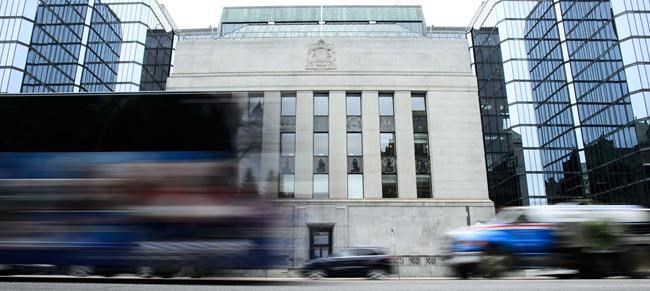
The Bank of Canada in Ottawa is seen on Thursday, May 16, 2019. THE CANADIAN PRESS/Sean Kilpatrick

“Economic activity and the environment are intertwined,” said the bank, which, like its international peers, is starting to make climate-change factors part of its financial stability research.

“Most experts agree that the global climate is changing and that this has growing implications for the economy. But the range of possible outcomes is large.”

Climate-change risks include the consequences of extreme weather events, such as flooding, hurricanes and severe droughts.

In Canada, the bank said insured damage to property and infrastructure averaged about $1.7 billion per year between 2008 to 2017 — 8.5 times higher than the annual average of $200 million from 1983 to 1992.

Beyond the physical damage, the bank said the shift to a lower-carbon economy will be complicated and could be costly for some.

The transition will likely lead to complicated structural adjustments for carbon-intensive sectors, such as oil and gas, and could leave insurance companies, banks and asset managers more exposed, the report said. In some cases, the bank said fossil fuel reserves could be left in the ground, which could drain the value of important assets.

The bank said the transformation to a lower-carbon economy also will likely provide a boost to sectors like green technology and alternative energy.

Both physical and transition risks are likely to have “broad impacts on the economy,” the report said.

“Climate change is of interest to central banks because of central bank mandates and how climate change can affect economic performance on the one hand and how it can affect financial stability on the other hand,” Bank of Canada governor Stephen Poloz told reporters Thursday.

Last month, a letter co-authored by Bank of England governor Mark Carney and Banque de France governor Francois Villeroy de Galhau urged central bankers and decision-makers in the financial community to act on climate-related risks with concrete steps to preserve the stability of the global system.

“We need collective leadership and action across countries and we need to be ambitious,” said the letter, published in the British newspaper the Guardian.

“Climate change is a global problem, which requires global solutions, in which the whole financial sector has a crucial role to play.”

In addition to climate change, the Bank of Canada’s report also underlined the emerging vulnerability of rising corporate debt levels in the non-financial sector — a growing concern seen in other advanced economies. Some of the borrowing is of lower quality and the situation needs to be monitored closely, the bank said.

Last year, non-financial corporate debt relative to income was at 315 per cent, which the bank said was “well above its historical average.”

The bank said vulnerabilities linked to high household debt and the once-hot housing market have “declined modestly but remain significant.”

Both have been persistent weak spots in recent years and the improvements are due to a slowdown in credit growth since 2017 that coincided with stricter mortgage-lending policies and past interest-rate hikes.

The share of Canadians falling behind their debt payments remains “low and relatively steady,” the bank said. It noted, however, that since 2015 — after the oil-price slump — it’s seen a “small but steady increase” in the number of households in Alberta and Saskatchewan that have fallen behind by 60 days or more on at least one loan payment.

Housing prices in key markets of Toronto and Vancouver have cooled, but imbalances in real-estate markets are still an important vulnerability, the bank said.

Overall, the bank said Canada’s financial system is resilient, but the risk has edged up since its last report in June 2018, due in part to factors such as slower economic growth and uncertainty around global trade.

The most-important threats to the financial system are a severe Canada-wide recession, a big house-price correction and a sharp re-pricing of risk in markets, the bank said.

Follow @AndyBlatchford on Twitter
Report Error Submit a Tip

More Stories

Rise of social media reflects rise of self-promotion — to the detriment of genuine storytelling

Reviewed by Matt Henderson 4 minute read Preview

Rise of social media reflects rise of self-promotion — to the detriment of genuine storytelling

Reviewed by Matt Henderson 4 minute read Yesterday at 3:00 AM CDT

A conversation is overheard between two people; one congratulates the other on their success, evident through countless posts on LinkedIn, but the other confesses the prolific aggrandizement is due to slumping success.

A young man on an airplane spends three hours poring over selfies taken on a vacation, zooming in on his biceps and using AI to retouch photos before posting on Instagram.

Anonymous and cowardly trolls on Reddit attempt to end another person’s career.

All this “storytelling” was observed in one day by this reviewer.

Read
Yesterday at 3:00 AM CDT

Could renewed interest in strategically critical rare earth elements finally make sub-sector profitable?

Joel Schlesinger 6 minute read Preview

Could renewed interest in strategically critical rare earth elements finally make sub-sector profitable?

Joel Schlesinger 6 minute read Yesterday at 3:00 AM CDT

Rare earth elements are among the most critical of mined resources for modern economies.

They’re essential in manufacturing specialized magnets used in a host of technologies from wind turbines and electric vehicles to hard drives, smartphones, television screens, and fibre optics. Most notably, however, rare earth minerals are increasingly vital to the defence industry.

These 17 elements — closely related chemically and usually found all together in mineral deposits — have indeed been growing in geopolitical importance as the United States, Canada and other Western nations recognize their dependence on production from China.

It is the world’s largest producer and processor of rare earths, including the most in-demand elements neodymium and praseodymium used to manufacture very light and powerful magnets for an array of technologies, including the most advanced weapons of modern warfare.

Read
Yesterday at 3:00 AM CDT

Firefighter’s death fuels cancer fight

Zoe Pierce 5 minute read Preview

Firefighter’s death fuels cancer fight

Zoe Pierce 5 minute read Yesterday at 2:01 AM CDT

The United Fire Fighters of Winnipeg is mourning the loss of Winnipeg firefighter Darrel Maynard while continuing its work to raise awareness of occupational cancer and improve health protections for firefighters.

Maynard, a senior firefighter II and acting lieutenant with the Winnipeg Fire Paramedic Service, died Aug. 5 at age 41 after a three-year battle with occupational cancer.

He served Winnipeg for nearly two decades and leaves behind his wife Francine and sons Colin and Christian.

“Darrel was an incredible, incredible person, an incredible firefighter, and really, really special to all of us,” said Nick Kasper, president of UFFW.

Read
Yesterday at 2:01 AM CDT

Foster mom pleads guilty to assault that left six-year-old-girl paralyzed

Dean Pritchard 4 minute read Preview

Foster mom pleads guilty to assault that left six-year-old-girl paralyzed

Dean Pritchard 4 minute read Friday, Aug. 14, 2026

A Winnipeg foster mother has admitted to violently assaulting her ill foster daughter and leaving her paralyzed after the girl resisted the woman’s efforts to provide her with medication, a court has heard.

Marilyn Keno, 26, pleaded guilty Friday to one count of aggravated assault.

Keno remains in custody and will be sentenced at a later date following the completion of a court-ordered pre-sentence report.

The maximum sentence for aggravated assault is 14 years in prison. Crown attorney Alanna Littman and defence lawyer Jeremy Kostiuk did not disclose what sentences they will be recommending.

Read
Friday, Aug. 14, 2026

Proposed Transcona development — which could add 20,000 people — gets thumbs down from residents

Joyanne Pursaga 5 minute read Preview

Proposed Transcona development — which could add 20,000 people — gets thumbs down from residents

Joyanne Pursaga 5 minute read Friday, Aug. 14, 2026

Dozens of Winnipeggers fear plans to make way for up to 20,000 more people to live in south Transcona would dramatically alter their neighbourhood and tie hefty fees for new services to their property titles.

If city council adopts the proposed South Transcona secondary plan, all future development applications would need to conform to its goals. The affected area is located south of Dugald Road, north of St. Boniface Road, east of Plessis Road and west of Murdock Road.

Homeowner Virginia Page Jähne fears the plan could add a massive tab to the title of her 4.3-acre property to cover services required for the development.

“My main concern is that they are wanting to put $1.4 million onto my title to pay for this. Now, they say that I will not have to pay it unless I subdivide. But if a person comes by and wants to buy from me … and they see that $1.4 million … what’s the first thing (they’re) going to do?” said Page Jähne, in an interview.

Read
Friday, Aug. 14, 2026

Bombers manage to hand Redblacks another loss

Taylor Allen 7 minute read Preview

Bombers manage to hand Redblacks another loss

Taylor Allen 7 minute read Updated: Yesterday at 8:35 AM CDT

It looked bad. Real bad.

Winnipeg Blue Bombers quarterback Zach Collaros made his return to the lineup on Friday night against the Ottawa Redblacks, and he was once again the victim of a blindside hit.

The one he suffered in Hamilton on July 5 appeared relatively modest in comparison and yet, it sidelined him for a month with a neck injury.

So when Redblacks linebacker Lucas Cormier came around the edge unblocked and hammered Collaros from behind in the second quarter, you could hear a pin drop inside Princess Auto Stadium.

Read
Updated: Yesterday at 8:35 AM CDT