New music
Reviews of this week's CD releases
Advertisement
Read this article for free:
or
Already have an account? Log in here »
To continue reading, please subscribe:

Digital Subscription
One year of digital access for only $205*
- Enjoy unlimited reading on winnipegfreepress.com
- Read the E-Edition, our digital replica newspaper
- Access News Break, our award-winning app
- Play interactive puzzles
*First annual payment billed as $205.00 + GST for one year. This annual subscription will automatically renew at $233.00 + GST every 52 weeks (10% off the regular annual price of $259.35). Offer available to new and qualified returning subscribers only. Cancel any time.
To continue reading, please subscribe:
Add Free Press access to your Brandon Sun subscription for only an additional
$1 for the first 4 weeks*
- Enjoy unlimited reading on winnipegfreepress.com
- Read the E-Edition, our digital replica newspaper
- Access News Break, our award-winning app
- Play interactive puzzles
*Your next Brandon Sun subscription payment will increase by $1.00 and you will be charged $17.95 plus GST for four weeks. After four weeks, your payment will increase to $24.95 plus GST every four weeks.
Read unlimited articles for free today:
or
Already have an account? Log in here »
Hey there, time traveller!
This article was published 23/05/2019 (2649 days ago), so information in it may no longer be current.
Pop & Rock
Lucette
Deluxe Hotel Room (Rock Creek Music/Thirty Tigers)
Lucette is a singer-songwriter from Edmonton whose real name is Lauren Gillis. Her 2014 debut album, Black is the Color, was a slow-burning collection of countrified folk songs made when she was just 19 with roots super-producer Dave Cobb (Brandi Carlile, Shooter Jennings, Lindi Ortega, Sturgill Simpson and many more).

The song Bobby Reid, a loping tale of murderous intent, earned her four million streams on Spotify but, she has since explained, it also pigeonholed her as a “woman in country music,” which isn’t necessarily what she wants to be.
Fortunately, Cobb and Bobby Reid also introduced Lucette to Sturgill Simpson, who appeared in the video for the song and later took her on the road as opening act on the groundbreaking, star-making tour for Metamodern Sounds in Country Music.
Now Lucette is back with a sophomore album produced by Simpson, who’s clearly become a musical mentor. Recorded in just four days in Nashville with Sturgill’s road band (bassist Chuck Bartels, keys/synth player Bobby Emmett, drummer Miles Miller and saxophonist Brad Walker), Deluxe Hotel Room is a clear departure from her previous work. Just as Sharon Van Etten eschewed her folkie sound earlier this year, Lucette and Simpson have hit upon a sound that’s equal parts modern, digital pop (Full Moon Town, Crazy Bird), piano balladry (the title track, album closer Lover Don’t Give Up on Me) and soulful roots (Out of the Rain, Fly to Heaven). There’s even a smattering of ’60s girl-group pop on Angel and a Kacey Musgraves-ish West Coast vibe on California.
Lucette’s writing, too, has taken on new depth, as she’s let songs become more revealing, especially Out of the Rain and Talk to Myself, which address her struggles to feel safe and mentally whole.
At just under 29 minutes, Deluxe Hotel Room may seem brief, but rest assured, it’s a complete musical statement.
★★★★ out of five
Stream these: Deluxe Hotel Room; Full Moon Town; Talk to Myself.
— John Kendle
https://youtu.be/ewBzpmWg95Q
R&B / Soul
Mavis Staples
We Get By (Anti-)
Time has certainly not dampened the urgency in Mavis Staples’ voice. Now 80, the Grammy-winning legend and social activist has one clear enemy on her new album: the status quo. She sings the word “change” some 20 times.

The terrific We Get By opens with the song Change and ends 10 tracks later with One More Change to Make. Along the way, she urges action: “Can’t stay the same,” “Something’s got to give” and “Grab hold of the days.”
All the songs on this, her 12th studio album, were written by Ben Harper and their union is both fruitful and moving. Harper has given Staples some tunes that show off her vulnerable side and others that make you move, with some funk and folk and soul and blues, the guitars often shimmering. He joins her in singing the dynamic, soulful We Get By.
The Staples-Harper collaboration dates back to when he wrote the terrific song Love and Trust for her 2016 album, Livin’ On a High Note. She thanks him for all his new work in the liner notes: “I love you, Baby Bruh.” He has three Grammys, but Harper might put that career achievement first.
Harper has written and produced an unrushed and quietly brooding album for Staples, one that puts her expressive voice at the centre with the instruments turned down. On two songs — Never Needed Anyone and Heavy On My Mind — it sounds like the band was in another room down the hall.
In between calls for change, Staples sings about love. On Chance on Me, she is needy: “I don’t need a symphony/I just need one violin.” On the tender, bluesy Hard to Leave, she’s longing: “Softly reaching over/For your touch upon my sleeve.”
Then there’s the standout Stronger, an irresistible rocking track where Staples’ voice stretches and soars and the guitar keeps up with her. “Don’t need a house on the hill/Don’t need my face on a dollar bill,” she sings.
Now that’s an idea. Staples may not need her face on money, but perhaps it’s the least we can do to thank her. Hey, George Washington has had a long run. Who’s down with Staples on the American $1? Change can be good.
★★★★½ out of five
Stream these: Chance on Me; Stronger.
— Mark Kennedy, The Associated Press
Jazz
Cannonball Adderley Quintet
Liederhalle Stuttgart 1969 (Jazzhaus)
This is another example of a “new-old” album marking the initial full release of a 1969 concert in Stuttgart, Germany.

It looks like there might have been a bit of a tug-of-war between labels for the release rights, as some of the tracks have apparently seen the light of day only in Europe. Whatever the explanation, this is a neat example of the Adderley Quintet in truly fine form.
The members are brother Nat on trumpet, Victor Gaskin on bass, Roy McCurdy on drums and a pre-fusion Joe Zawinul on piano. This is Cannonball after being part of Miles Davis’s band, and Zawinul had been on Davis’s In A Silent Way the year before. He was a year away from Weather Report. All in all, a quintet with impeccable credentials and on the verge of major developments ahead.
The playlist offers full opportunity for each member to shine. Perhaps the biggest surprise for me was Zawinul, who at times seems the most restless and almost prods the others into more risks. His solos on Rumpelstiltskin and The Painted Desert are especially terrific. While the quintet really grooves on uptempo, driving rhythms, ballads like Somewhere are lovely.
As an aside, I can say that Nat Adderley appeared in Winnipeg at the University of Winnipeg around 1980 with a memorable quintet of his own. In some ways, this music is fairly typical of the time, but with clear hints of what was just around the corner. If Cannonball and/or this era’s music is something you enjoy, this will be a welcome gift.
★★★★½ out of five
STREAM THESE: Why Am I Treated So Bad?, The Painted Desert.
— Keith Black
Classical
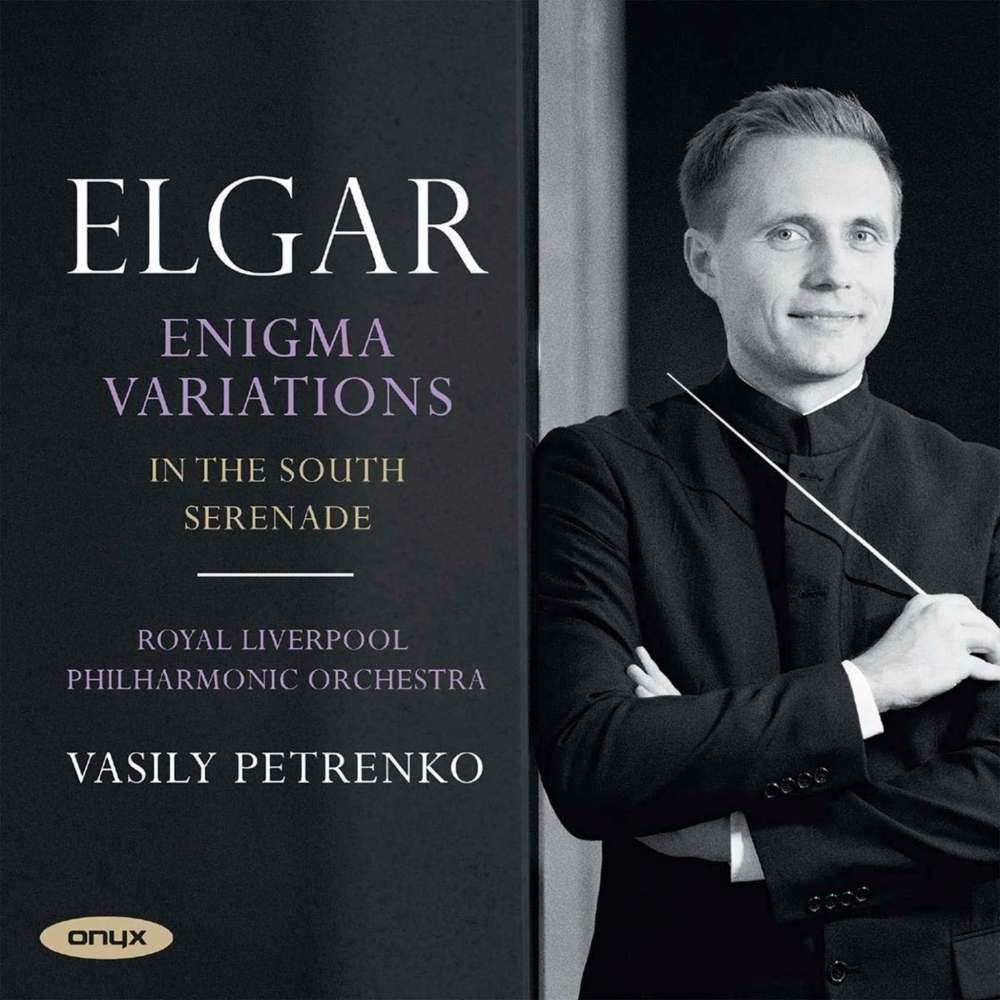
Vasily Petrenko and the Royal Liverpool Philharmonic Orchestra
Elgar: Enigma Variations (Onyx)
Russian-born conductor Vasily Petrenko’s third Elgar album on the Onyx label features the Royal Liverpool Philharmonic Orchestra performing a trio of the quintessentially English composer’s compelling works, including his 1898 masterpiece, Variations on an original theme, a.k.a. the Enigma Variations.
First up is In the South, Op. 50, written during Elgar’s winter family holiday in 1903 in Alassio, Italy, which inspired the concert overture marked by dramatic contrasts, including its unusual solo viola’s eloquent statement of the serenade’s theme, and larger bursts of brass. The maestro skilfully paces the 24-minute, one-movement work throughout its ebbs and flows to culminate in a final, exuberant flourish.
Serenade for Strings, Op. 20, dated 1892, is similarly given brisk treatment, with Petrenko’s choice of tempo helping create momentum for the shorter, lyrical work, with one legato phrase seemingly bleeding into the next.
The album’s cornerstone is the Enigma Variations, featuring its pensive theme and subsequent, imaginatively conceived 14 variations depicting how Elgar’s friends and family might have performed the same material.
Petrenko’s expansive approach allows particularly for full shimmer in the strings, with the work unfolding as an effective tapestry of texture and mood. Highlights include its first variation titled for Elgar’s wife Alice, Variation 1: C.A.E., and the more animated Variation 6: Ysobel and Variation 10 Dorabella with its chattering staccato woodwinds. However, the iconic Variation 9: Nimrod, inspired by the composer’s publisher Augustus Jaeger, remains the perennial go-to, with its wide crests of sweeping sound so emblematic of this equally timeless composer.
★★★★ out of five
STREAM THESE: Variation 9: Nimrod.
— Holly Harris