

Somali governor in city seeking refugee protection

Advertisement
Read this article for free:
or
Already have an account? Log in here »
To continue reading, please subscribe:

Digital Subscription
One year of digital access for only $205*
- Enjoy unlimited reading on winnipegfreepress.com
- Read the E-Edition, our digital replica newspaper
- Access News Break, our award-winning app
- Play interactive puzzles
*First annual payment billed as $205.00 + GST for one year. This annual subscription will automatically renew at $233.00 + GST every 52 weeks (10% off the regular annual price of $259.35). Offer available to new and qualified returning subscribers only. Cancel any time.
To continue reading, please subscribe:
Add Free Press access to your Brandon Sun subscription for only an additional
$1 for the first 4 weeks*
- Enjoy unlimited reading on winnipegfreepress.com
- Read the E-Edition, our digital replica newspaper
- Access News Break, our award-winning app
- Play interactive puzzles
*Your next Brandon Sun subscription payment will increase by $1.00 and you will be charged $17.95 plus GST for four weeks. After four weeks, your payment will increase to $24.95 plus GST every four weeks.
Read unlimited articles for free today:
or
Already have an account? Log in here »
Hey there, time traveller!
This article was published 22/05/2019 (2633 days ago), so information in it may no longer be current.
The small-business owner sold food products in bulk to support his family while paying his way through university. His education, ambition and management skills landed him a job in regional government, where he worked his way to the top job.
When his predecessor was assassinated, Noor Ahmed Hassan was named governor of the Galguduud region of Somalia in September 2017 — putting him in the crosshairs, too.
“It’s very, very dangerous,” said Hassan, who is in Winnipeg preparing for his refugee protection hearing Monday before the Immigration and Refugee Board of Canada.
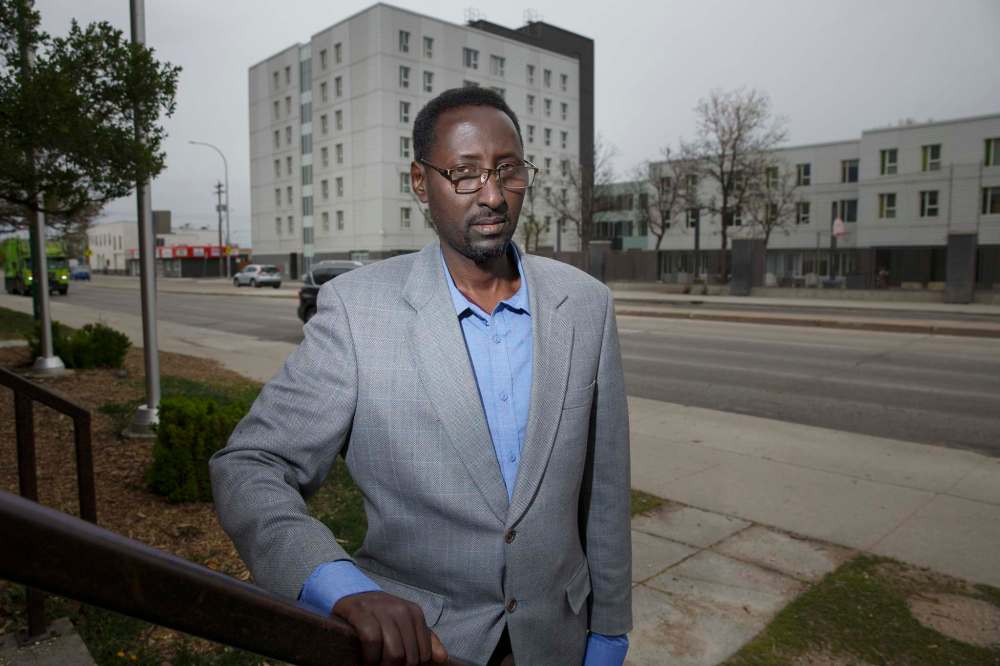
After surviving decades of civil war and terror attacks — including Somalia’s largest in October 2017 that killed nearly 600 people at Mogadishu’s Safari Hotel — the greatest threat to his life was being appointed to lead one of the country’s 18 administrative regions. Like the slain governor (Mohamed Dahir Ali Elmi) he was to replace, Hassan became a target for al-Shabaab terrorists trying to overrun the country, as well as an armed opposition.
In an interview Wednesday at a Tim Hortons coffee shop on Isabel Street, Hassan shared highlights from his short-lived appointment to lead the central region where he was born.
“There was a lot of conflict,” he said through an interpreter, showing Somalia TV news clips, including an interview with a reporter and a news conference where he’s one of four leaders seated on the dais.
“I was given the opportunity by my own people who needed a new leader,” said Hassan, 47. “The economy and everything was going down.”
When he was named governor of Galguduud region, following a peace agreement brokered for central Somalia, he said he was reassured by the head of Galmudug state that he’d receive heavy security.
Within weeks, Hassan’s office was attacked. He and his staff were beaten and taken hostage by opposition militia for three weeks before African Union Mission to Somalia (AMISOM) forces took control of the building and freed them.
“They can’t protect you,” Hassan said. His family — six teenage and adult children from his late wife, and his second wife who was expecting their first child — lived apart from him for their safety since he joined the government in 2017. “I felt like I was in my own prison.”
Last year, he saw a way out: a conference on artificial intelligence in Las Vegas. While waiting for his U.S. visa to arrive in April 2018, an al-Shabaab suicide bomber set off a car-based explosion near the Mogadishu airport — narrowly missing Hassan. The bomber died and two police officers were injured; Hassan was unscathed but sure he was the intended target.
When his visa arrived, he headed to Las Vegas, then north to Minneapolis, home of the largest Somali community in the United States. Friends told him there was no hope of the U.S. granting him asylum under the Trump administration, so he headed to Canada.
He took a bus to Fargo, N.D., then paid a taxi $150 to get him close to the border at Emerson. He walked for three hours, arriving in Canada in the dark on May 1, 2018.
The RCMP took him to the Canada Border Services Agency to verify his identity and make sure he wasn’t a security threat. He was driven to the Salvation Army in Winnipeg, then Welcome Place for help filing a refugee claim and other paperwork.
He went to Toronto, where he had friends, and worked in shipping and receiving, sending money to his family in Somalia. Now, he’s back in Winnipeg for his hearing and hopes the city will become his permanent home.

If granted refugee protection, he’s eager to bring over his wife and young daughter, as well as his six grown children.
“I think here is the best option,” said Hassan, who sees Winnipeg as a safe place to live. “Toronto is very expensive and getting a home is very hard.”
If his refugee claim is rejected, Hassan plans to appeal, all the while working to send money to his family.
“If Somalia could have saved my life, I would’ve stayed there.”
carol.sanders@freepress.mb.ca
Carol Sanders
Legislature reporter
Carol Sanders is a reporter at the Free Press legislature bureau. The former general assignment reporter and copy editor joined the paper in 1997. Read more about Carol.
Every piece of reporting Carol produces is reviewed by an editing team before it is posted online or published in print — part of the Free Press‘s tradition, since 1872, of producing reliable independent journalism. Read more about Free Press’s history and mandate, and learn how our newsroom operates.
Our newsroom depends on a growing audience of readers to power our journalism. If you are not a paid reader, please consider becoming a subscriber.
Our newsroom depends on its audience of readers to power our journalism. Thank you for your support.
Carol Sanders
Legislature reporter
Carol Sanders is a reporter at the Free Press legislature bureau. The former general assignment reporter and copy editor joined the paper in 1997. Read more about Carol.
Every piece of reporting Carol produces is reviewed by an editing team before it is posted online or published in print — part of the Free Press‘s tradition, since 1872, of producing reliable independent journalism. Read more about Free Press’s history and mandate, and learn how our newsroom operates.
Our newsroom depends on a growing audience of readers to power our journalism. If you are not a paid reader, please consider becoming a subscriber.
Our newsroom depends on its audience of readers to power our journalism. Thank you for your support.
Advertisement Advertise With Us
Advertisement Advertise With Us
History
Updated on Wednesday, May 22, 2019 8:21 PM CDT: Updates spelling of name.