Claus von Bulow, cleared in attempted murder of wife, dies
Advertisement
Read this article for free:
or
Already have an account? Log in here »
To continue reading, please subscribe:

Digital Subscription
One year of digital access for only $205*
- Enjoy unlimited reading on winnipegfreepress.com
- Read the E-Edition, our digital replica newspaper
- Access News Break, our award-winning app
- Play interactive puzzles
*First annual payment billed as $205.00 + GST for one year. This annual subscription will automatically renew at $233.00 + GST every 52 weeks (10% off the regular annual price of $259.35). Offer available to new and qualified returning subscribers only. Cancel any time.
To continue reading, please subscribe:
Add Free Press access to your Brandon Sun subscription for only an additional
$1 for the first 4 weeks*
- Enjoy unlimited reading on winnipegfreepress.com
- Read the E-Edition, our digital replica newspaper
- Access News Break, our award-winning app
- Play interactive puzzles
*Your next Brandon Sun subscription payment will increase by $1.00 and you will be charged $17.95 plus GST for four weeks. After four weeks, your payment will increase to $24.95 plus GST every four weeks.
Read unlimited articles for free today:
or
Already have an account? Log in here »
Hey there, time traveller!
This article was published 30/05/2019 (2689 days ago), so information in it may no longer be current.
LONDON – Danish-born socialite Claus von Bulow, who was convicted but later acquitted of trying to kill his wealthy wife in two trials that drew intense international attention in the 1980s, has died. He was 92.
Von Bulow, who moved to London after he was cleared, died at his home there on Saturday, his son-in-law, Riccardo Pavoncelli, told The New York Times.
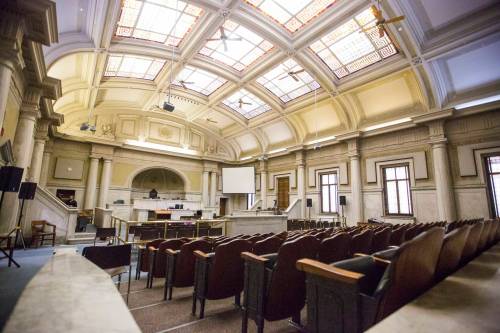
The tall, aristocratic von Bulow was charged with putting his wife, Martha “Sunny” von Bulow, into an irreversible coma to gain her fortune so he could live with his mistress, a raven-haired soap opera actress. He was convicted of attempted murder in 1982 at a trial in Newport, Rhode Island, that was widely followed with its high society overtones about possible attempted murder by insulin injection.
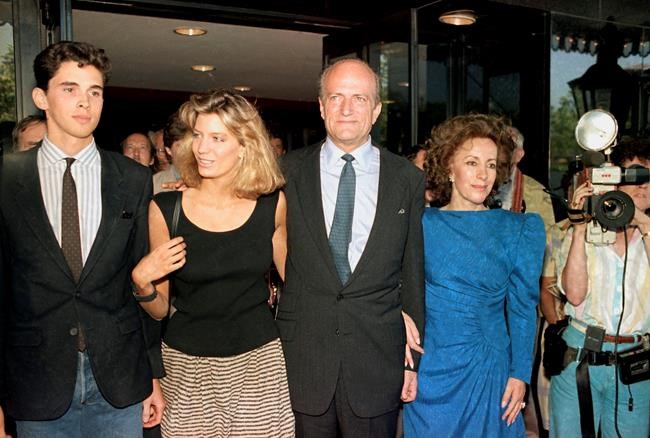
The conviction was overturned on appeal and he was acquitted at his second trial in 1985.
The case split his family: Sunny von Bulow’s two children from her first marriage to an Austrian prince accused their stepfather of attempted murder, while the couple’s daughter maintained her father was innocent. That loyalty nearly cost her millions — she was for several years excluded from her wealthy grandmother’s will because of her belief in her father’s innocence.
The jury in the first case endorsed the prosecution claim that Sunny von Bulow’s coma was caused by insulin injections administered surreptitiously by her husband Claus, but the second jury did not reach the same conclusion.
Sunny von Bulow died in 2008, nearly 28 years after she became comatose.
Claus von Bulow, who was portrayed by Oscar-winner Jeremy Irons in a film about the attempted murder case, always maintained his innocence. He did not testify at his criminal trials, but did deny wrongdoing under oath in a civil case brought by his stepchildren.
He rarely spoke about the case, in part because an eventual financial settlement reached with his stepchildren required him to keep mum.
“If I give an interview, it will be a $5 million interview,” he told The Associated Press in 2012, referring to a fine he said he might face if he discussed the matter with the press.
Harvard Law Professor Alan Dershowitz, who represented von Bulow and kept in touch with him for decades, said he scrupulously avoided the spotlight.
“He lived a good happy life following his acquittal, because he decided to remain in private. I advised him once we won the case to disappear from public view. He, unlike O.J. Simpson, accepted my advice,” Dershowitz said on Thursday.
Before the settlement agreement silenced him, von Bulow described the case as a disaster for all concerned. “This was a tragedy and it satisfied all of Aristotle’s definitions of tragedy,” he told members of the Harvard Law School during a 1986 talk. “Everyone is wounded, some fatally.”
When he was found not guilty at the second trial, von Bulow announced plans to permanently leave the United States for Europe. He also expressed an interest in staying out of the public eye.
“I want to be forgotten and live peacefully,” he said.
Dershowitz said he lived a “simple and humble life in a very small apartment,” enjoying the company of his daughter and grandchildren and attending the opera and theatre.
The trial had shed light on the lives of the super-rich during an era when Ronald Reagan was president and TV shows such as “Dallas” and “Dynasty” were extremely popular.
The von Bulows had a grand Fifth Avenue apartment in New York City to go along with Clarendon Court, their oceanside mansion in Newport, Rhode Island, which had been the setting for the 1956 musical “High Society” starring Grace Kelly, Frank Sinatra and Bing Crosby.
Sunny Von Bulow — who in her youth resembled Kelly, according to many friends — was the source of the wealth. She was the heiress to a substantial fortune, with her mother’s net worth estimated at $100 million. In the trials she was portrayed as an unhappy woman, although some friends, including the writer Dominick Dunne, challenged this perception as inaccurate and unfair.
The prosecution said Claus von Bulow on two occasions injected his wife with insulin in an attempt to aggravate her hypoglycemia and kill her. They said he could not face the financial consequences of a divorce that would cut him off from her millions.
Prosecutors said he did not come to her aid after she was stricken, refusing to call a doctor, even though the family maid, Maria Schrallhammer, begged him to summon medical help. Her testimony about his cold-hearted behaviour prompted the famous tabloid headline: “Maid: Claus was a Louse.”
At the first trial, actress Alexandra Isles, known for her role in “Dark Shadows,” gave damning testimony that she had told von Bulow she would end their love affair, if he did not leave Sunny. That helped convince the jury that von Bulow had a motive for trying to kill his wife.
The 1982 guilty verdict in the first trail was overturned by the Rhode Island Supreme Court two years later in a decision that helped establish the national reputation of Dershowitz, who managed the successful appeal.
That led to a second trial, held in nearby Providence.
Dershowitz on Thursday recalled that the appeal he argued was the first time any appeal was covered on television.
“It was the first really highly publicized case in the new age of widespread media coverage,” Dershowitz said. “It was a prelude in many ways to the O.J. Simpson case, but it was a decade earlier.”
Claus von Bulow used a different legal team that was better able to challenge the medical testimony linking Sunny’s coma to insulin injections, and the acquittal marked the end of von Bulow’s criminal exposure. That still left him vulnerable to a substantial civil case brought by his stepchildren, who believed he was directly responsible for their mother’s vegetative state. They sued him for $56 million in July 1985, just one month after his acquittal.
A settlement was reached two years later in which von Bulow agreed to drop all claims to his wife’s fortune, to divorce her, and to refrain from discussing the case or profiting from it.
The divorce meant that he would no longer be legally in charge of Sunny’s medical care — which gave his stepchildren some solace.
In exchange, his daughter Cosima — who had been excluded from her grandmother’s will because she sided with her father in the dispute — had her lucrative position in the will restored. Von Bulow said at the time that he was pleased with the result because he had been seeking financial parity for Cosima.
The next major development in the drama was the “Reversal of Fortune” film that saw Irons win an Academy Award for his devastating portrayal of von Bulow. Glenn Close played Sunny in the film, which portrayed appeals lawyer Dershowitz (author of the book it was based on) in a heroic light.
Dershowitz said von Bulow liked the book, but disliked the movie because it left as an open question whether he was guilty or innocent, while the book came down definitively on von Bulow’s side.

Von Bulow was born Claus Cecil Borberg in 1926 in Copenhagen. During World War II, after the Nazi occupation of Denmark, Claus was moved to England and was brought up by his mother and maternal grandfather, Frits Bulow, a former justice minister in Denmark.
Claus adopted the Bulow name and was said to have added the “von” when he was a young adult.
He graduated in law from Trinity College, Cambridge, and worked in the legal field for some years before he became a personal assistant to oil baron J. Paul Getty.
___
Michelle R. Smith contributed to this report from Providence, Rhode Island.