

Province to unveil road map for mining
Protocol aims to proactively avoid clashes with First Nations
Advertisement
Read this article for free:
or
Already have an account? Log in here »
To continue reading, please subscribe:
Monthly Digital Subscription
$1 per week for 24 weeks*
- Enjoy unlimited reading on winnipegfreepress.com
- Read the E-Edition, our digital replica newspaper
- Access News Break, our award-winning app
- Play interactive puzzles
*Billed as $4.00 plus GST every four weeks. After 24 weeks, price increases to the regular rate of $19.95 plus GST every four weeks. Offer available to new and qualified returning subscribers only. Cancel any time.
Monthly Digital Subscription
$4.99/week*
- Enjoy unlimited reading on winnipegfreepress.com
- Read the E-Edition, our digital replica newspaper
- Access News Break, our award-winning app
- Play interactive puzzles
*Billed as $19.95 plus GST every four weeks. Cancel any time.
To continue reading, please subscribe:
Add Free Press access to your Brandon Sun subscription for only an additional
$1 for the first 4 weeks*
*Your next subscription payment will increase by $1.00 and you will be charged $16.99 plus GST for four weeks. After four weeks, your payment will increase to $23.99 plus GST every four weeks.
Read unlimited articles for free today:
or
Already have an account? Log in here »
Hey there, time traveller!
This article was published 31/05/2019 (2521 days ago), so information in it may no longer be current.
OTTAWA — Manitoba will unveil today a road map for future mining projects in the province aimed at avoiding clashes with First Nations communities, the Free Press has learned.
The Pallister government’s mineral development protocol attempts to clarify the rules around how prospectors can explore and take samples without trampling on treaty rights.
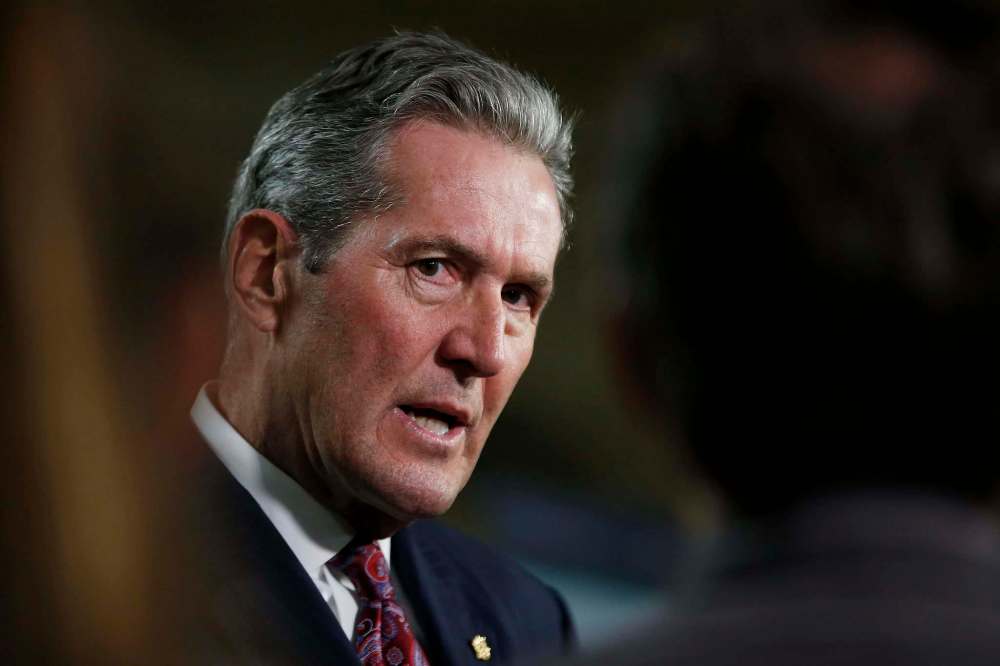
The news comes amid headaches raised by the planned Manitoba Hydro transmission line to Minnesota, as First Nations and Métis claims of botched consultation prompted Premier Brian Pallister to hold an urgent meeting Wednesday with Prime Minister Justin Trudeau.
The idea of the protocol is to put both First Nations and mining companies on solid ground at the start of possible projects, outlining the rules companies must follow and what initial exploration First Nations will permit.
A document obtained by the Free Press outlines a template that communities and companies can either use as provided or modify, spanning the phases of a project from initial exploration to mine development. It also touches on remediation and monitoring commitments.
The province is set to unveil funding intended to establish joint-management boards and help First Nations get the training and experts needed for representation in regulatory approvals.
In theory, the protocol should provide Indigenous communities with enough documentation to green-light exploration with a reduced risk of an environmentally disruptive project that would provide scant benefit to the community.
Similarly, companies would have a road map for what laws they need to follow, what adequate compensation and employment look like, what issues to anticipate and how to resolve disputes before they lead to lawsuits stalling or quashing projects.
Pallister launched this process in July 2017, appointing two PC politicians to get advice from dozens of First Nations: Filmon-era minister Jim Downey and Ron Evans, the former chief of Norway House Cree Nation who will run as Pallister’s candidate in The Pas-Kameesak.
The government originally mentioned Indigenous groups at large, but the interim report in June 2018 focused only on First Nations, without mentioning Métis groups.
That interim report floated ideas like having reserves appoint a single person as the point of contact for mining prospectors, and milestones of a project at which point the community and company touch base. It stressed that First Nations want companies to understand how past projects have hurt their environment and traditions, so firms can avoid repeating these mistakes.
Environmental groups have argued that the Indigenous grassroots deserves a stronger voice in the regulation and approval of these projects.

Hollow Water First Nation’s band council has officially endorsed a silica sand mine on its territory near Seymourville, though some locals have protested the fracking project’s provincial review, saying it didn’t properly consider evidence of possible health risks.
The federal Liberals’ Bill C-69 aims to clarify stable, predictable rules for major projects like pipelines, ports and mining projects large enough to exceed provincial jurisdiction. Yet critics complain the bill would instead introduce confusion.
Similarly, Public Services and Procurement Canada has refined its rules around divesting federally owned land to avoid years-long court sagas like the one surrounding the Kapyong Barracks.
dylan.robertson@freepress.mb.ca