

Experiencing magical Haida Gwaii
Visit to remote B.C. islands an opportunity to discover Indigenous culture
Advertisement
Read this article for free:
or
Already have an account? Log in here »
To continue reading, please subscribe:
Monthly Digital Subscription
$1 per week for 24 weeks*
- Enjoy unlimited reading on winnipegfreepress.com
- Read the E-Edition, our digital replica newspaper
- Access News Break, our award-winning app
- Play interactive puzzles
*Billed as $4.00 plus GST every four weeks. After 24 weeks, price increases to the regular rate of $19.95 plus GST every four weeks. Offer available to new and qualified returning subscribers only. Cancel any time.
Monthly Digital Subscription
$4.99/week*
- Enjoy unlimited reading on winnipegfreepress.com
- Read the E-Edition, our digital replica newspaper
- Access News Break, our award-winning app
- Play interactive puzzles
*Billed as $19.95 plus GST every four weeks. Cancel any time.
To continue reading, please subscribe:
Add Free Press access to your Brandon Sun subscription for only an additional
$1 for the first 4 weeks*
*Your next subscription payment will increase by $1.00 and you will be charged $16.99 plus GST for four weeks. After four weeks, your payment will increase to $23.99 plus GST every four weeks.
Read unlimited articles for free today:
or
Already have an account? Log in here »
Hey there, time traveller!
This article was published 15/06/2019 (2516 days ago), so information in it may no longer be current.
A ray of sunlight shines on the still waters of Stads K’uns GawGa (Peel Inlet) in Haida Gwaii as we dip our paddles in unison while paddling a traditional dugout canoe made from a single 600-year-old cedar tree.
The light beams directly onto the canoe, painted with art motifs, as the powerful voice of 19-year-old Jaylene Shelford, from Masset, sings a Haida song of peace.
We are a small group of tourists and Haida guides paddling in calm waters, where the thickly wooded Charlotte Mountain Range meets the waterline. In that moment, it strikes me that this is why Haida Gwaii — an archipelago of more than 150 islands at the most westerly point of northern British Columbia — is often described as magical.
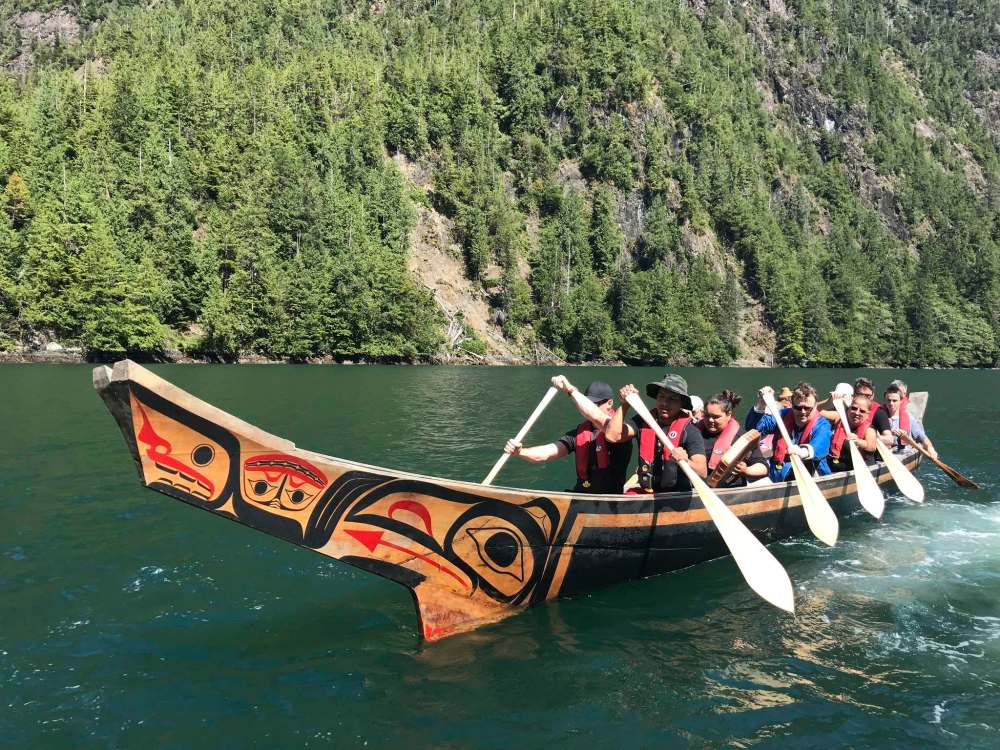
Peel Inlet is so remote you can only get there by boat or be flown in by helicopter, as we had done four days earlier. Initially strangers from across Canada and the United States, our group quickly bonded thanks to shared experiences in this pristine wilderness setting that few tourists have ever visited.
Our accommodation was at the recently opened Ocean House, which was once a fishing lodge now converted into a luxury wilderness resort.
The floating lodge is 100 per cent owned by the Haida and managed by Haida Enterprise Corporation (HaiCo). Having just 12 suites, with a maximum occupancy of 24 guests, visitors are practically guaranteed an intimate experience at the lodge, moored not far from shore.
While Ocean House on Moresby Island just opened in June, HaiCo has been operating Haida House at Tllaal on the east coast of Graham Island since 2012, when it bought a bear-hunting lodge and retired the commercial hunting licences. Both lodges believe in a “leave no footprint” philosophy common in Aboriginal tourism.
At Ocean House, the goal is to provide visitors with all the comforts one would expect from luxury lodges, like fine dining, a spa and great decor, while giving them a better understanding of Haida Gwaii’s history and culture.
This would come not from lectures, but visiting special places by Ocean House and meeting Haida Gwaii residents. The lodge, which opens from June to the end of August, invites Haida artists, who typically stay for one week interacting with guests before another artist replaces them, to share their experiences.
The week I visited, we were fortunate that artist was one of the nation’s cultural leaders — master carver Christian White and his wife Candace Weir, who is a teacher of the Haida language.
Together, the couple is helping lead a Haida cultural revival of art, dance and song, and proudly point out the younger generation at Ocean House are in effect cultural ambassadors for the Haida people as well.
“We are so proud of our young people,” Weir says, adding she recalls Shelford was just a toddler when she sang at the couple’s first potlatch in Masset. Later at our goodbye dinner, Shelford sings a Haida song for the first time that she had just been taught by Weir.
For a moment she hesitates, and Weir quickly joins her at the head of the long table set up for guests to enjoy a feast of local cuisine. There were so many memorable moments like this, visitors can’t help feeling they have a front-row seat to witnessing the Haida culture being passed down and thriving.

For the time I was at the lodge, I truly felt a part of the community, whether foraging in the forests looking for medicinal plants, taking a boat ride with local staff to lay and then later retrieve crab traps, or going on a gentle hike to one of more than 14 ancestral villages that surround the floating lodge.
On the forest walk, we are shown by Masset resident Tuna Bell, who switched careers from welding to adventure tourism, archeological remains of longhouses, a mortuary pole and two totem poles left to disintegrate as part of the pole’s natural life cycle.
Bell explains the one particular longhouse we are seeing at the Kay’suun village, about a half-hour boat ride away from Ocean House, would have had been able to fit about 30 people inside. There are indications of other houses as well at the village that likely were home to about 300 people before European contact.
“The 300 people that were here were wiped out after the first wave of the smallpox epidemic in 1862, and only 30 to 40 people were left and moved to Skidegate,” Bell says, adding of the 10,000 Haida who lived on these islands before contact, only 600 were left after smallpox. Standing at that ancient village, long abandoned, the enormity of those statistics takes on more meaning.
After being out on the land and given a window into traditional Haida life, I was more interested than ever in learning more. Back at the lodge, I took advantage of the opportunity to watch documentaries on Haida Gwaii and its people in the cosy lounge.

In one of the documentaries, Stolen Spirits of Haida Gwaii, I learn how the Haida have brought home more than 400 of their ancestors whose bones were stolen and taken to museums — like the Field Museum in Chicago, which had the remains of 150 ancestors.
In the film, released in 2004, White is shown learning how to make a traditional Haida bentwood box from a single plank of wood that is steamed until pliable, then bent and held together by pegs on the ends.
The boxes White made would then be used to bring home the remains of their ancestors.
Having the opportunity to speak with White directly at Ocean House about his life was truly unique and educational.
During a boat ride to a nearby site where White was able to chop down Devils Club, used to treat respiratory illnesses, we chatted about the changes he’s witnessed on these remote islands that are home to about 3,000 Indigenous people and 2,000 non-natives.
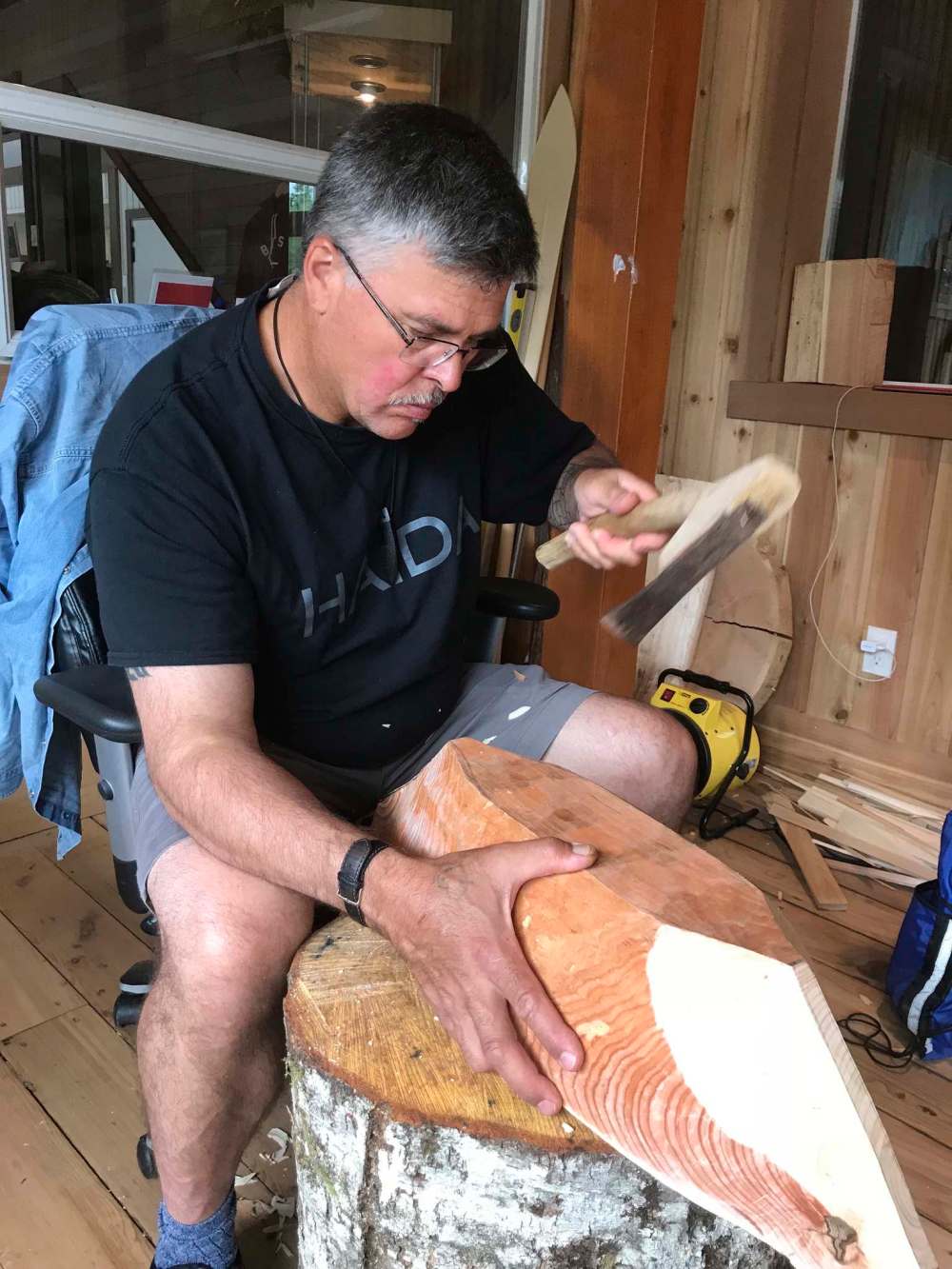
One of the main changes, he says, is that less emphasis is put on resource extraction and more on creating a sustainable economy.
“Tourism has always been important to us, but it was swept under the carpet,” White says.
“Logging is all about exploiting a resource. Tourism is not about extraction. We do take what we need, but it will sustain itself. It’s looking at a 1,000-year plan instead of a 70-year plan.”
kpemberton@shaw.ca

