WEATHER ALERT

Hair apparent

Debut graphic novel explores black women's lives through their hairstyles

Advertisement

Advertise with us

Women’s hair is never just hair, and for black women this is even more true.

Read this article for free:

or

Already have an account? Log in here »

To continue reading, please subscribe:

Subscribe and receive a limited-edition Free Press branded hat or tote.

Digital Subscription

One year of digital access for only $205*

  • Enjoy unlimited reading on winnipegfreepress.com
  • Read the E-Edition, our digital replica newspaper
  • Access News Break, our award-winning app
  • Play interactive puzzles

*First annual payment billed as $205.00 + GST for one year. This annual subscription will automatically renew at $233.00 + GST every 52 weeks (10% off the regular annual price of $259.35). Offer available to new and qualified returning subscribers only. Cancel any time.

To continue reading, please subscribe:

Add Free Press access to your Brandon Sun subscription for only an additional

$1 for the first 4 weeks*

  • Enjoy unlimited reading on winnipegfreepress.com
  • Read the E-Edition, our digital replica newspaper
  • Access News Break, our award-winning app
  • Play interactive puzzles
Start now

*Your next Brandon Sun subscription payment will increase by $1.00 and you will be charged $17.95 plus GST for four weeks. After four weeks, your payment will increase to $24.95 plus GST every four weeks.

Hey there, time traveller!
This article was published 22/06/2019 (2576 days ago), so information in it may no longer be current.

Women’s hair is never just hair, and for black women this is even more true.

African and diasporic black artists and writers have been telling us this for decades. From comedian Chris Rock’s 2009 documentary for his daughters, Good Hair, to Chimamanda Ngozi Adichie’s epic 2013 novel Amerikanah and Solange’s 2016 song Don’t Touch My Hair, black women’s hair has recently become a flashpoint for the complex relationships between gender, race, class, family, culture, advertising, business and art.

Hot Comb, the first book by U.S. cartoonist Ebony Flowers, is a sophisticated entry into this topic, by turns heartbreaking and joyous. Composed of eight short stories about African-American girls and women, Hot Comb takes us through such coming-of-age experiences as hair shame, chemical straightening, burned scalps, braiding, afros and ultimately hair acceptance.
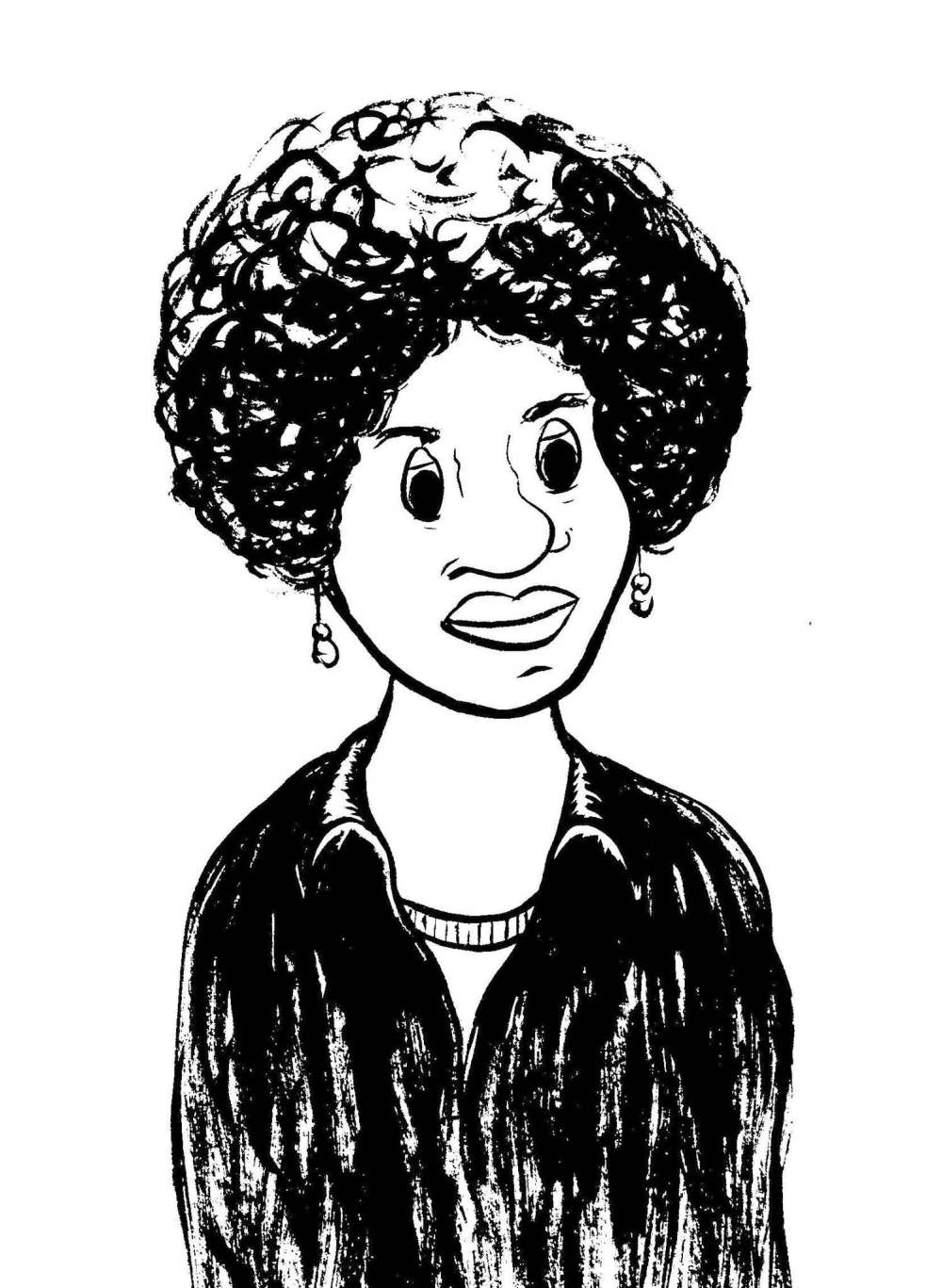
A self-portrait illustration of author Ebony Flowers.

Along the way, we meet black girls being bullied by their white peers, black women being exoticized by white men, black girls and women encouraging each other to have “good” hair, and black mothers ambivalent about letting their daughters start the spiral of straightening treatments. Flowers shows us the internalized racism that can lead to self-harm and depression, but also shows us the important bonding that takes place between girls and women in scenes of mothers braiding their daughters’ hair, “aunties” initiating teenagers into perms and friends encouraging each other to go natural. Read together, these stories tell a collective coming-of-age story that ends on a hopeful, liberating note of black women’s hair, body, and self-acceptance.

Flowers is a cartoonist, ethnographer and teacher who was born in Maryland and now lives in Denver. She wrote her PhD thesis in curriculum and instruction at the University of Wisconsin-Madison largely as a comic, and won a 2017 Rona Jaffe Award for emerging women writers. Fans of cartoonist Lynda Barry may not be surprised to learn that Flowers has studied and worked with her. Like Barry, Flowers focuses on girlhood and sees drawing as a way to both tap into creativity and develop new forms of teaching and scholarship.

Because she is a trained ethnographer, another comparison is to the early 20th-century African-American writer and anthropologist Zora Neale Hurston. Like Hurston, Flowers is an artist-folklorist, using her creative talents to capture the tones, rhythms and everyday lives of black women with an unflinching yet loving eye and ear.

The title comic is also the first and the longest, using first-person perspective in a coming-of-age graphic memoir about Ebony’s introduction to harsh chemical hair relaxing. Having moved from a predominantly white trailer park to a black neighbourhood in Baltimore, Ebony is suddenly made aware of her “bad” hair by other black girls.

Her mother finally relents to Ebony’s pleas to have a hair salon straightening perm. Ironically, when she returns to her neighbourhood with her new hairdo, the black boys at her school tell her she looks “dumb.”
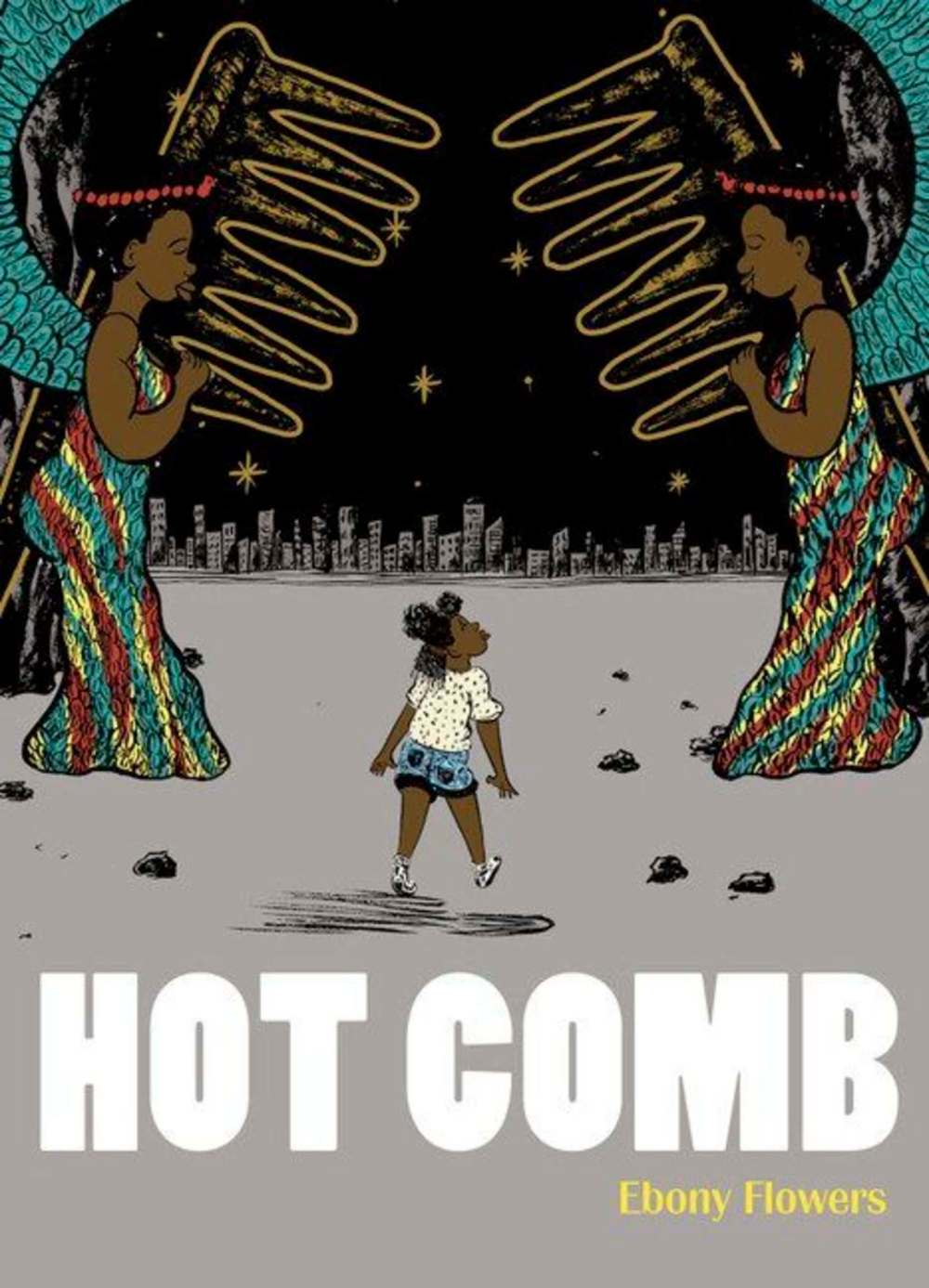
The final story, Last Angolan Saturday, is another standout. Moving from the U.S. to Angola, Flowers begins with three 20-something black friends doing each other’s hair and then deciding to go to the beach.

When they get stuck in traffic, we see them discussing local politics alongside the problems of finding someone in the U.S. who can match Angolan women’s elaborate cornrow designs. They eventually arrive at the beach, and the book ends with a glorious scene of the friends finding their voices.

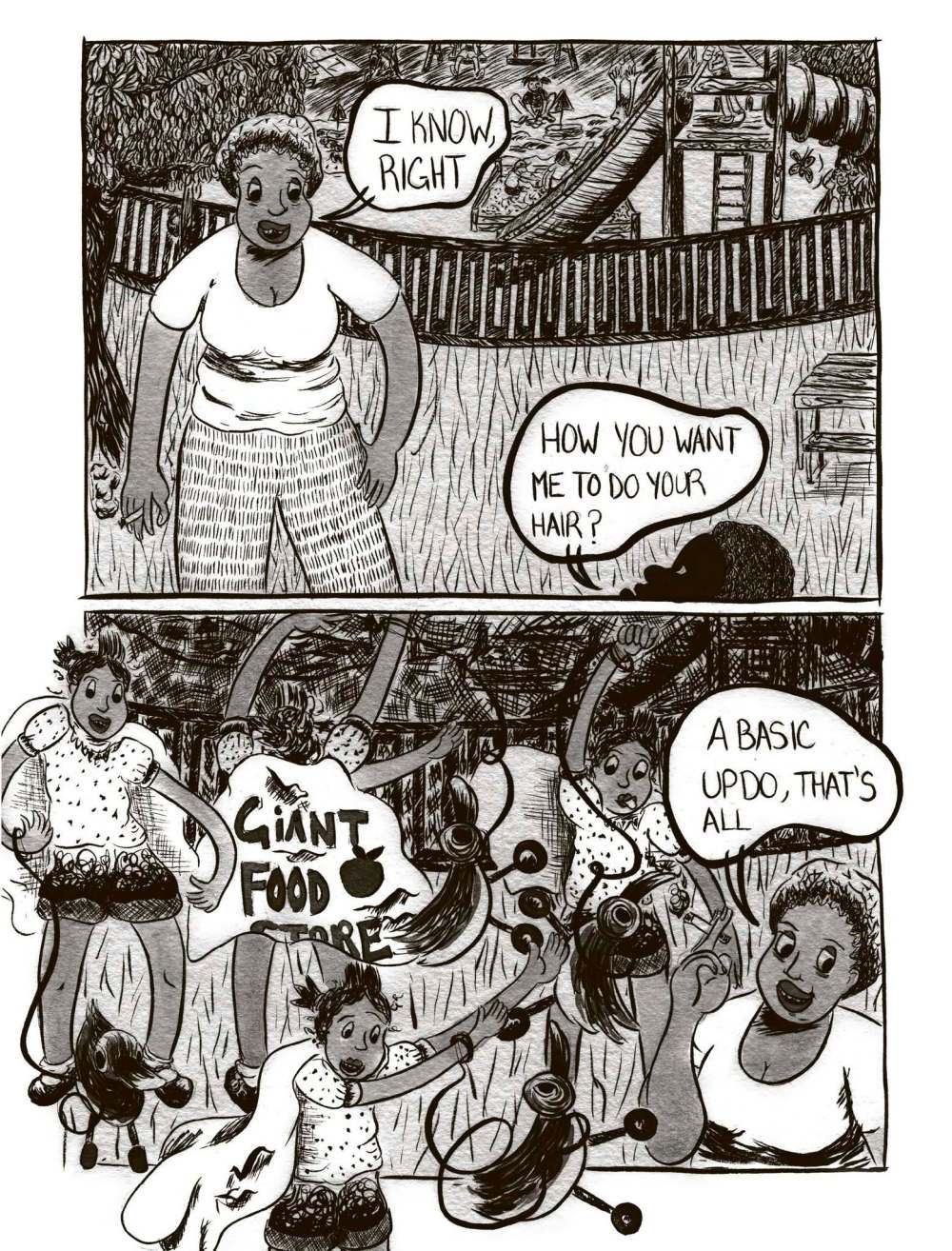
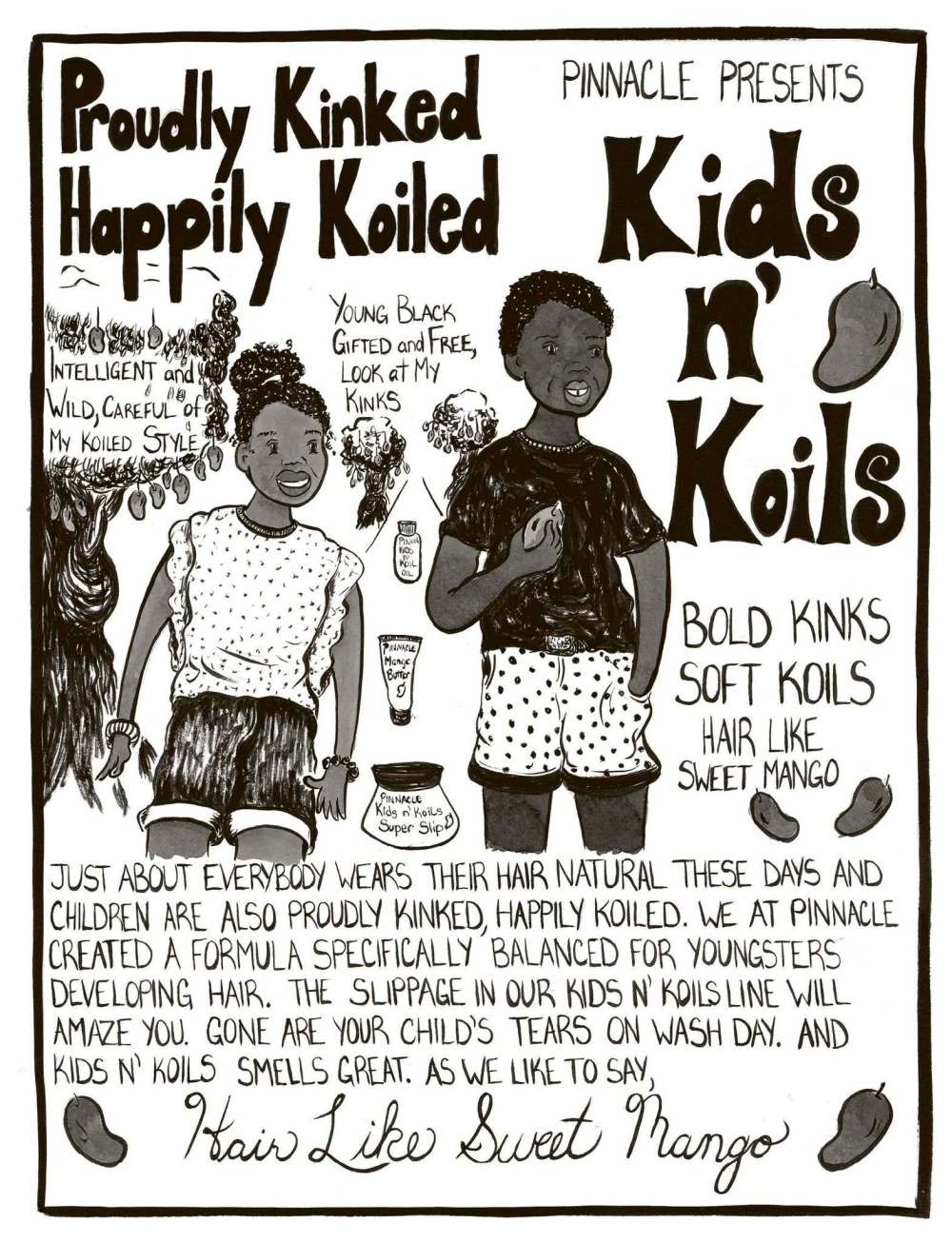
Flowers has a scribbly, sketchy, black-and-white style that works well for these intimate, honest and beguiling stories.

Throughout, Hot Comb provides a glimpse into a set of very specific gendered, racialized and generational experiences that are nevertheless relatable for any reader who has experienced growing pains, complex family dynamics and struggles with self-image and identity.

Hot Comb is a vibrant entry into the growing genre of coming-of-age comics that uses the intricate politics of hair to draw complex portraits of the lives of black girls and women.
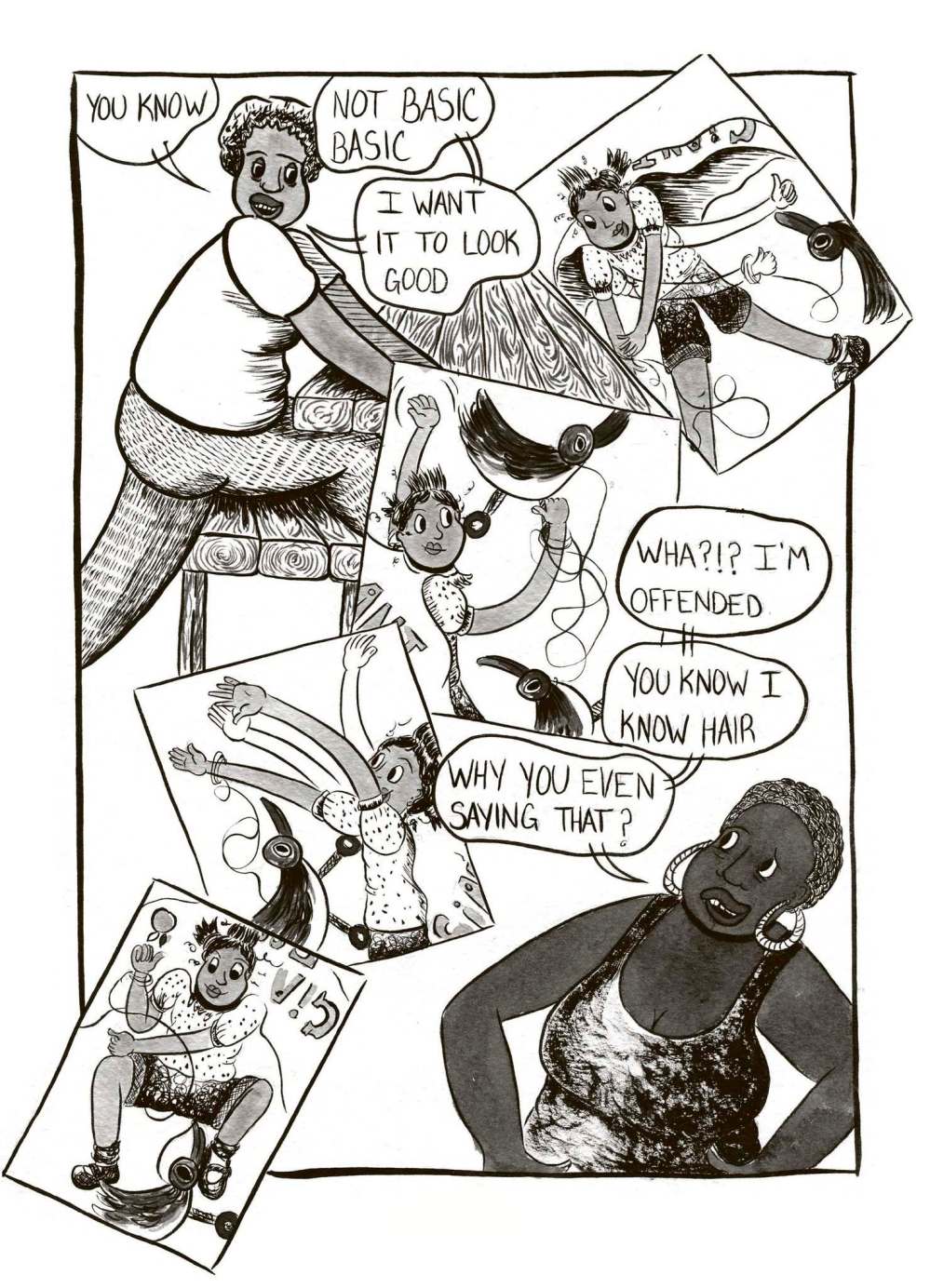
A panel from the graphic novel Hot Comb.

Candida Rifkind is an associate professor in the department of English at the University of Winnipeg, where she teaches and researches comics, graphic narratives and Canadian literature and culture.
Report Error Submit a Tip

More Stories

Homeless face even more peril in high heat after drug use crackdown, advocates say

Tiago Resko 5 minute read Preview

Homeless face even more peril in high heat after drug use crackdown, advocates say

Tiago Resko 5 minute read Yesterday at 6:01 PM CDT

Advocates say the recent police crackdown on open drug use on Winnipeg streets has driven members of the homeless community into the shadows and will put them at risk during the heatwave this week.

“That was a really ugly week and a half in the city’s history. The results have been devastating,” said Kate Sjoberg, executive director of Resource Assistance for Youth, who has been highly critical of the 10-day drug sweep in which more than 100 people were detained for drug use or trafficking.

She said the crackdown has made it harder for some homeless people to receive help because they’ve moved to less visible areas to avoid police.

Environment Canada issued a special weather statement for southern Manitoba that warns of intense heat that will last into next week. It’s expected to reach up to 45 degrees Celsius on Sunday, when the humidity is factored in.

Read
Yesterday at 6:01 PM CDT

Kids Market ringing up joy at Victoria Beach

Aaron Epp 4 minute read Preview

Kids Market ringing up joy at Victoria Beach

Aaron Epp 4 minute read Yesterday at 8:04 PM CDT

If Maude Delaquis ever runs a fashion empire, she can say it all started at the beach.

The 11-year-old is one of more than 30 budding merchants who will hawk their wares at the Village Green Bakery Kids Market in Victoria Beach on Sunday.

The annual event is meant to encourage creativity and entrepreneurial spirit by giving children under the age of 14 a place to sell homemade items.

Maude will be promoting Bonjour Soleil, a line of T-shirts featuring a Victoria Beach-themed decal she created. It’s her fourth year participating.

Read
Yesterday at 8:04 PM CDT

As Canada’s newest top doc, Dr. Joss Reimer immediately had to confront two deadly global outbreaks

Dan Lett 13 minute read Preview

As Canada’s newest top doc, Dr. Joss Reimer immediately had to confront two deadly global outbreaks

Dan Lett 13 minute read Thursday, Jul. 9, 2026

OTTAWA — The whirlwind that has been Dr. Joss Reimer’s career has officially touched down in Building 62.

A modern, non-descript complex in a suburban industrial park, Building 62 is the only name given to the headquarters of the Public Health Agency of Canada, and Reimer’s new home as the country’s chief public health officer.

For the record, whirlwind is hardly an exaggeration.

Seven years ago, Reimer was a well-respected, somewhat low-key obstetrician and medical educator in Winnipeg. Along the way, she spent time as a YouTube public-health influencer, the Winnipeg Regional Health Authority’s medical director for public health, the provincial government’s medical officer of health and — in the role most familiar to Manitobans — the medical lead and official spokesperson for the provincial COVID-19 vaccine implementation task force.

Read
Thursday, Jul. 9, 2026

Disc drive: petition seeks to reverse Sony decision to stop producing physical discs

Gabrielle Piché 5 minute read Preview

Disc drive: petition seeks to reverse Sony decision to stop producing physical discs

Gabrielle Piché 5 minute read Thursday, Jul. 9, 2026

Atop a counter displaying vintage video games, a sign urges passersby to petition Sony Group Corp.

The Japanese multinational company’s PlayStation system discs aren’t retro — yet. But they will be in 2028, when Sony plans to stop producing the physical products.

Its games will be sold online or in “digital formats” at shops, including as codes.

Winnipeg-based independent chain PNP Games has outfitted its St. Vital area store with signs of protest. It’s also launched an online petition — one garnering more than 231,000 signatures in roughly a week.

Read
Thursday, Jul. 9, 2026

An evening in the emergency room

Janine LeGal 5 minute read Preview

An evening in the emergency room

Janine LeGal 5 minute read Yesterday at 2:01 AM CDT

This situation needs immediate intervention. Anything less means nothing.

Read
Yesterday at 2:01 AM CDT

Red card for FIFA, Infantino

Editorial 4 minute read Preview

Red card for FIFA, Infantino

Editorial 4 minute read Thursday, Jul. 9, 2026

It took longer than most people thought it would, but U.S. President Donald Trump finally brought his brand of chaos to the men’s World Cup soccer tournament — and immediately soiled the pitch.

Trump was infuriated by a questionable red card shown to top U.S. forward Folarin Balogun during the American team’s July 1 match with Bosnia and Herzegovina — disciplinary action which meant Balogun was ejected from the game and suspended for his country’s next match versus Belgium on Monday, July 6.

Spurred on by officials including Andrew Giuliani (yes, the son of Rudy), director of the White House task force on the World Cup, Trump called up his bosom buddy, FIFA president Gianni Infantino, that very evening to ask that something be done about the suspension. He called Infantino again on July 4.

Lo and behold, FIFA announced July 5 that its disciplinary panel had suspended the application of Balogun’s one-match ban for a year, making him eligible to play in the Belgium game (which the U.S. lost 4-1, by the way). Multiple news reports quickly revealed Trump’s calls to Infantino — reaction was equally swift.

Read
Thursday, Jul. 9, 2026