David Saint-Jacques faces long recovery after return to Earth, doctor says
Advertisement
Read this article for free:
or
Already have an account? Log in here »
To continue reading, please subscribe:

Digital Subscription
One year of digital access for only $205*
- Enjoy unlimited reading on winnipegfreepress.com
- Read the E-Edition, our digital replica newspaper
- Access News Break, our award-winning app
- Play interactive puzzles
*First annual payment billed as $205.00 + GST for one year. This annual subscription will automatically renew at $233.00 + GST every 52 weeks (10% off the regular annual price of $259.35). Offer available to new and qualified returning subscribers only. Cancel any time.
To continue reading, please subscribe:
Add Free Press access to your Brandon Sun subscription for only an additional
$1 for the first 4 weeks*
- Enjoy unlimited reading on winnipegfreepress.com
- Read the E-Edition, our digital replica newspaper
- Access News Break, our award-winning app
- Play interactive puzzles
*Your next Brandon Sun subscription payment will increase by $1.00 and you will be charged $17.95 plus GST for four weeks. After four weeks, your payment will increase to $24.95 plus GST every four weeks.
Read unlimited articles for free today:
or
Already have an account? Log in here »
Hey there, time traveller!
This article was published 23/06/2019 (2620 days ago), so information in it may no longer be current.
MONTREAL – Canadian astronaut David Saint-Jacques will return to Earth on Monday following a six-month mission aboard the International Space Station. Raffi Kuyumjian, the doctor for the Canadian Space Agency, explains that the 49-year-old astronaut will undergo a long recovery as his body adjusts from weightlessness.
————–
The Canadian Press: How will Saint-Jacques feel when he returns to Earth?
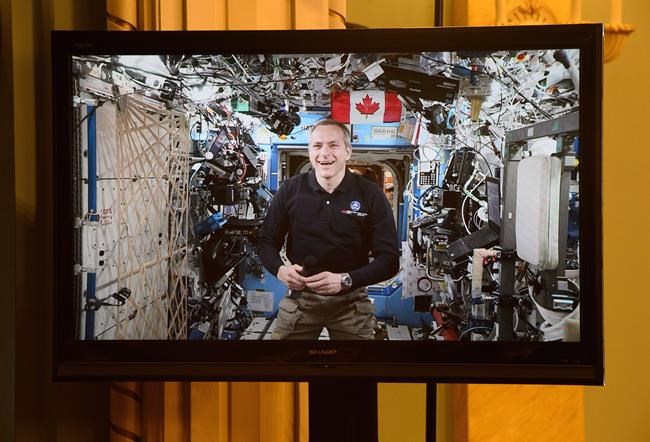
Raffi Kuyumjian: Spending about six months (in space), it’s a little like having spent six months in bed without moving. His body will have to readapt to gravity. He will need help getting out of the capsule. Clearly, we have to expect some difficulty with the process, a certain lack of balance. He may feel dizzy because his cardiovascular system is no longer used to fighting gravity. And typically (astronauts) have pains everywhere. From the sitting position he will feel pain in the back and the posture muscles because those muscles haven’t worked for six months.
CP: How will his body have been changed?
RK: The loss of muscle is hard to quantify, it’s very variable. Bone loss, we’re talking about an average of one per cent bone density per month that’s lost, but it can vary. It depends on several factors, including how much exercise they did, their genetics, physical shape before leaving, etc. Even if the lost bone density is mild or non-existent or recoverable after a certain time, it’s quite possible that the bone architecture is not recoverable at all. Bone architecture is simply the shape inside bones. It may be lost forever. Does it have any practical or clinical impact? We don’t know yet.
CP: What will happen after he returns to Earth?
RK: In the first few weeks there will be a series of medical exams to make sure he’s healthy, but beyond those medical tests there are others that are linked to research. Researchers who study different physiological parameters drew blood and did certain tests before the flight, during the flight, and they will want to see the results after the flight. The third element in the weeks to come is strictly rehabilitation. An exercise specialist will bring him to the gym about two hours per day to make him do different musculature exercises, cardiovascular exercises, so he regains his endurance, his muscular co-ordination, his body’s flexibility, endurance in general, all those things that were a little lost.
CP: How long does it take for an astronaut to more or less return to normal?
RK: Normally it takes about a day for every day (in space). So after a few months we should be able to say David has really regained the same level of physical health he had before the flight. The exception is bone density loss, which depending on how much he lost, can take up to a year.
CP: So a space journey is very hard on the human body.
RK: Absolutely. In fact, the time spent during weightlessness in space is often compared to accelerated aging. David adjusted to weightlessness, it took him several weeks to adapt when he was on the space station, and after a time he felt perfectly adapted to space. Now when he comes back, it will be about the same amount of time and rehabilitation that will be necessary to adapt to earth and gravity. Apart from balance problems and lack of strength and co-ordination, we expect there will be symptoms of “Earth sickness,” if you will. So the symptoms of nausea that generally come when astronauts arrive in space, there is the equivalent when they return to Earth.
CP: What are the practical applications here on Earth for what we learn about the human body in space?
RK: These physiological changes, which are enormously comparable to the physiological changes that happen when we age, can help researchers find solutions that apply to astronauts but could also apply to an aging population. David has demonstrated two technologies on himself: the biomonitor, a shirt that measures different vital signs and sends the data to Earth; and a portable device for blood tests, so that one day instead of needing a lab to analyze blood counts we can imagine we’ll be able to go to the doctor for a blood test and get the results instantly.
CP: What pushes Saint-Jacques to essentially serve as a guinea pig in this way?
RK: All astronauts have one thing in common: they’re explorers who question and who want to know more — not only about the human body but where we come from, how we can go further, what is behind the next mountain or beyond the moon. Most astronauts have always dreamed of going to space and exploring, to understand more. That’s what they have in common, so it’s a bit natural for them to have that thirst for learning and to serve as guinea pigs for research.
————-
This interview has been edited for length and clarity.
Related Articles
David Saint-Jacques doing well after return to Earth
Advertisement Advertise With Us
Advertisement Advertise With Us