

Not quite on pointe
Cold War ballet drama lacks a certain spark

Advertisement
Read this article for free:
or
Already have an account? Log in here »
To continue reading, please subscribe:
Digital Subscription
One year of digital access for only $1.44 a week*
- Enjoy unlimited reading on winnipegfreepress.com
- Read the E-Edition, our digital replica newspaper
- Access News Break, our award-winning app
- Play interactive puzzles
*Billed as $5.77 plus GST every four weeks. After 52 weeks, price increases to the regular rate of $19.95 plus GST every four weeks. Offer available to new and qualified returning subscribers only. Cancel any time.
To continue reading, please subscribe:
Add Free Press access to your Brandon Sun subscription for only an additional
$1 for the first 4 weeks*
- Enjoy unlimited reading on winnipegfreepress.com
- Read the E-Edition, our digital replica newspaper
- Access News Break, our award-winning app
- Play interactive puzzles
*Your next Brandon Sun subscription payment will increase by $1.00 and you will be charged $17.95 plus GST for four weeks. After four weeks, your payment will increase to $24.95 plus GST every four weeks.
Read unlimited articles for free today:
or
Already have an account? Log in here »
Hey there, time traveller!
This article was published 28/06/2019 (2529 days ago), so information in it may no longer be current.
With a title taken from a Russian idiom for an outsider, this elegant but opaque fact-based drama centres on ballet star Rudolf Nureyev’s dramatic defection from the Soviet Union to France in 1961.
Like musical biopics, dance movies have their own clichés, which almost always involve setting up a conflict between technique and passion. Often there’s a dancer who is technically perfect but cold, and another whose skills are uneven but whose performance is all fire and emotion.
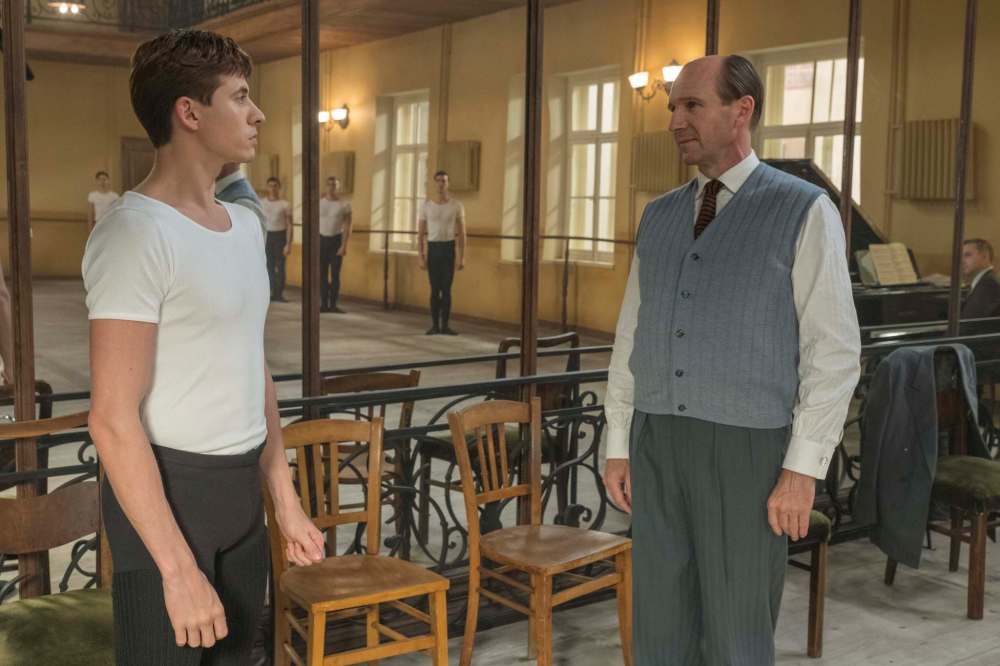
In The White Crow (in Russian, French and English, with subtitles), this trope is applied to the young Nureyev (played by Ukrainian dancer Oleg Ivenko). As a student of the Mariinsky ballet school in Leningrad, he is initially dismissed as clumsy and unteachable, and his restless, impetuous spirit is constantly chafing against the institution’s insistence on obedience, discipline and rules. This personal battle gets a geopolitical echo with a parallel between the promised individual freedom of the West and the rigidity of the Soviet regime.
Actor and director Ralph Fiennes (who was nominated for an Oscar for his work in Schindler’s List) and writer David Hare, the English playwright who has also scripted such films as Denial, The Reader and The Hours, get a little too stuck in this overdetermined paradigm. While The White Crow offers real pleasures for dance fans, it never quite captures the complexity of Nureyev as a man and artist, or the larger Cold War context of his defection.
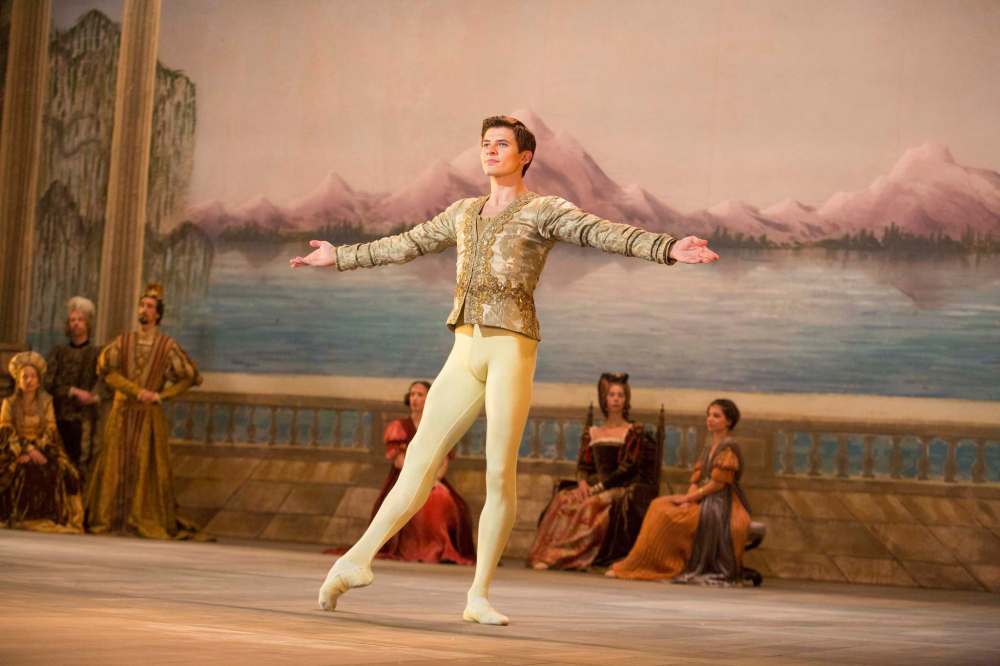
The narrative is circular, cutting between Nureyev’s impoverished childhood near the Ural mountains, his early experiences at the school, his later debut as a professional dancer and his trips abroad. The vivid colour of his electrifying onstage performances is contrasted — a little too neatly perhaps — with the grim, grey, desaturated landscape of his upbringing.
Ukrainian dancer Ivenko shares some of Nureyev’s extraordinary beauty as a man and a dancer. Unfortunately, he’s a novice actor struggling with a very challenging central role. Nureyev could be selfish, arrogant and cruel, but he also had loads of charisma. Ivenko often comes off as merely sullen and petulant. Unable to convey his character’s insecurities and vulnerabilities — which are hinted at in the script — he can’t always hold our sympathy or even our attention.
Some of the supporting roles are effective. Fiennes himself (speaking in Russian!) plays Alexander Pushkin, a ballet master and a gentle melancholy cuckold, and Adèle Exarchopoulos is intriguing as Clara Saint, who looks like a cool, enigmatic girl from a French New Wave film and became a crucial part of Nureyev’s escape to the West. (She had connections to André Malraux, the minister of culture, and in 1960s France, people actually knew who that was.)
The dance scenes are well-crafted, not just the performances but the sequences in the rehearsal room, which suggest the punishing physical labour needed to convey ethereal grace.


There are other nicely detailed moments: a tiny Russian apartment crammed with lovely furniture; Parisian tables crowded with intense, smoky talking; a scene that demonstrates that the French police keep cognac on hand (you know, for emergencies).
The film — while suggesting that Nureyev was never interested in politics, only art — is at its best when it explicitly brings in the political. Ballet, after all, was caught up in the Cold War as a gorgeous but dangerous propaganda weapon: the Soviet authorities wanted to take their gifted companies to the West to show them off, but then had to risk their dancers’ exposure to such decadent bourgeois pleasures as Parisian nightlife and the company of French intellectuals.
Nureyev’s own conflicted loyalties culminate in a tense showdown involving his allies, the French police and some desperate Soviet minders, and Fiennes finally finds the drama that has been lacking.
Overall, though, that common dance-movie trope of technique versus passion applies to the film itself, which is handsome and correct in form but somewhat lacking, at crucial moments, in life and spark.
alison.gillmor@freepress.mb.ca
Studying at the University of Winnipeg and later Toronto’s York University, Alison Gillmor planned to become an art historian. She ended up catching the journalism bug when she started as visual arts reviewer at the Winnipeg Free Press in 1992.
Our newsroom depends on a growing audience of readers to power our journalism. If you are not a paid reader, please consider becoming a subscriber.
Our newsroom depends on its audience of readers to power our journalism. Thank you for your support.
MOVIE REVIEW
The White Crow
Starring Oleg Ivenko and Ralph Fiennes
● Towne
● PG ● 127 mins
★★★ out of five
“The film may go to lengths to tell us that Nureyev was sensational to watch, but we don’t experience much of this power or magnetism as viewers.”
— Martha Schabas, Globe and Mail
“Unless you have a special interest in Nureyev, Russian ballet or the Cold War’s impact on the arts at mid-century, The White Crow might be something better heard about than experienced.”
— Mick LaSalle, San Francisco Chronicle
“Ultimately, The White Crow seems tailored to appeal to moviegoers who are already fans of Nureyev’s idiosyncratic dancing and want to know more about how it got that way.”
— Chris Hewitt, Minneapolis Star Tribune
“Fiennes’ drab biopic of Russian ballet dancer Rudolf Nureyev drains the colour from his life, and comes across as cold as a Soviet winter.”
— Adam Graham, Detroit News
Studying at the University of Winnipeg and later Toronto’s York University, Alison Gillmor planned to become an art historian. She ended up catching the journalism bug when she started as visual arts reviewer at the Winnipeg Free Press in 1992.
Our newsroom depends on a growing audience of readers to power our journalism. If you are not a paid reader, please consider becoming a subscriber.
Our newsroom depends on its audience of readers to power our journalism. Thank you for your support.
Advertisement Advertise With Us
Advertisement Advertise With Us