

Website tracks Lake Winnipeg algae blooms
Advertisement
Read this article for free:
or
Already have an account? Log in here »
To continue reading, please subscribe:
Monthly Digital Subscription
$1 per week for 24 weeks*
- Enjoy unlimited reading on winnipegfreepress.com
- Read the E-Edition, our digital replica newspaper
- Access News Break, our award-winning app
- Play interactive puzzles
*Billed as $4.00 plus GST every four weeks. After 24 weeks, price increases to the regular rate of $19.95 plus GST every four weeks. Offer available to new and qualified returning subscribers only. Cancel any time.
Monthly Digital Subscription
$4.99/week*
- Enjoy unlimited reading on winnipegfreepress.com
- Read the E-Edition, our digital replica newspaper
- Access News Break, our award-winning app
- Play interactive puzzles
*Billed as $19.95 plus GST every four weeks. Cancel any time.
To continue reading, please subscribe:
Add Free Press access to your Brandon Sun subscription for only an additional
$1 for the first 4 weeks*
- Enjoy unlimited reading on winnipegfreepress.com
- Read the E-Edition, our digital replica newspaper
- Access News Break, our award-winning app
- Play interactive puzzles
*Your next Brandon Sun subscription payment will increase by $1.00 and you will be charged $17.95 plus GST for four weeks. After four weeks, your payment will increase to $24.95 plus GST every four weeks.
Read unlimited articles for free today:
or
Already have an account? Log in here »
Hey there, time traveller!
This article was published 28/06/2019 (2509 days ago), so information in it may no longer be current.
Nothing ruins a great Lake Winnipeg beach day like a bloom of smelly green algae clogging up the shoreline.
However, forewarned is forearmed — and just a click away, says a local scientist who works with remote-sensing satellite data.
Lake Winnipeg BloomFinder website is in its second season of operation, as Winnipeg company NextGen Environmental Research Inc. invites lake enthusiasts to join up on social media to chart what the water looks like in near-real time before they head to the beach.
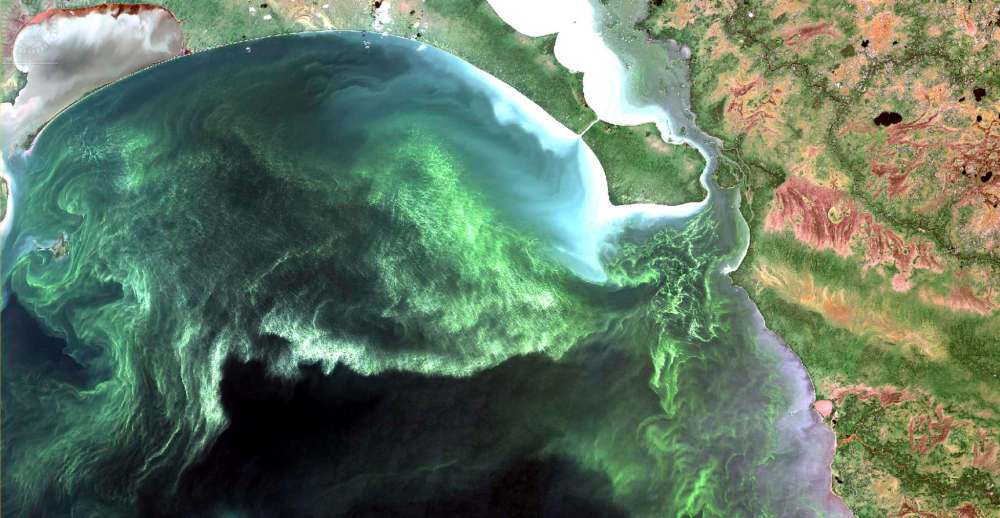
NextGen president Paul Cooley said the company uses satellite images and, in less than a day, can track algae blooms on one of the largest lakes in the world.
He said the website is a non-profit venture designed to help Manitobans decide if, where and when they’ll visit locations along Lake Winnipeg.
“I understand, from a citizen’s perspective, what the challenges to using the lake are during the algal blooms. Some days it’s a beach day and some days, it’s not, and you don’t know until you get there,” said Cooley, who said he grew up near the lake.
“You pack all your kids up and you bring people out from Winnipeg for a barbecue, and you get to the lake and the beach is empty because it’s green… People driving out to Grand Beach, the day before might have been good; the next day, you’ve got algae there.”
Those interested in participating are invited to fill out a registration form at nextgenenvironment.ca/bloomfinder. Members can follow the BloomFinder Facebook group to get day-to-day updates on any Lake Winnipeg beach and when new satellite images are uploaded.
People can also become a beach ambassador and upload photos, video and comments on local conditions.
“It’s not a financially-motivated project. It’s one where agencies, governments and communities need to pool together. It took several generations to put the lake into the state it’s into today, and it’s likely to be multi-generational in its recovery,” Cooley said.
“Behind the scenes, what (the data is) trying to do is educate communities. It’s directed at the public. The existing programs done by the government and other non-profits are data-oriented and very important for the long-term trajectory and recovery of the lake, but the public has not been involved.
“It will allow them to have more educated conversations in the future, which will help them to speak to local, provincial or federal governments with a common voice.”

Nicole Armstrong, director of water science and water management for Manitoba Sustainable Development, said the proliferance of blooms is related to phosphorus, a nutrient that promotes the growth of algae, being at a level double what officials want to see.
Such nutrients are coming into Lake Winnipeg from a watershed that stretches across four provinces and four U.S. states.
“It stretches as far as the Rocky Mountains into the west, east to Ontario’s Lake of the Woods area and then south into Minnesota and North Dakota,” said Armstrong. “It means that all those people that are living across that… in many of the activities in their day-to-day life are contributing nutrients that could potentially end up in Lake Winnipeg.”
The province monitors Lake Winnipeg beaches and posts advisories about E. coli and algae at manitoba.ca/beaches, Armstrong said, but noted conditions change quickly, so blooms may have cleared by the time an advisory is posted.
ashley.prest@freepress.mb.ca