

Advocates sound alarm over degradation of Rent Assist

Advertisement
Read this article for free:
or
Already have an account? Log in here »
To continue reading, please subscribe:

Digital Subscription
One year of digital access for only $205*
- Enjoy unlimited reading on winnipegfreepress.com
- Read the E-Edition, our digital replica newspaper
- Access News Break, our award-winning app
- Play interactive puzzles
*First annual payment billed as $205.00 + GST for one year. This annual subscription will automatically renew at $233.00 + GST every 52 weeks (10% off the regular annual price of $259.35). Offer available to new and qualified returning subscribers only. Cancel any time.
To continue reading, please subscribe:
Add Free Press access to your Brandon Sun subscription for only an additional
$1 for the first 4 weeks*
- Enjoy unlimited reading on winnipegfreepress.com
- Read the E-Edition, our digital replica newspaper
- Access News Break, our award-winning app
- Play interactive puzzles
*Your next Brandon Sun subscription payment will increase by $1.00 and you will be charged $17.95 plus GST for four weeks. After four weeks, your payment will increase to $24.95 plus GST every four weeks.
Read unlimited articles for free today:
or
Already have an account? Log in here »
Hey there, time traveller!
This article was published 16/07/2019 (2597 days ago), so information in it may no longer be current.
With a provincial election looming and a fear of funding cuts, anti-poverty advocates got a reminder Tuesday of how they helped create the Rent Assist benefit — and just how quickly it can erode.
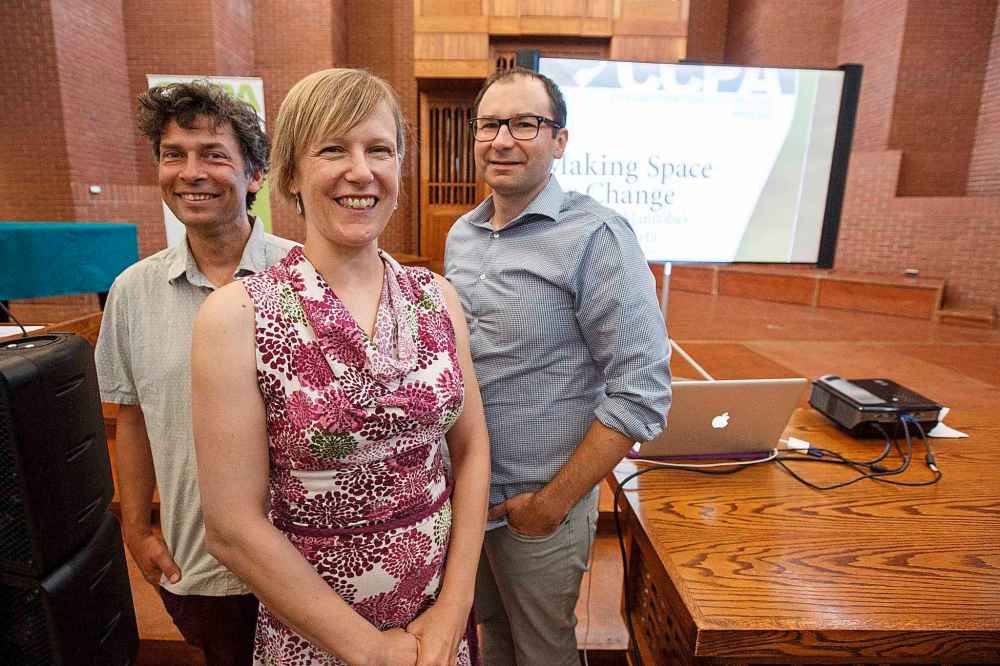
“Rent Assist was a huge victory for the community,” Josh Brandon with the Social Planning Council of Winnipeg said Tuesday at the Crossways in Common on Broadway. He and University of Manitoba economics and labour studies faculty member Jesse Hajer were there to tell the story of Manitoba’s Rent Assist benefit.
In 2014, it was a groundbreaking, rent-geared-to-income program that helped welfare recipients, the working poor and seniors keep a roof over their heads at a time of rising rents in the private sector.
For example, between 2000 and 2016, rent for an average studio apartment in Winnipeg increased to $634 from $339. Rents rose 35 per cent while incomes increased by just under 14 per cent, Brandon and Hajer said in a report they wrote for the Canadian Centre for Policy Alternatives in Manitoba. Employment and Income Assistance shelter benefit rates were far below average rents for all household types.
Rent Assist got support from all parties because of the research, publicity and campaigning done by the many groups fighting poverty in Manitoba, Brandon and Hajer told the crowd gathered to hear their report on how the benefit program came to be and what’s happened to it.
A decade ago, groups including the Canadian Centre for Policy Alternatives think tank and the Social Planning Council of Winnipeg honed in on the lack of affordable housing. Rallies, reports and hand-written posters saying “Can you find a home for $285?” popped up around the city. The message hit close to home — with voters and those they elected.
“People don’t like to give people money, but know they need a roof over their heads,” Brandon said.
Rent Assist was created by the NDP after a “fairly dismal” track record of creating “convoluted programs” that were “extremely complicated to explain,” Hajer said. Rent Assist was tied to median rents in the private sector, and the benefit program was portable, so people who moved or found a job didn’t lose it. The benefit eliminated the “welfare wall” that had disincentivized people from working more while on assistance. There was legislation to make sure there are annual index increases in Rent Assist levels.

Since the Progressive Conservatives took power in 2016, Rent Assist benefits have begun to erode, Brandon and Hajer say. The province has increased the percentage of income deductible — the amount a recipient would pay after receiving Rent Assist for a unit costing 75 per cent of median market rent — from 25 per cent to 28 per cent then to 30 per cent for those not on social assistance.
In May, the province created a new tier of Rent Assist for single people under 55 and those without dependant children on social assistance. Their Rent Assist will be tied to 75 per cent of the median rate for a bachelor unit, rather than an average of bachelor and one-bedroom units. That, in effect, freezes the rates for a number of years for some of the most vulnerable recipients — including some of the women Kirsten Bernas works with at West Central Women’s Resource Centre.

“You’re only going to further destabilize them,” said Bernas, who is chairwoman of the provincial Right to Housing Coalition. Women with mental-health issues and addictions are already struggling to find safe, affordable housing, Bernas said. Making a one-bedroom apartment less affordable and squeezing them financially isn’t going to help them get on their feet or save the system money down the road, she predicts. Bernas spoke at Tuesday’s event to remind community workers and activists of the difference they can make.
“People fought hard to get Rent Assist,” she said.
carol.sanders@freepress.mb.ca
Carol Sanders
Legislature reporter
Carol Sanders is a reporter at the Free Press legislature bureau. The former general assignment reporter and copy editor joined the paper in 1997. Read more about Carol.
Every piece of reporting Carol produces is reviewed by an editing team before it is posted online or published in print — part of the Free Press‘s tradition, since 1872, of producing reliable independent journalism. Read more about Free Press’s history and mandate, and learn how our newsroom operates.
Our newsroom depends on a growing audience of readers to power our journalism. If you are not a paid reader, please consider becoming a subscriber.
Our newsroom depends on its audience of readers to power our journalism. Thank you for your support.
Measuring rent assist impact
The deductible for the Rent Assist benefit rose to 30 per cent from 25 per cent for those not on EIA since the provincial government has been in power. That’s affecting low-income Manitobans, analysts say.
For example, for a two-bedroom household with a $2,000 per month income, a 25 per cent deductible would be $500. If 75 per cent of median market rent is $861, the amount of Rent Assist the family receives would be $361. When the deductible increased to 30 per cent, the amount of Rent Assist drops by $100 to $261.
A single minimum-wage worker working 40 hours a week received $124.92 in rent assistance on July 1, 2017, compared to $18.13 on July 1, 2018.
The province hired the consulting firm KPMG for a Manitoba Fiscal Performance Review that warned Rent Assist benefits would balloon out of control, with caseloads expected to reach 9,800 per month without changes. Critics said the benefit program would see an upsurge then plateau given the limits of the eligible population. In 2017-18, the average caseload was 7,210 per month, and Employment and Income Assistance and Rent Assist was under-budget.
— source: Making Space for Change: The Story of Manitoba’s Rent Assist Benefit
Carol Sanders
Legislature reporter
Carol Sanders is a reporter at the Free Press legislature bureau. The former general assignment reporter and copy editor joined the paper in 1997. Read more about Carol.
Every piece of reporting Carol produces is reviewed by an editing team before it is posted online or published in print — part of the Free Press‘s tradition, since 1872, of producing reliable independent journalism. Read more about Free Press’s history and mandate, and learn how our newsroom operates.
Our newsroom depends on a growing audience of readers to power our journalism. If you are not a paid reader, please consider becoming a subscriber.
Our newsroom depends on its audience of readers to power our journalism. Thank you for your support.
Advertisement Advertise With Us
Advertisement Advertise With Us
History
Updated on Tuesday, July 16, 2019 10:01 PM CDT: Updates photos.