Textiles evolving to meet demand for sustainable materials

Advertisement

Advertise with us

Whether it's how they're made or what they're made of, textiles are evolving to meet consumer demand for sustainability.

Read this article for free:


By clicking the button above, an account will be created and you will begin to receive some of our recommended newsletters. You may opt out of any newsletter by visiting your Email and Communication Preferences page or by clicking "unsubscribe" at the bottom of any email.

or

Already have an account? Log in here »

To continue reading, please subscribe:

Digital Subscription

One year of digital access for only $1.44 a week*

  • Enjoy unlimited reading on winnipegfreepress.com
  • Read the E-Edition, our digital replica newspaper
  • Access News Break, our award-winning app
  • Play interactive puzzles

*Billed as $5.77 plus GST every four weeks. After 52 weeks, price increases to the regular rate of $19.95 plus GST every four weeks. Offer available to new and qualified returning subscribers only. Cancel any time.

To continue reading, please subscribe:

Add Free Press access to your Brandon Sun subscription for only an additional

$1 for the first 4 weeks*

  • Enjoy unlimited reading on winnipegfreepress.com
  • Read the E-Edition, our digital replica newspaper
  • Access News Break, our award-winning app
  • Play interactive puzzles
Start now

*Your next Brandon Sun subscription payment will increase by $1.00 and you will be charged $17.95 plus GST for four weeks. After four weeks, your payment will increase to $24.95 plus GST every four weeks.

Hey there, time traveller!
This article was published 08/08/2019 (2633 days ago), so information in it may no longer be current.

Whether it’s how they’re made or what they’re made of, textiles are evolving to meet consumer demand for sustainability.

“There’s a real push for sustainability now, and the home textiles industry is waking up to that consumer call,” says Shannon Maher, chair of Home Products Development at the Fashion Institute of Technology, in New York.

It’s about reducing waste during textile production, she said, and reusing or recycling waste to produce other products.

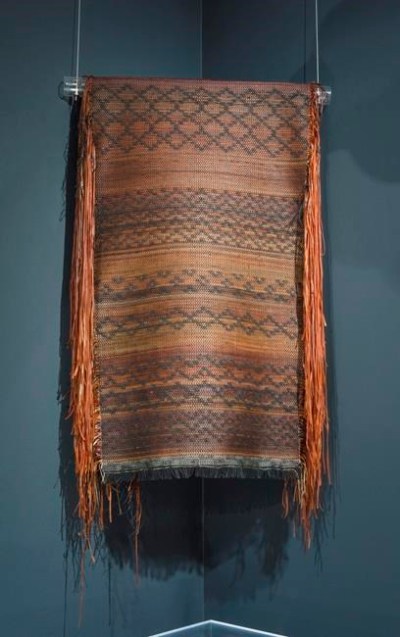
This 2019 photo shows an Installation view of
This 2019 photo shows an Installation view of "Nature—Cooper Hewitt Design Triennial" in New York. The exhibit of cutting edge innovations at the Cooper Hewitt, Smithsonian Design Museum, on view through January 20, 2020, includes this textile made from seaweed woven on an electric loom. (Matt Flynn/Cooper Hewitt, Smithsonian Design Museum via AP)

“Zero Waste has definitely become a watchword,” she said.

Consumers today have a heightened awareness of the harm plastic does to the environment, and “are willing to pay 5 or 10% more for a sustainable product as a way of contributing to the circular economy, and helping the environment,” she says.

Rugs and outdoor fabrics, for instance, are increasingly being made with recycled materials instead of new plastics.

A lot is happening on the fashion-design front, too, to explore new, sustainably sourced and even compostable types of textiles.

“Companies like Adidas and Nike are at the cutting edge of some of these innovations, and their work — and innovations in textiles used for apparel — does trickle down to textiles in other realms,” Maher says.

An exhibit of textile innovations at the Cooper Hewitt Design Museum in New York City, on view through Jan. 20, includes a dress made by a Japanese design team that features naturally glowing silk, made from silkworms injected with a green fluorescent protein derived from jellyfish. There’s a prototype for Adidas sneakers made entirely of ocean plastic; another prototype of sneakers that would be entirely compostable; and a textile made from algae.

“There’s a level of optimism when you look around and see designers really taking on the challenge of all this,” says Andrea Lipps, a curator at the Cooper Hewitt who helped organize the exhibit. “There’s a groundswell of creativity that’s continuing to reverberate.”

At the Fashion Institute of Technology, students have been experimenting with using milkweed and flax to create luxurious “fur” from 100% plant material. That won them the Stella McCartney Prize for Sustainable Fashion at the Biodesign Challenge Summit earlier this summer.

Another student design team there came up with the idea for a Spandex-type elastic fabric using a protein found in oysters.

This 2019 photo shows an Installation view of
This 2019 photo shows an Installation view of "Nature—Cooper Hewitt Design Triennial" in New York. The exhibit of cutting edge innovations at the Cooper Hewitt, Smithsonian Design Museum, on view through January 20, 2020, includes a prototype for Adidas sneakers made of recycled ocean plastic and another prototype of sneakers that can be cleaned, broken down and remade entirely with the same material. (Matt Flynn/Cooper Hewitt, Smithsonian Design Museum via AP)

To help companies get the word out about steps they’re taking, and help consumers identify environmentally responsible companies, the Sustainable Furnishing Council provides an online list.

“We have about 400 member companies, and they each have made their own public and verifiable commitment to sustainability,” says Susan Inglis, executive director of the council.

Look up, say, garden furniture, and see what best practices various manufacturers have put in place.

Another effort to help consumers reliably identify more eco-friendly companies is a new level of Oeko-TEX certification, called “Made in Green,” certifying that no harmful chemicals have been used in the manufacture of a certain product.

“People are talking more these days about ‘the value chain,’ showing that not only are you certified as being environmentally responsible, but all of the factories in your production process are certified. It’s a level of transparency that includes aspects like using clean energy sources,” explains Maher.

“Sustainability is complex,” she says. From a factory standpoint, it’s also a matter of asking whether they’re solar-powered, and how much water they use.


Report Error Submit a Tip

More Stories

Puzzles Palace

1 minute read Friday, Oct. 16, 2026

To solve our puzzles, please subscribe with this special offer: |

Winnipeg Jets trade Connor Hellebuyck to New Jersey Devils

Free Press staff 1 minute read Preview

Winnipeg Jets trade Connor Hellebuyck to New Jersey Devils

Free Press staff 1 minute read 11:34 AM CDT

Connor Hellebuyck has been traded.

The Winnipeg Jets announced Friday morning they have sent the netminder to the New Jersey Devils for four players and two draft picks.

The Jets are receiving: Dawson Mercer, Alexander Command, Nico Daws and Nick Bjugstad.

More to come.

Read
11:34 AM CDT

Family history, solo sojourns paved path for celebrated author’s latest novel

Ben Sigurdson 7 minute read Preview

Family history, solo sojourns paved path for celebrated author’s latest novel

Ben Sigurdson 7 minute read 2:01 AM CDT

It’s 1967 and Lee Clarke has just been kicked out of UCLA when he receives his draft letter in the mail. Rather than report for basic training, he hops in a car and sets off across America on an amphetamine-fuelled road trip to bid farewell to his fractured, dysfunctional family before crossing the border into Canada.

Such is the premise for B.C.-born, Portland-based Patrick deWitt’s sixth novel Dodge City, published in September by House of Anansi. He’s in Winnipeg tonight at McNally Robinson Booksellers’ Grant Park location to launch the book.

The 51-year-old deWitt came to prominence with his sophomore novel, 2011’s The Sisters Brothers. The book was a critical and commercial success, winning the author the Governor General’s Literary Award for Fiction, the Rogers Writers’ Trust Fiction Prize and the Stephen Leacock Medal for Humour, and was adapted for the big screen in a film starring John C. Reilly and Joaquin Phoenix.

His 2018 novel French Exit was also adapted for cinema, and his 2023 novel The Librarianist won deWitt the Leacock Medal for the second time. Dodge City is deWitt’s fourth novel to make the Giller Prize long list.

Read
2:01 AM CDT

Winnipeg business closure scare leads Hydro to reschedule planned outage

Free Press staff 2 minute read Wednesday, Oct. 21, 2026

Manitoba Hydro has cancelled a planned River Heights neighbourhood outage after a miscommunication led to area businesses fearing unexpected closure.

Hydro had planned to shut down power along Lanark and Renfrew streets between Corydon Avenue and John Brebeuf Place on Friday.

Overhead electrical maintenance work can only be done with the power off, during the day, for safety reasons, Hydro spokesman Peter Chura said. It chose Friday from 9 a.m. to 3 p.m. because St. John Brebeuf School had an in-service day.

However, the affected area houses a strip of businesses including a Royal Bank of Canada, eateries, shops, services such as physiotherapy and a medical centre.

Textiles evolving to meet demand for sustainable materials

Katherine Roth, The Associated Press 4 minute read Preview

Textiles evolving to meet demand for sustainable materials

Katherine Roth, The Associated Press 4 minute read Thursday, Aug. 8, 2019

Whether it's how they're made or what they're made of, textiles are evolving to meet consumer demand for sustainability.

"There's a real push for sustainability now, and the home textiles industry is waking up to that consumer call," says Shannon Maher, chair of Home Products Development at the Fashion Institute of Technology, in New York.

It's about reducing waste during textile production, she said, and reusing or recycling waste to produce other products.

"Zero Waste has definitely become a watchword," she said.

Read
Thursday, Aug. 8, 2019

First Crumbl cookie shop opens in Winnipeg

Gabrielle Piché 3 minute read Preview

First Crumbl cookie shop opens in Winnipeg

Gabrielle Piché 3 minute read Updated: 11:15 AM CDT

The early birds got their cookies. Klaudia and Jayson Ballantyne were the first in line for the grand opening of Winnipeg’s first Crumbl location at 1570 Regent Ave. West, arriving at 2 a.m. Friday — six hours before the cookie chain was set to open.

Read
Updated: 11:15 AM CDT