Forget about it
Famous amnesia cases feature familiar names
Advertisement
Read this article for free:
or
Already have an account? Log in here »
To continue reading, please subscribe:
Digital Subscription
One year of digital access for only $1.44 a week*
- Enjoy unlimited reading on winnipegfreepress.com
- Read the E-Edition, our digital replica newspaper
- Access News Break, our award-winning app
- Play interactive puzzles
*Billed as $5.77 plus GST every four weeks. After 52 weeks, price increases to the regular rate of $19.95 plus GST every four weeks. Offer available to new and qualified returning subscribers only. Cancel any time.
To continue reading, please subscribe:
Add Free Press access to your Brandon Sun subscription for only an additional
$1 for the first 4 weeks*
- Enjoy unlimited reading on winnipegfreepress.com
- Read the E-Edition, our digital replica newspaper
- Access News Break, our award-winning app
- Play interactive puzzles
*Your next Brandon Sun subscription payment will increase by $1.00 and you will be charged $17.95 plus GST for four weeks. After four weeks, your payment will increase to $24.95 plus GST every four weeks.
Read unlimited articles for free today:
or
Already have an account? Log in here »
Hey there, time traveller!
This article was published 10/08/2019 (2511 days ago), so information in it may no longer be current.
It was like a scene out of a Hollywood movie.
Early Tuesday morning, covered in mud and dressed in cycling gear, a mystery man wandered into Chinook Regional Hospital in Lethbridge, Alta.
Appearing to be in his 60s, the man claimed he’d fallen off his bike in the southern Alberta city’s river valley, but it wasn’t his injuries that made this case unique.
The remarkable thing was the fact the man couldn’t remember who he was, apparently suffering from amnesia after tumbling from his bike.
Along with his cycling attire, the mystery man sported a blue water-bladder backpack. Police said he didn’t have any ID, and didn’t match any missing persons reported in the area.
“It is pretty rare,” Staff Sgt. Dwayne Smith told CBC News. “Usually they have something on them or someone has called in looking for them. Usually it’s a dementia patient, and we are usually able to get them home pretty quick.”
Lethbridge police issued a public plea for help in identifying him and, hours later, family members responded and were reunited with the man, who remains in hospital with symptoms of amnesia.
While unusual outside of movies and thriller novels, it’s far from the first time this real-life condition has generated mysterious headlines, as we see from today’s unforgettable list of Five Famous Amnesia Cases:
5) The famous case: Ansel Bourne
A story to remember: When it comes to famous cases of amnesia, the first name that likely comes to mind is Jason Bourne, the protagonist in a series of popular novels and Hollywood blockbusters chronicling the adventures of a man who is fished out of the ocean suffering from extreme memory loss and struggles to recover facts about his earlier life as a CIA-trained assassin. It appears likely that Jason Bourne’s character was, in fact, based on the real-life case of Ansel Bourne, a 19th-century evangelical preacher and one of the first documented cases of “dissociative fugue,” a type of psychogenic amnesia that is not the result of injury or disease.
According to online reports, on Monday, March 14, 1887, Ansel Bourne suddenly awoke in a strange bed with no idea where he was or how he got there. Bourne opened his door, heard movement in the next room, and tapped on the door. Landlord Pinkston Earle opened the door and said: “Good morning, Mr. Brown.” Replied Bourne: “My name isn’t Brown. Where am I?” Earle informed Bourne he was in Norristown, Pa., and the date was March 14. According to smallstatebighistory.com, Bourne was incredulous — the last thing he remembered was Jan. 17, when he left his home in Coventry, R.I., travelled to Providence, paid some bills and visited the store of his nephew. Two entire months of his life were missing. During that time, a man calling himself Alfred Brown had rented a room in Earle’s house and opened a small store, selling candy and stationery.
When Brown suddenly awoke to his old identity, doctors were called and he was reunited with his family. Under hypnosis, it was found he could be induced to assume the personality of either Bourne or Brown, and neither personality had any knowledge of the other. “He had experienced a dissociative fugue, a rare condition that causes a person to lose access to his autobiographical memory and personal identity. A person in this state might adopt a new identity, or abruptly embark on a long journey. Incidents are usually triggered by trauma of some sort,” according to smallstatebighistory.com.
4) The famous case: Agatha Christie
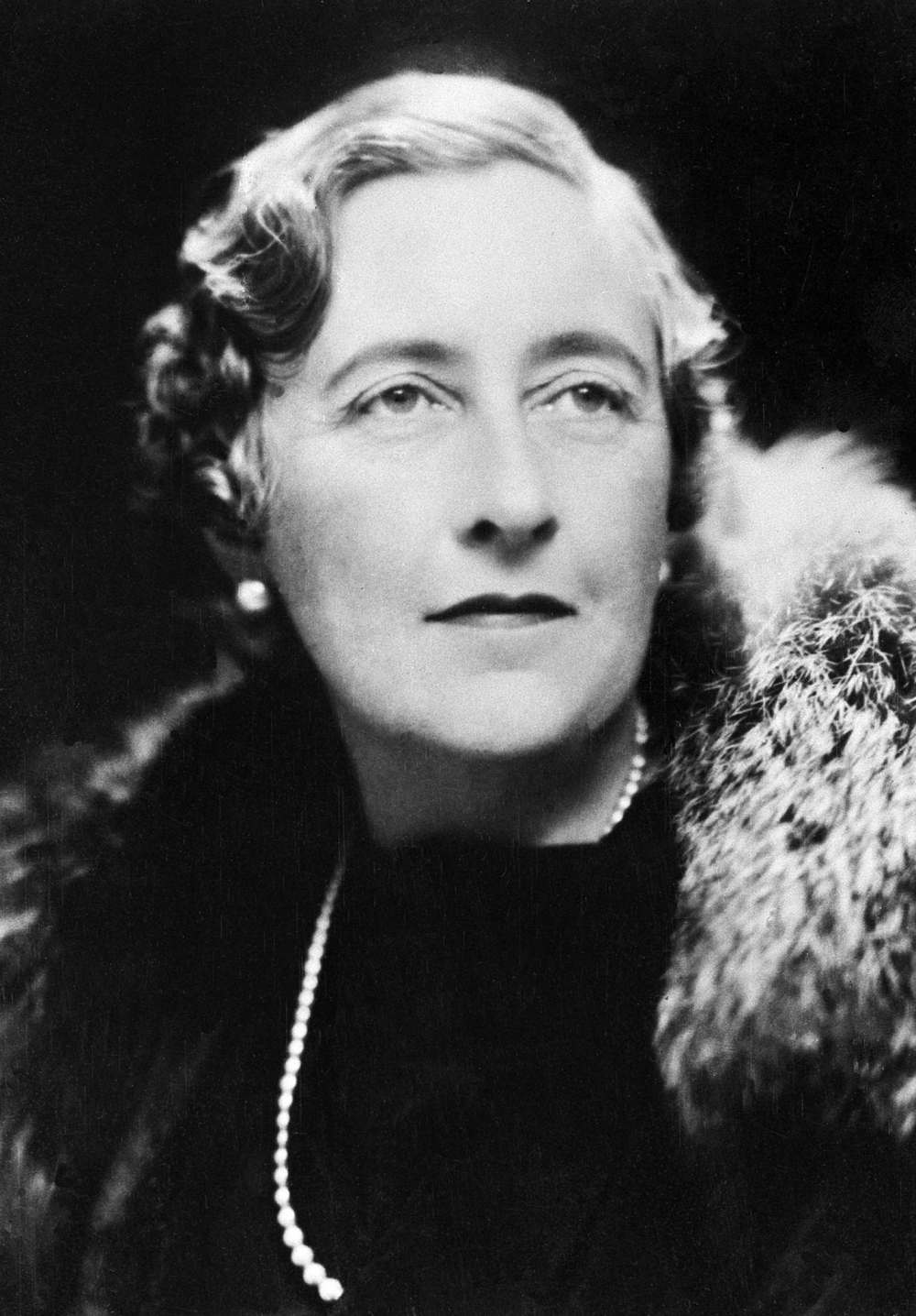
A story to remember: We’re talking about the bestselling novelist of all time, an English writer whose 66 mystery books spawned two of fiction’s most famous and beloved detectives — Hercule Poirot and Miss Marple. In 1926, however, this legend of literature became the subject of a real-life mystery when she vanished for 11 days, sparking a public outcry and a manhunt that involved more than 1,000 police officers, 15,000 volunteers and several airplanes.

The drama began on Dec. 3, 1926, when Christie vanished after a quarrel with her then-husband, Archie, who had asked for a divorce because he had fallen in love with a woman named Nancy Neele. The next day, her abandoned car was found in a roadside ditch near the city of Guildford, England. News of her disappearance spread around the globe, with her photo appearing on the front page of the New York Times. On Dec. 14, she was discovered in a hotel in Harrogate, a spa town in Yorkshire about 320 kilometres from where her car had been found. Christie — who was registered as Mrs. Teresa Neele — claimed to have no recollection of what had happened during the 11 days she was missing. After she was located, husband Archie told a newspaper: “She has suffered from the most complete loss of memory, and I do not think she knows who she is. She does not know me, and she does not know where she is. I am hoping that rest and quiet will restore her.”
Notes the website livescience.com: “Christie may have been experiencing psychogenic amnesia, a rare condition that is psychological in origin and typically follows some type of trauma, researchers noted in a study published in 2003 in the journal Practical Neurology.” Indeed, two doctors diagnosed the author as suffering from amnesia. But others have speculated Christie fabricated the episode as revenge against her husband for having an affair.
As Scientific American noted in 2017: “Given the many questions that are unresolved 90 years after Christie’s disappearance, it remains a mystery. Nor is it at all clear whether her amnesia was staged or was in fact caused by stress or some organic disorder.”
3) The famous case: Harrison Ford
A story to remember: Yes, we’re talking about THAT Harrison Ford — the guy who rocketed to fame for his starring roles as Han Solo in the Star Wars movie series and as the whip-wielding archeologist in the Indiana Jones film franchise. He is also a real-life action hero in the sense he is a licensed pilot, and it was his love of flying that landed him a spot on our list of famous amnesiacs.
On March 5, 2015, the famed actor was flying a vintage two-seater Second World War fighter plane when it experienced engine failure and was forced to make a crash landing on the Penmar Golf Course in Venice, Calif. In a pre-Halloween episode of Jimmy Kimmel Live, Ford — who was dressed as a hotdog at the time — opened up about suffering from memory loss after his terrifying crash. “Yeah I remember. Not all of it, I remember some of it. I remember the engine stopping, I remember that part very well. And then I remember the tower, I remember their suggestion. Their suggestion was that I take the normal route to land and I knew I wasn’t going to do that, so I said no. And that’s the last thing that I remember until five days afterwards actually.” After the crash, Ford was taken to Ronald Reagan UCLA Medical Centre, where he spent about a month being treated for a broken pelvis, a broken ankle, a scalp laceration and other injuries.
It was there the then-73-year-old actor was diagnosed with retrograde amnesia, the inability to recall memories of events that occurred before an injury. In air traffic control audio, Ford is heard reporting his emergency: “Engine failure, requesting immediate return.” Air traffic controllers responded, “Clear to land.” Then, a controller states: “It looked like it was short off the runway.” And that was Ford’s last memory until he woke up in hospital five days later. “Was it like being in a movie?” Jimmy Kimmel wanted to know. Replied the star: “This was not a movie.”
2) The famous case: A man called “W.O.”
A story to remember: Our mystery man, called only “W.O.” by his physicians, woke up on March 14, 2005, at his military post in Germany and began a routine day — he played a 45-minute round of volleyball at the gym, went to the office to answer emails, then headed to the dentist in the afternoon for a root-canal treatment. And that’s where it all came to a grinding halt.
“Every day since, no matter what the actual date happens to be, W.O. wakes up thinking it’s the morning of March 14, 2005, believing he is still in Germany and that this is the day of his dentist appointment,” the Washington Post reported in 2015. “His life is something of a Groundhog Day in reverse — while the rest of the world moves on, W.O. is the only person who isn’t aware of time passing. Starting from that moment in the dentist’s chair a decade ago, he hasn’t been able to remember almost anything for longer than 90 minutes. Then he forgets it, a switch flips, and he’s back to March 14, 2005, once more.” W.O.’s mysterious case was laid out in a study published in the medical journal Neurocase. According to the Post, doctors were baffled by his amnesia because there appears to be nothing wrong with his brain. He was a healthy, happy 38-year-old member of the British Armed Forces with a wife and two children. Nothing catastrophic happened during the hour-long root canal and doctors aren’t even sure that’s what triggered his memory loss.
Notes the Post: “W.O. has been tentatively diagnosed with anterograde amnesia, the loss of ability to form new memories after a traumatic event.” He now depends on an electronic diary to remind him of what’s happened since his last memory. “Every morning he checks his computer for a list of life events he should be aware of — marriages, deaths, his children’s birthdays. Some of them, like the loss of a beloved pet, continue to surprise him,” the paper said. The study authors say W.O.’s problem is not in the writing of new memories, but in “recording” them, a process known as “consolidation” that occurs among synapses, allowing the brain to access the memories later.
1) The famous case: The Man Who Lost Himself
A story to remember: Terry Evanshen spent 14 seasons piling up amazing memories as a star receiver in the Canadian Football League. The youngest player ever inducted into the Canadian Football Hall of Fame, he was twice voted outstanding Canadian in the CFL and became a Grey Cup champion.

On July 4, 1988, the football star’s life almost ended when a van ran a red light and broadsided his Jeep. The impact sent him smashing through the Jeep’s back window, leaving him in a coma, with severe brain injuries and hovering near death. A priest was called to perform last rites, but, against the odds, Evanshen survived. When he emerged into consciousness weeks later, Terry Evanshen the football player was gone. He was a man without a past; every vestige of memory from the first 44 years of his life had been wiped clean.
“I lost oxygen to part of my brain for four minutes, so I ended up with retrograde amnesia, couldn’t remember my past and have short-term memory failure,” Evanshen, now a motivational speaker, has said. “If I don’t write it down, I won’t remember it tomorrow, so I had to retrain myself to learn to speak again… It was a long process and has been a long struggle. I had to trust people, most importantly my wife and daughters, as they were my stabilizer in the first five years. I didn’t know who I was or where I was — zero — nothing.” His wife and three daughters were strangers when he awoke. He didn’t even know his own name.
It took him a year to learn how to show affection. His daughters had to re-teach him how to catch a football. His battle with amnesia inspired June Callwood’s 2000 book, The Man Who Lost Himself, which was turned into a 2005 CTV movie. With his damaged memory, he truly lives one day at a time. “Every day is a new day and from the moment I wake up, at 4 o’clock or 5 o’clock, I’m planning on being a good person that day and to carry on proper responsibilities and to develop myself,” he told the CBC in 2000. “I just want to do everything to the best of my ability.”
doug.speirs@freepress.mb.ca