Into the wild

Novelist's latest offering a riveting fictional account of missionaries' plight

Advertisement

Advertise with us

In 1955, five American missionary couples set out to evangelize the Waorani, an Indigenous people group of the Ecuadorian rainforest that had never had contact with the outside world. They dubbed their mission “Operation Auca.”

Read this article for free:

or

Already have an account? Log in here »

To continue reading, please subscribe:

Subscribe and receive a limited-edition Free Press branded hat or tote.

Digital Subscription

One year of digital access for only $205*

  • Enjoy unlimited reading on winnipegfreepress.com
  • Read the E-Edition, our digital replica newspaper
  • Access News Break, our award-winning app
  • Play interactive puzzles

*First annual payment billed as $205.00 + GST for one year. This annual subscription will automatically renew at $233.00 + GST every 52 weeks (10% off the regular annual price of $259.35). Offer available to new and qualified returning subscribers only. Cancel any time.

To continue reading, please subscribe:

Add Free Press access to your Brandon Sun subscription for only an additional

$1 for the first 4 weeks*

  • Enjoy unlimited reading on winnipegfreepress.com
  • Read the E-Edition, our digital replica newspaper
  • Access News Break, our award-winning app
  • Play interactive puzzles
Start now

*Your next Brandon Sun subscription payment will increase by $1.00 and you will be charged $17.95 plus GST for four weeks. After four weeks, your payment will increase to $24.95 plus GST every four weeks.

Hey there, time traveller!
This article was published 07/09/2019 (2520 days ago), so information in it may no longer be current.

In 1955, five American missionary couples set out to evangelize the Waorani, an Indigenous people group of the Ecuadorian rainforest that had never had contact with the outside world. They dubbed their mission “Operation Auca.”

After a few months of airdropping gifts, the five men — Jim Elliot, Peter Fleming, Nate Saint, Ed McCully and Roger Youderian — opted to set up camp on a beach near a Waorani settlement. Just a few days later, they were all speared to death. Thanks to the swift arrival of a Life magazine photographer, the brutal conclusion to Operation Auca became global news.

In her new novel, Five Wives, Winnipeg writer Joan Thomas tells this story again.
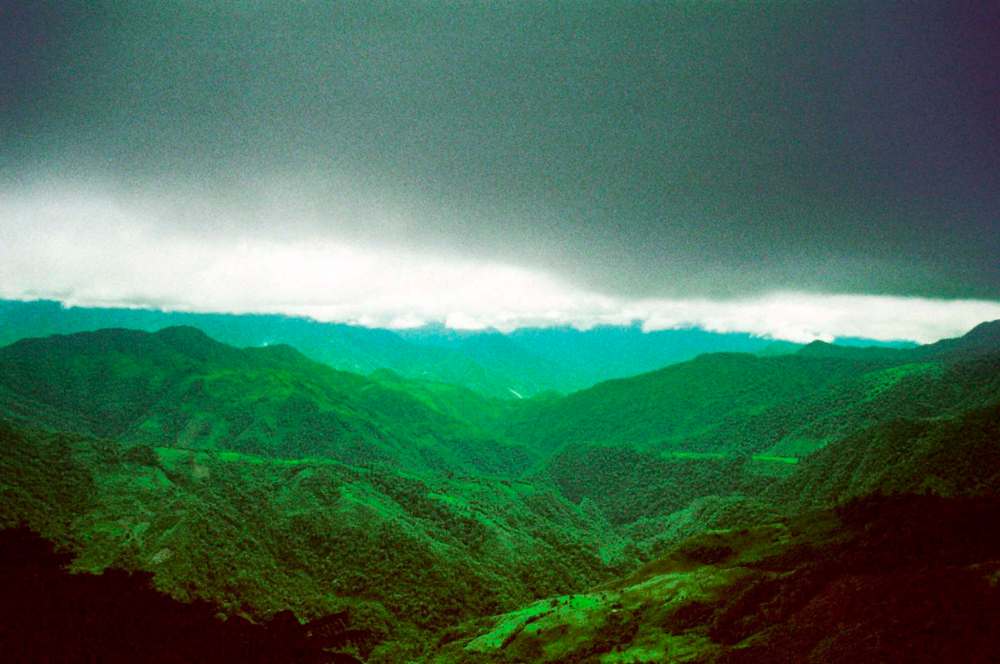
Ecuador is the primary setting of Winnipeg author Joan Thomas’s new novel. (Esther de Jong / The Associated Press files)

“In the missionaries’ memoirs, ‘God’s leading’ explains almost every impulse,” Thomas writes in a postscript. “I set out to peer behind that, to explore in human terms actions that astonished me.”

Because Thomas was reluctant to discuss people still living, Five Wives treats the original generation — Jim and Elizabeth Elliot et al. — fictionally, meaning the novel remains faithful to facts and timelines, while imagining these individuals’ interiority and motivations. Subsequent generations are entirely fictionalized.

In choosing to tell this story, Thomas signed up for weighty material. Five Wives is not an exposé (though Thomas certainly did her research), but it does take a critical point of view. Not for nothing has this novel been compared to Barbara Kingsolver’s The Poisonwood Bible. From the outset, Thomas risks alienating any among her audience who have Christian roots, because the story of Nate Saint, Jim Elliot and the others is beloved by evangelicals, and Thomas has no interest in further romanticizing it.

It’s a sad, sad story from any point of view, both for the horror of the murders and the effects foreign interests had on Ecuador. It’s a fact, for example, that missionaries helped usher the oil industry into Ecuador and played a direct hand in Waorani disenfranchisement. Missionaries were instrumental in preserving Waorani language but also, early on, in cementing the Waorani’s global reputation as cultureless “savages” (“Auca” is actually a misnomer for “Waorani,” meaning “savages”). Following contact, many of the Waorani were wiped out by viruses against which they had no immunity. Today, they are only beginning to regain a political voice.

It’s not a Waorani voice that Thomas takes up in Five Wives, but those of the women left behind after that terrible day on the beach.
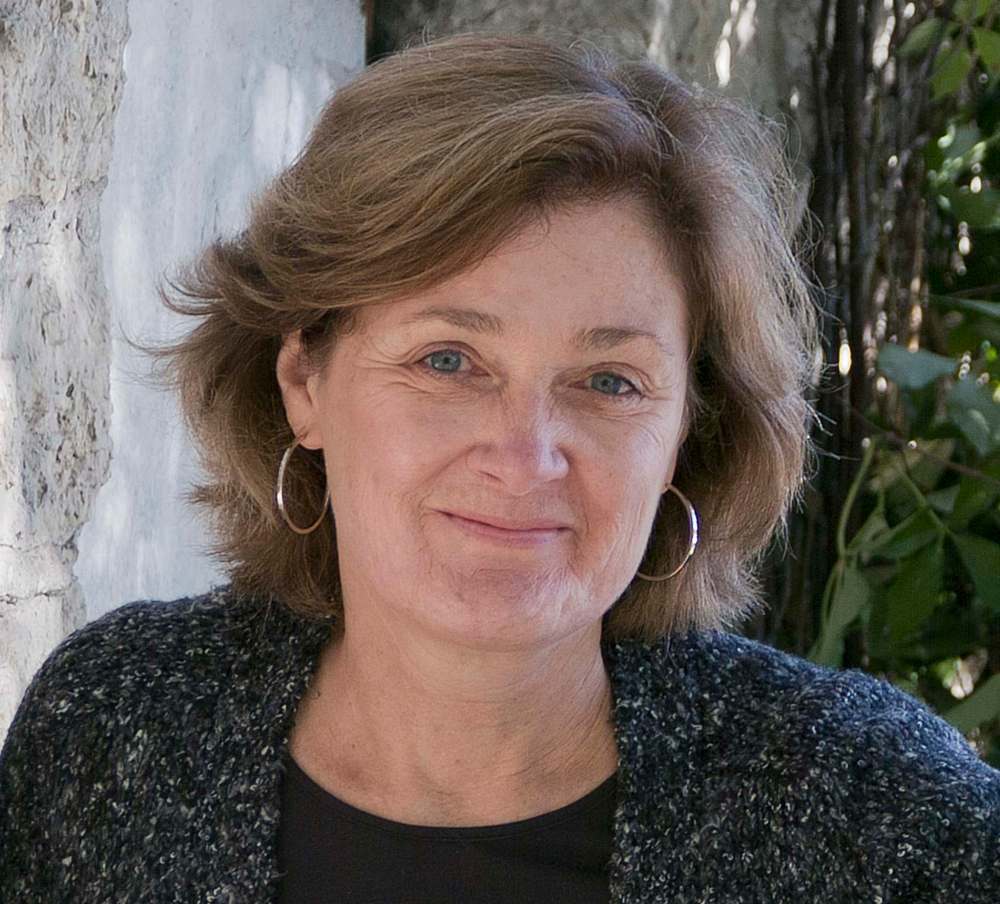
Thomas imagines what it would have been like for the missionaries’ widows in the field, forced to put on a brave face for their children. (Bruce Thomas Barr photo)

They are Elizabeth Elliot, Olive Fleming, Marjorie Saint, Rachel Saint (Nate’s sister), Marilou McCully and Barb Youderian. Some of them are newly married when they arrive in Ecuador, some have little children and some are opposed to the mission from the start. In the days after their husbands are murdered, all of them stick to the story that the deaths aren’t a tragedy but rather an opportunity for God to expand “His” work in Ecuador.

Thomas imagines, with great effect, how it would feel to be widowed on the mission field, forced to continue making sandwiches for the children while turning a brave, believing face to the world.

“I don’t want you to think I’m questioning God,” a distraught Marjorie tells the Life photographer when her control breaks.

Contemporary chapters are narrated by Saint’s fictional son, David, as well as a granddaughter named Abby. With such a large cast of characters, the narration in Five Wives is occasionally spread too thin, and some intriguing narrators — like Olive Fleming — are left by the wayside. Sections in which 19-year-old Abby wrestles with her family’s legacy are especially poignant; her earnestness calls to mind characters Thomas has written before (Lily in 2008’s Reading by Lightning and Sylvie in 2014’s The Opening Sky). Abby’s questions serve as a corrective to the other characters’ fervour, and Five Wives could have stood more of them.

But such is Thomas’s skill that she also finds nuance in the fervour, as when the widowed Elizabeth Elliot meditates on the significance of being chosen as Jim’s partner in life and in missions: “She felt the deep gladness of this, and also its weight. It was of a scale too big to be reckoned up, his martyrdom and God’s purposes. Consciously or unconsciously, she had followed Jim into mystery.”
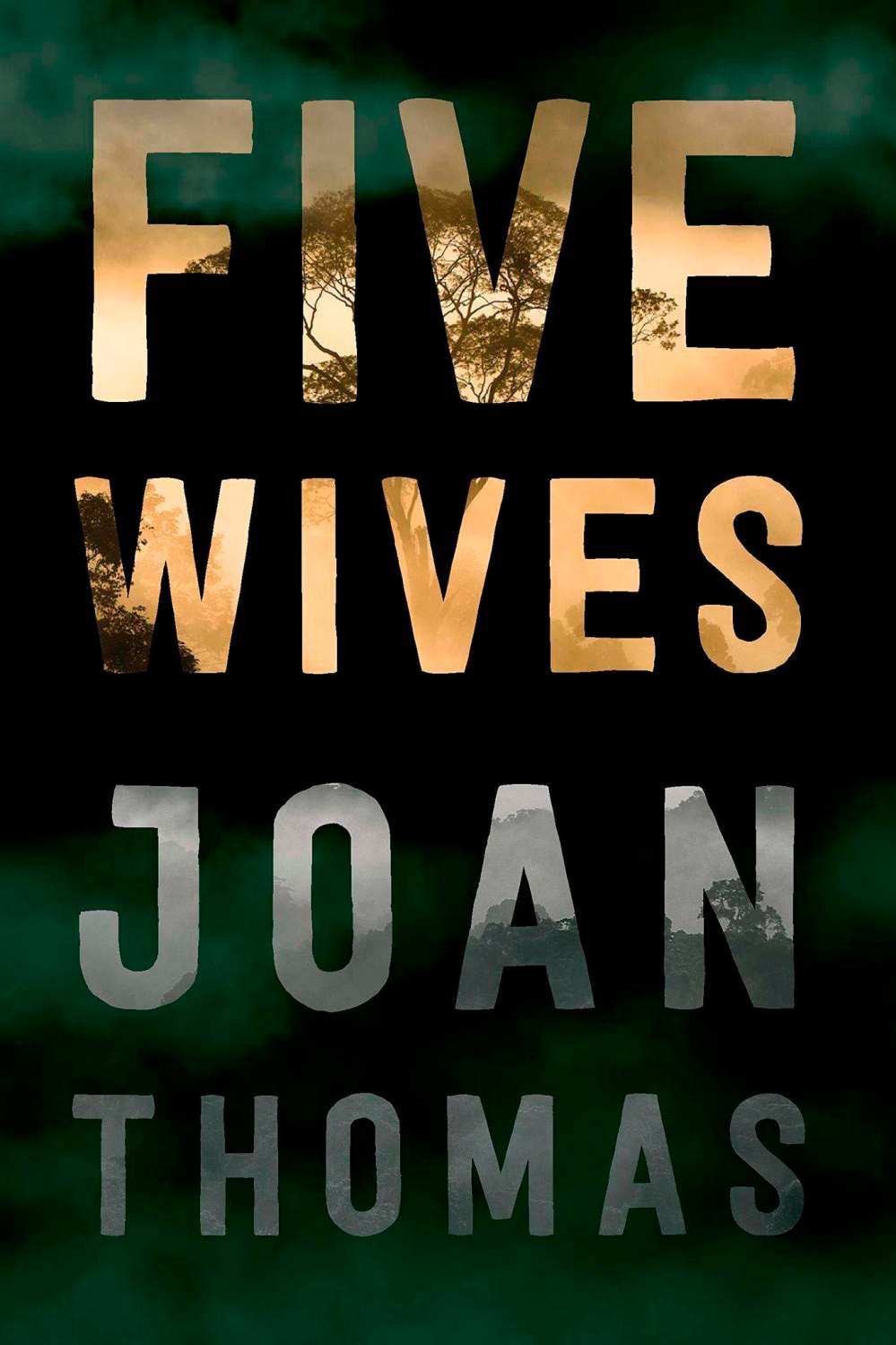
Five Wives is an engrossing, thoughtful read, and a fresh testament to Thomas’s narrative powers — and her ability to locate a human pulse under the often-deafening drumbeats of religious and cultural tradition.

Julienne Isaacs is a Winnipeg writer.
The Associated Press files
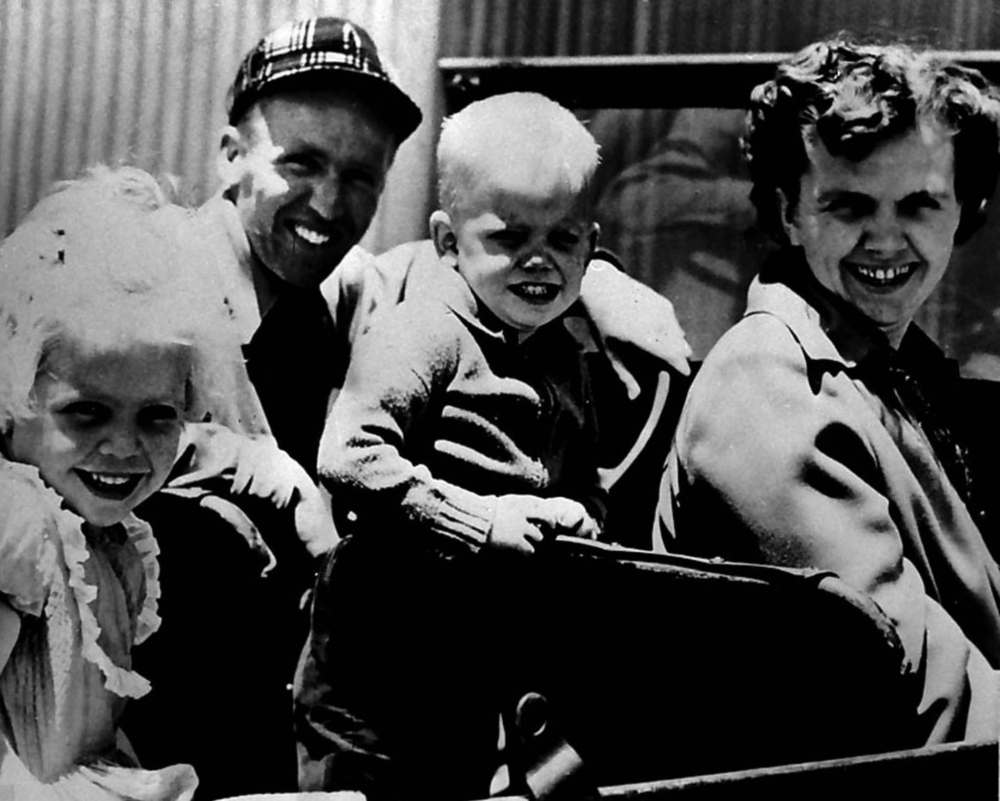
In this 1956 photo, American missionary Nate Saint, wearing a hat, poses with his daughter, Kathy (left), son Steve, and wife, Marjorie, just days before Nate was killed. In her novel, Thomas creates a fictional son for Saint, David, who narrates the contemporary sections of her book.
The Associated Press files In this 1956 photo, American missionary Nate Saint, wearing a hat, poses with his daughter, Kathy (left), son Steve, and wife, Marjorie, just days before Nate was killed. In her novel, Thomas creates a fictional son for Saint, David, who narrates the contemporary sections of her book.
Report Error Submit a Tip

More Stories

Downtown Keg closes… to reopen nearby

Free Press staff 2 minute read Preview

Downtown Keg closes… to reopen nearby

Free Press staff 2 minute read Yesterday at 7:28 PM CDT

Downtown Winnipeg is without a Keg restaurant — for a couple of months, anyways.

The Keg Steakhouse and Bar vacated 115 Garry St. on Wednesday, after more than five decades at the location. It will open in a new Donald Street apartment tower this fall.

Its move comes after years of waiting. The DSM, at 185 Donald St., sat as a partially started apartment block after its developer stopped operating and sought creditor protection in April 2023. The developer began the project in 2019.

Carrington Real Estate took over in 2024. Part of the 14-storey site’s initial plans — pre-Carrington — was for the Keg to occupy the main floor.

Read
Yesterday at 7:28 PM CDT

Plan to stay busy with overseas sweetheart

Maureen Scurfield 5 minute read Yesterday at 2:00 AM CDT

DEAR MISS LONELYHEARTS: I got a surprise phone call the other night from a number I thought I recognized and took a chance on answering it.

It was an old English girlfriend who still lives in London, where I went to university. I’ve been lonely this summer, so I thought, “What harm could there be in a friendly chat?”

I poured myself a big glass of wine as we started conversing. She was all flirty and charming — and hinting she wanted an invitation to come to Canada and visit me.

That sounded kind of exciting, and as I had another drink (and another) as we kept on talking, things got into full swing! Now she’s coming to Winnipeg for three weeks in the very near future. That can be a long time, if things go badly. Help me!

Climate change threatens events we wait for all year

Jen Zoratti 5 minute read Preview

Climate change threatens events we wait for all year

Jen Zoratti 5 minute read 2:01 AM CDT

This week, owing to extreme heat and a wild storm with tree-snapping winds, the Royal Winnipeg Ballet had to cancel its full run of Ballet in the Park, a much-loved annual tradition at which people from all over Manitoba can enjoy world-class art in the verdant Assiniboine Park.

Two weeks prior, Rainbow Stage, another jewel of a Winnipeg summer, had to cancel the closing matinee of Jesus Christ Superstar owing to heat and humidity.

And at the beginning of July, Winnipeg Folk Festival attendees baked under scorching temperatures — 47 C with the humidex — to enjoy not just the discovery of music, but the community that has formed in Birds Hill Park on the second weekend of July for over 50 years.

This doesn’t feel great. I do not begrudge cancellations — they are absolutely the correct call for the health and safety of performers and patrons — but I can’t be the only one feeling some existential dread about our summers, and the things that make them special, in the face of a changing climate.

Read
2:01 AM CDT

On the night table: Colson Whitehead

1 minute read Preview

On the night table: Colson Whitehead

1 minute read 2:02 AM CDT

Colson Whitehead

Author, Cool Machine

I’ve been reading Caroline Fraser. She has a book called Murderland about serial killers that came out last year. Her previous book, Prairie Fires, was a biography of Laura Ingalls Wilder. She’s a new author for me, and I’m going through that biography now. I never read Wilder’s books, but I liked the TV show when I was a kid; it’s one of those books that’s about a person’s life, but also pulls back to get the larger cultural panorama of America, talking about frontier life and and prairie life — it’s really interesting.

Colson Whitehead will launch Cool Machine, the third book in his Harlem trilogy, on Tuesday at 7 p.m. in the Muriel Richardson Auditorium at WAG-Qaumajuq (300 Memorial Blvd.) in an event presented by McNally Robinson Booksellers.

Read
2:02 AM CDT

Palestinian Canadian stories belong

Isha Khan 5 minute read 2:01 AM CDT

In June, the Canadian Museum for Human Rights opened a small exhibit focused on the human rights impacts of the forced displacement of Palestinians: infringements on their rights to life, education, equality, movement, and more.

Palestine Uprooted: Nakba Past and Present shares stories, memories and artifacts of Palestinian Canadians. It is on display in our Rights Today gallery, and that placement is intentional. It is a story unfolding before our eyes, demanding our attention.

The exhibit is also a reminder that behind every headline there are real people we must approach with empathy. Unfortunately, much of the coverage and commentary has failed to do that, often omitting Palestinian voices entirely.

Some of the dialogue, both critical and supportive, has contributed to the very things we need to resist — the dehumanization of one another, focusing on entrenched positions over dialogue and understanding.

Hydro scrambling to restore power to remaining 4,500 customers after storm; some outages will continue into Saturday

Chris Kitching 5 minute read Preview

Hydro scrambling to restore power to remaining 4,500 customers after storm; some outages will continue into Saturday

Chris Kitching 5 minute read Updated: Yesterday at 4:31 PM CDT

Power outages could stretch into a third day for some Manitobans — mainly in and around Winnipeg — while crews continued to repair widespread damage caused by powerful thunderstorms.

About 4,500 Manitoba Hydro customers were still without electricity at 2:30 p.m. Friday, after more than 30,000 lost power while powerful winds brought down trees and power lines Wednesday night and early Thursday.

The Crown corporation said it is aiming to have all outages with greater numbers of customers restored by Friday night, but some customers may remain without power into Saturday.

“The challenge is just the sheer scale of this thing — hundreds of different outages spread across a large part of the city,” Hydro spokesman Peter Chura said. “Just getting to all of them in a timely fashion is very difficult.”

Read
Updated: Yesterday at 4:31 PM CDT