Going off the rails
Winnipeg historian James Blanchard looks back on the massive social changes and economic challenges the once-thriving 'Chicago of the North' faced in the 1920s
Advertisement
Read this article for free:
or
Already have an account? Log in here »
To continue reading, please subscribe:

Digital Subscription
One year of digital access for only $205*
- Enjoy unlimited reading on winnipegfreepress.com
- Read the E-Edition, our digital replica newspaper
- Access News Break, our award-winning app
- Play interactive puzzles
*First annual payment billed as $205.00 + GST for one year. This annual subscription will automatically renew at $233.00 + GST every 52 weeks (10% off the regular annual price of $259.35). Offer available to new and qualified returning subscribers only. Cancel any time.
To continue reading, please subscribe:
Add Free Press access to your Brandon Sun subscription for only an additional
$1 for the first 4 weeks*
- Enjoy unlimited reading on winnipegfreepress.com
- Read the E-Edition, our digital replica newspaper
- Access News Break, our award-winning app
- Play interactive puzzles
*Your next Brandon Sun subscription payment will increase by $1.00 and you will be charged $17.95 plus GST for four weeks. After four weeks, your payment will increase to $24.95 plus GST every four weeks.
Read unlimited articles for free today:
or
Already have an account? Log in here »
Hey there, time traveller!
This article was published 14/09/2019 (2539 days ago), so information in it may no longer be current.
An excerpt from Jim Blanchard’s A Diminished Roar: Winnipeg in the 1920s. University of Manitoba Press. A Diminished Roar will be launched Monday, Sept. 16 at McNally Robinson Booksellers.
The third instalment in Blanchard’s popular history of early Winnipeg, A Diminished Roar presents a city in the midst of enormous change. Once the fastest-growing city in Canada, by 1920 Winnipeg was losing its dominant position in Western Canada. As the decade began, Winnipeggers were reeling from the chaos of the Great War and the influenza pandemic. But it was the divisions exposed by the 1919 Winnipeg General Strike that left the deepest marks. As Winnipeg wrestled with its changing fortunes, its citizens looked for new ways to imagine the city’s future and identity.
● ● ●
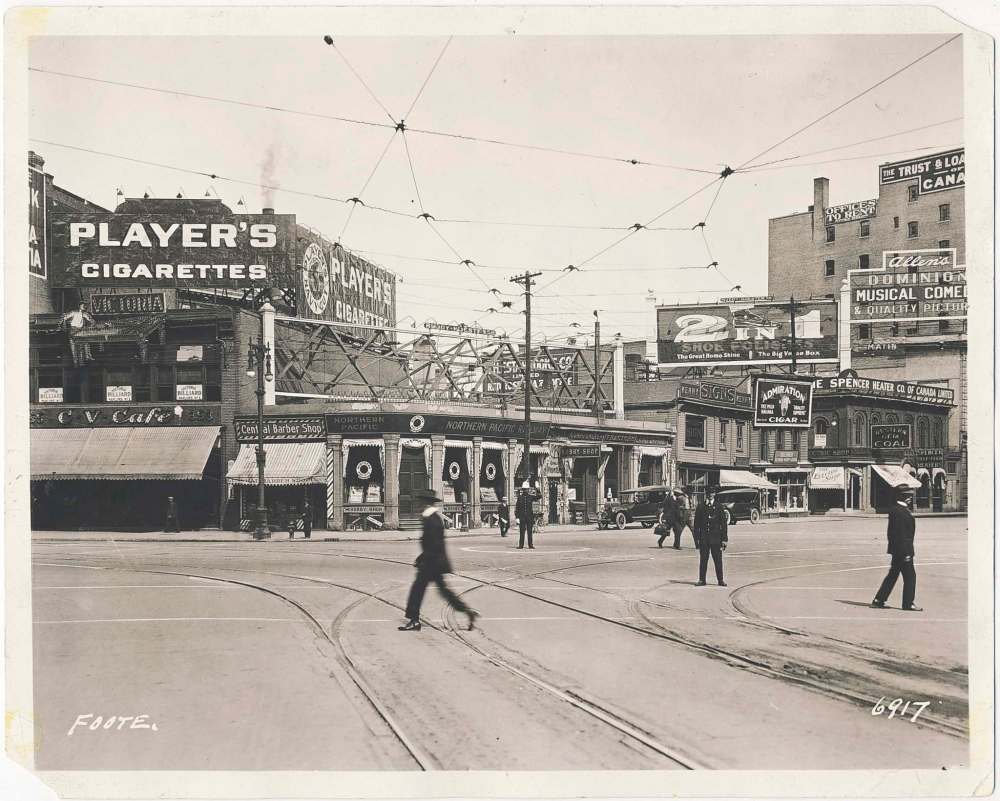
This book is about Winnipeg during the 10 years from 1920 to 1930. It is a decade that may appear to be uneventful compared with the tumultuous 50 years that preceded it, but the 1920s in Winnipeg were a period during which its people and institutions were faced with problems, challenges, and adjustments more profound than any they had seen before, as the city attempted to come to terms with its changed situation.
Winnipeg had experienced major challenges in the years leading up to the 1920s. War, the General Strike, the growth of other western cities, the postwar depression and other influences caused the West’s oldest city to lose the pre-eminent position it had occupied in the region.
The Great War brought European immigration to an end and, with that, a major source of the city’s prosperity. The General Strike, a fully justified work stoppage, could be said to have failed. The result was demoralizing for the labour movement. Union membership had grown toward the end of the war as workers suffered from the effects of inflation. Then, postwar depression and unemployment set in and, with no unemployment insurance, many families were forced to rely on the inadequate relief available from the city.
But the strike did have some positive results. People who had participated remembered it as a time when they stood up for their rights. Unions took pride in the organizational ability they had demonstrated. The One Big Union maintained the loyalty of many of its members as a place in which to express that they were not beaten. The Ukrainian Labour Temple, built with volunteer labour shortly before the strike, still stands as a symbol of the confidence and determination felt by the Winnipeg Labour movement at the time. Labour politicians emerged from the strike — some emerged from prison — determined to establish themselves as a permanent and effective group on city council and in the provincial legislature.
However, the nationwide postwar depression, itself a result of the end of the war, acted as a check on Winnipeg’s growth and development. It resulted in the weakening of some of the city’s main economic engines and created a massive unemployment problem in Winnipeg.
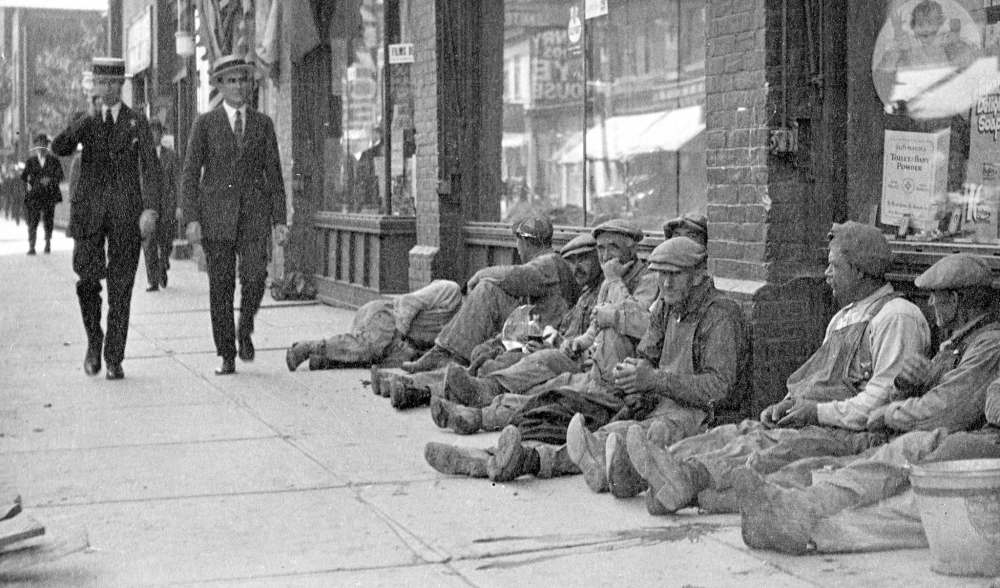
All these things meant that the people of Winnipeg were faced with an enormous task: coping with the unfavourable economic situation. The boom years seemed to be over, and the city would no longer be the “commercial centre of the Canadian west,” the “bull’s-eye of the Dominion” or the “Chicago of the North,” to quote just three of the slogans formerly applied to Winnipeg. In the past, the expansion going on in the West poured money into Winnipeg, and a cohesive business community and Board of Trade usually called the shots. New policies and strategies were needed to solve the problems that existed in the 1920s, but there were many competing points of view about which actions to take.
The story of the phenomenal growth of the previous half-century, from the little village of wooden buildings in 1870 to the status of third-largest city in Canada, was a source of pride for Winnipeggers. The people who built Winnipeg in the early decades had believed in its future, its potential to become a great metropolis. The city was seen as a place where a person could make their fortune, and people flocked there hoping to become rich. Many had indeed made fortunes, and the main streets of the 1920s were lined with beautiful commercial buildings. There were magnificent homes in the leafy suburbs, large public parks and well-built schools, all reminders of the prosperity of the boom years.
Winnipeg’s great success was, however, blemished by the way in which groups such as the Métis were elbowed aside, dispossessed and deprived of the lands promised to them in the Manitoba Act at the time of Confederation. First Nations people were no longer seen in the city, restricted as they were to their allotted reserves.
The boom years had also left behind poor districts, such as the one immediately north of the Canadian Pacific Railway yards, characterized by poorly built and inadequate housing, outdoor privies and outbreaks of diseases such as typhus and tuberculosis. Infant mortality was still unacceptably high in the North End wards. On the outskirts there were shantytowns such as the one that would eventually be called Rooster Town, south of the city. Here, people built their own houses out of scrap lumber, tarpaper, and pieces of discarded tin. Rooster Town was home to many Métis families and others whom the boom had passed by, people for whom the frantic growth of Winnipeg had resulted only in loss and exclusion in an area where they had once been the majority.
For the “winners” who had gained control of Winnipeg and made it a symbol of success, the 1920s were characterized by a sense of gloom over the city’s future and anxiety that the good times would not return.
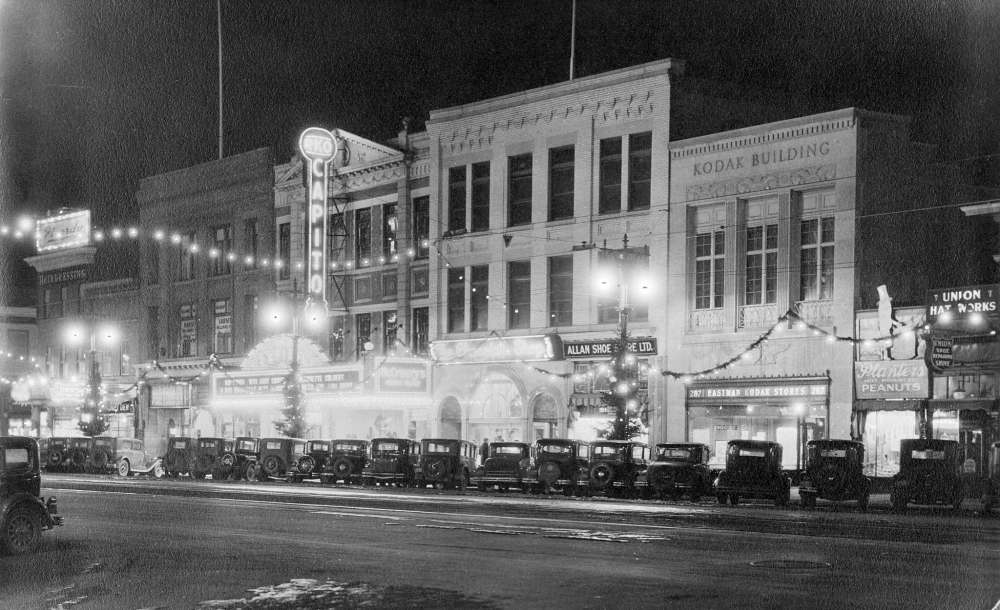
Winnipeggers of different generations and backgrounds came forward to fight for the city. The city leadership had a wider range of viewpoints than in the past, a situation that meant compromise and working together were more important than they had been. Unfortunately, the atmosphere in the city made compromise and working together difficult. Different political groups struggled over how to manage the city and solve its problems. The Board of Trade and their allies continued to have influence and were able to sponsor initiatives that could be said to favour the return of the old Winnipeg. But their control was no longer as complete as it had been, and the Independent Labour Party and their sympathizers were strong and adept enough to achieve some of their objectives and push the city in new directions. There were also a few non-aligned politicians who occasionally exerted their influence.
This book does not present a simple narrative that moves chronologically from year to year, but rather presents a sampling of representative events and trends in order to describe what the city was like. The first part looks at the effects of the Great War, postwar depression and the General Strike on the city, as well as the impact of the personal fortunes amassed by some leaders of the business community. The second part focuses on city politics and public utilities. The third part examines some of the social changes that were taking place in the 1920s in Canada and how these changes played out in Winnipeg. The fourth part looks at two ambitious projects of the 1920s: the construction of Memorial Boulevard and the renewal of the neighbourhood around it; and the sustained, but ultimately unsuccessful, campaign to revive the city’s annual Industrial Exhibition.
•••
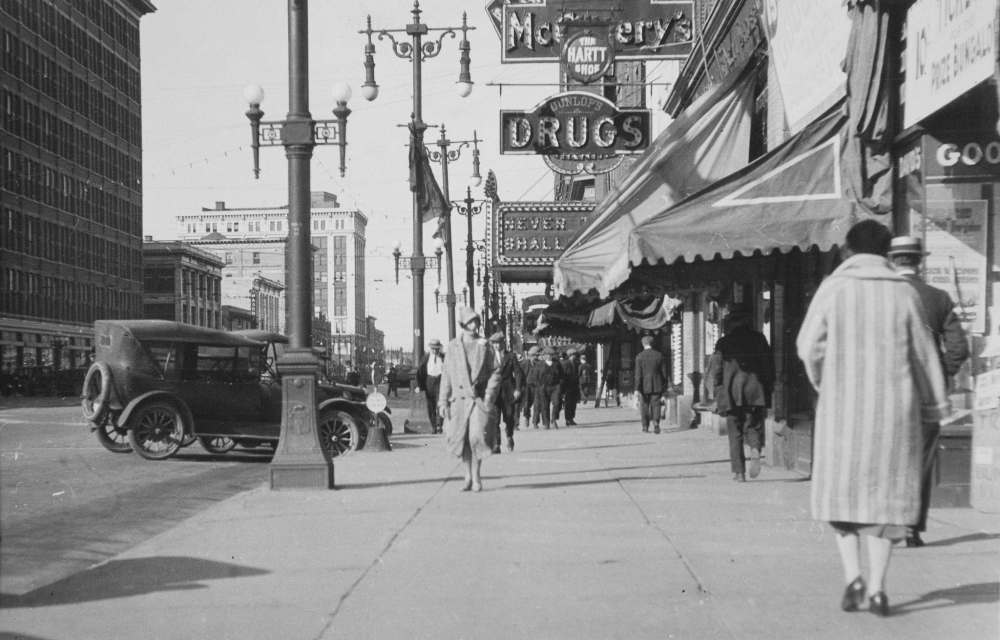
During the 1920s the rich and diverse theatre world of Winnipeg carried on as it had in the past with the difference that motion pictures played an increasingly important role. On one weekend in February 1922, for example, the city had a long list of entertainments from which to choose. At the Walker Theatre, The Beggar’s Opera was playing, to be followed the next week by a new three-act play, The Unloved Wife, starring Ruby Norton. Norton was also appearing in the vaudeville review nearby at the Orpheum on Notre Dame, where she was billed as the “Little Big Star of Song.” Pantages was the other vaudeville theatre in town. At the Winnipeg Theatre, a repertory company presented plays, and their current offering was Charlie’s Aunt. The biggest of the many movie houses, the Allen, later called the Metropolitan and, just down Donald Street, the Capitol, both offered the latest motion pictures together with some stage acts. Both had orchestras, and the Capitol also featured singing and dancing on its stage. The theatre organist at the Allen presented a recital at the end of each evening’s program. There were many smaller movie theatres and a few of them had live entertainers, as well.
In the midst of the ads for all this professional entertainment, in February 1922 the Winnipeg Community Players inserted a simple notice for their first performances at the Dominion Theatre on Portage Avenue East. They announced they would be presenting, later in the month, three one-act plays, The Little Stone House, Squirrels and Suppressed Desires.
The Winnipeg Community Theatre, a predecessor of the Royal Manitoba Theatre Centre, had been founded in 1921. At the time, a community theatre movement was spreading in Britain, the United States and Canada, although in this country only Winnipeg, Montreal and Toronto had companies in the early 1920s. Winnipeg had a long history of amateur theatre stretching back to the Red River Settlement. But the Winnipeg Community Theatre had fairly high-minded goals, pledging itself to putting on plays of a better class “without making box office receipts the primary consideration.” The theatre was seen as a place not to just have fun, but to learn and develop one’s artistic taste. In 1922, the Tribune praised the group: “It is all done for the good of the cause, the final objective of which is greater refinement.” Both the amateur performers and their audiences, then, were interested in increasing the sophistication of the Winnipeg theatre world, making it more like the theatre of larger cities.
With all the competing entertainment available in Winnipeg theatres, it was just as well that the box office was not the Winnipeg Community Theatre’s prime consideration. The group would be giving members a chance to learn about all aspects of theatre work: acting, directing, stage design and writing. The community theatre movement has been satirized over the years, but there is no doubt that it was the starting place of many professionals and helped build an audience for live plays. The Winnipeg Community Theatre would function until 1936 when, heavily in debt, it was closed down. It was revived after the Second World War and would merge with Theatre 77 in 1958 to form what is now the Royal Manitoba Theatre Centre.
The first play produced by the Community Players, staged at the Dominion Theatre in December 1921, was John Galsworthy’s The Pigeon.
While the first productions of the Community Players were in the Dominion Theatre on Portage Avenue East, the group soon purchased their own venue, called the Little Theatre, a former movie house at 959 Main St. The theatre had 250 seats, most of which were sold by subscription. Members from the university faculty were involved and the University Women’s Club was a supporter of the group. A list of donors from these early days includes names such as James Richardson, Robert Rogers, Arnold Brigden and many of the same people who were often mentioned in the society columns. In 1928 Lady Tupper directed a production of The Importance of Being Earnest. The celebrated Winnipeg artist Walter J. Phillips designed sets and local volunteers sewed costumes.
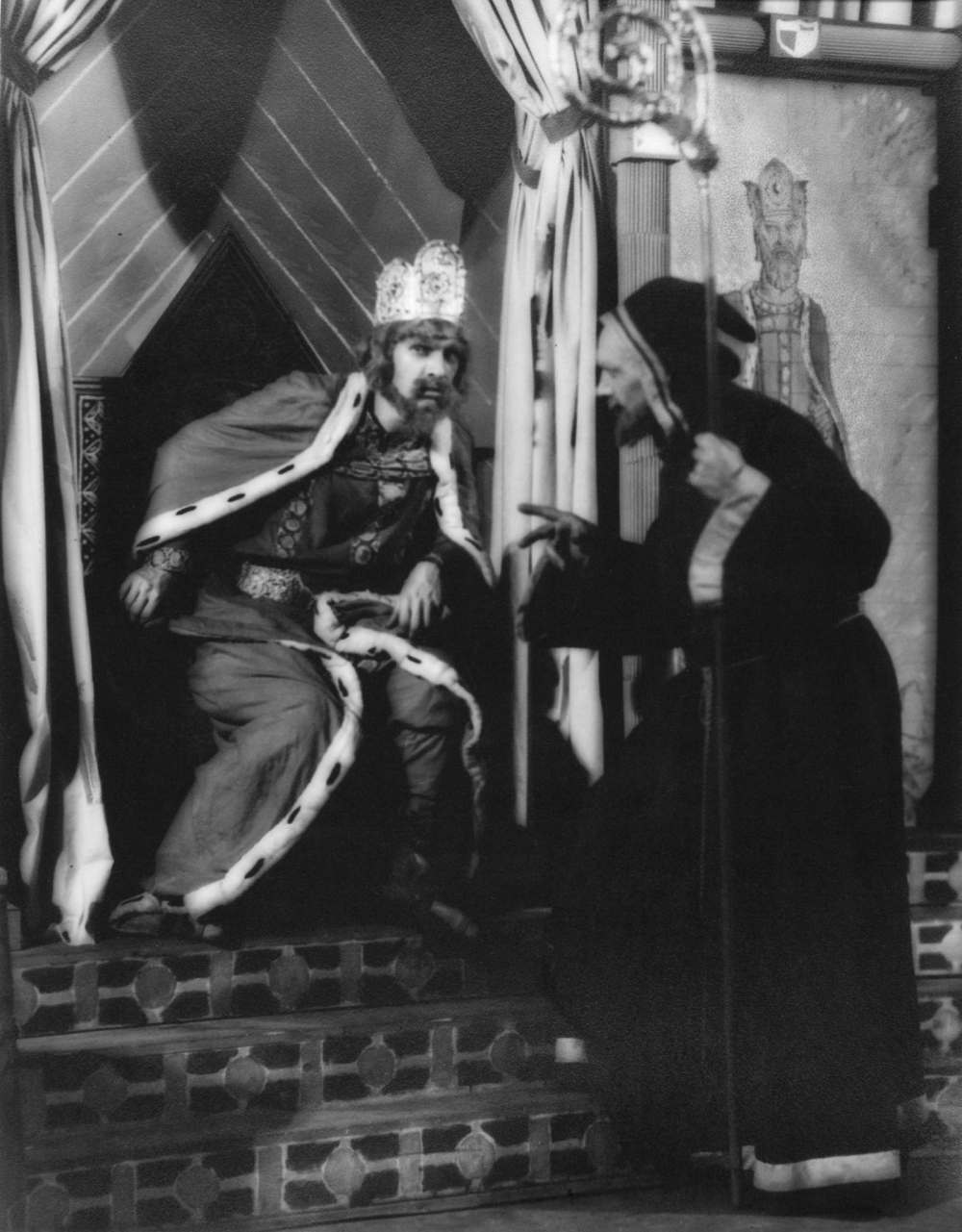
The group was fairly sophisticated in what it chose to present in the Little Theatre. There were plays by Edmond Rostand, Alan A. Milne, George Calderon, John Galsworthy, George Bernard Shaw, Philip Marlowe and John Synge. Some of the plays chosen had only recently debuted in New York. For example, in 1922 Rowena Brownstone directed Six Who Pass While Lentils Boil by Stuart Walker, a new play performed for the first time the year before in New York. In February 1923, she directed The Potboiler, with a cast made up of members of the University of Manitoba Menorah Society, a Jewish students’ group. The one-act play, by Alice Gerstenberg, a young woman active in the Chicago Community Theatre, became a classic. It satirizes playwrights and their foibles. Plays were chosen in part by asking the members of the group what they would like to see the following year. During the winter season, on Saturdays when there was no production, the group workshopped one-act plays and presented readings.
As to the quality of any of the productions, local critics such as Prof. William F. Osborne, who taught French and modern languages at the university, published reviews in the daily papers that ranged from very critical to glowing. When someone complained to the paper about a bad review, the answer came back that if one gave only good reviews, then a truly good one means nothing.

The Little Theatre group participated in fundraisers for other causes in the city and to support their own efforts. In 1925, they put on a street fair on Gertrude Avenue, closing the street between Wellington Crescent and Daly Street to raise funds for the theatre.
In November 1925, a group of young women borrowed the Little Theatre to put on a Humpty Dumpty Review, a pantomime-type entertainment for children. They were all members of the Humpty Dumpty Club, a group of teenaged girls formed in 1918 by Ellen Code and Mary Machray. The group decided at their first meeting that they would work to raise funds for the children who were patients at Winnipeg General Hospital. One of their regular fundraising events was the Review. The club remained in existence for many years, always with teenaged members. Ellen Code was the director of the Review in 1925 and her sister Lorraine was one of the players. The Codes were the daughters of Abram Code, who was an inspector for the federal Department of Inland Revenue, and his wife, Gertrude, who was one of the daughters of Edward Drewry, the owner of the Redwood Brewery. Mary Machray, their cousin, was the daughter of lawyer John Machray and also a granddaughter of Edward Drewry.
An aspect of the Little Theatre that was quite different from other Winnipeg theatres was that it was a place where people of different backgrounds worked together on plays. While most of the works put on by the group were by British authors, members such as Rowena Brownstone introduced a wider variety of material. For example, in 1930 The Dybbuk was performed by a cast of 40, mostly members of the Menorah Society at the university. The director was Winston McQuillin, who worked for the Cockfield Brown Advertising Agency. That same year a Scandinavian classic, Eywind of the Hills, was performed. Winnipeg audiences were thus being exposed to drama from a variety of traditions. The group was heavily supported by members of the city’s elite and the cosmopolitan nature of some of the plays probably indicates that attitudes were changing when it came to non-British cultures.
James Blanchard is a retired academic librarian and Librarian Emeritus of the University of Manitoba. He is a former president of the Manitoba Historical Society and is the author of Winnipeg’s Great War: A City Comes of Age and Winnipeg 1912.