Red alert

Klein pushes for Green New Deal in the face of climate crisis

Advertisement

Advertise with us

There are few global or international challenges that have brought our species together in solidarity. One can think to D-Day or the Apollo moon landing as examples of western countries using, in the former case, our collective capacity to push back totalitarian hate, and in the latter, defying what we knew was possible in terms of space exploration.

Read this article for free:


or

Already have an account? Log in here »

To continue reading, please subscribe:

Subscribe and receive a limited-edition Free Press branded hat or tote.

Digital Subscription

One year of digital access for only $205*

  • Enjoy unlimited reading on winnipegfreepress.com
  • Read the E-Edition, our digital replica newspaper
  • Access News Break, our award-winning app
  • Play interactive puzzles

*First annual payment billed as $205.00 + GST for one year. This annual subscription will automatically renew at $233.00 + GST every 52 weeks (10% off the regular annual price of $259.35). Offer available to new and qualified returning subscribers only. Cancel any time.

To continue reading, please subscribe:

Add Free Press access to your Brandon Sun subscription for only an additional

$1 for the first 4 weeks*

  • Enjoy unlimited reading on winnipegfreepress.com
  • Read the E-Edition, our digital replica newspaper
  • Access News Break, our award-winning app
  • Play interactive puzzles
Start now

*Your next Brandon Sun subscription payment will increase by $1.00 and you will be charged $17.95 plus GST for four weeks. After four weeks, your payment will increase to $24.95 plus GST every four weeks.

Hey there, time traveller!
This article was published 05/10/2019 (2525 days ago), so information in it may no longer be current.

There are few global or international challenges that have brought our species together in solidarity. One can think to D-Day or the Apollo moon landing as examples of western countries using, in the former case, our collective capacity to push back totalitarian hate, and in the latter, defying what we knew was possible in terms of space exploration.

But there has never been a time in human history, which is not very long, where we have stared collectively into the mirror of our own existence.

For the past six decades, we have known that we have been causing catastrophic damage to our home. If you dispute the history of our destruction, Sept. 27 of this year marked the 57th anniversary of the release of Rachel Carson’s environmental science book, Silent Spring. (It should be mandatory reading for all educators.)
Darren Calabrese / The Canadian Press files
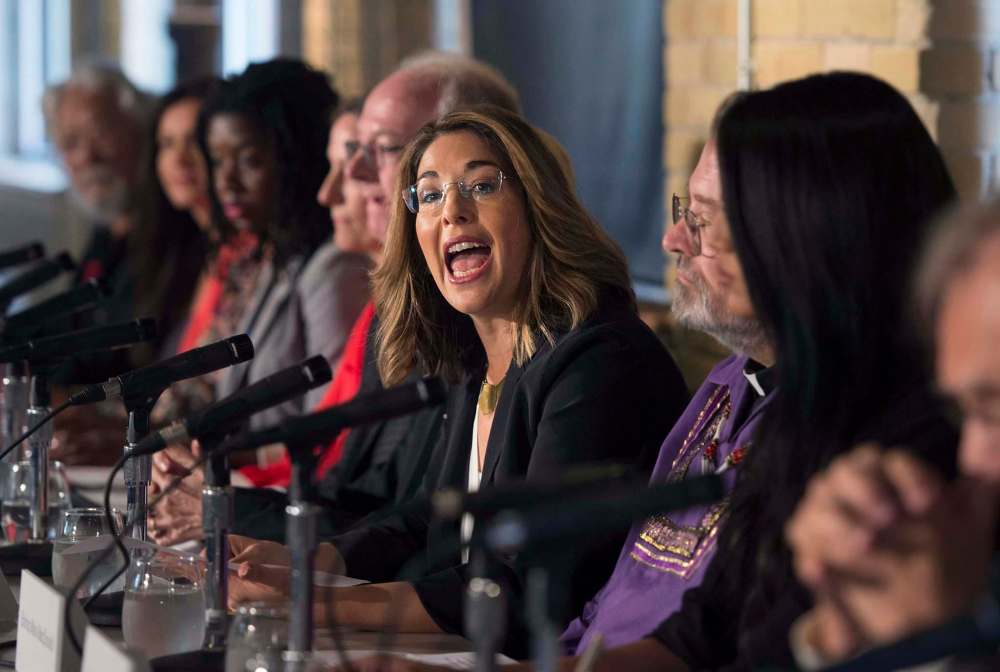
Naomi Klein (centre) launched the Leap Manifesto in Toronto in 2015.
Darren Calabrese / The Canadian Press files Naomi Klein (centre) launched the Leap Manifesto in Toronto in 2015.

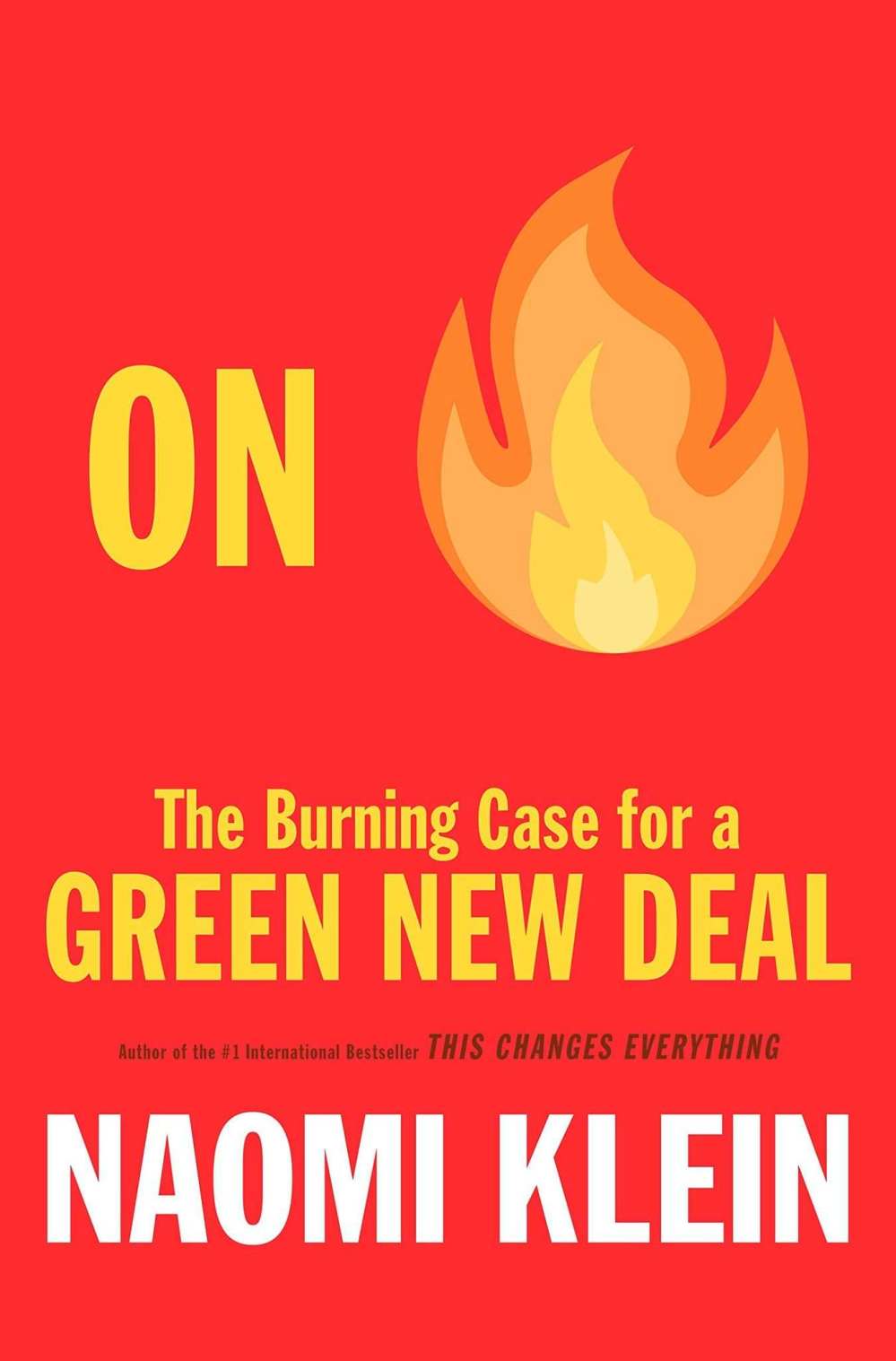
Sept. 27 of this year also marked the largest student demonstration in human history, with millions of youth leaving their classrooms to fight for their future and wake the rest of us up. It is this existential struggle that has compelled Naomi Klein, Canadian journalist, activist, and progressive, to release her latest book, On Fire: The Burning Case for a New Green Deal.

The author of No Logo and This Changes Everything, among others, was also a critical player in the development of the Leap Manifesto and the Green New Deal, supported by none other than U.S. presidential candidate Bernie Sanders and championed by U.S. congresswoman Alexandria Ocasio-Cortez.

In On Fire, Klein is inspired by the new voice of moral courage on our planet, Swedish teenage activist Greta Thunberg, and the millions of youth turned activists who should be enjoying this time of adolescence but, owing to our greed and neglect,are forced to fight for the very thing that sustains life: planet Earth.

According to Klein, “learning has become a radicalizing act,” whereby in spite of adults, our children are participating in civil disobedience because “they are the first for whom climate disruption on a planetary scale is not a future threat, but a live reality.” They no longer have the idle pleasure of succumbing to what Aristotle calls akrasia, the human tendency to act against our better judgment.

On Fire provides a series of Klein’s essays written over the past decade, which not only chronicle the monumental and catastrophic canaries in the coal mine (the 2010 BP explosion in the Gulf of Mexico, the rise of fracking, the burning of the boreal forest, etc.), but also make the case for the need of a new understanding of how we live together. Of how we treat and share resources. Of how we become stewards of the Earth so that everyone has the means for a decent life.
And much of this work began in 2015, as Klein and other leaders began to develop the Leap Manifesto. Only four years ago, Canadians and the world were presented with a plan towards sustainability, equity and stability that was scoffed at by the likes of Stephen Harper, Justin Trudeau and even Thomas Mulcair. Fast forward to 2019, and we’re still debating who will champion which pipeline.

And we wonder why our children are frustrated and afraid. “They understand that they are fighting for the fundamental right to live full lives,” Klein writes — lives that have been stolen from them.

Following the Leap Manifesto, in 2019 the Green New Deal arrived on Capitol Hill and has provided the basis for a global conversation about a positive pathway forward. Inspired by Franklin Roosevelt’s New Deal, Klein helped develop a framework that checks unbridled capitalism, addresses social inequity and fully realizes the planetary emergency that stares us in the face.

The Green New Deal calls for a fundamental shift in how we operate. It calls for us, Klein argues, to “swerve off our perilous trajectory” through “sweeping industrial and infrastructure overhaul.”

It calls for us to stop denying the future of our kids and to become their allies as they lead the way to a positive, inclusive and thriving future.
Justin Tang / The Canadian Press
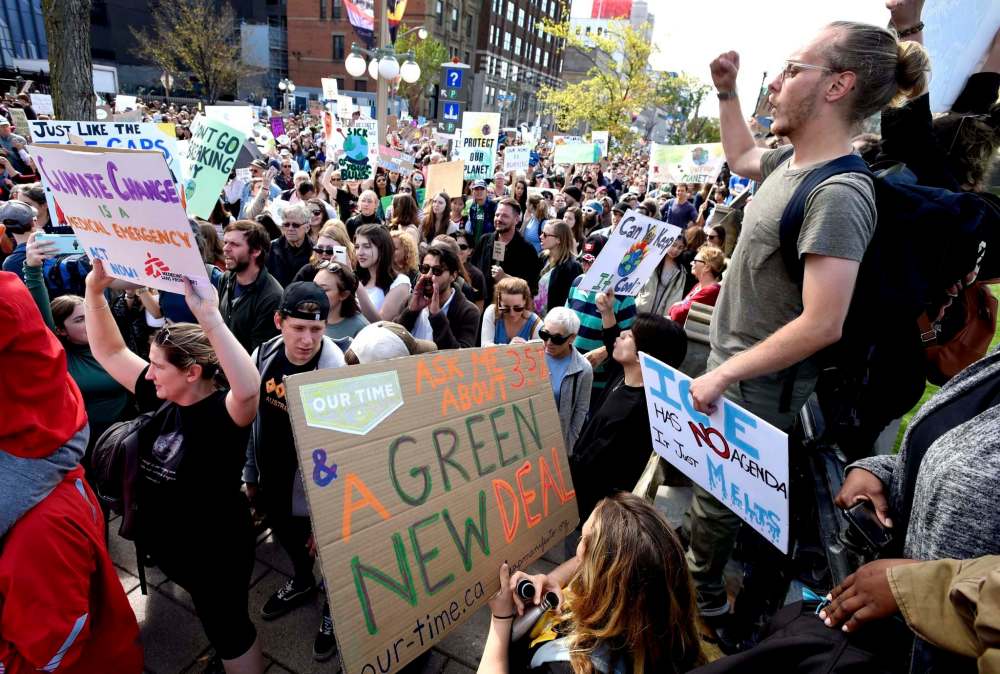
People rally near Parliament Hill in Ottawa as part of a climate rally, one of many held worldwide on Friday, Sept. 27.
Justin Tang / The Canadian Press People rally near Parliament Hill in Ottawa as part of a climate rally, one of many held worldwide on Friday, Sept. 27.

Matt Henderson is assistant superintendent of Seven Oaks School Division.
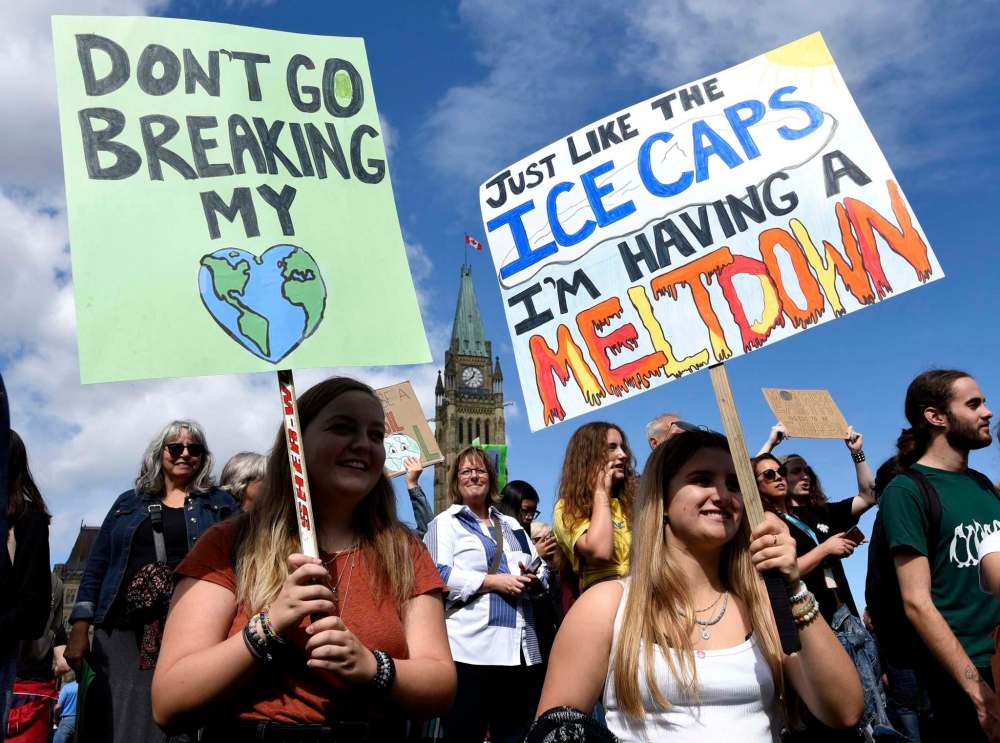
Justin Tang / The Canadian Press files
The global climate strike, held in cities in dozens of countries on Sept. 27, saw millions of youth leave their classrooms in one of the largest worldwide demonstrations in history.
Justin Tang / The Canadian Press files The global climate strike, held in cities in dozens of countries on Sept. 27, saw millions of youth leave their classrooms in one of the largest worldwide demonstrations in history.
Report Error Submit a Tip

More Stories

A way of seeing, a vision for living

Stephen Borys 6 minute read Preview

A way of seeing, a vision for living

Stephen Borys 6 minute read 2:00 AM CDT

In Ways of Seeing, John Berger reminds us that seeing precedes words.

Read
2:00 AM CDT

Klein’s entrance adds spark to ho-hum mayoral race

Tom Brodbeck 5 minute read Preview

Klein’s entrance adds spark to ho-hum mayoral race

Tom Brodbeck 5 minute read Tuesday, Sep. 1, 2026

Until this week, Winnipeg’s mayoral race looked less like a democratic contest and more like a coronation.

Read
Tuesday, Sep. 1, 2026

‘Where are they going to go?’: encampment policy blamed for homeless people sleeping outside thrift store

Scott Billeck 5 minute read Preview

‘Where are they going to go?’: encampment policy blamed for homeless people sleeping outside thrift store

Scott Billeck 5 minute read Yesterday at 4:55 PM CDT

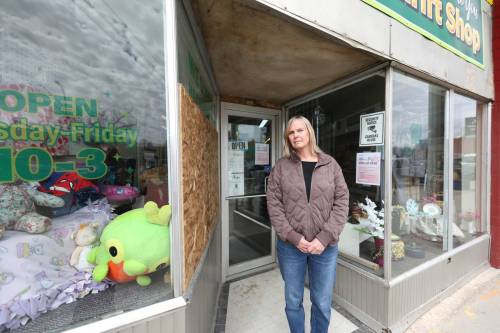
The owner of a Portage Avenue thrift shop says the city’s encampment ban has pushed dozens of homeless people from tent communities to spaces near her store.

Susan Lockhart, who runs Just Like New to You at 635 Portage Ave., says anywhere from 25 to 50 people can be found at any given time behind the store and along the back lane stretching between Sherbrook and Furby streets.

“Where are they going to go?” she said Wednesday from her shop. “I was just here on the weekend and I couldn’t get to our back door. There were people everywhere. Mattresses.”

Earlier this week, the city reported 275 people were known to be living in 72 encampments across Winnipeg — down from 100 encampments housing about 700 people last September. The report also noted that 141 sites have been remediated since the city’s encampment policy came into effect in November.

Read
Yesterday at 4:55 PM CDT

NDP defends involvement of U.S. company in Hydro project

Chris Kitching 5 minute read Preview

NDP defends involvement of U.S. company in Hydro project

Chris Kitching 5 minute read Yesterday at 6:10 PM CDT

A U.S. company that donated to Donald Trump’s 2025 presidential inauguration could build Manitoba Hydro’s proposed $3-billion natural gas turbines, which has drawn criticism from an environmental group amid the NDP government’s pushback to tariffs.

Read
Yesterday at 6:10 PM CDT

Deep Dark Woods brings haunted sound back to city

Sheldon Birnie 4 minute read Preview

Deep Dark Woods brings haunted sound back to city

Sheldon Birnie 4 minute read 6:00 AM CDT

The more things change, the more they stay the same. Time, after all, is a circle.

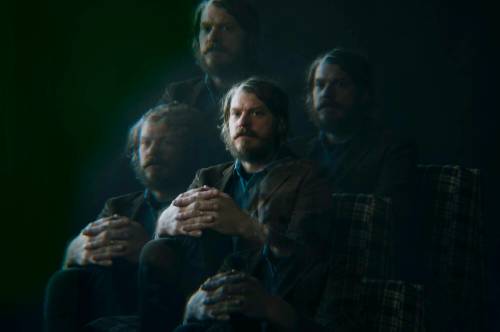
For Ryan Boldt, singer and principal songwriter for the long-running, award-winning Canadian folk-rock outfit the Deep Dark Woods, that circle remains unbroken.

“I’ve been playing in bands and going on tour for over half my life now,” Boldt says with a laugh. “It’s really bizarre to think about.”

Founded in Saskatoon in 2005, the Deep Dark Woods has released seven albums of original music, along with two followup volumes to Boldt’s Broadside Ballads series of traditional folk songs.

Read
6:00 AM CDT

What's Up: Smiley Face, Shari Lapena book launch, Winnipeg Comedy Showcase, Ximbombo Dance Party, Mending with Tradition

5 minute read Preview

What's Up: Smiley Face, Shari Lapena book launch, Winnipeg Comedy Showcase, Ximbombo Dance Party, Mending with Tradition

5 minute read 6:00 AM CDT

Smiley FaceDave Barber Cinematheque, 100 Arthur St.Tonight, 7 p.m.; Saturday, 3 p.m.Admission $11.50When all is said and done, and her career on screen is assessed in full, Anna Faris might just be remembered as one of the definitive comic actors of the 2000s.

Aside from starring in the Scary Movie franchise, which has been spoofing prestige and shlock for a quarter of a century, Faris, who turns 50 in November, showed off her comic chops as ex-centrefold Shelley Darlingson in the underrated 2009 film The House Bunny, creating a character who has developed a cult following. On Mom, Faris and co-star Allison Janney balanced producer Chuck Lorre’s penchant for horny humour with genuinely touching performances dealing with thorny issues such as addiction.

All those versions of Faris meet in the centre in filmmaker Gregg Araki’s 2007 stoner comedy Smiley Face, which finds Jane (Faris) sidetracked from the most straightforward mission by cannabis consumption. The extended supporting cast — featuring John Krasinski, Jane Lynch, Marion Ross, Jim Rash and Emmy winner Roscoe Lee Browne in his final role — is loads of fun, with Faris using each scene partner as a funhouse mirror to reflect her ascent into chaotic highness.

Faris, who stars in the current buddy comedy Spa Weekend, will return to more prestigious territory this fall in Primetime, director Lance Oppenheim’s dramatization of the rise of To Catch a Predator host Chris Hansen; Faris plays Mary Joan Hansen, the wife of Hansen, played by Robert Pattinson.

Read
6:00 AM CDT