WEATHER ALERT

Lives to remember

McDiarmid details deaths and disappearances of Indigenous women and girls on B.C. highway

Advertisement

Advertise with us

In the public mind, few geographies in Canada signify the tragedy of missing and murdered Indigenous women and girls more fully than the “Highway of Tears” — the stretch of Highway 16 connecting Prince George in the heart of British Columbia to Prince Rupert on the coast.

Read this article for free:

or

Already have an account? Log in here »

To continue reading, please subscribe:

Subscribe and receive a limited-edition Free Press branded hat or tote.

Digital Subscription

One year of digital access for only $205*

  • Enjoy unlimited reading on winnipegfreepress.com
  • Read the E-Edition, our digital replica newspaper
  • Access News Break, our award-winning app
  • Play interactive puzzles

*First annual payment billed as $205.00 + GST for one year. This annual subscription will automatically renew at $233.00 + GST every 52 weeks (10% off the regular annual price of $259.35). Offer available to new and qualified returning subscribers only. Cancel any time.

To continue reading, please subscribe:

Add Free Press access to your Brandon Sun subscription for only an additional

$1 for the first 4 weeks*

  • Enjoy unlimited reading on winnipegfreepress.com
  • Read the E-Edition, our digital replica newspaper
  • Access News Break, our award-winning app
  • Play interactive puzzles
Start now

*Your next Brandon Sun subscription payment will increase by $1.00 and you will be charged $17.95 plus GST for four weeks. After four weeks, your payment will increase to $24.95 plus GST every four weeks.

Hey there, time traveller!
This article was published 05/10/2019 (2486 days ago), so information in it may no longer be current.

In the public mind, few geographies in Canada signify the tragedy of missing and murdered Indigenous women and girls more fully than the “Highway of Tears” — the stretch of Highway 16 connecting Prince George in the heart of British Columbia to Prince Rupert on the coast.

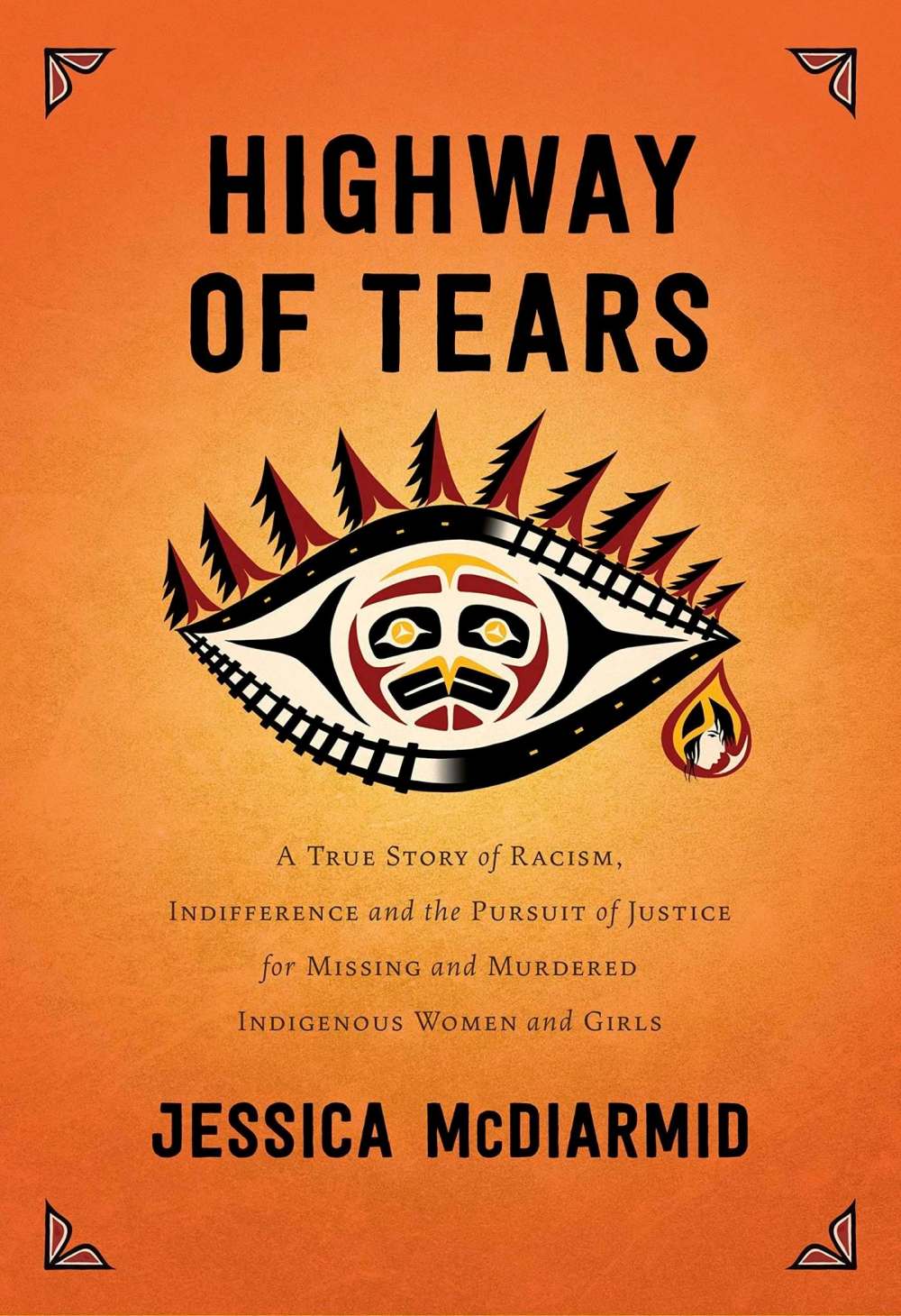
In this important book, Jessica McDiarmid offers a history of what she calls “Canada’s dirtiest secret” that is both methodical and moving, yet filled with a quiet determination for justice.

McDiarmid is a non-Indigenous journalist who spent two years reporting from Africa with the organization Journalists for Human Rights, and whose work has been regularly featured in the Toronto Star and by the Associated Press.
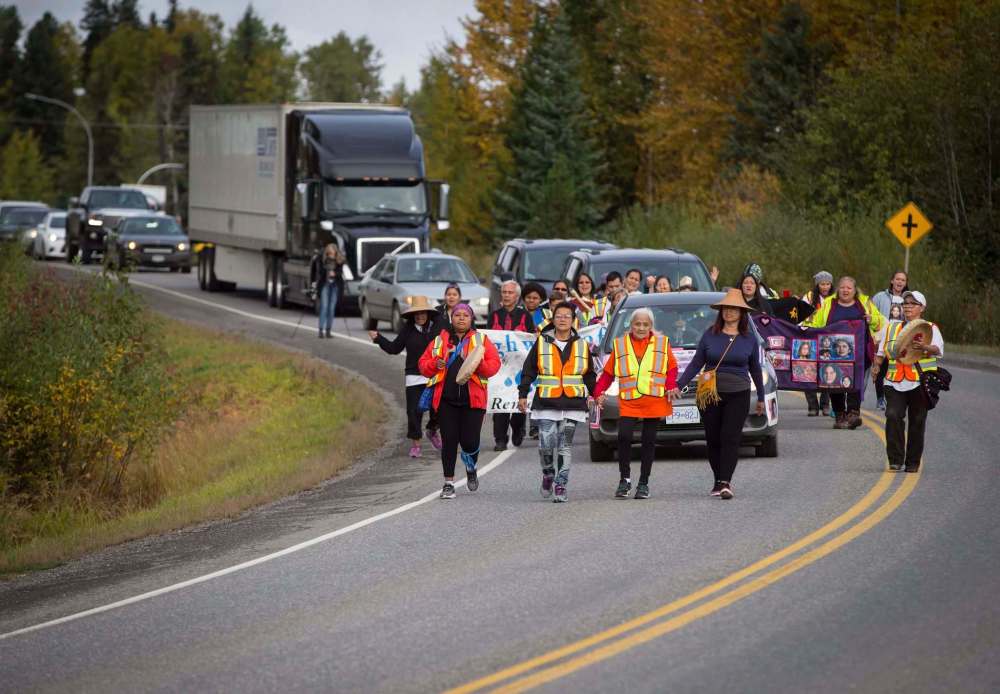
Photos by Darryl Dyck / The Canadian Press files
In this 2017 photo, a group of family members and advocates of missing and murdered Indigenous women and girls walk along the Highway of Tears near Moricetown, B.C.
Photos by Darryl Dyck / The Canadian Press files In this 2017 photo, a group of family members and advocates of missing and murdered Indigenous women and girls walk along the Highway of Tears near Moricetown, B.C.

Having grown up along the highway in Smithers, she writes poetically and lovingly of the region, while revealing the terrible losses concealed by its dark forests and lonely sections of road.

Through interviews with the families and friends of missing and murdered women and girls, as well as RCMP officers and others involved in investigating the cases, McDiarmid constructs a more-or-less chronological narrative of the deaths and disappearances.

Released mere months after the final report of the National Inquiry into Missing and Murdered Indigenous Women and Girls (but completed before the inquiry reached its conclusions), Highway of Tears recounts the years of losses, grief, protest and advocacy that finally resulted in the inquiry. Yet, where the inquiry sought to identify societal causes behind the horrific epidemic of violence, McDiarmid’s book is more intimate, telling the stories of the lives behind the statistics — the women and girls themselves, as well as their families and friends who worked so hard to find them and pursued justice in their cases.

While it is estimated that more than 40 women and girls have been killed or gone missing in northern B.C., here McDiarmid focuses on nine of the 18 lost along Highway 16: Tamara Chapman, Lana Derrick, Alishia Germaine, Nicole Hoar, Delphine Nikal, Aielah Singer, Roxanne Tiara, Alberta Williams and Ramona Wilson.

From each life lost or missing, a depressing pattern emerges — including a sluggish response from the police, who initially dismiss the concerns of loved ones — and low levels of public interest, especially when compared with cases involving non-Indigenous women (such as Hoar).
McDiarmid delves into the systemic failures and inertia that prevented more from being done to stop the tragedies from recurring, including the RCMP’s Project E-Pana, which failed to solve a single Highway of Tears case, to recommendations from a grassroots 2006 symposium to improve safety along the highway that were never implemented.

As she indicates in her epilogue, McDiarmid strived for a certain degree of journalistic objectivity in preparing the book. And to some extent, this serves her well in reconstructing the events and personalities involved. Yet as a non-Indigenous writer, she probably should have done more to situate herself in these stories and made more transparent how she came to be trusted to tell them.

As it is, McDiarmid appears in the narrative for the first time on page 243, participating in 2016’s Cleansing the Highway walk, with no real explanation as to how she was welcomed into this community of families and activists. By leaving herself out of the narrative, McDiarmid also refrains from discussing how she herself was affected by these tragedies, which lends the book a somewhat dispassionate tone at odds with its emotionally wrenching subject matter.

Still, McDiarmid has done great service to both the victims and their families in telling the stories of these lives and the pain left behind by their loss — stories every Canadian should know and remember.

Michael Dudley is a librarian at the University of Winnipeg.
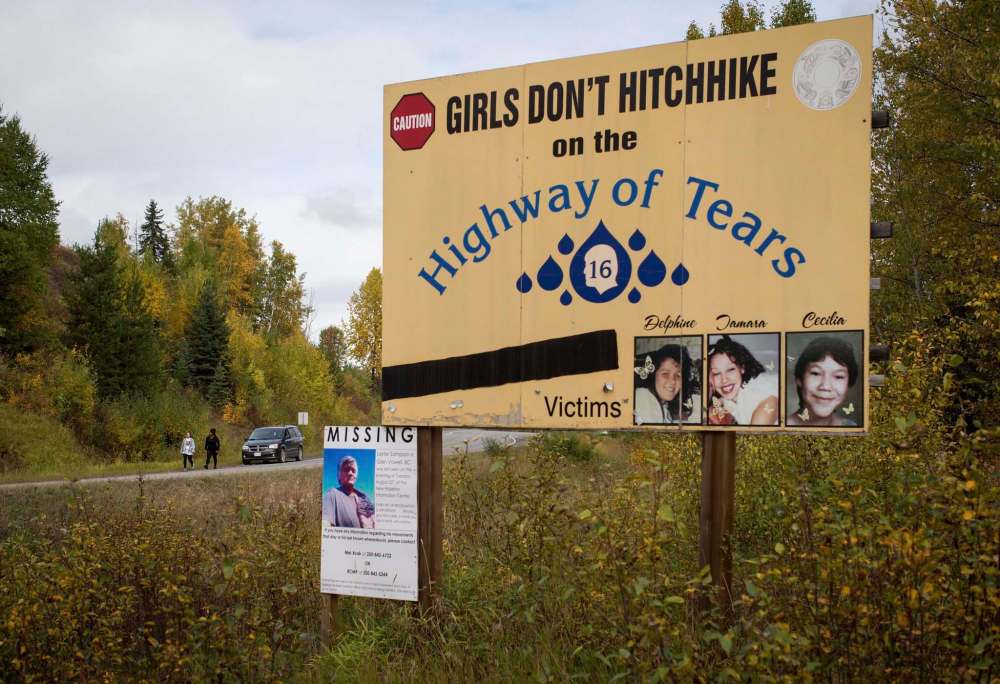
A pattern of sluggish police responses and low levels of public interest emerges in author’s exploration of nine of the 18 women who went missing along B.C.’s Highway 16.
Report Error Submit a Tip

More Stories

Puzzles Palace

1 minute read Monday, Jul. 13, 2026

To solve our puzzles, please subscribe with this special offer: |

Brown bombs as Bombers blasted

Taylor Allen 7 minute read Preview

Brown bombs as Bombers blasted

Taylor Allen 7 minute read Updated: Yesterday at 9:15 AM CDT

Winnipeg Blue Bombers quarterback Dru Brown took Friday night's ‘Christmas in July’ theme a little too seriously.

He wasn't carrying around a red sack, but he did gift-wrap four interceptions to the Calgary Stampeders in what ended up being a 52-30 loss for the Blue and Gold in front of a sold-out crowd.

The result dropped the Bombers, now 1-3 at home this season, to 4-3. Calgary improved to 3-4 and now have a chance to win the tiebreaker when the two sides meet for a final time on Oct. 10 at Princess Auto Stadium.

“Yeah, not nearly good enough...You certainly don't want to go get into a track meet against a good offence like that,” said Bombers head coach Mike O’Shea.

Read
Updated: Yesterday at 9:15 AM CDT

Bombers’ offence, defence, and special teams fail to show up against Stampeders

Taylor Allen 6 minute read Preview

Bombers’ offence, defence, and special teams fail to show up against Stampeders

Taylor Allen 6 minute read Yesterday at 3:19 PM CDT

The Winnipeg Blue Bombers constantly preach the importance of playing three-phase football.

On Friday night, they went 0-for-3.

Their offence, defence, and special teams all played a significant role in losing 52-30 to the visiting Calgary Stampeders.

The team that erased a 17-point deficit to beat Ottawa last Sunday was nowhere to be found.

Read
Yesterday at 3:19 PM CDT

A 39-year-old woman has been charged after police say a retail theft attempt led to a knife being used against a security guard at a store on Portage Avenue.

The Winnipeg Police Service said Central District General Patrol officers arrested the woman at about 5:30 p.m. on Thursday in connection with a robbery at a retail store in the 300 block of Portage Avenue.

Police said the woman entered the store shortly before 2 p.m. and attempted to steal merchandise before being confronted by store security. Police said the suspect then brandished a knife and assaulted a security guard.

Security was able to gain control of the suspect, and police were contacted.

Dropping the gloves to make the point

Editorial 4 minute read Preview

Dropping the gloves to make the point

Editorial 4 minute read Yesterday at 2:01 AM CDT

In hockey parlance, it’s called “shedding,” the moment in a game when you are forced to deal with an instigator by dropping (shedding) your gloves for an all-out brawl.

That term is a deep cut from hockey culture that Prime Minister Mark Carney — he of the “elbows up” phenomenon — may need to not only embrace but practise more often in the face of yet another round of overly punitive tariffs imposed by United States President Donald Trump.

To be fair, under Carney’s leadership, Canada has not exactly rolled over in the face of Trump’s bully-boy tactics.

Yes, Canada has made concessions to placate Trump to further a new continental trade agreement: investing more money to combat the cross-border flow of fentanyl that isn’t actually happening, stalling efforts to tax streaming companies as most European countries already do, and — most recently — giving Trump a cut of profits from the Canadian-made, Canadian-paid Gordie Howe bridge between Windsor and Detroit.

Read
Yesterday at 2:01 AM CDT

Hospital window smasher gets 90 days in jail

Tessa Adamski 4 minute read Yesterday at 2:01 AM CDT

BRANDON — A 35-year-old man from The Pas was sentenced to 90 days in jail after he admitted to smashing a garage window in the ambulance bay of the Brandon hospital while intoxicated.

James Constant pleaded guilty in Brandon provincial court on Thursday to mischief under $5,000 and breaching a probation order that prohibited him from possessing weapons. Two additional charges, involving failing to comply with a probation order and possessing a dangerous weapon, were stayed.

On July 15, Constant was taken to the Brandon Regional Health Centre by ambulance after he overdosed and became “aggressive” and “unco-operative” with paramedics, says an agreed statement of facts read in court by Crown attorney Rich Lonstrup.

“He took a piece of wood and smashed the garage-door window within the ambulance bay,” Lonstrup said.