

Complications abound for canola
Delayed harvest means delayed sales as farmers count losses
Advertisement
Read this article for free:
or
Already have an account? Log in here »
To continue reading, please subscribe:

Digital Subscription
One year of digital access for only $205*
- Enjoy unlimited reading on winnipegfreepress.com
- Read the E-Edition, our digital replica newspaper
- Access News Break, our award-winning app
- Play interactive puzzles
*First annual payment billed as $205.00 + GST for one year. This annual subscription will automatically renew at $233.00 + GST every 52 weeks (10% off the regular annual price of $259.35). Offer available to new and qualified returning subscribers only. Cancel any time.
To continue reading, please subscribe:
Add Free Press access to your Brandon Sun subscription for only an additional
$1 for the first 4 weeks*
- Enjoy unlimited reading on winnipegfreepress.com
- Read the E-Edition, our digital replica newspaper
- Access News Break, our award-winning app
- Play interactive puzzles
*Your next Brandon Sun subscription payment will increase by $1.00 and you will be charged $17.95 plus GST for four weeks. After four weeks, your payment will increase to $24.95 plus GST every four weeks.
Read unlimited articles for free today:
or
Already have an account? Log in here »
Hey there, time traveller!
This article was published 05/10/2019 (2562 days ago), so information in it may no longer be current.
Canola prices finally began showing some energy this week, after languishing for months under the cloud of China’s snub.
The trouble is, most of this year’s canola crop is still in the field. Heavy rains, snow and cool temperatures across the Prairies have put harvest on hold.
The fact that the markets are finally noticing this year’s crop is in trouble is cold comfort for farmers who see the quality and quantity deteriorating by the day.
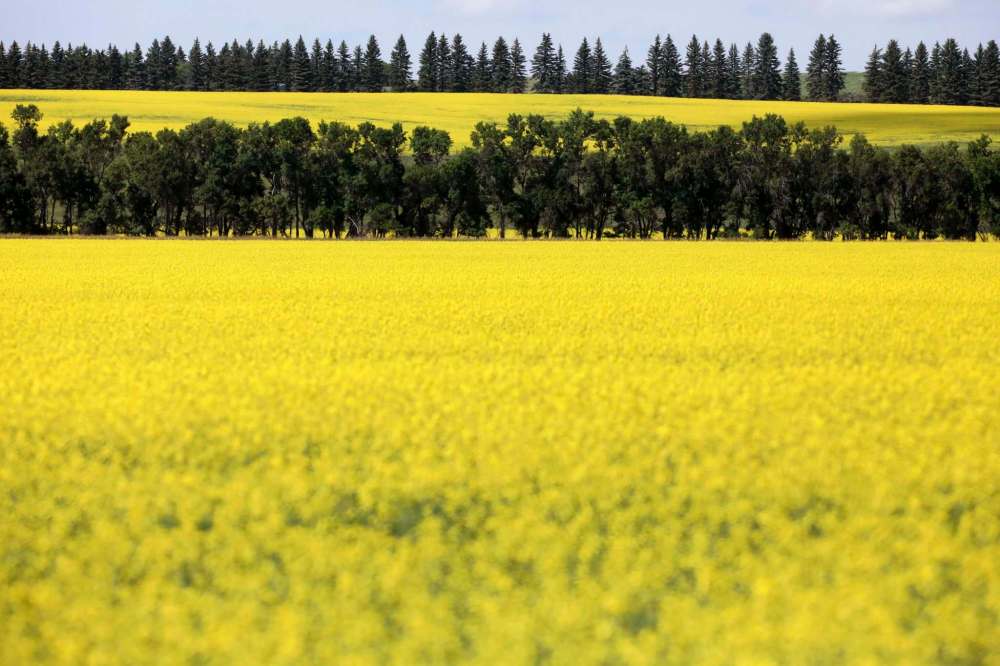
Manitoba’s harvest was the most advanced before the rains came, but the most recent provincial crop report says one-third of the planted acres are still in the field.
While cereals have mostly been harvested, some of the higher-value crops such as canola, dry beans and soybeans are well behind the three-year average.
The Saskatchewan weekly crop report says more than half of the crop remains unharvested, well behind the normal. In Alberta, harvest was only about one-third completed before widespread rain and snow in late September, pushing the pause button on harvest once again.
Much of that crop is lying in swaths, which makes it more prone to quality losses from moisture, sprouting, disease and feasting by migrating flocks of birds.
The losses and costs for farmers under these conditions accumulate quickly.
It goes without saying that their yields, which weren’t great to begin with after a droughty summer, will be even lower than anticipated.
The effect of quality losses is multi-faceted. Not only is it worth less, once it is harvested, it needs to be stored carefully either in aeration bins or dried so that it doesn’t rot or overheat. Running grain through drying bins is labour-intensive in addition to the cost of propane.
Delayed harvest means delayed sales, which increases the cost of interest on operating loans. Weather-damaged grain is harder to market because grades and conditions are variable.
Grain buyers have the ability to blend within their facilities, which means they can take in a certain amount of off-grade grain and blend it with higher-quality grains within minimum standards. But that’s a tricky business, too.
Traditionally, off-grade grains find their way into livestock feed. But even small amounts of fungus diseases such as ergot or fusarium in grains can cause heaps of trouble for livestock feeders, ranging from animals going off their feed or even dying. So increased testing is required.
There is a human cost to a harvest like this one, too. Mental-health workers worry that the fiercely independent culture associated with farming, combined with the fact that many farmers work alone, makes them vulnerable to the effects of stress, anxiety and depression.
But as frustrating as this harvest season has become, it’s not all doom and gloom. The fact that this year’s harvest might be a smaller than anticipated is compensated in part by the fact that farmers were forced to carry over a record volume of canola from last year.
The Statistics Canada stocks report in early September showed a record carryover of canola stocks, up 55 per cent over the previous year.
The last time farmers had a big carryover of canola was in 2014, after transportation bottlenecks during the winter of 2013-14 slowed exports to a crawl.

Chances are, those carryover stocks will now move at a better price than the outlooks earlier this year suggested.
Even though harvest this year is proving to be a tough grind, most farmers are reluctant to complain. Perhaps the biggest plus of this cold and rainy September has been the fact that precipitation and soil moisture conditions have been restored to normal ranges in most regions.
Crops in many areas of the Prairies have been squeezing by with the help of timely rains over the past three growing seasons, pushing out some remarkable yields despite a general moisture deficit.
The recharging effect of a soggy September sets the stage for next year. This is still, after all, next-year country.
Laura Rance is vice-president of content for Glacier FarmMedia. She can be reached at lrance@farmmedia.com.