Canadian author in for the long haul
Winning Giller Prize put Sean Michaels on the map
Advertisement
Read this article for free:
or
Already have an account? Log in here »
To continue reading, please subscribe:

Digital Subscription
One year of digital access for only $205*
- Enjoy unlimited reading on winnipegfreepress.com
- Read the E-Edition, our digital replica newspaper
- Access News Break, our award-winning app
- Play interactive puzzles
*First annual payment billed as $205.00 + GST for one year. This annual subscription will automatically renew at $233.00 + GST every 52 weeks (10% off the regular annual price of $259.35). Offer available to new and qualified returning subscribers only. Cancel any time.
To continue reading, please subscribe:
Add Free Press access to your Brandon Sun subscription for only an additional
$1 for the first 4 weeks*
- Enjoy unlimited reading on winnipegfreepress.com
- Read the E-Edition, our digital replica newspaper
- Access News Break, our award-winning app
- Play interactive puzzles
*Your next Brandon Sun subscription payment will increase by $1.00 and you will be charged $17.95 plus GST for four weeks. After four weeks, your payment will increase to $24.95 plus GST every four weeks.
Read unlimited articles for free today:
or
Already have an account? Log in here »
Hey there, time traveller!
This article was published 28/10/2019 (2538 days ago), so information in it may no longer be current.
In 2014, the Scotiabank Giller Prize doubled the amount of money awarded to the winner from $50,000 to $100,000, making it the most lucrative literary prize awarded to a fiction writer in Canada.
That November, Sean Michaels’ life changed forever. At 32 years of age, Michaels was awarded the Giller Prize for his debut novel Us Conductors, a fictionalized account of Russian scientist/spy Lev Termen — who also invented the musical instrument called the theremin.

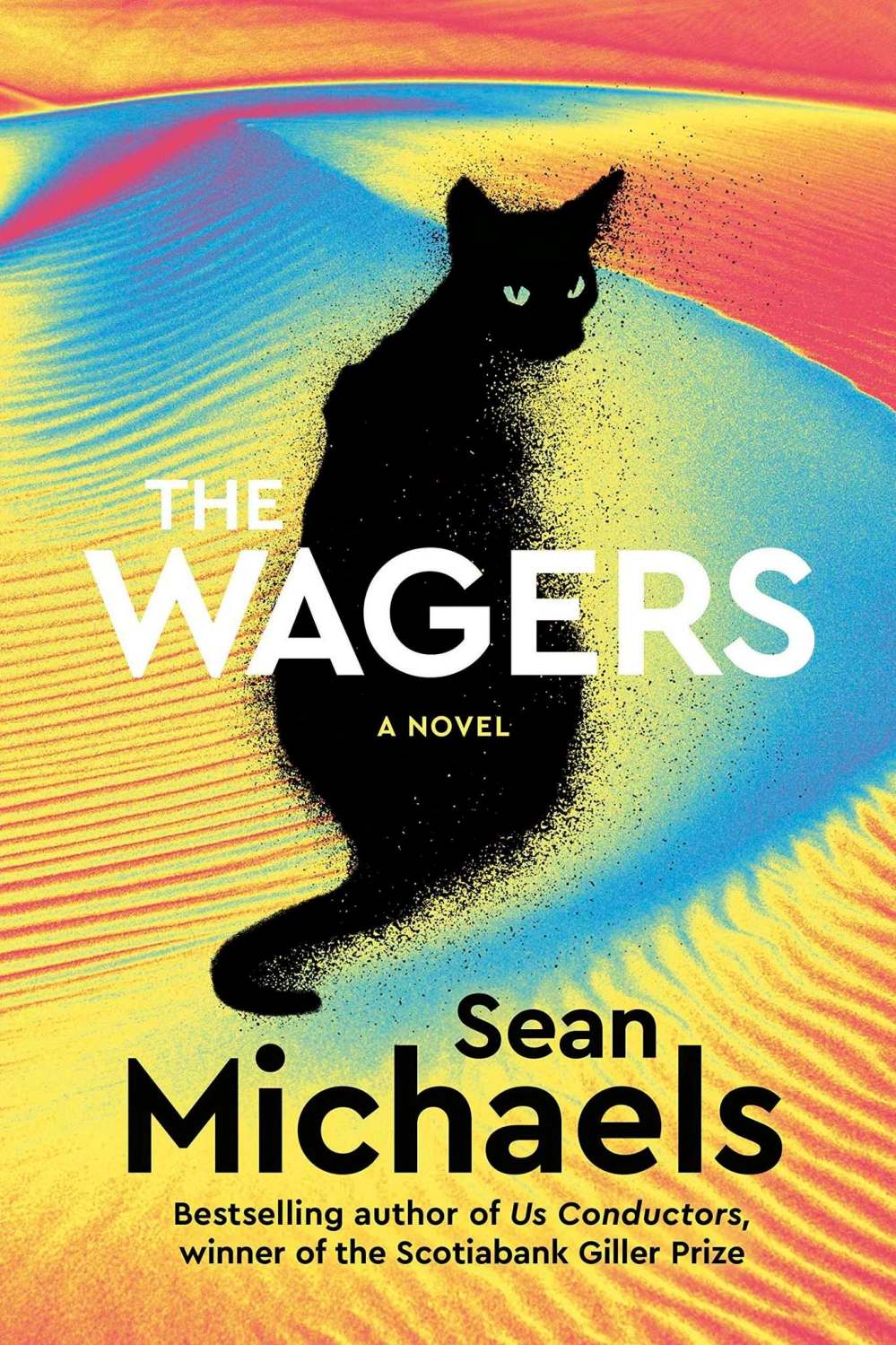
By the time Michaels accepted his award at the awards gala in Toronto that fall, he was already at work on his sophomore novel The Wagers, published in late September of this year by Random House Canada. Michaels is in Winnipeg tonight to launch the book at McNally Robinson Booksellers’ Grant Park location, where he’ll be joined in conversation with Free Press writer Jill Wilson.
The win changed both the scope of his book as well as the way he thought about himself as a writer.
“I really had to centre myself, try to think about and realize that I want to be a writer for a long time,” Michaels explains by phone from a Montreal café in advance of his Winnipeg launch. “I want to write a lot of books… I thought about the careers of the writers I really loved, and challenged myself to experiment with new ways of writing, and to start becoming the author I want to be — not just the writer of one book.”
The Wagers follows protagonist Theo Potiris from stocking shelves in his family’s grocery store in Michaels’ home city of Montreal (although the city isn’t named in the book) to dabbling in standup comedy, to a job as an analyst of sports and other events for a betting firm called The Rabbit’s Foot and finally to joining a group of thieves who steal luck. In The Wagers, luck (or “Luck,” as it comes to be known) is a physical thing, a sand-like substance scattered around the world that the thieves in the No Name Gang aim to steal.
“Life is full of random happenstance: accidents, tragedies, miracles thread their way through all of our lives; we imbue each of these things so much significance, and it can be really distracting and disorienting,” Michaels says. “Something like the Giller risked distorting the view of who I was, why I was doing the work I was doing. So you see Theo and other characters in the book trying to reckon with what they’re doing in spite of, or because of, the luck that comes their way.”
For The Wagers, Michaels researched all manner of predictive odds, remarkable occurrences of luck and more. “I went to a hockey analytics conference in Ottawa, I read a bunch of books, became fascinated by a professional gambler in Australia named David Walsh, who made his fortune with this kind of math, and then his great passion became art,” Michaels explains. “Walsh made his money by outsmarting luck.”
“I thought about the careers of the writers I really loved, and challenged myself to experiment with new ways of writing, and to start becoming the author I want to be– not just the writer of one book.” – author Sean Michaels
Rather than putting the Giller win entirely out of mind to focus on writing, in The Wagers Michaels tackles his own experiences with luck as an author head-on. One of the characters in The Wagers with a stash of Luck is an author whose (fictional) book The Labrador Sea wins the prestigious (and also fictional) Tim Hortons Prize in Canada.
“I was interested in having a conversation with myself and with the characters about the kind of questions around stuff like that — about deserving, about why I’m doing this. Am I a writer with the goal of winning awards and being ‘successful,’ or do I like the work of writing? It’s a little bit of a conversation I had in the book — hopefully in a way that doesn’t feel pedantic or preachy.”
The Wagers paints a loving and vivid portrait of Montreal, which Michaels found great joy in writing.
“It was really fun to riff on and wink to the things I love about the city I live in,” he says. “But it’s also really reconnected me with what I love about my city. I didn’t want to write a book that was technically, literally about Montreal, but rather one that has the characteristics that made me love Montreal the way I do.”
And while Michaels’ extensive travels in support of Us Conductors never brought him to Winnipeg, his love for the art created here holds a particular attraction, one that recalls his feelings about his home city.
“I feel like Winnipeg shares some of those qualities that Montreal does: it’s not a city that’s dressed up to the nines, a city of the future,” he explains. “Rather, it’s a city that’s stubbornly, shabbily magical and is able to mix this sense of things that are slowly falling apart with a sense of imagination.”
As for his next big writing project, Michaels isn’t sure where it will take him. “I haven’t started my new book yet — maybe I’ll find what I’m looking for in Winnipeg.”
books@freepress.mb.ca