Bringing virtual reality to the stage
Dance goes digital in innovative PTE Leap Series production

Advertisement
Read this article for free:
or
Already have an account? Log in here »
To continue reading, please subscribe:

Digital Subscription
One year of digital access for only $205*
- Enjoy unlimited reading on winnipegfreepress.com
- Read the E-Edition, our digital replica newspaper
- Access News Break, our award-winning app
- Play interactive puzzles
*First annual payment billed as $205.00 + GST for one year. This annual subscription will automatically renew at $233.00 + GST every 52 weeks (10% off the regular annual price of $259.35). Offer available to new and qualified returning subscribers only. Cancel any time.
To continue reading, please subscribe:
Add Free Press access to your Brandon Sun subscription for only an additional
$1 for the first 4 weeks*
- Enjoy unlimited reading on winnipegfreepress.com
- Read the E-Edition, our digital replica newspaper
- Access News Break, our award-winning app
- Play interactive puzzles
*Your next Brandon Sun subscription payment will increase by $1.00 and you will be charged $17.95 plus GST for four weeks. After four weeks, your payment will increase to $24.95 plus GST every four weeks.
Read unlimited articles for free today:
or
Already have an account? Log in here »
Hey there, time traveller!
This article was published 30/10/2019 (2485 days ago), so information in it may no longer be current.
As a concept, virtual reality is nothing new. Its roots may extend as far back as 1932, the year Aldous Huxley’s dystopian novel Brave New World introduced readers to “the feelies,” a movie experience that added the sense of touch to the already intoxicating cinema realm of sight and sound.
As we get ever closer to realizing Huxley’s feelies, disturbing questions remain about how an immersive media can be transformative for its users, and not necessarily in a positive way.
It’s an inquiry posed by Winnipeg intermedia artist Freya Björg Olafson in MÆ Motion Aftereffect at Prairie Theatre Exchange, a show in PTE’s Leap Series lineup devoted to smaller experimental pieces.
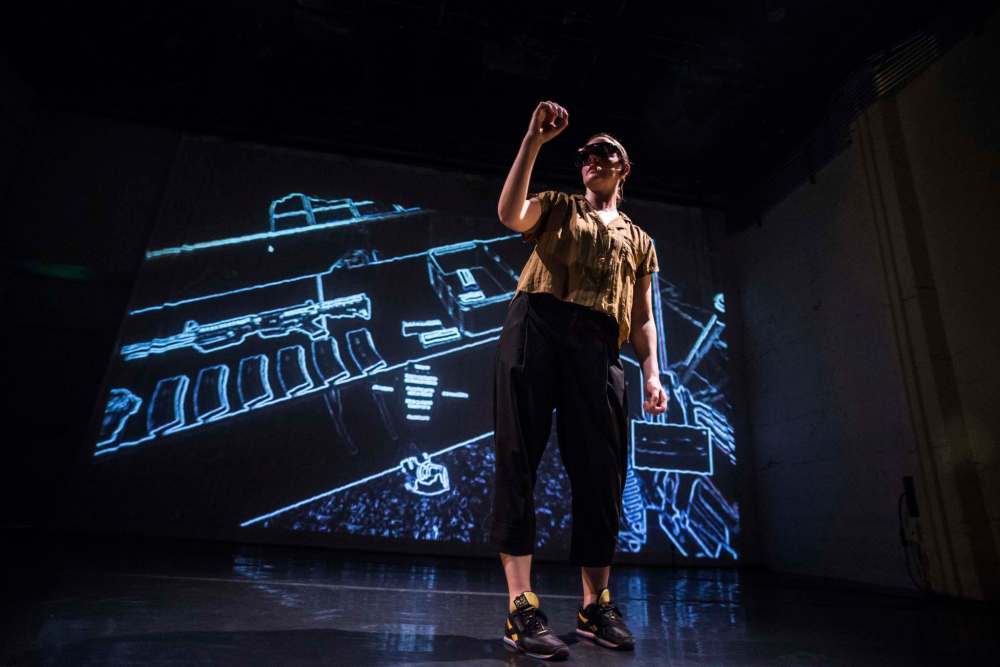
Olafson is a dancer who spent six years in the professional program of the Royal Winnipeg Ballet and earning a degree from the School of Contemporary Dancers in conjunction with the University of Winnipeg. But her expertise extends beyond, into intermedia, encompassing film, video and audio.
This project, employing all her talents, has been more than two years in the making, beginning with a residency in San Francisco at CounterPulse, a space for creating “experimental and interdisciplinary dance and performance,” where Olafson’s milieu dovetailed nicely with the institution.
“I did six shows in San Francisco and it was like a 25-minute version of this work,” Olafson says. In the intervening two years — which also saw her join the dance department at York University in Toronto as an assistant professor — Olafson extended the performance to a running time of an hour.
“This is a première of the full-length version of the work,” she says.
The images from the show, in which Olafson is seen in front of computer-generated avatars, suggest this may be a motion-capture dance performance. In fact, much of the animated content is stuff Olafson found online “of people testing out their home motion-capture systems so that they would be using ready-made avatars that they found, or that was part of software that they were using to create their own animation.”
It serves to reflect Olafson’s fascination with the virtual-reality experience. “It’s basically like strapping a TV to your head so when you tip your head, the TV will tip as well,” she says, adding the sense of disorientation it causes is exciting and delightful, yet confusing and destabilizing.
“So that got me to start thinking about VR, that sense of manipulation that happens,” she says. “When you put on a VR headset, I know I’m standing on the ground but I’m also in an environment where I’m walking over a plank between two buildings.
“The power of sight just overrides so many of our other senses,” she says. “So I got really interested in thinking about what is it doing to our bodies? What is it doing to our ways of thinking?
“The European Union hired two philosophers to develop a code of ethics for people who are developing content in VR because it is a very immersive and manipulative tool that is different from these external things that we’ve had, like televisions and cellphones,” she says.
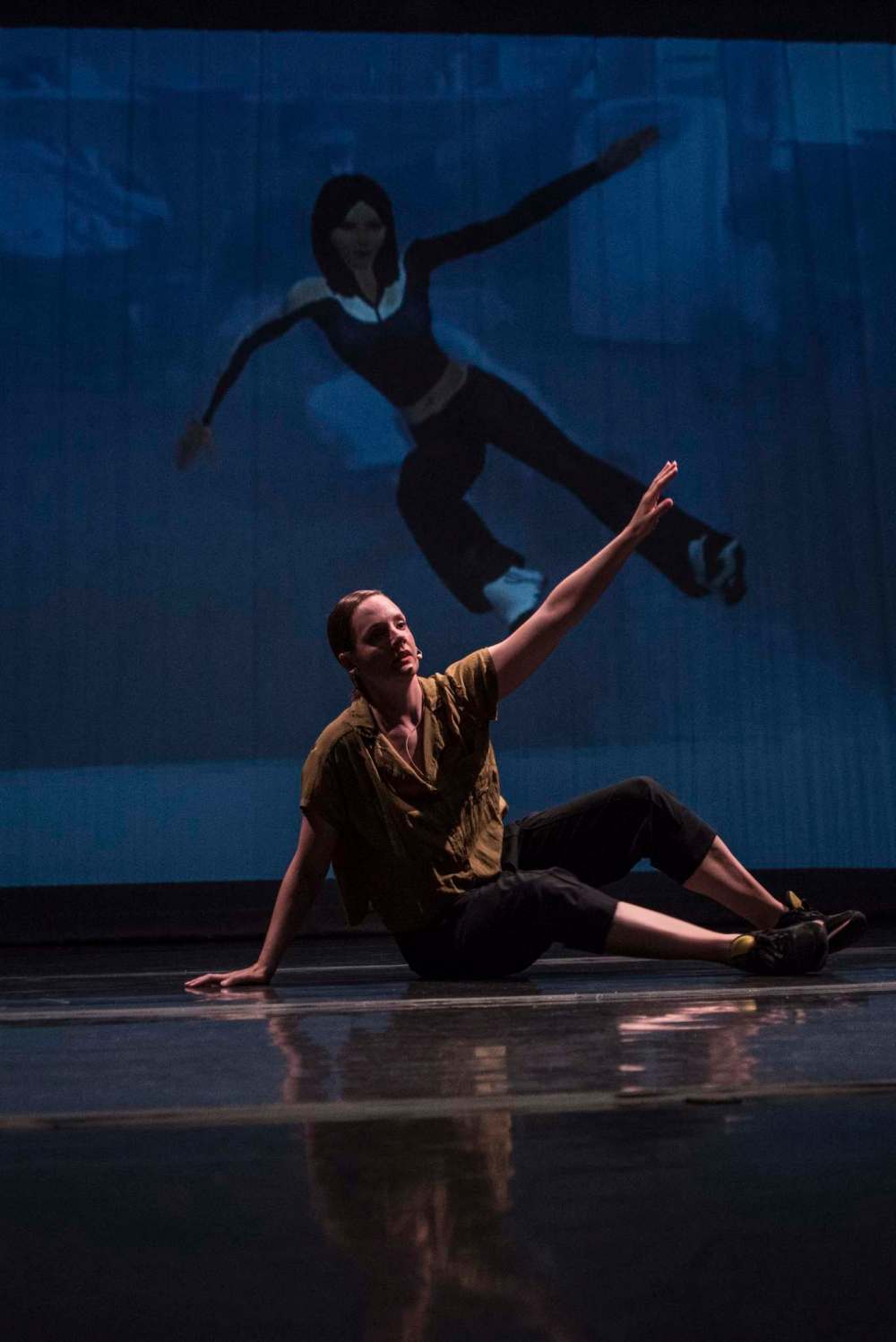
Olafson’s show “addresses aspects of pornography and violence in some of the industries that have pushed the development of these tools.

“As well, I think I’m pulling between embracing its seductive qualities, its playful qualities, its potential for exploration outside of our day-to-day understanding of ourselves and our world.
“And there’s a lot of beauty in that,” she says. “But it also comes with negative effects what industries are doing with it. It can move into changing your experience of the physical world.
“So I’m hoping that the work, rather than me giving a thesis statement on what I think of the technology, just provokes reflection for those who have engaged with it,” she says.
randall.king@freepress.mb.ca
Twitter: @FreepKing
Our newsroom depends on a growing audience of readers to power our journalism. If you are not a paid reader, please consider becoming a subscriber.
Our newsroom depends on its audience of readers to power our journalism. Thank you for your support.
Theatre Preview
MÆ Motion Aftereffect
By Freya Björg Olafson
● Prairie Theatre Exchange
● To Sunday, Nov. 3
● Tickets: $25 at pte.mb.ca
Our newsroom depends on a growing audience of readers to power our journalism. If you are not a paid reader, please consider becoming a subscriber.
Our newsroom depends on its audience of readers to power our journalism. Thank you for your support.
Advertisement Advertise With Us
Advertisement Advertise With Us