Current cancer treatment system flawed
Advertisement
Read this article for free:
or
Already have an account? Log in here »
To continue reading, please subscribe:

Digital Subscription
One year of digital access for only $205*
- Enjoy unlimited reading on winnipegfreepress.com
- Read the E-Edition, our digital replica newspaper
- Access News Break, our award-winning app
- Play interactive puzzles
*First annual payment billed as $205.00 + GST for one year. This annual subscription will automatically renew at $233.00 + GST every 52 weeks (10% off the regular annual price of $259.35). Offer available to new and qualified returning subscribers only. Cancel any time.
To continue reading, please subscribe:
Add Free Press access to your Brandon Sun subscription for only an additional
$1 for the first 4 weeks*
- Enjoy unlimited reading on winnipegfreepress.com
- Read the E-Edition, our digital replica newspaper
- Access News Break, our award-winning app
- Play interactive puzzles
*Your next Brandon Sun subscription payment will increase by $1.00 and you will be charged $17.95 plus GST for four weeks. After four weeks, your payment will increase to $24.95 plus GST every four weeks.
Read unlimited articles for free today:
or
Already have an account? Log in here »
Hey there, time traveller!
This article was published 16/11/2019 (2495 days ago), so information in it may no longer be current.
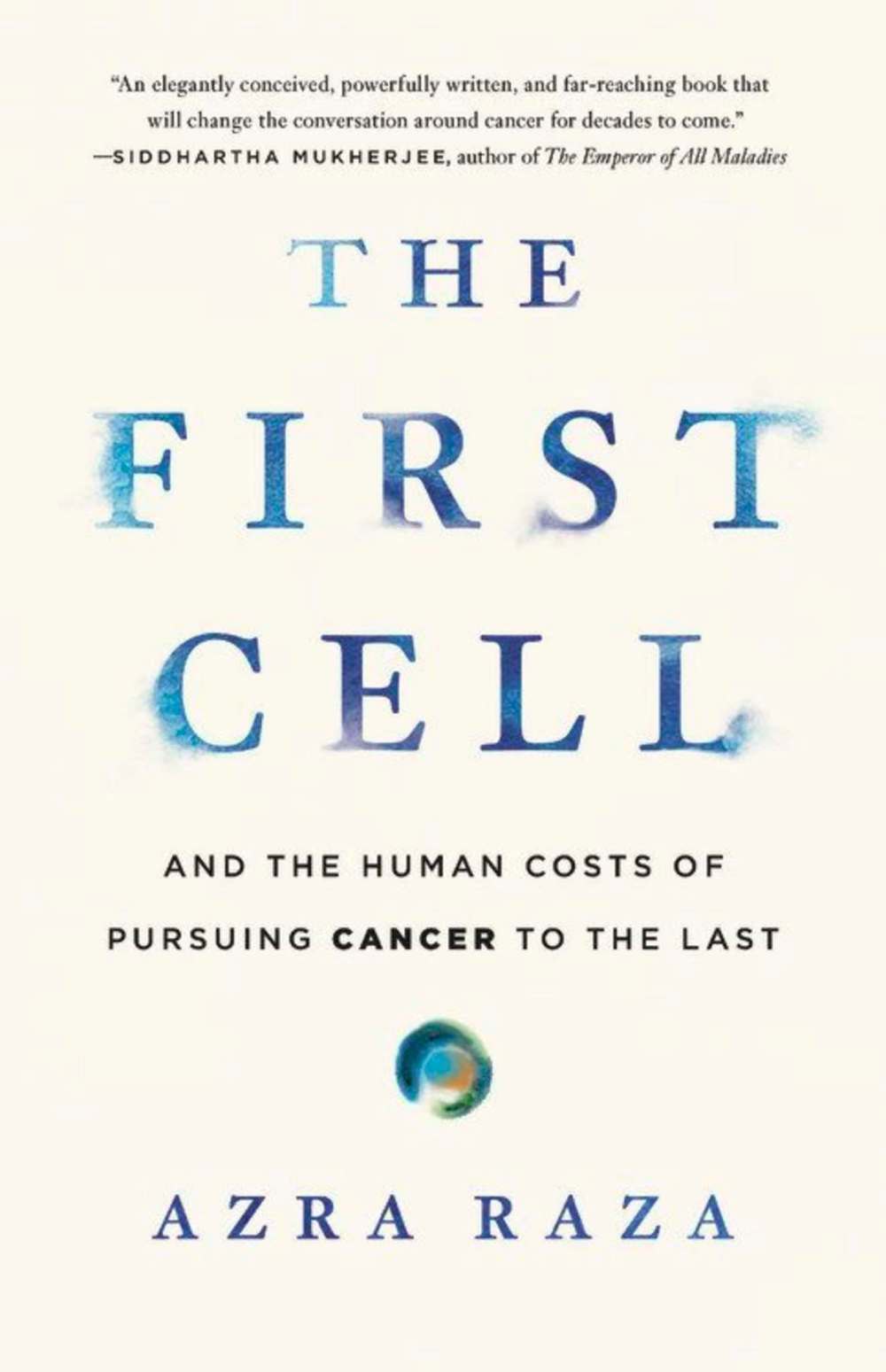
Dr. Azra Raza believes cancer research and treatment is on the wrong track.
In The First Cell Raza, a professor at Columbia University and oncologist for over 30 years, argues that most drugs being developed and approved by the U.S. Food and Drug Administration (FDA) end up buying patients only a few months of life at great cost and suffering. Meanwhile, research into the bio-markers of early stage cancers and pre-cancers is starved for funds.
Raza acknowledges that new immunotherapy has been successful in treating some childhood leukemia, but says that cancer survival rates for adults, which currently stand at 68 per cent, have improved largely owing to a drop in smoking and widespread screening for cervical and colorectal cancer.
Most other cancers are still being detected too late for successful treatment, despite billions being spent on drug development and testing.
Strangely, Raza does not acknowledge the breakthrough in the treatment of estrogen-dependent breast cancer. But for the most part, her case for what is wrong with the current system is made passionately and convincingly using a combination of statistics, case histories of cancer patients, and bits of applicable poetry and philosophy.
Since roughly half of men and one-third of women will be diagnosed with cancer at some point in their lives, The First Cell is an important book. Presently, approximately 70 per cent of American research funding goes toward studies on treating advanced malignancies, leading to drug trials that have a failure rate of about 90 per cent. To be approved by the FDA, a drug trial needs only to improve survival rates by a matter of months in five to seven per cent of patients.
Raza maintains that the current system fails patients for several reasons. Firstly, Raza doubts that pretrial testing on mice is useful in studying late-stage cancers which have undergone multiple mutations — yet FDA protocols require such tests. Secondly, she believes that trials should analyze tissue samples of the patients who do not respond to the drug for biomarkers, so that in the future such patients would not be put on a drug that causes them suffering for no benefit.
Although she never directly skewers the pharmaceutical industry, it is clear that it benefits from the protocols in place. Analysis of tissue samples from patients who did not respond to a drug would increase research costs, while limiting the market for that drug in the future. At the moment, the financial costs of cancer drugs to patients are enormous; one study has shown that two years after diagnosis, 42.4 per cent of American cancer patients have used up their entire life’s assets to pay for treatment, and as a result, are in debt.
In discussing patients’ current options, Raza is concerned that too often frank conversations about treatment options versus palliative care do not occur, and that the popular metaphor of “battling cancer” is part of the problem. Her case histories — including that of her husband, who died of lymphoma in 2002 — show that there are no easy answers here. Is it better to die from the disease or (perhaps) buy a few months and die of the treatment? Individual patients will respond differently. Still, Raza believes that at some point doctors need to make sure that conversation takes place.
Unlike Siddhartha Mukherjee’s 2010 book The Emperor of All Maladies, which presented a history of cancer and its treatment at arm’s length, The First Cell moves back and forth from the scholarly realm to the personal. Raza includes both her own research and experiences and those of others, sometimes written in their own words. It is an unusual book in this respect, but manages to make a powerful point.
Faith Johnston is a Winnipeg writer.