Artist explores spiritual dimensions
'Icons help direct your attention to things beyond this world'

Advertisement
Read this article for free:
or
Already have an account? Log in here »
To continue reading, please subscribe:

Digital Subscription
One year of digital access for only $205*
- Enjoy unlimited reading on winnipegfreepress.com
- Read the E-Edition, our digital replica newspaper
- Access News Break, our award-winning app
- Play interactive puzzles
*First annual payment billed as $205.00 + GST for one year. This annual subscription will automatically renew at $233.00 + GST every 52 weeks (10% off the regular annual price of $259.35). Offer available to new and qualified returning subscribers only. Cancel any time.
To continue reading, please subscribe:
Add Free Press access to your Brandon Sun subscription for only an additional
$1 for the first 4 weeks*
- Enjoy unlimited reading on winnipegfreepress.com
- Read the E-Edition, our digital replica newspaper
- Access News Break, our award-winning app
- Play interactive puzzles
*Your next Brandon Sun subscription payment will increase by $1.00 and you will be charged $17.95 plus GST for four weeks. After four weeks, your payment will increase to $24.95 plus GST every four weeks.
Read unlimited articles for free today:
or
Already have an account? Log in here »
Hey there, time traveller!
This article was published 02/12/2019 (2472 days ago), so information in it may no longer be current.
In many cultures, art and spirituality are intertwined. For centuries, much of western art was devoted to the expression of the Christian faith.
Since the rise of secularism in the 19th century, however, and especially following the development of modern art, the predominance of religious subject matter has receded.
So what does it mean to make faith-based work within the contemporary art world?
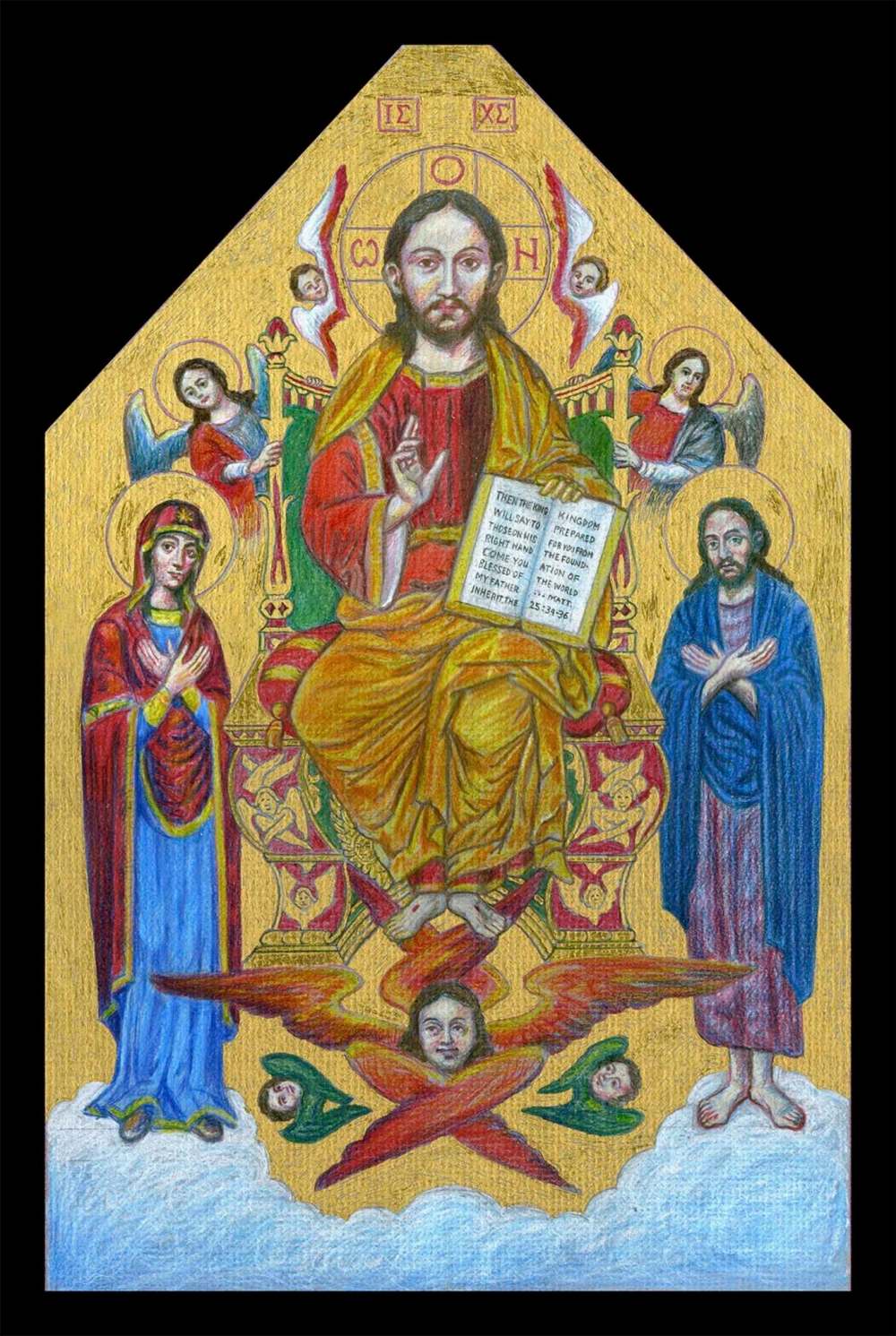
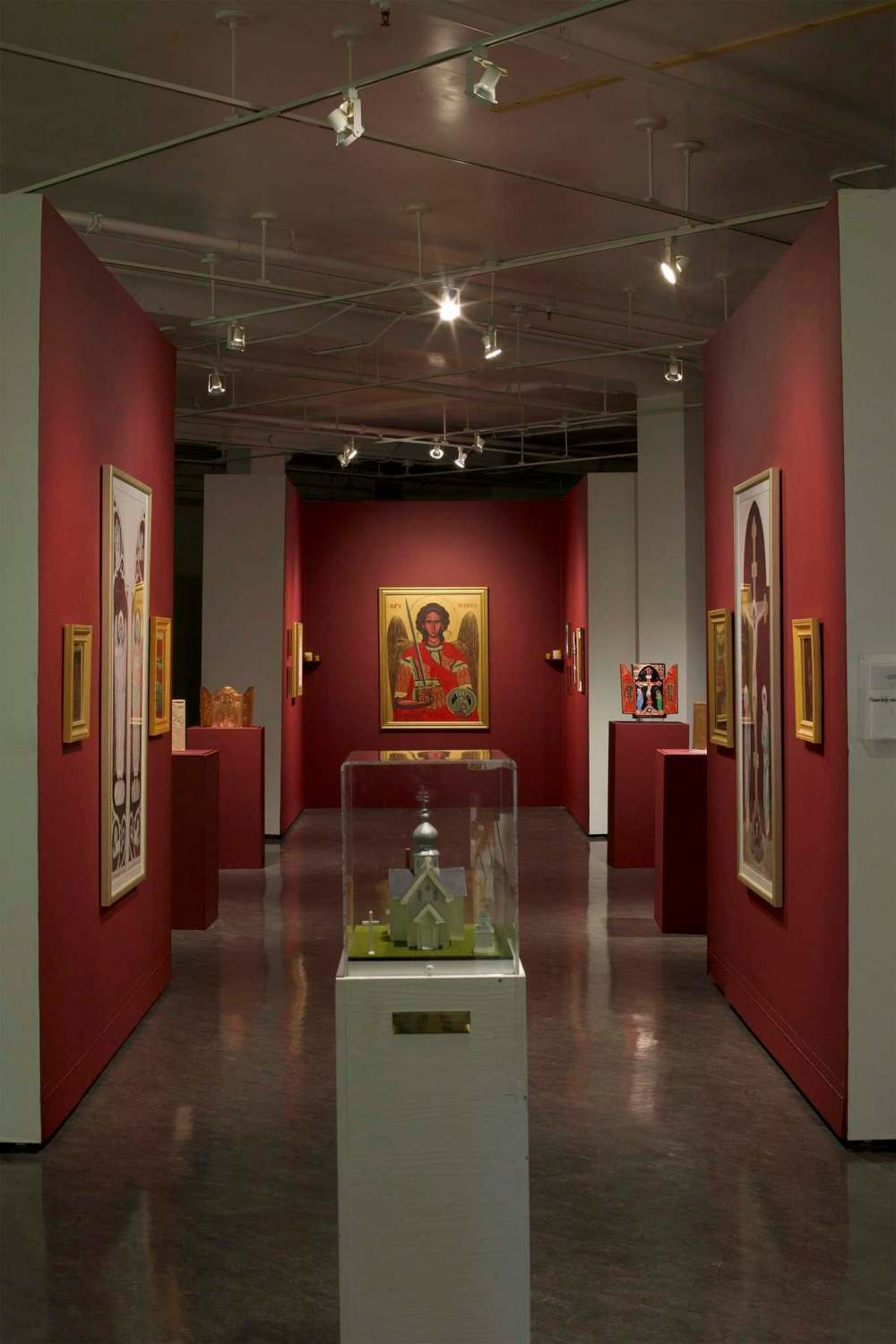
At this month’s First Fridays’ Art Talk/Art Walk, we’ll speak with Winnipeg artist and art educator Michael Boss, whose work has explored the spiritual dimensions of everything from Christian saints to ordinary household objects. Boss also creates icons, drawing on traditional sources but using modern media such as acrylic paints, coloured pencils and gold felt markers.
Boss’s Wolseley home is filled with examples of icon art. “We have whole icon rooms,” Boss says.
“I’ve gotten a lot (of icons) through flea markets. Some are ones my parents and grandparents had, and some are ones I made myself. Some have been given as gifts.”
Boss’s own religious background is rich and complex. Ukrainian Catholic through his father’s side, with Mennonite heritage on his mother’s side, he has also worshipped in the Anglican Church.
“There are aspects that are at odds with each other,” he says, especially when it comes to ideas about images and image-making.
Though he grew up surrounded by examples of religious art, he found this wasn’t really part of the art school experience.
“Art school was generally atheistic, and I struggled with this,” he says. “Later, in grad school, I was trying to represent the spiritual without being overt, trying to imbue everyday objects with the suggestion of a presence. That’s about as far as I got, and it wasn’t until years later that I started doing icons.
“I really came to producing icons about 20 years ago, with a rekindling interest in family history and cultural history that came about when my mother died, and I inherited all these books and objects and notes,” Boss says.

“My daughter was young then, and I started thinking about legacies and where you fit in the continuum and wanting to pass on values that were handed to you and you think are worthy of being passed down.”
There was another motivation. “I was basically sick of the art world at that point,” Boss says with a laugh. “I said, enough of this striving to be different and original and new, and I went back to something that was traditional and kind of anonymous.”
Since then, he’s made more than 50 icons, some close copies of traditional images, some with more modern aspects.
It’s important to point out that icons aren’t just representations of religious figures. “It’s not like a poster of your favourite team,” Boss says. “It’s really a way of focusing the viewer or participant on the religious figure — Jesus or the Trinity or St. Mary or various other people who have become classified as saints.
“Icons help direct your attention to things beyond this world,” Boss says.
The process of making icons is also meditative.
“The making is an act of devotion, because you get wrapped up in what you’re copying and what it represents,” Boss says. “I often listen to liturgical music.”
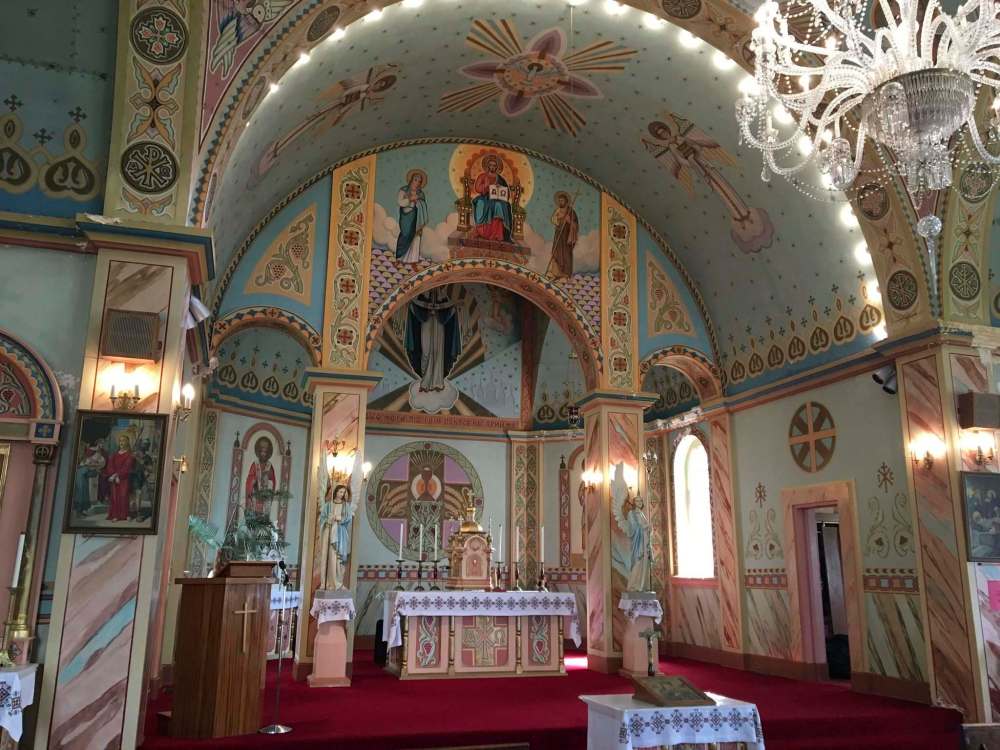
Boss wants to be clear he doesn’t adhere to the traditional rules governing the creation of icons, which is a strict devotional practice that involves fasting and rituals and the use of natural materials such as tempera paint, a centuries-old medium that uses egg as a binder.
“If you’re doing one according to the authentic procedure, it’s a very prescribed process,” Boss says.
And in his art practice, Boss sometimes combines religious content with experimental forms, as when he used blue neon light to spell out the phrase, “I will refresh you,” part of the Anglican Book of Common Prayer.
While Boss is influenced by contemporary ideas, he is also drawn to the history of religious expression.
He marvels at “the Gothic cathedrals that took generations to build.”
“That kind of sacrifice, that kind of devotion — where you’re giving your life and your work to something you will never see completed. And they remain such stunning structures.”
Other examples include the silent, solitary saints of Spanish Baroque painter Francisco de Zurbaran, the graphic suffering of Matthias Grünewald’s Isenheim Altarpiece and the Rothko Chapel in Houston, which translates spiritual yearning into abstract colour and form.

At this Friday’s Art Talk, Boss will talk about how spiritual history and contemporary concerns come together for him in his art.
“I made a decision a long time ago to really edit things I would put out for public consumption and try to focus on things I feel are positive. I’ve strayed from that from time to time, but for many years, I was really trying to focus on using my art as a spiritual voice and a reflection of my spiritual belief,” Boss says.
“It’s not always there, but it influences my choices in life, and it influences how I present myself through my art.”
This First Fridays’ Art Talk/Art Walk with Michael Boss takes place at the Free Press News Café at 237 McDermot Ave., on Friday at 6 p.m., with a guided art tour of the Exchange afterwards. Call 204-421-0682 or email wfpnewscafe@gmail.com to reserve tickets, which include dinner and cost $25 plus tax.
alison.gillmor@freepress.mb.ca
Studying at the University of Winnipeg and later Toronto’s York University, Alison Gillmor planned to become an art historian. She ended up catching the journalism bug when she started as visual arts reviewer at the Winnipeg Free Press in 1992.
Our newsroom depends on a growing audience of readers to power our journalism. If you are not a paid reader, please consider becoming a subscriber.
Our newsroom depends on its audience of readers to power our journalism. Thank you for your support.
Studying at the University of Winnipeg and later Toronto’s York University, Alison Gillmor planned to become an art historian. She ended up catching the journalism bug when she started as visual arts reviewer at the Winnipeg Free Press in 1992.
Our newsroom depends on a growing audience of readers to power our journalism. If you are not a paid reader, please consider becoming a subscriber.
Our newsroom depends on its audience of readers to power our journalism. Thank you for your support.
Advertisement Advertise With Us
Advertisement Advertise With Us