Creeping menace to Moore’s psychological drama
Advertisement
Read this article for free:
or
Already have an account? Log in here »
To continue reading, please subscribe:
Digital Subscription
One year of digital access for only $1.44 a week*
- Enjoy unlimited reading on winnipegfreepress.com
- Read the E-Edition, our digital replica newspaper
- Access News Break, our award-winning app
- Play interactive puzzles
*Billed as $5.77 plus GST every four weeks. After 52 weeks, price increases to the regular rate of $19.95 plus GST every four weeks. Offer available to new and qualified returning subscribers only. Cancel any time.
To continue reading, please subscribe:
Add Free Press access to your Brandon Sun subscription for only an additional
$1 for the first 4 weeks*
- Enjoy unlimited reading on winnipegfreepress.com
- Read the E-Edition, our digital replica newspaper
- Access News Break, our award-winning app
- Play interactive puzzles
*Your next Brandon Sun subscription payment will increase by $1.00 and you will be charged $17.95 plus GST for four weeks. After four weeks, your payment will increase to $24.95 plus GST every four weeks.
Read unlimited articles for free today:
or
Already have an account? Log in here »
Hey there, time traveller!
This article was published 07/12/2019 (2515 days ago), so information in it may no longer be current.
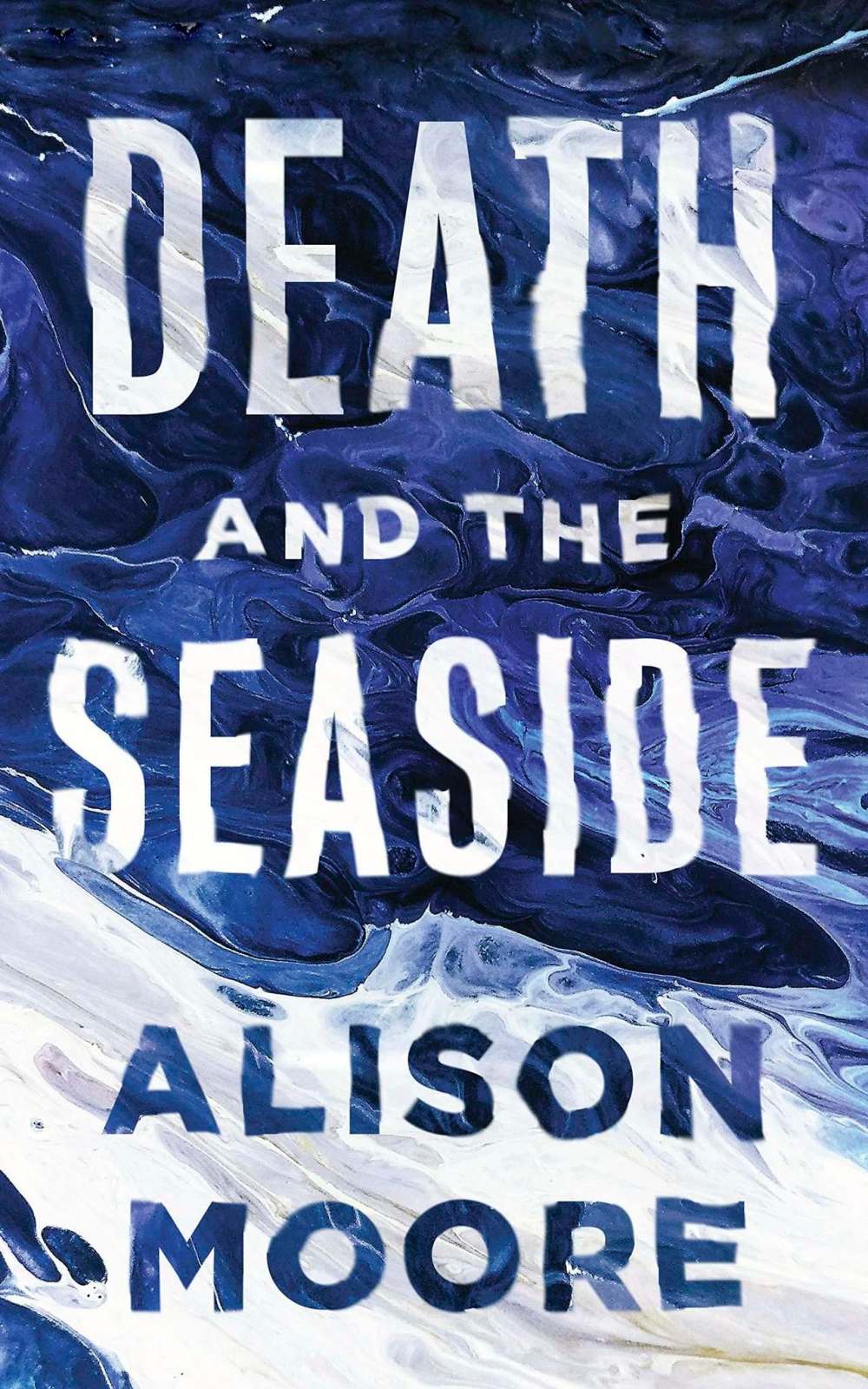
Death and the Seaside is the latest book by U.K. writer Alison Moore to be published in Canada. It’s a concise and satisfying psychological drama that explores the intersection of stories and life as well as power, obsession and fear.
Bonnie Falls, burdened by her father’s judgment and beset by a constricting set of fears and anxieties, has established a pattern of underachievement and unfinished ventures. She struggled in school and, “after a gap year that turned into three, all spent under her parents’ roof,” started an English degree in university because, Moore writes, “it had always been her best subject and because she had managed to get a B at A level. It was also her native language.”
After leaving university without taking her final exams or completing her thesis, Bonnie once again lives with her parents while she works two casual cleaning jobs and, in her spare time, writes — or tries to write — short stories. The plot of Death and the Seaside is set in motion when Bonnie’s parents inform her that it’s time to move into her own home, which she does when she finds a ground-floor flat on Slash Lane.
When she meets her landlady, Sylvia Slythe, she finds someone who, unusually, is interested in her life, her relationships, her stories. So intense are their conversations and so frequent their visits that Bonnie feels safe with her.
When the two walk home after Bonnie’s birthday dinner, Sylvia seems a bulwark against her mother’s worries and the implied danger in the setting: “Her mother might not like the idea of her walking the length of Slash Lane in the dark, but at least, she thought, as she passed between the broken street lamps, she was with a friend.”
Moore has a sense for just the right image to expose the uncanny fissure in an apparently ordinary moment.
For example, Sylvia’s keys, which Bonnie notices at exactly the moment where she suspects that Sylvia might have seen something more than Bonnie had shown her, evoke a menace that has, before this point in the narrative, remained elusive. “She thought of the bunch of keys attached to the belt loop of Sylvia’s skirt. She thought about moving the furniture, pushing the wardrobe or the bed in front of the door. But whatever she did was likely to make no difference at all, she realized, because Sylvia probably still had her own key to the back door.”
Such small moments accumulate throughout the novel — along with the sections of Bonnie’s unfinished short story, which are interspersed throughout, and Bonnie’s thesis notes about the sea — and they contribute to a menacing and tense atmosphere and a sense that every sentence in Death and the Seaside is driving toward its particular end.
This is not the sort of novel that achieves its impact with violence and shocking plot twists. In fact, the understated quality of the action serves only to highlight Moore’s insight into the places where relationships, art and everyday life might turn into something strange and revealing.
Melanie Brannagan Frederiksen is a Winnipeg writer and critic.