Sesame Street puppeteer Caroll Spinney dies at age 85
Advertisement
Read this article for free:
or
Already have an account? Log in here »
To continue reading, please subscribe:

Digital Subscription
One year of digital access for only $205*
- Enjoy unlimited reading on winnipegfreepress.com
- Read the E-Edition, our digital replica newspaper
- Access News Break, our award-winning app
- Play interactive puzzles
*First annual payment billed as $205.00 + GST for one year. This annual subscription will automatically renew at $233.00 + GST every 52 weeks (10% off the regular annual price of $259.35). Offer available to new and qualified returning subscribers only. Cancel any time.
To continue reading, please subscribe:
Add Free Press access to your Brandon Sun subscription for only an additional
$1 for the first 4 weeks*
- Enjoy unlimited reading on winnipegfreepress.com
- Read the E-Edition, our digital replica newspaper
- Access News Break, our award-winning app
- Play interactive puzzles
*Your next Brandon Sun subscription payment will increase by $1.00 and you will be charged $17.95 plus GST for four weeks. After four weeks, your payment will increase to $24.95 plus GST every four weeks.
Read unlimited articles for free today:
or
Already have an account? Log in here »
Hey there, time traveller!
This article was published 08/12/2019 (2501 days ago), so information in it may no longer be current.
LOS ANGELES – Caroll Spinney, who gave Big Bird his warmth and Oscar the Grouch his growl for nearly 50 years on “Sesame Street,” died Sunday at the age of 85 at his home in Connecticut, according to the Sesame Workshop.
The Sesame Workshop said in a statement that the legendary puppeteer lived for some time with dystonia, which causes involuntary muscle contractions.
Spinney voiced and operated the two major Muppets from their inception in 1969 when he was 36, and performed them almost exclusively into his 80s on the PBS kids’ television show that later moved to HBO.
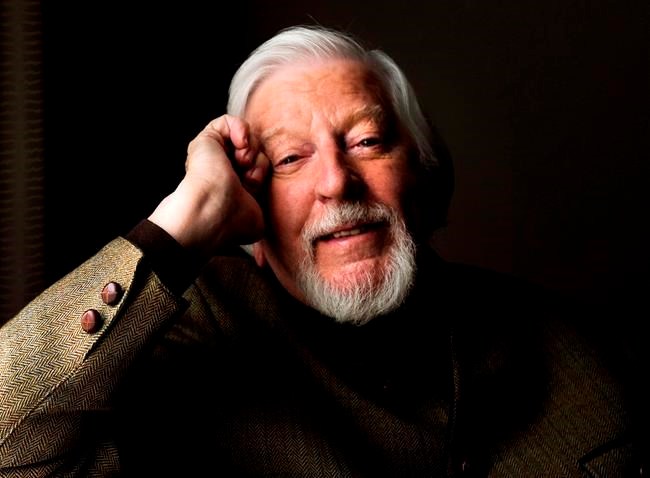
“Before I came to ‘Sesame Street,’ I didn’t feel like what I was doing was very important,” Spinney said when he announced his retirement in 2018. “Big Bird helped me find my purpose.”
Spinney grew up in Massachusetts, but told The Canadian Press in a 2014 interview that his father was born in New Brunswick and his mother grew up in Cape Breton, N.S.
Through his two characters, Spinney gained huge fame that brought international tours, books, record albums, movie roles, and visits to the White House.
“Caroll was an artistic genius whose kind and loving view of the world helped shape and define Sesame Street from its earliest days in 1969 through five decades, and his legacy here at Sesame Workshop and in the cultural firmament will be unending,” the Sesame Workshop said.
But he never became a household name.
“I may be the most unknown famous person in America,” Spinney said in his 2003 memoir. “It’s the bird that’s famous.”
Spinney gave “Sesame Street” its emotional yin and yang, infusing the 8-foot-2 Big Bird with a childlike sweetness often used to handle sad subjects, and giving the trashcan-dwelling Oscar, whose voice Spinney based on a New York cabbie, a street-wise cynicism that masked a tender core.
“I like being miserable. That makes me happy,” Oscar often said. “But I don’t like being happy, so that makes me miserable.”
To colleagues there was no question which character the kindly Spinney resembled.
“Big Bird is him and he is Big Bird,” former “Sesame Street” head writer Norman Stiles said in a 2014 documentary on Spinney.
It wasn’t easy being Big Bird. To play the part, Spinney would strap a TV monitor to his chest as his only eyes to the outside. Then the giant yellow bird body was placed over him. He held his right arm aloft constantly to operate the head, and used his left hand to operate both arms. The bird tended to slouch more as the years took their toll.
In 2015, Spinney switched to just providing the characters’ voices. That year, the longtime PBS show inked a five-year pact with HBO that gave the premium cable channel the right to air new episodes nine months before they air on PBS.
Big Bird’s builder Kermit Love always insisted that his design was a puppet, not a costume. But to many children, he was neither. He was real.
“Eight-year-olds have discovered to their horror that he’s a puppet,” Spinney told The Associated Press in 1987.
Born in 1933 in Waltham Massachusetts, Spinney had a deeply supportive mother who built him a puppet theatre after he bought his first puppet, a monkey, at age 8.
He spent four years in the U.S. Air Force after high school, then returned to Massachusetts and broke into television. He teamed up with fellow puppeteer Judy Valentine for their own daily series, then worked on a Boston version of the clown show “Bozo’s Big Top.” Spinney in this period had three children, Jessica, Melissa and Benjamin, all from his 1960 to 1971 marriage to Janice Spinney. He later married his second wife Debra in 1979, and the two were nearly inseparable for the rest of his life.
It was after a disastrous performance at a puppet festival in Utah that Spinney met Muppet master Jim Henson, who came backstage and told him, “I liked what you were trying to do,” Spinney remembered Henson saying, in his memoir.
Spinney would join the Muppet crew when “Sesame Street” was about to turn them from popular phenomenon into an American institution. Henson brought his signature character, Kermit the Frog, to the show. His right-hand man Frank Oz would become famous via Grover and Cookie Monster. Together they created Ernie and Bert.
But Big Bird would become the show’s biggest star, his name and image synonymous with not just “Sesame Street” but PBS and children’s television. The character was usually used for comedy, but his innocence and questioning was also useful when serious subjects needed addressing. When “Sesame Street” shopkeeper Mr. Hooper died, Big Bird had to get a lesson in accepting death, saying in the memorable 1983 episode that “he’s gotta come back. Who’s gonna take care of the store? Who’s gonna make my birdseed milkshakes, and tell me stories?”
When Henson died suddenly in 1990 at age 53, leaving the Muppet world devastated, Big Bird played the same part in real life. At the funeral, Spinney appeared alone on stage in full Big Bird costume and sang “It’s Not Easy Bein’ Green,” Kermit’s signature song.
“It was extraordinarily moving,” Oz said in the Spinney documentary. “It tore people up.”
Spinney said he was crying under the feathers but he got through the song, looking at the sky and saying, “Thank you Kermit,” before walking off.
Sesame Street co-founder Joan Ganz Cooney said Sunday that Spinney, her longtime colleague and friend, “not only gave us Big Bird and Oscar the Grouch, he gave so much of himself as well.”
“We at Sesame Workshop mourn his passing and feel an immense gratitude for all he has given to Sesame Street and to children around the world,” she said.
— With a file from The Canadian Press
____ This story has been updated to correct the spelling of Caroll Spinney’s first name. It is Caroll, not Carroll.