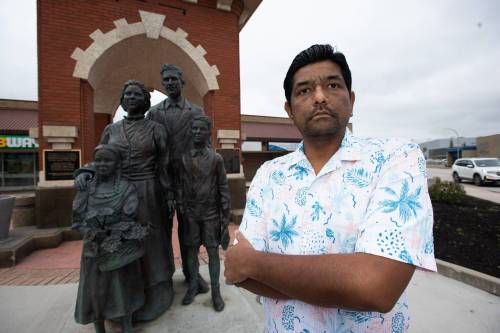
Out with the old

Author argues true reconciliation requires drastic changes to Indigenous agencies

Advertisement

Advertise with us

Most non-indigenous Canadians are unaware of the history of treaties, the annuities promised in these treaties and how the evolution of the Indian Act and the Department of Indigenous Affairs (in all its forms) have fundamentally created flawed relationships between Indigenous peoples and Canada — rendering “ordinary Indigenous people” voiceless.

Read this article for free:


or

Already have an account? Log in here »

To continue reading, please subscribe:

Subscribe and receive a limited-edition Free Press branded hat or tote.

Digital Subscription

One year of digital access for only $205*

  • Enjoy unlimited reading on winnipegfreepress.com
  • Read the E-Edition, our digital replica newspaper
  • Access News Break, our award-winning app
  • Play interactive puzzles

*First annual payment billed as $205.00 + GST for one year. This annual subscription will automatically renew at $233.00 + GST every 52 weeks (10% off the regular annual price of $259.35). Offer available to new and qualified returning subscribers only. Cancel any time.

To continue reading, please subscribe:

Add Free Press access to your Brandon Sun subscription for only an additional

$1 for the first 4 weeks*

  • Enjoy unlimited reading on winnipegfreepress.com
  • Read the E-Edition, our digital replica newspaper
  • Access News Break, our award-winning app
  • Play interactive puzzles
Start now

*Your next Brandon Sun subscription payment will increase by $1.00 and you will be charged $17.95 plus GST for four weeks. After four weeks, your payment will increase to $24.95 plus GST every four weeks.

Hey there, time traveller!
This article was published 15/02/2020 (2370 days ago), so information in it may no longer be current.

Most non-indigenous Canadians are unaware of the history of treaties, the annuities promised in these treaties and how the evolution of the Indian Act and the Department of Indigenous Affairs (in all its forms) have fundamentally created flawed relationships between Indigenous peoples and Canada — rendering “ordinary Indigenous people” voiceless.

Such is the claim of Sheilla Jones, Winnipeg journalist, author, and senior fellow with the Frontier Centre for Public Policy. In Let the People Speak: Oppression in a Time of Reconciliation, Jones argues that we will not truly seek out a path towards reconciliation until we come to the truth about how First Nations are funded and governed, and how the emergence of the monolithic Department of Indigenous Affairs has created a system “that has been unable to solve the issues of Indigenous poverty and suffering, no matter how much money was spent over the past fifty years.”

Supported by former MKO Chief and fellow journalist Sheila North, who wrote the book’s foreword, Jones chronicles the land grab that first witnessed the signing of the numbered treaties in the West, followed by the consolidation of these treaties in the Indian Act, and then the mad attempt of the federal government to wash its hands of its responsibilities — all of which has been a strategic ploy on the part of Canada to assume control of resources.

In this 2008 photo, Saskatoon RCMP officer David Kisters hands out the annual five dollar annuity still given to treaty members. Some consider the practice a slap in the face, while others see it as a symbolic gesture. (Gord Waldner / The Canadian Press files)

As Jones argues, even in 2019 “It is the land, again, that is at the nexus of the conflict between Indigenous and non-Indigenous people, just as it has been from the start.”

The conflict that Jones surfaces is highly complex and multifaceted; however, she manages to succinctly boil down an essential theory as to the massive gaps in social, political and economic inequity which persists in our prosperous country. According to Jones, as treaties were being signed, annuities, or yearly payments, were negotiated in order to avoid massive lump-sum payments, and also to provide a basis for a livelihood for people living on reserve. As treaties such as Treaty 1 (1871) were being signed, Indigenous leaders new full well that their lives were going to radically change.

Treaties 1 and 2 both originally had annuities of three dollars, later negotiated to five dollars following the signing of future treaties. In 2019, the annuity remains at five dollars. That’s right — for those who are party to treaties in Winnipeg and the surrounding areas, which includes some of the most fertile and resource-rich land in the world, the annuity or annual payment is five dollars. Treaty Days, or the day when Indigenous Affairs bureaucrats come to pay out the annuity, occur each year, considered a slap in the face by some and a symbolic gesture by others.

Jones asks a salient question that perhaps should re-enter the national conversation around reconciliation: “If annuities were intended as a form of family support, along with the freedom to pursue traditional vocations, why did the value of the annuity never increase again after Parliament voted its approval in 1878? “

For Jones, the annuity and the lack of an “escalator clause” is the fundamental cause of inequity. She argues that if annuities were modernized and given directly to First Nations peoples (and not band councils), that the standard of life for ordinary Indigenous people would, coupled with the advent of more democratic and accountable models of self-governance, substantially improve. A fair and equitable annuity would not only see funds go directly to ordinary people, but would reinforce the notion of “the annuity being linked directly to the land through the treaties” — a critical first step towards reconciliation.

Jones asserts that through the Indian Act, the very piece of legislation that has gobbled up the treaties, Canada has created a system in which band councils and representative organizations have become so dependent on the Department of Indigenous Affairs funding that it is impossible for them to properly represent their constituents on and off reserve. Calling into question the legitimacy of the Assembly of First Nations in particular, Jones posits firmly that power and voice can only be placed in the hands of the people once the top-down colonial and patriarchal constructs of the Indian Act are supplanted by the original intent of the treaties and the negotiated annuities.

Reconciliation still requires substantial part on settlers to accept the truth and then take meaningful action to affect positive change. Sheilla Jones offers a provocative possibility towards a future where we all of the means for a decent life.

Matt Henderson is assistant superintendent of Seven Oaks School Division.
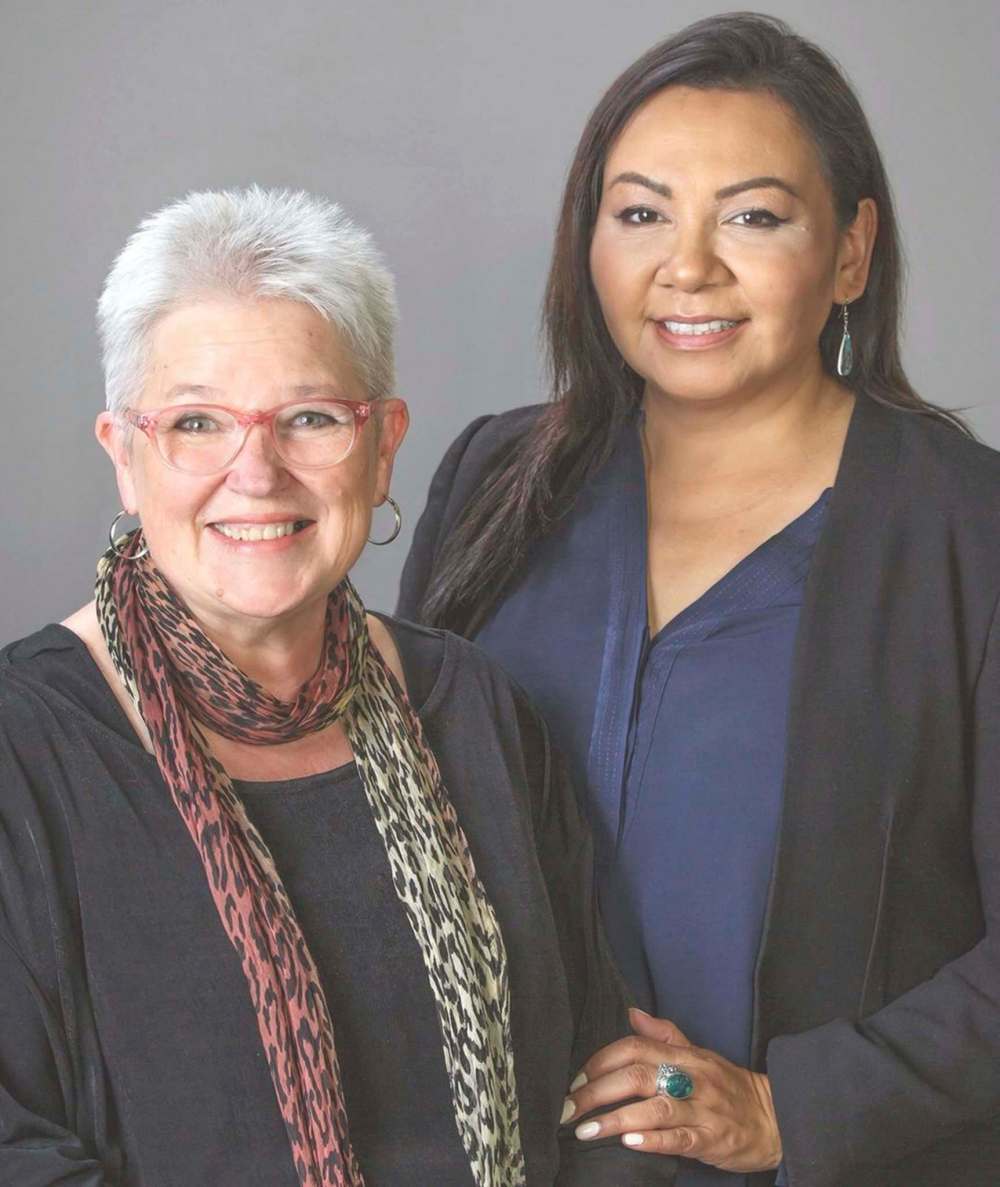
Author Sheilla Jones (left), with Sheila North, who wrote the introduction to Let the People Speak. (Supplied)
Report Error Submit a Tip

More Stories

Frustrated owners won’t rebuild demolished Boujee

Nicole Buffie 4 minute read Preview

Frustrated owners won’t rebuild demolished Boujee

Nicole Buffie 4 minute read Monday, Aug. 10, 2026

The co-owner of a former Main Street restaurant vows he will not rebuild in Winnipeg’s downtown, owing to constant crime and vandalism in the area.

Kanish Sood, who is one of three partners of the now-demolished Boujee Restaurant and Bar, said he did everything he could to keep the building safe from vandals after it was hit by arson last October.

“After that (fire), there is about already 15, 20 times there has been break-in in the property,” Sood said Monday. “We have been informing police continuously that there is continuously break-ins. People are trying to go inside the building and stealing things, but there was no action.”

After Boujee was torched, Sood and his partners locked the building and boarded it up. They also hired private security to monitor it. The break-ins continued.

Read
Monday, Aug. 10, 2026

A Winnipeg home with a mountain view? You won’t find a real one, but AI-generated visual suggests otherwise

Gabrielle Piché 6 minute read Preview

A Winnipeg home with a mountain view? You won’t find a real one, but AI-generated visual suggests otherwise

Gabrielle Piché 6 minute read Yesterday at 6:03 PM CDT

Manitoba’s mountain range peeked out behind a Scotia Street home.

At least, it did in a photo attached to a real estate listing for 232 Scotia St. in Winnipeg’s (flat) Seven Oaks neighbourhood.

Another picture — now removed — showed a cartoon cityscape viewable from the bungalow’s front porch.

Both photos had tags in their bottom left corners: “AI-generated content.”

Read
Yesterday at 6:03 PM CDT

Rail line bypass plan would make Winnipeg ‘major transportation hub’: Axworthy

Carol Sanders 4 minute read Preview

Rail line bypass plan would make Winnipeg ‘major transportation hub’: Axworthy

Carol Sanders 4 minute read 2:15 PM CDT

After decades of calls to move railway traffic to the outskirts of Winnipeg, a plan that would benefit residents, railways and taxpayers is now on track, says the former Winnipegger leading the way.

A rail line bypass around the city, using Crown-owned land and the Manitoba Hydro corridor, would take 20 years to complete, remove 120 railway crossings that are a safety risk, and free up about 250 acres of Winnipeg land over time for development, Lloyd Axworthy said Tuesday.

Axworthy, a former federal transport minister and Manitoba MP, was tasked by Kinew in October 2024 with leading a two-year rail relocation feasibility study.

Axworthy and Premier Wab Kinew are holding a news conference Wednesday afternoon. The premier is expected to announce a three-month feasibility study that homes in on a location for a bypass around the city for major railways CN Rail, Burlington Northern Santa Fe and Canadian Pacific Kansas City.

Read
2:15 PM CDT

Mom grieves loss of daughter, 4, on Long Plain First Nation

Morgan Modjeski 4 minute read Preview

Mom grieves loss of daughter, 4, on Long Plain First Nation

Morgan Modjeski 4 minute read Yesterday at 7:29 PM CDT

The mother of a four-year-old girl killed and two other children injured on Long Plain First Nation said she raised concerns about their care months before her daughter’s death.

Read
Yesterday at 7:29 PM CDT

‘Exciting news’ on rail relocation coming

Carol Sanders 5 minute read Preview

‘Exciting news’ on rail relocation coming

Carol Sanders 5 minute read Yesterday at 2:00 AM CDT

Premier Wab Kinew is expected to make an announcement concerning long-awaited Winnipeg rail relocation later this week.

Former federal transport minister and Manitoba MP Lloyd Axworthy, who Kinew tasked in October 2024 with leading a two-year rail relocation feasibility study, confirmed there would be an announcement Wednesday.

“We’ve had this rail study group which I’ve chaired and we’ve been responsible for developing recommendations,” Axworthy said Monday.

The longtime champion for Winnipeg rail relocation, who is vacationing at his cottage on Lake Winnipeg, deferred to the premier’s office for information, but confirmed he will attend Wednesday’s news conference.

Read
Yesterday at 2:00 AM CDT

Student union coalition scrutinized, accused of providing minimal benefit for fees paid

Maggie Macintosh 5 minute read Preview

Student union coalition scrutinized, accused of providing minimal benefit for fees paid

Maggie Macintosh 5 minute read Updated: Yesterday at 8:36 AM CDT

Despite being labelled as “permanently closed” online and maintaining a website filled with outdated information, a coalition of student unions is defending itself as an active entity deserving of fees in spite of its low profile.

The Canadian Federation of Students and its local chapter, better known as CFS-MB, collect annual membership dues from campuses across the province to support their advocacy work.

Alan Saji Koshy’s advice to new and returning students to the University of Winnipeg? “Start asking questions.”

“We pay hundreds of thousands of dollars for practically no benefit and students don’t even know (CFS-MB resources) exist,” the recent graduate and former student association president said.

Read
Updated: Yesterday at 8:36 AM CDT