

On the heart beat
Local teams at the forefront of long-overlooked research into women's cardiovascular health
Advertisement
Read this article for free:
or
Already have an account? Log in here »
To continue reading, please subscribe:
Digital Subscription
One year of digital access for only $1.44 a week*
- Enjoy unlimited reading on winnipegfreepress.com
- Read the E-Edition, our digital replica newspaper
- Access News Break, our award-winning app
- Play interactive puzzles
*Billed as $5.77 plus GST every four weeks. After 52 weeks, price increases to the regular rate of $19.95 plus GST every four weeks. Offer available to new and qualified returning subscribers only. Cancel any time.
To continue reading, please subscribe:
Add Free Press access to your Brandon Sun subscription for only an additional
$1 for the first 4 weeks*
- Enjoy unlimited reading on winnipegfreepress.com
- Read the E-Edition, our digital replica newspaper
- Access News Break, our award-winning app
- Play interactive puzzles
*Your next Brandon Sun subscription payment will increase by $1.00 and you will be charged $17.95 plus GST for four weeks. After four weeks, your payment will increase to $24.95 plus GST every four weeks.
Read unlimited articles for free today:
or
Already have an account? Log in here »
Hey there, time traveller!
This article was published 24/02/2020 (2289 days ago), so information in it may no longer be current.
Cardiovascular disease was once considered a men’s club.The notion that men were more likely to die of heart attack or stroke was a belief in medicine that persisted for decades.
This is a myth. Women are just as likely to experience a stroke or heart attack; only their risk factors can differ.
The latest research shows women’s biology — more dissimilar from men’s than previously thought — may often require different preventative care, diagnosis and treatment than men.
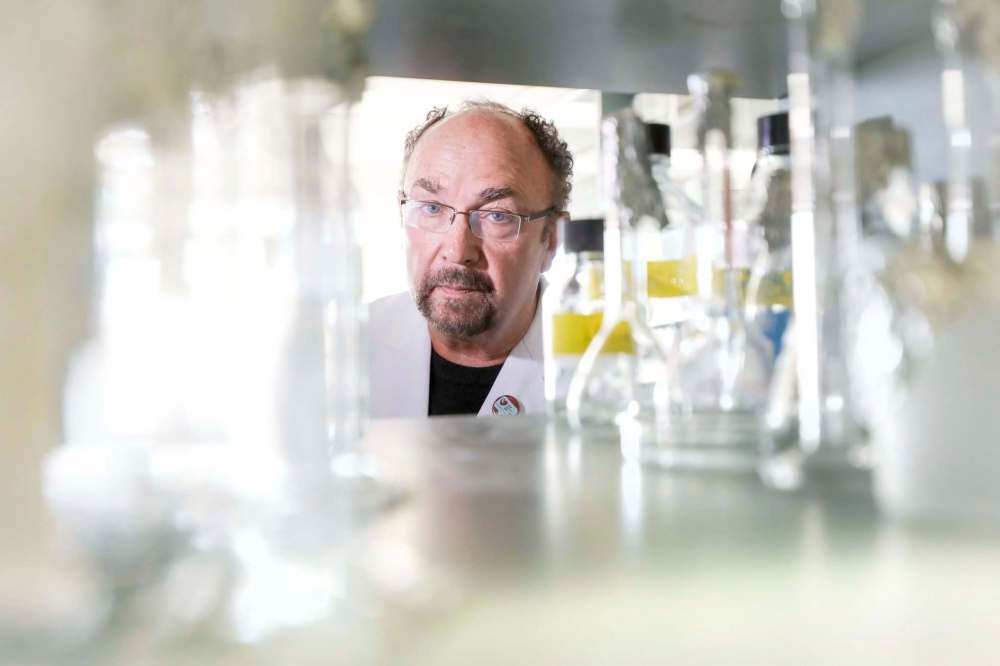
The Heart and Stroke Foundation has been leading the charge for a greater emphasis on female heart health, supporting research and raising awareness, a campaign that often peaks in February — Heart Month.
It’s a national, if not global, effort. And many important studies are going on in our backyard.
Among them are the work of three principal investigators at the Albrechtsen Research Centre at St. Boniface Hospital, one of Canada’s leading centres for cardiac science.
Here’s a quick look at their research, all which aims to improve and save women’s lives in Manitoba and beyond.
WARMing up to women’s cardiovascular risk
One challenge regarding women’s risk of heart attack and stroke is that many benchmarks for blood pressure and cholesterol, for example, are based on data skewed toward men. Todd Duhamel, a professor at the University of Manitoba’s faculty of kinesiology and recreation management, says the most well-known of these tools is the Framingham Risk Score (named after a city in Massachusetts that was the focus of a population study, which formed the basis for the assessment).
“Although very useful, it seems to be able to better predict cardiovascular disease in men than women,” he says.
Enter WARM, or Women’s Advanced Risk Assessment in Manitoba.
The recently launched study, which is seeking women aged 55 and older to participate, aims to create new criteria for cardiovascular risk in women.
Among the measures are a walking test to see how fast a participant can walk eight metres, and another that gauges hand-grip strength. Both are thought to be predictive of cardiovascular disease risk, Duhamel says.
Presently about 400 women are involved. About 600 more are required for the study’s completion. If you’re a woman age 55 and over, have not had a heart attack or stroke, and want to participate, email warmheartsresearch@gmail.com.

And who knows? One day, women around the world might be given the Manitoba risk assessment, instead of the Framingham test.
The difference between men and women… under the microscope
Dr. Ross Feldman’s work on an estrogen hormone receptor’s role in women’s heart health has been featured before in the Free Press. The principal investigator of women’s health at the Institute of Cardiovascular Sciences at St. Boniface and his team found a variation of a commonly found receptor, called GPER. The receptor helps regulate many bodily functions, including blood pressure.
The variant version of the receptor is present in about 25 per cent of the population and is associated with increased heart disease risk.
Feldman notes estrogen has long been considered protective against cardiovascular disease for women before menopause. And thus it was assumed that its decreased levels after menopause play a role in doubling their risk of heart disease compared with men the same age.
But research shows it’s not lower estrogen levels that elevate heart disease risk. Instead, it’s the interaction between the reproductive hormone and GPER, specifically its variant.
“So if you have the second-rate version of GPER, you are likely to have higher blood pressure and higher cholesterol” after menopause, Feldman says. While men have the receptor too, it has little bearing on disease.
“But if you are a woman, the odds of you having hard-to-treat blood pressure and the bad version of GPER are twice that of the general population.”
The reason remains a mystery, and that is the focus of Feldman’s work examining male and female differences at the cellular level. A greater understanding of these biomechanisms, he says, may one day lead to sex-specific preventative care and therapies.
Fighting cancer without sacrificing the heart
Some side effects of chemotherapy, such as hair loss and nausea, are well known. But a lesser known one — heart failure — is among the more troubling side effects when patients undergo treatment for breast cancer. Doxorubicin (also referred to as anthracycline) is the most common, and generally best, treatment for the breast cancer.
“It’s great for killing the cancer cells, but bad for the heart,” says Dr. Davinder Jassal, a cardiologist and a principal investigator at St. Boniface. “One in four women who receive this chemotherapy will actually develop heart failure.”

That’s why he and another researcher, Dr. Scott Grandy, an oncologist at Dalhousie University in Halifax, are leading a new study supported by the Canadian Cancer Society and Canadian Institutes of Health Research.

Called EXACT 2.0 (EXercise to prevent AnthraCycline-based Cardio-Toxicity), it builds on previous work demonstrating regular exercise can prevent heart failure. “We saw that their heart function was maintained,” says Grandy. The previous pilot study involved women exercising twice a week at the hospital. But that “turned out to be a major barrier for a lot of participants because they didn’t want to go back there any more than they had to,” he adds.
So the new study — now underway — wants to find out if women exercising 30 to 60 minutes at a time, twice a week at home, receive similar benefit.
“The goal is to eventually have a program prescribed with their chemotherapy to offset its negative impacts, specifically to the heart.”
Only rather than in a clinical setting, it can done all from the comfort of their home, Grandy adds.
joelschles@gmail.com